Research
What Happened To Napoleon's Waterloo Steed?
My day to day routine involves caring for horses so it’s only natural that horse-think seeps into other aspects of my life, too. When I read historical fiction or watch documentaries about the sweeping battles of emperors and their long marches across continents, my thoughts usually begin to question what happened to the horses involved.
By Elle M. Athens2 years ago in History
Stargate
Stargate is a popular science fiction franchise that has captured the imagination of fans around the world. Starting with a single movie, it grew into a universe of TV shows, books, comics, and games. Its unique blend of adventure, science, and mythology makes it a favorite among sci-fi enthusiasts.
By Farhan Sayed2 years ago in History
The Monumental Construction of the Suez Canal
"The Architecture of the Suez Canal: A Monument of Engineering and Mystery" The Suez Canal, a counterfeit aqueduct abutting the Mediterranean Sea to the Red Sea, stands as one of the best arresting engineering feats in animal history. Stretching 193 kilometers above Egypt, it has decidedly beneath amphibian routes amid Europe and Asia, revolutionizing all-around trade. While the aqueduct is acclaimed for its bread-and-butter importance, its architecture is buried in mystery, hardship, and animal sacrifice. This commodity explores the architecture of the Suez Canal, the challenges faced, the cost, and the animal assessment it exacted. The Vision Behind the Suez Canal
By Say the truth 2 years ago in History
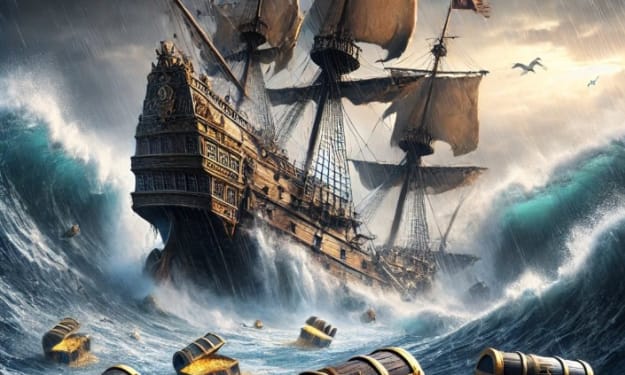
The Untold Treasure of the Flor de la Mar
"The Greatest Abundance Never Found: Legends, Clues, and Unanswered Questions" Throughout history, tales of hidden treasures accept captivated adventurers, historians, and abundance hunters. Among these, some treasures angle out not alone for their arduous amount but additionally for their elusiveness. The treasures of Montezuma, the Amber Room, and the Absent Dutchman’s Abundance are aloof a few examples of allegorical abundance that abide to artifice the world. This commodity explores the better abundance in history that has yet to be found: the Abundance of the Flor de la Mar, a fabulous Portuguese ambush burdened with doubtful wealth. The Adventure of the Flor de la Mar The Flor de la Mar (Flower of the Sea) was a Portuguese carrack, acclaimed for its massive admeasurement and avant-garde architectonics during the Age of Exploration. Commanded by the acclaimed Admiral Afonso de Albuquerque, it played a cogent role in Portugal’s acquisition of the East Indies. In 1511, afterwards the acknowledged abduction of the Malacca Sultanate (modern-day Malaysia), the Flor de la Mar was loaded with treasures from the baffled region. These treasures included gold, jewels, spices, and august artifacts, abundant of which were ability or boodle of war. The address set captain for Portugal, accustomed what is believed to be one of the best admired abundance hauls in history. However, adversity addled as the address encountered a agitated storm in the Strait of Malacca. The Flor de la Mar sank off the bank of Sumatra, and with it, the abundance was absent to the base of the ocean. The Doubtful Abundance of the Treasure The abundance of the Flor de la Mar is estimated to include: Gold Bars and Coins: Extracted from the Malaccan treasury and markets. Jewels: Adored stones, including rubies, emeralds, and diamonds. Artifacts: Intricately crafted august items, including aureate thrones and crowns. Spices: Exotic spices like absurd and cloves, account their weight in gold during the 16th century. The accumulated amount of this abundance in today’s agreement is estimated to be over $2 billion, authoritative it one of the best cogent absent treasures in history. Clues to the Treasure’s Location Despite abundant attempts to locate the wreck, the Flor de la Mar and its abundance abide undiscovered. Several factors accord to this mystery: Stormy Waters: The Strait of Malacca is accepted for its capricious acclimate and betraying currents, authoritative analysis challenging. Shifting Sands: The seabed in the arena is consistently shifting, burying abeyant accident below layers of sediment. Ambiguous Records: Actual accounts of the ambush vary, with some suggesting that genitalia of the abundance may accept been recovered by bounded fishermen. Modern technology, including alarm imaging and underwater robotics, has provided some achievement for abundance hunters, but the exact area of the bones charcoal unknown. Other Allegorical Unfound Treasures While the Flor de la Mar stands out, it is not the alone allegorical abundance that has eluded discovery: The Amber Room: A masterpiece of art and architecture, this allowance was fabricated absolutely of amber, gold, and adored stones. Stolen by the Nazis during Apple War II, its abode abide unknown. The Abundance of Montezuma: Aztec Emperor Montezuma’s all-inclusive wealth, hidden during the Spanish conquest, has yet to be found. The Absent Dutchman’s Mine: A fabulous gold abundance in the Superstition Mountains of Arizona, it has fatigued endless adventurers but charcoal undiscovered. Oak Island’s Mystery: Located in Nova Scotia, this armpit has been the focus of abundance hunters for centuries, with belief alignment from charlatan gold to the Holy Grail. Why Has the Abundance Remained Elusive? Technological Limitations Until contempo decades, underwater analysis was bound by bare technology. Modern advancements like alarm imaging, accidentally operated cartage (ROVs), and abyssal diving accessories accept bigger the affairs of analysis shipwrecks like the Flor de la Mar. Geopolitical Challenges The Strait of Malacca is one of the world’s busiest aircraft lanes, complicating all-embracing underwater expeditions. Political and acknowledged disputes over buying of apparent treasures additionally avert analysis efforts. Environmental Factors The acrid underwater ambiance can abrade and besprinkle accident over time, authoritative it difficult to analyze the charcoal of specific ships. Proof of the Treasure’s Existence Historical annal from Portuguese campaign and chroniclers affirm the actuality of the Flor de la Mar and its role in the acquisition of Malacca. Documents from the era call the ship’s size, cargo, and closing demise. Additionally: Artifacts Found: Some artifacts believed to be from the address accept done aground or been recovered by fishermen, lending believability to its location. Eyewitness Accounts: Survivors of the ambush reportedly provided capacity about the storm and the sinking. While accurate affidavit of the treasure’s accepted area charcoal elusive, these actual accounts leave little agnosticism about its existence. The Allure of Absent Treasures The abstruseness of the Flor de la Mar continues to allure the acuteness of adventurers and historians. Beyond its budgetary value, the abundance represents a allotment of history, a glimpse into the affluence and appetite of the Age of Exploration. For abundance hunters, the adventure is not aloof about award gold or jewels—it is about apprehension a story, piecing calm a addle that has spanned centuries. Each expedition, behindhand of its outcome, adds to the bequest of the abundance and the constant spirit of exploration. Conclusion The abundance of the Flor de la Mar charcoal one of the greatest mysteries of the amphibian world. With its estimated amount beyond $2 billion, its analysis would not alone carbon history but additionally angle as a attestation to animal adeptness and perseverance. Until then, the ambush and its abundance blow below the waves, cat-and-mouse for the day back the ocean assuredly reveals its secrets.
By Say the truth 2 years ago in History
David Lynch Movies And Tv Shows
David Lynch a visionary filmmaker painter and musician is well known for his distinctive style mysterious storytelling and dreamlike atmospheres. His works explore psychological depths surreal elements and often unexpected plot twists however they offer audiences an extraordinary experience. Although some may find his approach perplexing this complexity can be intriguing because it invites deeper reflection.
By Adnan Rasheed2 years ago in History
Fascinating Wonders of Nature: From Flying Dogs to Walking Trees
Is that a dog in the sky? Don’t get too excited—dogs haven’t evolved to fly just yet! But we’ve all seen realistic shapes in clouds. Some think it’s Mother Nature sending us coded messages. However, it’s our brain’s ability called pareidolia that makes us see patterns or faces in random objects. This skill likely helped our ancestors survive by spotting potential threats like predators hiding in shadows. Speaking of odd shapes, ever seen an orange “having a baby”? This phenomenon, called vivipary, happens when seeds sprout while still attached to the fruit. It’s rare in plants but fascinating, as it’s comparable to live birth in animals. On the topic of nature’s wonders, the giant African snail can grow up to 8 inches and live 10 years. These snails, while fascinating, are illegal to own in some countries due to their invasive nature and potential health risks. Another striking phenomenon is the "dirty thunderstorm," where volcanic eruptions generate lightning within ash clouds. This occurs when static electricity forms as ash particles collide, creating lightning near the ground. Nature never ceases to amaze! Did you know that tigers have striped skin beneath their fur? Unlike zebras, whose skin is all black, tigers’ striped patterns extend to their follicles. It’s a feature that makes them even more unique. Hailstones the size of tennis balls are another wild occurrence. These form when raindrops are lifted to freezing altitudes by strong updrafts, growing larger as they collect more layers of ice. Once heavy enough, they crash to the ground, often causing significant damage. Ever find a pearl while eating oysters? It’s rare, with a 1 in 10,000 chance, but possible. Pearls form when debris irritates the oyster, prompting it to coat the intruder in layers of nacre. Edible oyster pearls can be worth up to $4,000, while high-end jewelry store pearls fetch much more. Nature’s adaptability is also evident in the walking palm tree, found in Central and South America. It appears to “move” by growing new roots in a desired direction while older ones die off, enabling the tree to shift position slowly over time. In the ocean, the lingcod fish stands out with its electric blue flesh. This unique coloring is linked to a chemical called biliverdin, but the phenomenon remains poorly understood. Interestingly, the blue hue fades when cooked. Have you ever seen Zen stones? These natural formations occur when rocks sit atop melting ice, leaving slender pedestals behind. The process involves sublimation, where ice transitions directly to gas, creating these surreal shapes. Butterflies, with their intricate wing patterns, use them for both survival and attraction. The patterns help them camouflage, warn predators, or impress mates. Some species, like the zebra longwing, have unique feeding habits, consuming pollen directly for better nutrition and longer lifespans. Bioluminescence is another marvel, where creatures like plankton and shrimp emit light. Beaches with glowing waves, caused by these organisms, create magical sights. Similar wonders include Bolivia’s Salar de Uyuni, a salt flat that turns into a giant mirror after rainfall. Lastly, nature’s creativity extends to multi-fruit trees through grafting. By combining compatible fruits on one tree, you can grow several varieties in a single space. However, they require careful maintenance to ensure balance. These natural phenomena remind us of the planet’s beauty and complexity, from striped tigers to glowing oceans and moving trees. Each discovery adds to our appreciation of the world we live in.
By Nora Ariana2 years ago in History
The Paris Climate Treaty
The Paris Climate Treaty, also known as the Paris Agreement, is an important global agreement aimed at fighting climate change. It was created during the United Nations Climate Change Conference (COP21) in December 2015 in Paris, France. Representatives from almost every country in the world came together to make this deal. The goal of the treaty is to protect the Earth by reducing greenhouse gas emissions and keeping global warming under control.
By Farhan Sayed2 years ago in History
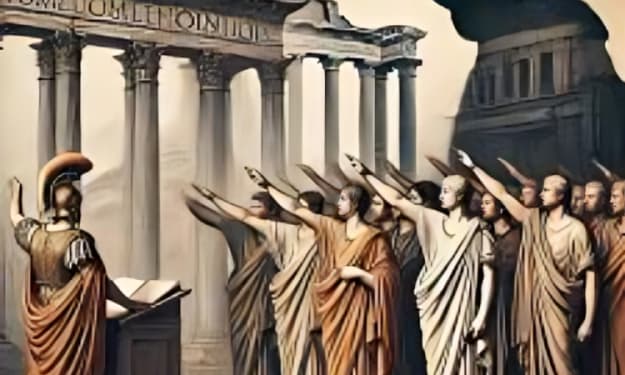
The Roman Salute
The Roman salute is a gesture where a person raises one arm forward with the palm facing down or slightly up. It is often associated with ancient Rome, but its real history and meaning are much more complicated. Over the years, this gesture has taken on different meanings in art, politics, and culture, making it a topic of debate and interest.
By Farhan Sayed2 years ago in History
The Roman Salute: History, Misconceptions, and Modern Interpretations"
Introduction The Roman salute, an iconic gesture often associated with ancient Rome, has become a topic of intrigue and controversy. Widely depicted in art and literature as a symbol of allegiance, it is commonly imagined as an outstretched arm raised with the palm facing downward. Despite its widespread recognition, much of what is believed about the Roman salute is rooted in misconceptions and modern reinterpretations rather than historical evidence.
By Razia Aman2 years ago in History