Research
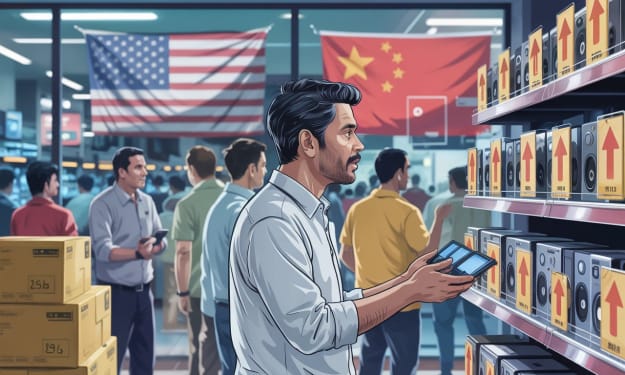
China says 'market has spoken' after US tariffs spark selloff
You know what’s funny? I never really cared about things like trade wars or tariffs before. Global economy stuff? Felt like something way out there—nothing to do with my day-to-day life. But now? It kinda feels like those big words are sitting right across from me at the dinner table. So how did this all start? Well, Trump made an announcement—not exactly breaking news, right? But this one hit different. He slapped a new 34% tariff on Chinese goods. Add that to the previous ones, and boom—total tax shoots up to nearly 70%. Crazy, right? And of course, China didn’t just sit there. They fired back with their own set of tariffs and even started holding back on some rare minerals that our tech world runs on. And we? The regular people? We’re stuck in the middle of this ping-pong match. Just the other day, I went out to buy a pair of headphones. Nothing fancy—something I’ve bought before, so I kinda knew the price. But this time? The guy at the shop asked for 600 Taka more than last time. I was like, “Wait… wasn’t this cheaper just a few weeks ago?” And he goes, “Yeah bhai, bringing stuff from China is costlier now. We gotta raise prices too.” That moment hit me. I mean, I’m just trying to listen to music, not fund a trade war. But here it is—global politics messing with my earphones. And it’s not just tech stuff either. Groceries? Prices are creeping up. Rice, lentils, even paper. Paper, man! And then there's the stock market. Don’t even get me started. I had some investments—pretty safe ones too. Thought I was being smart. Then bam! S&P 500 drops 9% in a week. Haven’t seen that kind of fall since the COVID days. I just sat there, staring at my screen, thinking, “Seriously? What now?” I remember this Chinese guy—Guo Jiakun—he once said, “The market has spoken.” Sounded simple at the time. But now? I get it. That sentence isn’t just about numbers. It’s about real people. Their savings, their struggles, their little dreams. And this whole mess? It’s not just about the US and China anymore. Europe’s feeling it. India too. Some countries are rushing to find new trade buddies. Others are trying to push local products into the spotlight. So, I started asking myself—are we just gonna sit and watch this unfold? ‘Cause if we don’t start doing something, even the basics might feel like luxury soon. These days, I try to buy local when I can. Sure, the quality’s not always top-tier, but it feels good—like I’m supporting people around me. But look, I’m not saying I can fix this alone. Nah, this needs everyone—government, business owners, buyers—pulling in the same direction. We can’t stop big countries from doing what they do, but maybe we can soften the blow. One last thing I wanna say—this whole trade war? It ain’t a movie. It’s not something we just watch and then move on. This is real life. One announcement from some leader somewhere, and suddenly your grocery bill goes up, your small business struggles, your plans take a hit. So yeah, maybe it’s time we stop just shaking our heads at the news and start thinking for ourselves. ‘Cause this isn’t just about politics—it’s about our lives."
By Md Motiur Rahmanabout a year ago in History
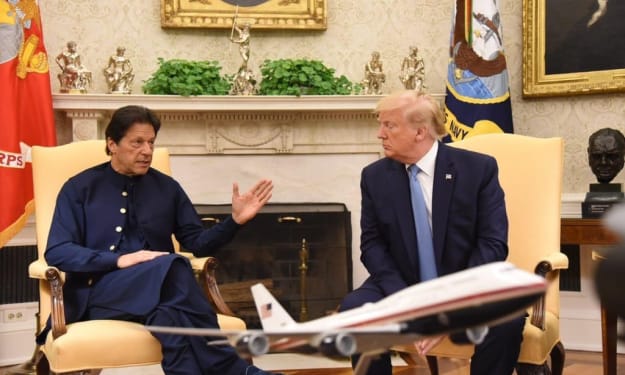
The Relationship Between Donald Trump and Imran Khan
The relationship between Donald J. Trump, the 45th President of the United States, and Imran Khan, the 22nd Prime Minister of Pakistan, was a notable chapter in the history of US-Pakistan relations. While their respective political ideologies and domestic contexts differed greatly, both leaders shared a populist style and a penchant for bold rhetoric that shaped their interactions and the broader diplomatic landscape between their nations.
By LegacyWordsabout a year ago in History
Pirate Torture. AI-Generated.
In the ancient world and the Middle Ages, ships were regarded as the apex of military power. They held a revered status, and over time, those who dominated the seas emerged as the most formidable nations. However, during the Age of Discovery, when vessels were charting new territories and traversing vast oceans, sailors faced significant hardships. This period was also marked by instances of mutiny. When a disgruntled crew revolted against their captain, chaos could ensue, leaving no place to escape. Consequently, particularly harsh punishments were imposed on unruly sailors.
By ADIR SEGALabout a year ago in History
The Berbers
Throughout history, humanity has sought prosperity and well-being, but these aspirations are fundamentally rooted in a more valuable principle: freedom. Conflicts have erupted, revolutions have sparked, and ideologies have been developed in pursuit of this intrinsic yearning. Among those who exemplify this struggle are the Berbers, one of Africa's oldest indigenous communities. For thousands of years, they have resisted assimilation, battled empires, and maintained their identity in the face of significant challenges.
By A Históriaabout a year ago in History
Giant Skeletons Reportedly Found in Alaska and Scientists believe the Smithsonian is Hiding Evidence
However, according to native Alaskans and the tales passed down, humans and giants were never at peace with one another. The Giants are said to be between 12 and 20 feet tall, and they hunt people and see humans as food.
By sara burdickabout a year ago in History
Hijacked at Sea: The Maersk Alabama Story. AI-Generated.
### Key Points - On April 8, 2009, the Maersk Alabama, a U.S.-flagged ship carrying humanitarian aid from Oman to Kenya, was hijacked by Somali pirates 440 km off Somalia’s coast. - The crew tried to defend themselves using water hoses and hiding in a safe room, but pirates boarded, taking Captain Richard Phillips hostage. - The U.S. Navy intervened, and on April 12, 2009, Navy SEALs rescued Phillips, killing three pirates, with one surrendering and later imprisoned. - It seems likely that this event highlighted the need for better ship security, leading to changes like armed guards on cargo ships. ### The Hijacking Event The Maersk Alabama, a large cargo ship, was on a mission to deliver aid when it faced a terrifying attack. On April 8, 2009, while 440 km from Somalia, the crew spotted a speedboat approaching fast. The ship’s top speed of 18-20 knots couldn’t outrun the pirates’ 25-knot boats, leaving them vulnerable. Captain Richard Phillips sounded the alarm, and the crew rushed to a safe room, with 14 of 19 members making it there. Two hid elsewhere, while Phillips and two others stayed on the bridge, the ship’s command center at the front. ### Crew’s Defense and Hostage Situation The crew had few options to fight back. They used water hoses to try and stop pirates from climbing aboard, but it wasn’t enough. A pirate with an AK-47 rifle boarded, and the helmsman rocked the ship side to side to throw them off. Despite their efforts, the pirates took control, capturing Phillips and forcing him into a lifeboat, demanding ransom. The crew managed to capture one pirate briefly during a hostage exchange attempt but released him under threat. ### Rescue and Aftermath The U.S. Navy arrived, with ships like the USS Bainbridge and Navy SEALs joining the effort. On April 12, 2009, when a pirate pointed a gun at Phillips, SEAL snipers killed three pirates simultaneously, rescuing him unharmed. One pirate surrendered, later sentenced to 33 years in prison in 2011. This event, the first U.S.-flagged ship hijacked by pirates in nearly two centuries, led to increased security measures, like armed guards on ships, reducing pirate attacks off Somalia. An unexpected detail is that the crew later sued Maersk Line, alleging Phillips ignored warnings to stay farther from the coast, settling for an undisclosed sum. This shows the complexity of responsibility in such incidents. --- ### Survey Note: Detailed Analysis of the Maersk Alabama Hijacking The Maersk Alabama hijacking on April 8, 2009, stands as a significant maritime security event, capturing global attention and highlighting the persistent threat of piracy off Somalia. This incident involved the U.S.-flagged cargo ship Maersk Alabama, which was en route from Ṣalālah, Oman, to Mombasa, Kenya, carrying humanitarian aid. The ship, measuring 508 feet (155 meters), had 21 Americans onboard, including Captain Richard Phillips. The attack occurred 240 nautical miles (440 km) southeast of Eyl, Somalia, a region notorious for pirate activity due to decades of instability and lack of policing in Somali waters. #### Incident Overview and Context The hijacking began when the crew sighted a speedboat with four armed pirates, each carrying AK-47s, approaching on the morning of April 8, 2009. This was not the first close call; the crew had evaded similar boats twice in the previous 24 hours, but this time, escape was impossible. The Maersk Alabama’s top speed of 18-20 knots was outpaced by the pirates’ speedboats, capable of over 25 knots, leaving the ship vulnerable. Captain Phillips, aware of the danger, sounded the alarm, initiating a desperate defense. #### Crew Actions and Defense Strategies The crew’s initial response included shooting flares and spraying fire hoses to ward off the attackers, aligning with the user’s mention of water hoses as a defense method. Of the 19 crew members, 14 managed to retreat to a fortified steering room, a safe haven designed for such emergencies. Two others hid elsewhere, while Phillips and two companions remained on the bridge, the ship’s highest point and command center at the front. The helmsman attempted to disrupt the pirates by rocking the ship side to side, a tactic to prevent boarding, but it proved ineffective against the determined attackers. Two pirates successfully boarded, marking the first U.S.-flagged ship boarded by pirates in nearly two centuries, a detail confirmed by multiple sources. The crew’s efforts to disable the ship and send distress calls were critical. They ambushed and briefly captured one pirate during an attempted hostage exchange, later releasing him when the pirates threatened Phillips. This back-and-forth highlighted the crew’s resilience, using limited tools like water hoses and their wits to resist. #### Pirate Actions and Hostage Crisis The pirates, demanding a $2 million ransom, forced Phillips into an 18-foot (5.5-meter) covered lifeboat after their initial boat capsized. This escalation intensified the standoff, with the pirates running out of khat, a stimulant, by April 11, allowing the U.S. ship to attach a tow cable. The hostage situation drew global attention, with Phillips’ life hanging in the balance. #### Rescue Operation and Resolution The U.S. Navy’s response was swift, with the USS Bainbridge reaching the scene on April 9, joined by other vessels and aircraft. The Maersk Alabama was ordered to continue to Kenya with an armed sailor security detail, a precursor to broader security changes. On April 10, Phillips attempted to escape by jumping overboard but was recaptured, adding to the tension. By April 11, Navy SEAL Team 6 arrived from Virginia, and on April 12, the crisis ended dramatically. One pirate surrendered, requesting medical treatment, and was later sentenced to 33 years in prison in 2011. Simultaneously, SEAL snipers killed three pirates when one pointed a gun at Phillips, believing imminent danger, ensuring his safe rescue. #### Aftermath and Broader Implications The aftermath revealed controversies, with the crew alleging Phillips failed to heed warnings to stay at least 600 miles from the coast, a decision criticized later. They sued Maersk Line in 2009, settling for an undisclosed sum, highlighting debates over captain responsibility. This incident, detailed in Phillips’ book *A Captain’s Duty* (2010, co-written with Stephan Talty) and adapted into the 2013 film *Captain Phillips* starring Tom Hanks, spurred significant changes. Post-hijacking, cargo ships began employing armed security details, reducing pirate attacks off Somalia, a shift noted in subsequent reports. An unexpected detail is the crew’s legal action, underscoring the complexity of maritime safety and corporate accountability. This event, the sixth vessel attacked in a week at the time, underscored the peak of Somali piracy in the late 2000s, with ransoms previously reaching tens of millions, as per historical records. #### Table: Key Timeline of Events | **Date** | **Event** | |----------------|---------------------------------------------------------------------------| | April 8, 2009 | Pirates board Maersk Alabama, crew defends with hoses, Phillips taken hostage. | | April 9, 2009 | USS Bainbridge arrives, standoff begins. | | April 10, 2009 | Phillips jumps overboard, recaptured by pirates. | | April 11, 2009 | Navy SEAL Team 6 arrives, pirates run out of khat, tow cable attached. | | April 12, 2009 | SEAL snipers kill three pirates, one surrenders, Phillips rescued. | | 2011 | Surrendered pirate sentenced to 33 years in prison. |
By Muhammad Waseem khanabout a year ago in History
The Morris Carter Land Commission (1932)
The Closer Union plan (see Colonial Villains: Edward Grigg) was meant to unite Kenya, Uganda and Tanganyika colonies into a single British East African federation. In the spring of 1931, East African delegates were invited to London to ‘represent the Native Races’ and tell the Joint Committee on Closer Union what they thought about the government of East Africa. The ones from Kenya were Rev. Ezekiel Apindi, president of the Kavirondo Taxpayers Welfare Association, from the west, up near Lake Victoria; the Kamba sub headman James Mutua, from the country east of Nairobi; and Chief Koinange wa Mbiyu, the president of the Kikuyu Association. This experience of immersion into the imperial capital of London was also meant to dazzle them enough to tell of England’s modernity upon returning back to the colonies.
By HINGES OF TIMEabout a year ago in History
The Great Pyramid: Tomb or Ancient Power Plant?
For centuries, the Great Pyramid of Giza has stood as an enduring marvel, its towering presence sparking awe and curiosity. Mainstream history tells us it was built 4,500 years ago as a grand tomb for Pharaoh Khufu, a monument to honor a god-king of Egypt’s Fourth Dynasty. Yet, a closer look reveals a structure that defies the conventions of a burial site-lacking artifacts, hieroglyphs, or the ornate decorations typical of Egyptian tombs. No mummies have ever been found inside any pyramid, including this one. So, if it wasn’t a tomb, what was it? Some daring thinkers, including the visionary Nikola Tesla, suggest an astonishing possibility: the Great Pyramid was a colossal power plant, tapping into the Earth’s energy and distributing it wirelessly across the globe-an idea that might have been conceived not 4,500 years ago, but perhaps 13,500 years in the distant past.
By KWAO LEARNER WINFREDabout a year ago in History
Unearthed Enigmas: The World’s Most Puzzling Ancient Discoveries
Across the globe, explorers and archaeologists have stumbled upon cryptic traces of humanity’s past-enigmatic markings, sprawling designs, and artifacts that defy explanation. These relics, etched into the earth or buried beneath it, whisper tales of forgotten cultures and spark endless curiosity. Despite centuries of study, many remain shrouded in mystery. Let’s journey through some of the most bewildering archaeological wonders ever uncovered.
By KWAO LEARNER WINFREDabout a year ago in History