Research
iPhone 17 Pro’s New Rear Camera Bar
# The Sleek, Unified Design of the New Rear Camera Bar on the iPhone 17 Pro Apple’s iPhone design has always been a topic of fascination, and the upcoming **iPhone 17 Pro** is rumored to bring a subtle yet significant change: a **rear camera bar that matches the color of the rest of the device**. This change may represent a departure from the current stainless steel camera enclosures, which offer an aesthetic that is more unified and seamless. ## A Look That Is More Harmonious Apple has used a "distinct camera housing" that stands out from the back panel, usually with a glossy or matte stainless steel finish, since the iPhone 11 Pro. While functional, this design has sometimes been seen as visually disruptive, especially on lighter-colored models.
By pulok kumarabout a year ago in History
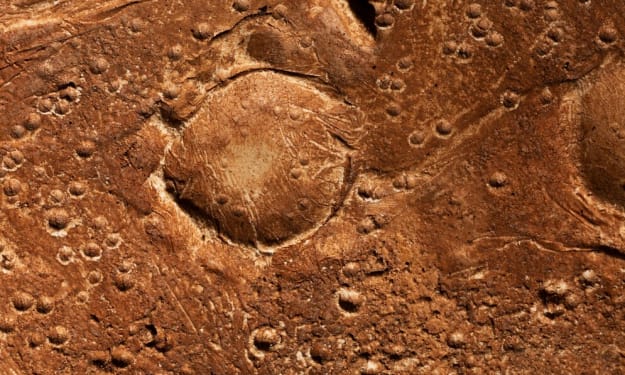
Mysterious Landmarks on Mars Discovered by NASA
NASA has once again ignited global curiosity with the announcement of newly discovered mysterious landmarks on the surface of Mars. These strange and fascinating formations, captured by the Mars Reconnaissance Orbiter (MRO)'s powerful cameras, have intrigued and puzzled scientists. The images, which show landforms, unusual shapes, and symmetrical patterns that have never been seen before on Mars, are bringing up new questions about the planet's geological past and possibly even more mysterious possibilities.
By Ashiqur Rahman Khanabout a year ago in History
Trump’s Pro-Palestinian Activism Crackdown Mirrors Project 2025’s Authoritarian Blueprint. AI-Generated.
Former President Donald Trump has pledged to severely crack down on dissent if he is re-elected, a position that is closely aligned with the far-right Project 2025 strategy as pro-Palestinian protests sweep college campuses and cities across the United States. The initiative, spearheaded by the Heritage Foundation and other conservative groups, outlines a sweeping authoritarian agenda for a potential second Trump term, including aggressive measures to suppress protests, expand executive power, and target political opponents.
By Md. Abdullahabout a year ago in History
10 Scientific Facts Found in Ancient Indian Texts Centuries Before Modern Discovery
10 Scientific Facts Found in Ancient Indian Texts Centuries Before Modern Discovery Long before Newton dropped his apple and Einstein bent space-time, the ancient sages of India were penning down ideas that today’s scientists are only beginning to understand. Hidden in the verses of texts like the Rigveda, Sushruta Samhita, and Bhagavata Purana are shockingly accurate descriptions of scientific phenomena—ranging from gravity and atomic theory to surgical procedures and time dilation. While often dismissed as mythology or philosophy, these texts are treasure troves of forgotten knowledge. Here are 10 extraordinary scientific concepts that appear in ancient Indian scriptures long before they were "discovered" by modern science. You probably haven’t heard of half of them. --- 1. Speed of Light – Accurately Described in Rigveda Commentary. A 14th-century commentary by Sayana on the Rigveda states that light travels 2,202 yojanas in half a nimesha. Converted to modern units, this results in approximately 186,000 miles per second—the exact speed of light. This was centuries before science could even attempt to measure it. 2. Atomic Theory – Proposed by Sage Kanada. The Vaisheshika Sutras describe "anu" (atoms) as the smallest indivisible units that make up all matter. Sage Kanada even wrote about how these atoms combine and interact—long before Dalton’s atomic theory in the 19th century. 3. Water Cycle – Clearly Outlined in the Vedas. Texts like the Rigveda and Manusmriti mention the Sun evaporating water, which forms clouds and returns as rain—an accurate outline of the water cycle, described in spiritual texts long before science formalized the concept. 4. Gravity – Mentioned in Surya Siddhanta. The ancient astronomical text Surya Siddhanta, composed over 1,200 years before Newton, mentions that Earth has a gravitational force that pulls objects toward itself. It even attempts to explain planetary motion. 5. Time Dilation – Implied in Mahabharata. In a story from the Mahabharata, King Kakudmi and his daughter Revati visit Brahma’s realm for a few minutes. When they return, thousands of years have passed on Earth—a tale eerily similar to Einstein’s theory of time dilation. 6. Multiverse – Described in Bhagavata Purana. This text speaks of multiple universes, each governed by a different Brahma. The idea that many universes coexist independently aligns with the multiverse theory explored in quantum physics today. 7. Surgery and Anesthesia – Detailed in Sushruta Samhita. This ancient surgical manual from 600 BCE describes over 300 surgeries and 120 instruments. It also mentions the use of wine as an anesthetic—centuries before the invention of modern anesthesia. 8. Flying Machines – Outlined in Vaimanika Shastra. Describes “Vimanas” powered by mercury engines and anti-gravity technology. Though controversial, the level of detail (materials, aerodynamics) in these texts has intrigued even aerospace researchers. 9. Evolution – Reflected in Dashavatara (Ten Incarnations) The sequence of Vishnu’s avatars—fish, amphibian, boar, half-man, dwarf, and so on—uncannily matches the stages of Darwinian evolution, from aquatic life to complex human forms. 10. Cyclic Universe – Described in Vishnu Purana. The universe is said to undergo endless cycles of creation and destruction, mirroring current cosmological theories like the cyclic or oscillating universe model being explored in modern physics. Conclusion: While many of these ancient ideas were cloaked in metaphors or symbolic language, their core concepts align remarkably with modern scientific understanding. These aren’t just coincidental similarities—they challenge our assumptions about the origins of science itself. Maybe it’s time we stop calling these texts mere “mythology” and recognize them as early scientific thought wrapped in the poetic language of spirituality. Start writing...
By Riya mandalabout a year ago in History
From Destruction to Peace: The Story of Hiroshima
In the quiet of a summer morning, Hiroshima stirred to life. It was August 6, 1945, and the city had already endured years of war. But beneath the tension, life persisted—vendors opened their stalls, children played in the streets, and mothers prepared breakfast for their families.
By Mohammad Tariq Sideeqiabout a year ago in History
NASA Curiosity Rover Finds Largest Organic Molecules on Mars Major Breakthrough in Search for Life.
NASA Curiosity Rover Finds Largest Organic Molecules on Mars Major Breakthrough in Search for Life. In a groundbreaking discovery that reignites the question of life beyond Earth NASA's Curiosity rover has detected the largest organic molecules ever found on Mars. These complex carbon based compounds considered essential building blocks of life were discovered in rock samples analyzed by Curiosity’s onboard instruments in the Gale Crater an area long suspected to have once hosted liquid water.
By Adnan Rasheedabout a year ago in History
The Sleepers of the Cave. AI-Generated.
The Sleepers of the Cave The Miraculous Story of Ashab-e-Kahf A long time ago, in a land ruled by a powerful and unjust king, there lived a group of young men who believed in one true God. This was a time when the people of the land were forced to worship idols and obey the king without question. The king claimed divine authority, and anyone who refused to worship him or the idols was punished severely.
By Zeeshan Aliabout a year ago in History
Houston Stuns Duke in Final Four Comeback to Reach NCAA Championship
SAN ANTONIO — In a thrilling Final Four showdown, Houston pulled off an incredible comeback to defeat Duke 70-67, overcoming a 14-point deficit in the final eight minutes. With this stunning victory, the Cougars are now set to face Florida in the NCAA Championship game on Monday night.
By Muhammad Hayatabout a year ago in History