Places
Xenophon
Xenophon (circa 430–354 BCE) stands out as one of the most multifaceted and intriguing personalities of ancient Greece. As a soldier, historian, philosopher, and a disciple of Socrates, he produced a substantial body of work that offers essential perspectives on Greek culture, military strategies, and philosophical ideas. In contrast to many of his peers, Xenophon employed a clear and direct writing style, which renders his texts approachable for both ancient and contemporary audiences. His renowned works, including Anabasis and Memorabilia, remain subjects of study due to their historical importance and literary value.
By A Históriaabout a year ago in History
The Mysterious Giant Pharaoh of Ancient Egypt
A Forgotten Pharaoh of Enormous Proportions In the vast annals of ancient Egyptian history, many pharaohs have risen to prominence, leaving their marks on monuments, temples, and pyramids that still awe us today. Yet, there is one ruler whose story remains largely obscure, even though it holds fascinating clues about a time long past: Sa-Nakht, the giant pharaoh.
By The Secret History Of The Worldabout a year ago in History
The Cursed City of the Hittites
A Forgotten Empire's Legacy High in the heart of Anatolia, nestled among the rugged hills of modern-day Turkey, lies the ancient city of Hattusa, a city that once thrived as the capital of the Hittite Empire. Known for its monumental walls, intricate temples, and grand palaces, Hattusa was a vibrant hub of culture, politics, and power. But today, it is a ruin.
By The Secret History Of The Worldabout a year ago in History
Archaeologists Excavated an Ancient Temple and Found 2,500 Year Old Tombs.
Archaeologists Excavated an Ancient Temple and Found 2,500 Year Old Tombs. Hidden for millennia beneath sacred stone, the untouched tombs reveal the mysteries of an ancient civilization's beliefs, rituals, and elite society.
By Adnan Rasheedabout a year ago in History
Nineteen Eighty-Four
1984 (also written as Nineteen Eighty-Four) is a powerful and chilling novel written by George Orwell. It was published in 1949, just after World War II, but it talks about a future world that feels cold, controlling, and scary. This book is not only a story—it’s a warning about what could happen if governments gain too much power and people lose their freedom.
By Muhammad Hayatabout a year ago in History
Temüjin to Genghis Khan: The Rise of a Conqueror and the Making of an Empire
From Temüjin to Genghis Khan: The Rise of an Empire and Conqueror Few historical figures have evoked such reverence and controversy as Genghis Khan. His early life was a crucible of hardship and betrayal; he was born Temüjin around 1162 in the harsh landscapes near the border of Siberia and Mongolia. However, a leader with unmatched ambition and military prowess emerged from these turbulent beginnings and would build the world's largest contiguous empire. Adversity marked Temüjin's path to power. He suffered from poverty, enslavement, and a constant struggle for survival after being orphaned at a young age and having his family leave him. He did, however, emerge from these trials with a strong resolve and a thorough comprehension of the Mongolian plateau's tribal dynamics. Through a series of strategic alliances and military victories, he began to consolidate his authority, and his charisma and unwavering determination gradually attracted a loyal following. In 1206, a pivotal moment occurred. Recognizing his growing influence and military prowess, a council of Mongol tribes declared Temüjin "Genghis Khan," meaning "universal ruler." This marked the beginning of a Mongol nation that had grown from a collection of feuding nomadic tribes into a powerful military power. The traditional clan structures were torn down under Genghis Khan's radical reforms, and he established a meritocratic system that placed loyalty and skill ahead of lineage. The Yassa, his unified legal code, helped to maintain order and stability in his growing state. Genghis Khan turned his gaze outward now that he had secured his base of power. He had a reputation for both brutal efficiency and strategic brilliance during his military campaigns, which were marked by meticulous planning and exceptional cavalry tactics. As they swept across Asia, the Mongol armies, known for their speed, discipline, and horsemanship, left an indelible mark on the world. The Mongols conquered a significant portion of China in the early 13th century, including the formidable Jin Dynasty. They clashed with the Khwarazmian Empire in Central Asia as a result of their westward expansion, launching devastating campaigns that extended into Persia. Instilling fear and reshaping the political map, Mongol armies under Genghis Khan's command or those of capable generals like Jebe and Subutai pushed as far west as the edges of Europe. Even though the Mongol conquests were frequently accompanied by a great deal of destruction and death, they also accidentally sparked a time of unprecedented interconnectedness throughout Eurasia. Following their initial conquests, the Pax Mongolica, or "Mongol Peace," facilitated trade and cultural exchange along the Silk Road, establishing new and significant connections between East and West. The vast empire was filled with ideas, technologies, and artistic influences that contributed to a time of relative stability and prosperity in many places. In 1227, Genghis Khan was killed while fighting the Western Xia dynasty. The fact that the location of his final resting place is kept a closely guarded secret is evidence of the enduring mystery surrounding his life. He left behind an enormous empire and a legacy that is still up for debate and interpretation. Genghis Khan continues to be an undeniable force in the history of the world, despite being remembered in some regions as a vicious barbarian and in others as a national hero who brought people together. A testament to his extraordinary leadership, military acumen, and unwavering vision, he rose from humble beginnings to become the founder of one of history's largest empires. His impact, which was both destructive and transformative, changed the course of civilizations and has stayed with us today.
By Tafsirul Talukdar luvdoabout a year ago in History
The Woman in the Darkness: The Haunting Story of Blanche Monnier. Content Warning.
A Whisper from the Shadows In the heart of 19th-century France, amid cobbled streets and aristocratic elegance, a secret festered behind shuttered windows and thick stone walls. A secret so harrowing, so drenched in silence, that the very air around it seemed to throb with mystery. This is not a tale born from gothic fiction, though it reads like one. This is a true story.
By The Secret History Of The Worldabout a year ago in History
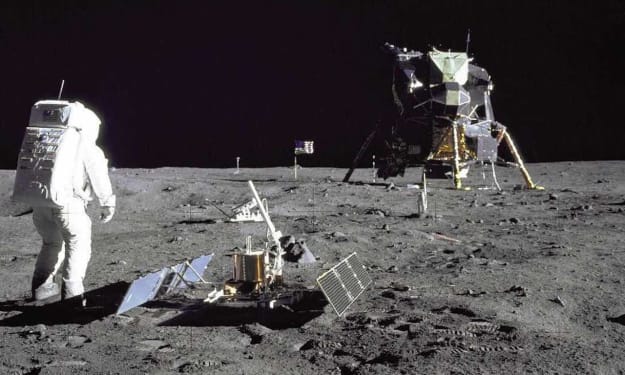
Apollo 11: The Mission That Almost Crashed the Moon Party (And the Wild Details They Never Taught You)
July 20, 1969: 650 million people watched a man step onto the moon, while 400,000 others held their breath, praying a computer glitch wouldn’t kill him live on TV. This is the story of how duct tape, a stolen sandwich, and a 26-year-old saved humanity’s greatest adventure… and why we’re still obsessed 55 years later.
By ChronoCuratorabout a year ago in History
Tach and future
The Future of Technology: How It Will Shape the World of Tomorrow Today Technology is the engine of change in a world that never sleeps. Our future is being built on today's innovations, such as quantum computing, biotechnology, artificial intelligence, and robotics. While the notion of flying automobiles and intelligent machines was once confined to science fiction, recent developments are making these fantasies increasingly attainable. As we stand at the edge of this digital revolution, it's worth exploring how technology will continue to reshape our lives—and what it means for humanity.
By Raihan Islam about a year ago in History
Supreme Court Divided Over FDA Block on Kid-Friendly Flavored Vapes. AI-Generated.
The FDA's refusal to approve flavors for vapes that are safe for children divides the Supreme Court. The U.S. A crucial case that has the potential to reshape federal regulation of flavored e-cigarettes, particularly those deemed appealing to children and adolescents, has divided the Supreme Court. The Food and Drug Administration's (FDA) decision to prevent millions of flavored vape products from entering the market is at the heart of the case. The FDA cited concerns about the products' appeal to minors and the potential for nicotine addiction. The vape companies Triton Distribution and Vapetasia have filed a lawsuit to contest the FDA's decision to deny their marketing applications. The businesses argue that the FDA shifted regulatory expectations midway through the process and failed to clearly communicate the approval standards. They claim that the FDA's sudden insistence on long-term scientific data to demonstrate that flavored e-cigarettes aid adult smokers in quitting was unexpected. The companies claim that they were never informed that this data was required. The justices appeared divided during oral arguments. Justice Sonia Sotomayor, among others, questioned whether the FDA provided businesses with sufficient clarity regarding its requirements, suggesting that due process might have been overlooked. These concerns were echoed by Justice Brett Kavanaugh, who suggested that the agency might have shifted the targetposts in a manner that was unfair to manufacturers. On the other hand, other justices appeared to be more in favor of the FDA's position. Justices Elena Kagan and Ketanji Brown Jackson stated that the agency's decisions were justified by the need to safeguard public health, particularly the health of children. The future of flavored vaping products as well as the extent of federal agencies' regulatory authority are at stake. The FDA's ability to swiftly respond to emerging threats to public health may be hindered by a ruling in their favor. Additionally, it might make room for a broader challenge to agency authority in a variety of industries. The FDA has received support from advocates for public health, citing studies indicating that the majority of young e-cigarette users prefer flavored products that frequently resemble candy or fruit. They argue that the FDA's ban would be reversed, undoing years of progress toward reducing youth tobacco use. In the meantime, vape manufacturers insist that their products are important tools for adult smokers who want to quit smoking cigarettes. They argue that the FDA's refusal to approve their applications was arbitrary, lacked a consistent scientific framework, and could encourage consumers to return to more harmful tobacco products. The final decision of the Supreme Court, which is expected later this year, could have wide-ranging repercussions, not only for the vaping industry but also for the extent to which government agencies can protect public health. The balance between innovation, regulation, and child safety is on the line as both sides wait for the verdict.
By Mahim khanabout a year ago in History