Places
How We Oversimplified the History of the Vietnam War.
One of the most contentious and misinterpreted wars in contemporary history is still the Vietnam War. However, its story has been simplified and flattened in public discourse, media representations, and textbooks over the years. This oversimplification robs the war of the complexity required for true comprehension, distorting its causes, trajectory, and outcomes. The Vietnam War was a complicated fusion of colonialism, nationalism, ideology, and civil unrest rather than merely a Cold War proxy conflict or a breakdown of American military power. We cannot learn from its lessons if we oversimplify its past.
By MD AKIF BIN KABIRabout a year ago in History
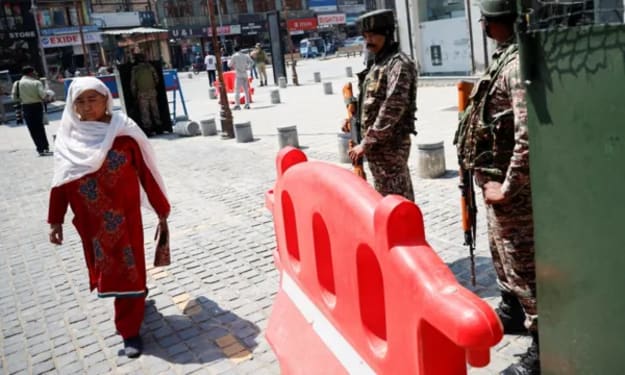
Description and history of the beauty of Kashmir, the paradise on earth
Kashmir - as if it were a dream paradise. All the beauty of the world has gathered here. All the aspects of nature have come together. This paradise is decorated with ornaments of every different taste of nature. At one time, the word Kashmir was geographically used to refer only to the vast Himalayas and the valley of the Pir Panjal Mountains. Today, Kashmir refers to a vast region that consists of the Indian-administered state of Jammu and Kashmir, the Pakistani-administered Gilgit-Baltistan and Azad Kashmir provinces, and the Chinese-administered Aksai Chin and Trans-Karakoram Tract regions. Therefore, it can be said that Kashmir has two parts. One is Indian-administered Jammu and Kashmir and the other is Pakistan-administered Azad Kashmir. Srinagar, Pahalgaon, Gulmarg, Sonmarg and Katra are the sights of tourists in Kashmir. Then we can say Dalhousie, Amritsar, Manali, Kullu, Himachal and Punjab. To visit these places, you need a vacation or leisure of more than a month. Banihal Tunnel has an amazing connection with Kashmir. This tunnel is about two and a half kilometers long. There are several avalanche zones before the tunnel. Once you cross from here, you will see Kashmir covered in amazing greenery. The forests are adorned with poplars, willow trees and green fields. The blue sky between the green trees. In the distance, rugged mountains, silent valleys. And Kashmir is rising above the mountains for miles. A romantic dream paradise. A dream kingdom. The beauty of Kashmir cannot be described in words. Clear water rivers, high snow-capped mountains, forests, and people of different cultural diversity are all unique additions here. There is the Pir Panjal mountain range on the other side, up to the Karakoram Nanga. And behind it is Kashmir. Pink, white mustard and poppy flowers shine all summer long. Every year, tourists from different parts of India and from different countries of the world flock to Kashmir to see Nishat, Shalimar, Harwan, Mughal Gardens and Chashmashahi. Kashmir has a special value for tourists due to its natural beauty and snowfall. The history of Kashmir is inextricably linked with the history of the greater Indian subcontinent and its neighboring regions (Central Asia, South Asia and East Asia). Historically, Kashmir has been called the 'Kashmir Valley'. Today, Kashmir refers to a relatively large region. The present-day Indian-controlled state of Jammu and Kashmir (which consists of Jammu, the Kashmir Valley and Ladakh), the Pakistan-controlled Azad Kashmir and Gilgit-Baltistan regions, and the Chinese-controlled Aksai Chin and Trans-Karakoram Tract regions are included in Greater Kashmir. Before the 5th century, Kashmir first became an important center of Hinduism and later Buddhism. Later, in the 9th century, Shaivism emerged in Kashmir. From the 13th to the 15th centuries, Islam spread in Kashmir and the influence of Shaivism declined. But the achievements of previous civilizations were not lost, but rather the new Islamic politics and culture largely incorporated them, resulting in the birth of Kashmiri Sufism. In 1339, Shah Mir became the first Muslim ruler of Kashmir and founded the Shah Mir dynasty. Muslim rule continued in Kashmir for the next five centuries. During this period, the Mughal emperors ruled Kashmir from 1586 to 1751 and the Afghan Durrani emperors from 1747 to 1819. In 1819, the Sikhs under the leadership of Ranjit Singh captured Kashmir. In 1846, the Sikhs were defeated by the British in the First Anglo-Sikh War. Then, under the Treaty of Amritsar, the Raja of Jammu, Gulab Singh, purchased the territory from the British. So I think if we are alive, we should visit Kashmir at least once. It is heaven on earth. If we go here, everyone will feel like we have gone to a heavenly place on earth.
By Md Razib Hossain about a year ago in History
Letters From a Locked Drawer
The Drawer No One Touched In the quiet town of Meadowridge, 16-year-old Clara Wren lived with her father in an old, creaky house full of memories. Her mother had passed away when Clara was just a baby, and the only thing left of her was an antique wooden desk in the attic. It had belonged to her mother, and on that desk sat a single drawer locked tight for as long as Clara could remember.
By Muhammad Hayatabout a year ago in History
US Urges India and Pakistan to Ease Tensions After Kashmir Incident
Washington, D.C. – The United States has called on India and Pakistan to engage in dialogue and take steps toward reducing tensions in the aftermath of a recent incident in the Kashmir region. The appeal for calm and cooperation comes as both nations face renewed diplomatic challenges following the reported loss of life in the disputed territory.
By Soumit Dharabout a year ago in History
Ctésias of Cnidus
Ctésias of Cnidus was an intriguing personality from antiquity—a Greek doctor, historian, and author who thrived during the 5th and 4th centuries BCE. Renowned for his accounts of Persia and India, Ctésias dedicated many years to the Persian court, acquiring direct insights into Eastern civilizations. Although his works have faced criticism for their inaccuracies and exaggerations, they continue to be significant for their distinctive viewpoint on the Achaemenid Empire and far-off regions.
By A Históriaabout a year ago in History
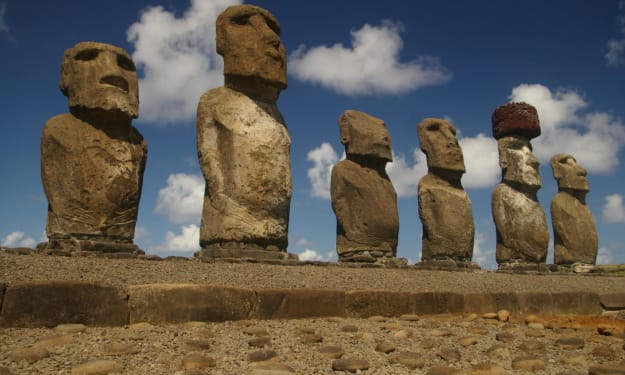
Historical Artifacts That Still Puzzle Archaeologists Today
Historical Artifacts That Still Puzzle Archaeologists Today Throughout history archaeologists have unearthed countless relics from ancient civilizations some of which have provided valuable insights into our past. However there are several artifacts that continue to defy explanation. These mysterious objects challenge conventional historical understanding and raise intriguing questions about the knowledge technology and capabilities of ancient cultures. Here are some of the most puzzling historical artifacts that remain unsolved mysteries to this day.
By Adnan Rasheedabout a year ago in History
The history about Cox's Bazar "The largest sea beach in the world"
Cox’s Bazar, a coastal town located in southeastern Bangladesh, is famous today for its unbroken 120-kilometer sandy sea beach—often claimed as the longest natural sea beach in the world. But beyond its scenic beauty and tourist appeal, Cox’s Bazar has a rich and layered history shaped by centuries of colonial influence, trade, and cultural exchange.
By Jotirmoy Sharmaabout a year ago in History
"Flight 27: Lost and Found"
The sky had been calm when Flight 908 left New York, bound for Buenos Aires. It was the kind of flight that lulled passengers into false security—soft lighting, a smooth ascent, and quiet conversations among strangers who would never speak again. At 37,000 feet, serenity held like a delicate thread.
By Hamdan Khanabout a year ago in History
Discover the World's Deepest Lake
Lake Baikal's Icy Depths- A Natural Wonder The depth of the lake is 1,642 meters -Belgium area, and this makes it the deepest lake in the world. It is also the residence of a mind-boggling 20 percent of the planet’s fresh water, and it holds the world's greatest stock of biodiversity, including untold species that can be found nowhere else on the face of the earth. Amid the breathtaking views that take your breath away, Twisties tours offer a sensational encounter with the unbridled magnificence of one of the planet's last remaining untouched ecosystems.
By Rohitha Lankaabout a year ago in History
The Calgary General Hospital Implosion:
When I think of a demolition project, I think of new beginnings. After all, my work shows me all kinds of people in all kinds of situations: people who are developing their homes to welcome a new family member or care for an aging member of family, or empty nesters looking to refresh their home into what they’d always hoped for. Sometimes it’s demolishing one decrepit building in favor of building a space that can house several families.
By Autumn Stewabout a year ago in History
The Last Message of Love. AI-Generated.
❤️ **The Last Message of Love** His name was Emran — a simple, ordinary boy from Pabna. He loved reading books, listening to music, and watching the sky for hours. And her name was Tisha — completely opposite to him. Full of life, always smiling, and could talk for hours about anything.
By MD Abdur Razzakabout a year ago in History