Places
AI in Cybersecurity: A game changer or a double-edged sword?
Artificial intelligence has utterly transformed cybersecurity in diverse manners, both remarkable and multifold. Its skills—including scouring immense datasets, searching for anomalies and systematising retaliation—have propelled protective tactics to unprecedented heights.
By Abjol Hussain Laskarabout a year ago in History
About A Mangrove forest
The Sundarbans: A Majestic Mangrove Wilderness Nestled in the delta of the Ganges, Brahmaputra, and Meghna rivers on the Bay of Bengal, the Sundarbans stand as the world's largest single block of tidal halophytic mangrove forest. Spanning across Bangladesh and India, this UNESCO World Heritage site is a breathtaking tapestry of interconnected waterways, mudflats, and dense forests, teeming with unparalleled biodiversity. The name "Sundarbans" literally translates to "beautiful forest" in Bengali, a fitting description for this enchanting and ecologically significant region.
By M.A.Rahmanabout a year ago in History
The title of the article in English is: The Power of Words: Stories of How Our Language Shapes Our World.
The Power of Words: Stories of How Ou Language Shapes Our World Hey friend, have you ever really thought about the amazing power our words hold? They're not just sounds that come out of our mouths or letters we scribble on paper or a screen. To me, words are more like tiny seeds that we plant in the minds and hearts of others. They can grow into towering trees or troublesome weeds, depending on the kind of seed we choose.
By Omar Mohammed about a year ago in History
The Sundarbans: A Proud Heritage of Bengal
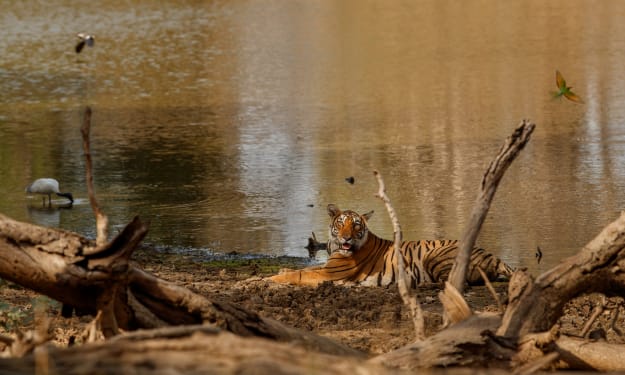
The sundarban is a her that fills the people of Bengal with pride. Nature has gifted us with forest paradise so magnificent that its stories can be told to the entire world. Recognized as a UNESCO World Heritage Site, the Sundarbans is the largest mangrove forest in the world, situated at the confluence of the Ganges and Brahmaputra rivers. What doesn’t this forest have? It is the home of the world-famous Royal Bengal Tiger. In addition, there are spotted deer, crocodiles, venomous snakes, turtles, and countless other species. The forest is also rich with diverse trees like Sundari, Garan, and Keora. People live in this heritage-rich jungle with their families. They earn their livelihood by collecting honey, cutting wood, and fishing. While doing so, they face numerous dangers—fears of being taken by tigers while collecting honey or wood, fear of snake bites, or attacks by crocodiles while fishing in the rivers. Yet, people continue to live there—they must. And with them, reside their deities \[1]. There are various theories about the human settlement in the Sundarbans. Many scholars believe that people started living there between the 8th and 10th centuries. In the medieval period, human habitation diminished due to various reasons. Some believe it was due to attacks by the Portuguese and the Arakanese. Other accounts exist as well—for example, a Sufi saint is said to have arrived in the 12th century and initiated agricultural activities. Some scholars suggest that woodcutters, fishermen, and farmers used to frequent the rivers of the Sundarbans for their livelihood. Moreover, during the 17th and 18th centuries, bandits also raided this region. While there is disagreement about exactly when permanent settlements began, most agree that they began toward the end of the 19th century. At that time, British Collector General Claude Russell divided the forest into two parts—one for forestry and the other allocated for agriculture and land leasing. From then on, people from nearby regions like Odisha, Bihar, Jharkhand, and Chhattisgarh began settling here for livelihood and land. After their arrival, deforestation increased, especially during the time of Tillman Henckell, who was then the Magistrate of Jessore district \[2]. The Sundarbans is a perilous place for humans. The residents constantly face danger, but over time, they have also discovered ways to survive. Some of these methods are spiritual, others practical. For instance, families fear crocodiles, so the women observe rituals to appease the crocodile deity. When honey collectors, or *mouals*, go deep into the forest, they take along *bauls* (tiger charmers), believed to be experts at handling tigers through chants and rituals. Bauls must also follow strict rules—since Friday is a sacred day for Muslims, they are not allowed to enter the forest on that day; they must not eat pork or crab; they cannot be involved in usury, etc. These rules mainly apply to Muslims. The life of a baul is extremely difficult and dangerous \[2, 3]. One way to understand the rituals, customs, lifestyle, beliefs, and socio-economic conditions of Sundarbans residents is to visit them and conduct interviews. Another way is to study their folk manuscripts (*puthis*), which often narrate tales of their local deities. The Sundarbans is home to both Hindus and Muslims. Among the Muslims, there are communities like Sheikh, Syed, and Pathan. Among Hindus, one finds barbers, fishermen, Chandals, washermen, yogis, etc.—most of whom belong to the Shudra caste. These people depend on the forest for their livelihood and must struggle against nature to survive. As a result, they rely heavily on religious beliefs and their deities to overcome adversity. Among the most revered deities are *Dakshin Rai* and *Bonbibi*. A well-written essay on the origin of Bonbibi can be found here. Dakshin Rai is believed to be the tiger deity. Residents of the Sundarbans worship him, and various mythological tales surround his origin. These stories have been passed down orally. Some believe he is the son of Lord Shiva. Others believe that after Lord Ganesha’s head was severed, it flew south and became the origin of this deity. In the manuscript *Bonbibir Johurnama* by the late Munshi Mohammad Khater, Dakshin Rai is also described as a forest demon or evil spirit. On the other hand, *Bonbibi* is another deity believed to protect everyone in the jungle. The most remarkable aspect is that both Hindu and Muslim communities believe in her divine power. However, the religious ceremonies honoring Bonbibi vary between the two religions. Muslims refer to the deity as Bonbibi, while Hindus call her Bondébi and worship her as a mother goddess. In Sharad Mitra’s essay *On an accumulation droll from eastern Bengal and on a muslimani legend about the Sylvan Saint Banabibi and Tiger deity Dakshina Roy*, it is mentioned that any Muslim girl can be chosen as Bonbibi and entrusted with a red flag. It’s important to note that such belief in a common, imaginary deity across two religious groups is not trivial. Deep philosophical thinking lies behind it. In a place where survival itself is a struggle and merely staying alive is paramount, depending on a mythical figure like Bonbibi is seen as essential—with the hope that she will protect them from any danger \[4]. Even though we know much about the Sundarbans as a region, how much do we truly know about its people? Their thoughts and beliefs differ from those in other parts of Bangladesh and are quite fascinating. Their likes and dislikes may also be different. There is significant scope for research on these people who live so close to nature. These individuals, who spend their lives battling constant threats, present a stark contrast to the lives of modern, urbanized humans. Research can be conducted on this contrast and on how important that difference is. **References:** \[1] Karmakar, S. (2018). *Ethnic identity and forest preservation: A sociological enquiry on Sundarbans, West Bengal*, *Journal of Research in Humanities and Social Science*, Volume 6(1), page: 20-25 \[2] Jalais, A. (2010). *Forest of Tigers: People, Politics & Environment in the Sundarbans* (New Delhi, India: Routledge) \[3] Hunter, W. W. (1973). *A Statistical Account of Bengal. Vol. I. District of the 24 Parganas and Sundarbans* \[4] Sarkar, S. C. (2010). *The Sundarbans: Folk Deities, Monsters and Mortals* (New Delhi, India: Social Science Press and Orient Blackswan) ---
By Riham Rahman about a year ago in History
At 4,800 Years Old the World’s Oldest Living Tree Predates the Egyptian Pyramids
At 4,800 Years Old the World’s Oldest Living Tree Predates the Egyptian Pyramids Hidden high in the rugged White Mountains of California stands a living being older than recorded human history. A bristlecone pine tree known to scientists simply as Methuselah is believed to be more than 4,800 years old making it the world’s oldest known living tree. Remarkably this ancient conifer took root long before the construction of the Great Pyramid of Giza and has silently witnessed the rise and fall of civilizations.
By Adnan Rasheedabout a year ago in History
Mike Waltz seen in photos using Signal app at White House after group chat scandal
Mike Waltz Spotted Using Signal App at White House After Group Chat Leak Sparks Controversy Congressman Mike Waltz was recently photographed using the encrypted messaging app Signal during a visit to the White House, sparking new conversations about digital privacy and communication security among lawmakers. The sighting comes in the wake of a recent group chat scandal involving leaked messages from a private conversation among Republican members of Congress. The controversy has heightened awareness of the risks of unsecured communication, pushing several lawmakers to reevaluate how they share sensitive information.
By GLOBAL NEWSabout a year ago in History
The Great Pyramid of Giza: Where Are All Its Architectural Documents?
The Puzzle of the Ages The Great Pyramid of Giza, standing majestically on the edge of the Egyptian desert, has captured the imagination of humanity for millennia. It is the last of the Seven Wonders of the Ancient World still standing, its stone blocks echoing with the whispers of a forgotten civilization. Despite its grandeur, one key piece of the puzzle has always been missing: the architectural documents that explain how it was built.
By The Secret History Of The Worldabout a year ago in History
Turkish Cypriots are part of the free Western world
In a recent report released by Freedom House in 2020, the Turkish Cypriot side of Cyprus has been acknowledged for its exceptional human rights standards, scoring 81 out of 100 and earning its place among the free world. The report, a comprehensive analysis of human rights conditions across the globe, highlighted the significant strides made by the Turkish Cypriot community in upholding fundamental freedoms and democratic principles.
By The Spotlightabout a year ago in History