Places
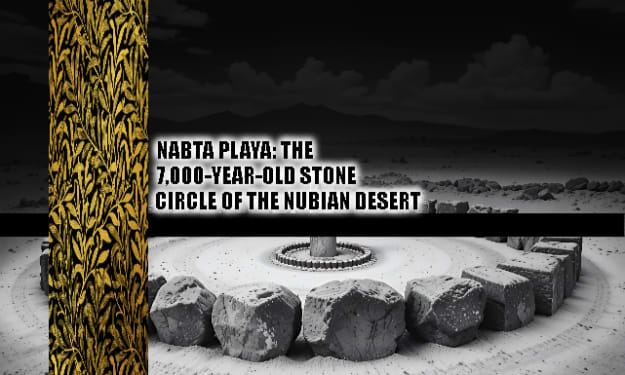
⛏️Nabta Playa: The 7,000-Year-Old Stone Circle of the Nubian Desert
⛏️Nabta Playa: The 7,000-Year-Old Stone Circle of the Nubian Desert Discovery and Location Nabta Playa lies hidden deep within the Nubian Desert, an arid and inhospitable region in southern Egypt, close to the border with Sudan. This vast desert landscape today is characterized by harsh winds, blazing sun, and seemingly endless sand dunes, but approximately 7,000 to 8,000 years ago, this area was dramatically different.
By History Seekerabout a year ago in History
THE HISTORY OF OUR REGULAR SPICE: NUTMEG
NUTMEG: A unique spice with a lush history. INTRODUCTION: The nutmeg tree (Myristica fragrans) is a tall, evergreen species originally from Southeast Asia. Prior to the late 1700s, it was found only in one part of the world—a small cluster of northeast Indonesian islands in the Banda Sea, hair of the Moluccas—historically referred to as the Spice Islands. Characterized by a dense canopy of leathery, dark green ovate leaves, the tree also bears small, bell-shaped yellow blossoms and distinctive pale-yellow, pear-like fruits. Its fruit is pale yellow and shaped like a pear, enclosed in a fleshy outer covering When fully ripe, the outer layer splits open along a natural seam, revealing a glossy, purple-brown seed roughly 2–3 cm long and 2 cm wide. Surrounding this seed is a vibrant red, lacy membrane known as the aril. From this single fruit come two different spices: nutmeg, which is made by drying the seed, and mace, which is derived from the aril.
By Shawon Hasanabout a year ago in History
Andalusia: The Forgotten Beacon of Civilization
The Forgotten Glory of Andalusia: A Legacy of Civilization, Now Overshadowed It is a historical fact that when the streets of Europe were overflowing with filth and plagued by disease—when people in many European cities were compelled to wear high wooden clogs just to avoid stepping in their own waste—Andalusia stood as a beacon of cleanliness, culture, and unparalleled development. In that golden era of Islamic Spain, not only did every Muslim household boast a private bath, but a well-structured sewage and drainage system also existed—an advanced infrastructure that was centuries ahead of its time and of anything found in Europe. Andalusia (Al-Andalus), under Muslim rule, was not merely a center of learning and arts; it was a symbol of a comprehensive civilizational and social transformation. While the rest of Europe was still entrenched in the Dark Ages—grappling with ignorance, superstition, epidemics, and backwardness—cities like Córdoba, Granada, and Seville shone brightly as centers of enlightenment, refinement, and scientific progress. The legacy of Al-Andalus is not limited to its majestic palaces or poetic gardens; it includes its libraries, universities, public baths, hospitals, and intricate urban planning. The city of Córdoba alone, in the 10th century, had over 70 libraries and 300 public baths, while most of Europe at that time had barely any public sanitation infrastructure. Streets were lit at night, water was supplied through aqueducts, and education was freely available to all segments of society—regardless of class, religion, or gender. Muslim Spain welcomed scholars of all backgrounds, promoting a culture of tolerance, dialogue, and intellectual curiosity. The knowledge preserved and produced there—ranging from medicine to astronomy, from architecture to philosophy—became the foundation upon which modern European renaissance was later built. It is not an exaggeration to say that the seeds of today’s Western progress were first planted in the soil of Al-Andalus. But today? Those very nations, which once lived in darkness and filth, now consider themselves the torchbearers of modern civilization. They now attempt to teach us the very principles of hygiene, discipline, urban planning, and civil society that we once taught them. This twist of history is not only ironic but deeply thought-provoking. It prompts us to reflect: How did a civilization that once led the world in every sphere of life fall so far behind? The answer lies not just in historical invasions or political failures. The real tragedy began when we forgot our own legacy. We ceased valuing knowledge, stopped nurturing critical thought, and turned away from our commitment to justice, excellence, and innovation. When a nation loses connection with its glorious past, it not only loses direction but also dignity. It is then forced to look up to others who were once its students. This loss of historical consciousness is more than just forgetfulness—it is a form of collective amnesia. Today’s generation often views Western achievements as independent developments, disconnected from the contributions of their ancestors. This ignorance leads to a dangerous inferiority complex, where we assume others are inherently superior and we are forever to play catch-up. However, history does not have to be a burden—it can be a guiding light. The example of Al-Andalus can inspire a revival. The Muslims of Spain were not superhumans; they were ordinary people with extraordinary commitment to values: the pursuit of knowledge, societal reform, cleanliness, justice, and the welfare of all. Their mosques were not just places of prayer but centers of education and public service. Their homes were not just private shelters but embodiments of beauty, order, and hygiene. What made their civilization great was not just what they built, but what they believed in. They believed in progress not for the sake of competition, but for the service of humanity. Their advancements in medicine were not designed to dominate but to heal. Their architecture was not built to intimidate but to inspire. Their governance was not aimed at control, but at delivering justice to the poor, the weak, and even the non-Muslim subjects under their rule. If we truly wish to rise again, we must reconnect with the values that made our ancestors worthy of admiration. We must learn to value knowledge not merely as a tool for earning a livelihood, but as a sacred trust for the betterment of society. We must take pride in cleanliness not just as a religious duty but as a public responsibility. We must understand that civilization is not about skyscrapers and machines alone, but about manners, ethics, and respect for all forms of life. Let us not lament the loss of Al-Andalus as a tale of the past, but let us take it as a call to rebuild. The rise of others is not a threat—it is a reminder of what is possible. But if we continue to forget our own history, we will forever be students of those who once learned from us. The lesson of Al-Andalus is clear: greatness is not inherited—it is earned, through consistent effort, vision, and unity. And those who forget their past are destined to live at the mercy of others’ futures.
By Ikram Ullahabout a year ago in History
Echoes of a Broken Lyre
In the expansive and colorful landscape of 19th-century Brazilian literature, few voices echo with the same haunting beauty and emotional depth as that of Luís Nicolau Fagundes Varela. A poet of contrasts—both mystical and melancholic, patriotic and reflective—Varela's short yet brilliant career represented a pivotal moment in Brazil’s Romantic movement. Frequently eclipsed by his contemporaries such as Castro Alves and Álvares de Azevedo, Varela remains a profoundly human figure, whose poetry was influenced as much by personal sorrow as by the idealistic zeal of his era.
By A Históriaabout a year ago in History
"Trump Praises West Point Cadets, Takes Credit for U.S. Military Might in Commencement Address."
West Point, New York – Former President Donald J. Trump delivered the much-anticipated commencement address at the United States Military Academy at West Point. Trump lauded the graduating cadets and his own administration's record on military strength and defense spending at the same time.
By Daily Life about a year ago in History
The Unseen World of Abandoned Places: A Journey Through Time
** Have you ever wondered what happens to places when they're left behind? The silence, the stillness, and the secrets they keep are a mystery to many. Abandoned places are a window into the past, a glimpse of what once was, and a reminder of the transience of time. In this article, we'll embark on a journey to explore the unseen world of abandoned places, and uncover the stories they tell. *The Allure of Abandoned Places* There's something hauntingly beautiful about abandoned places. The crumbling structures, the overgrown gardens, and the eerie silence all seem to whisper stories of the past. These places are a testament to the passage of time, a reminder that everything that rises will eventually fall. Yet, despite their neglect and decay, abandoned places hold a certain allure, a mystique that draws us in. *A Window into the Past* Abandoned places are a window into the past, a glimpse of what life was like in a bygone era. They tell stories of people, places, and events that shaped the world we live in today. From abandoned factories to ghost towns, each place has its own unique history and significance. By exploring these places, we can gain a deeper understanding of the past and its relevance to our present. *The Psychology of Abandonment* Abandonment is a complex phenomenon that can be triggered by various factors, including economic decline, natural disasters, or simply a change in societal values. When a place is abandoned, it's not just the physical structure that's left behind; it's also the memories, the emotions, and the stories that were once associated with it. The psychology of abandonment is a fascinating topic that reveals the intricate relationships between people, places, and things. *Exploring Abandoned Places* Exploring abandoned places can be a thrilling experience, but it's not without its risks. From structural hazards to environmental concerns, there are many factors to consider before venturing into an abandoned place. However, for those who are willing to take the risk, the rewards can be immense. Whether it's the thrill of discovery, the rush of adrenaline, or the sense of adventure, exploring abandoned places can be a truly unforgettable experience. *The Art of Urban Exploration* Urban exploration, or urbex, is a growing trend that involves exploring abandoned places and capturing their beauty through photography and videography. Urban explorers are drawn to the aesthetic appeal of abandoned places, the textures, the colors, and the compositions that can be found in these forgotten spaces. Through their art, urban explorers can reveal the beauty in decay, the elegance in neglect, and the stories that lie hidden in plain sight. *Preserving the Past* As we explore abandoned places, we're often faced with the question of preservation. Should we preserve the past, or let it fade away? The answer is complex, and it depends on the context and significance of the place. Some abandoned places are historic landmarks that deserve to be preserved, while others are mere relics of a bygone era that can be left to nature. The key is to strike a balance between preservation and progress, to respect the past while embracing the future. *Conclusion* Abandoned places are a mysterious and fascinating world that holds many secrets and stories. By exploring these places, we can gain a deeper understanding of the past, appreciate the beauty in decay, and uncover the hidden narratives that lie within. Whether you're an urban explorer, a historian, or simply a curious individual, abandoned places have something to offer. So, the next time you come across an abandoned place, take a moment to pause, reflect, and appreciate the stories it tells.
By Umair Khanabout a year ago in History
Casimiro de Abreu
Casimiro José Marques de Abreu (1839–1860) was a brilliant yet tragically brief figure in Brazilian literature. A poet of deep sensitivity, he emerged as one of the most iconic voices of Brazil’s Ultra-Romantic movement, leaving a legacy of melancholic beauty despite his premature death at the age of 21. His poetry, marked by nostalgia, youthful yearning, and an almost childlike innocence, continues to resonate with readers, especially through his renowned work As Primaveras (1859) and the timeless poem Meus Oito Anos ("My Eight Years").
By A Históriaabout a year ago in History
The Creation of the World: A Bible Story of God’s Power and Love. AI-Generated.
In the very beginning, before time as we know it began, there was nothing but God—eternal, infinite, and full of love. The story of the Creation of the World, found in the Book of Genesis (1:1-2:3), is the foundation of the Bible, revealing how God brought everything into existence with His mighty word. This sacred account, believed to have occurred thousands of years ago, tells of the origins of the heavens, the earth, and all living things, showcasing God’s power, creativity, and purpose for humanity. Shared across generations, this story continues to inspire awe and gratitude for the world we live in today.
By David Andrewsabout a year ago in History
Russia: The Unconquered Giant of the Earth
Russia: A Colossal Land of Mysteries, Power, and Resilience Russia is so vast that it can accommodate two entire United States or two Chinas within its borders. It could fit five Indias or an astonishing 21 Pakistans. In terms of sheer geographical size, Russia is like an entire planet on its own — in fact, it spans an area nearly equivalent to that of the dwarf planet Pluto. This enormous country stretches across 11 different time zones — more than any other country on Earth. That means when it's sunrise in one part of Russia, it could be night in another. It shares its borders with 14 different countries, making it one of the most geographically connected nations in the world. Russia is home to the world’s longest railway line — the famous Trans-Siberian Railway, which stretches a staggering 9,200 kilometers from Moscow to Vladivostok. If someone were to board a train and travel this entire route non-stop, it would take about 153 hours — over six days — to reach the final station. The scale and engineering of this railway are a testament to Russian ambition and endurance. Just within the capital city of Moscow, about 9 million people use the metro railway system daily, making it one of the busiest and most efficient subway systems in the world. In terms of population, Russia is home to around 150 million people. Interestingly, the female population exceeds the male population by approximately 10 million. Despite being such a large country, Russia boasts an impressive literacy rate of nearly 100%, reflecting a strong emphasis on education and intellectual development. Russia is also a global energy giant. It holds the largest reserves of natural gas in the world. In fact, about 40% of Europe’s gas supply comes from Russian exports. This energy dependency gives Russia substantial geopolitical influence, especially in the European continent. When it comes to military might, Russia is among the most powerful nations on Earth. It possesses approximately 8,400 nuclear weapons, a number that far surpasses many other nuclear powers. For comparison, Pakistan is believed to have around 165 nuclear warheads. In 2017, Russia allocated $66 billion to its defense budget, emphasizing its strategic focus on maintaining military strength. One of the key reasons Russia has never been fully conquered by any foreign power is its harsh, freezing climate and vast terrain. According to international defense analysts, to fully occupy and control Russia, an invading force would require more than 12 million soldiers — a nearly impossible logistical and military feat. The freezing winters have historically served as a natural defense. Napoleon’s army in 1812 and Hitler’s forces in 1941 both crumbled under the brutal Russian winter during their invasions. Another intriguing aspect of Russia is the presence of around 15 secret cities that have been kept out of public knowledge for decades. These hidden cities are often linked to sensitive military or scientific research, and very few people know what really happens there — or even who lives in them. The secrecy around these cities continues to spark curiosity and conspiracy theories around the world. Extra Note: To this day, no one has been able to completely conquer Russia. Even modern military strategists agree that occupying Russia entirely is nearly impossible without an extraordinarily large and well-coordinated land army. However, there is one notable exception from history — the Mongols. They are credited with having conquered a large part of Russia while riding on horseback, showcasing their unmatched mobility and fearsome tactics. In every sense, Russia is a land of extremes. From bone-chilling winters to vast stretches of wilderness, from unmatched energy resources to immense military strength, from secret cities to a proud, resilient population — Russia remains one of the most fascinating and complex countries on Earth. Whether you view it through the lens of geopolitics, history, natural resources, or cultural identity, Russia continues to stand as a titan among nations — unconquered, enigmatic, and ever-powerful.
By Ikram Ullahabout a year ago in History