Places
Artifacts and Finds on Oak Island: Spanish Gold, Templar Clues, and Echoes From 700 Years Ago
The dirt on Oak Island doesn’t just cover soil and stone. It covers secrets. For more than two centuries, men and machines have clawed into this cursed ground, chasing whispers of treasure and truth. And while no vault has yet been fully opened, the earth has spoken in fragments.
By Rukka Novaabout a year ago in History
The unique skull of an extinct, enormous "thunderbird" has been discovered by archaeologists.
The Australian Outback once trembled beneath a ball. He was bigger than one person and five times heavier than Cassobary. For over a century, scientists have known these giants (called dromaeosaurus) only from scattered and often cut bones. The crushed skull that appeared in 1913 led to wild assumptions about what Zenonis Newton, the last of the string, looked, fed, and squealed. Now, the newly excavated skull bones have been transformed by blowing one from the dry bed of Lake Carabona.
By Francis Damiabout a year ago in History
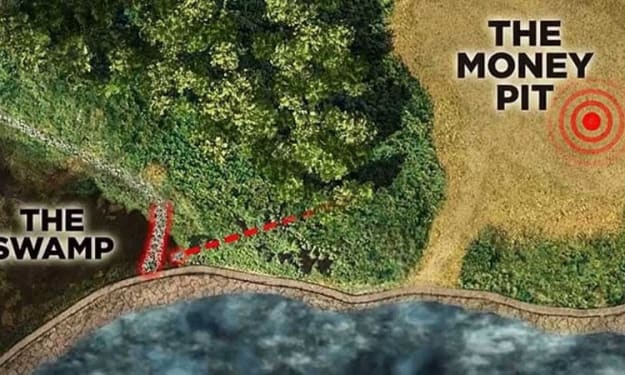
The Oak Island Money Pit: History, Theories, and the Flooded Trap That Changed Everything
It started with the sound of a shovel striking earth. What followed would become the longest-running treasure hunt in modern history — filled with mystery, death, obsession, and one maddening, elusive promise: that somewhere beneath Oak Island, something extraordinary lies buried.
By Rukka Novaabout a year ago in History
📚 The Library of Ashurbanipal: The World’s First Great Archive of Knowledge
📚 The Library of Ashurbanipal: The World’s First Great Archive of Knowledge 📜Part I: Discovery Amid Ruins In the mid-1800s, long before archaeology had matured into the scientific discipline we know today, the deserts of northern Iraq were largely unexplored by Europeans. One such explorer was Austen Henry Layard, a British adventurer with a deep fascination for the biblical cities of Nineveh and Babylon. In 1849, while excavating near the village of Kuyunjik, Layard uncovered massive ruins buried under mounds of earth. These ruins belonged to Nineveh, the ancient capital of the Neo-Assyrian Empire — a city that had once been one of the most powerful urban centers in the ancient world.
By History Seekerabout a year ago in History
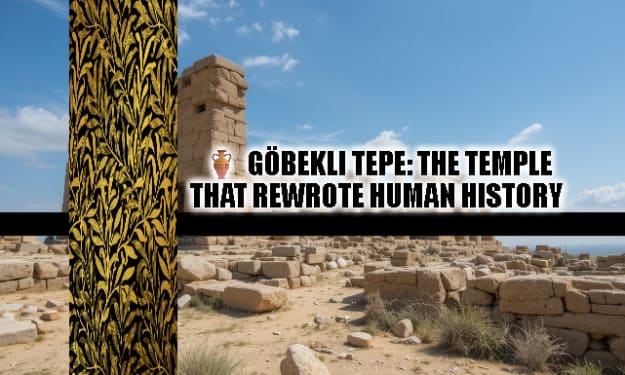
🏺 Göbekli Tepe: The Temple That Rewrote Human History
🏺 Göbekli Tepe: The Temple That Rewrote Human History I. Discovery and Location Göbekli Tepe, which translates from Turkish as “Potbelly Hill,” sits quietly in the dry, rolling hills of southeastern Turkey, near the modern city of Şanlıurfa. Though it had long appeared on maps as a minor mound — a common sight in the region — its true significance wasn’t understood until the mid-1990s. In fact, for decades, local farmers and researchers assumed the mound was a simple Bronze Age burial site or a ruined Byzantine outpost. But in 1994, the German archaeologist Klaus Schmidt, who had worked at nearby Neolithic sites, re-examined the mound and recognized that the flint tools and carved stones scattered across the surface pointed to something far older and more significant.
By History Seekerabout a year ago in History