Places
The Foundations of Japanese Civilization
Japan, an island nation situated in East Asia, boasts one of the world's oldest civilizations. Its distinctive influences on global culture, encompassing areas such as architecture, religion, and politics, have endured throughout history. This article explores Japan's ancient past, charting its evolution from prehistoric periods to the beginning of the medieval age.
By A História2 years ago in History
Join the Shadows: Echoes of the Forgotten
We have the echoes of living left to us. They're parts of us; these reverberations often slumber in our memory's depths. This is the journey to history. And while we read these echoes, perhaps some time, somewhere, will be devoted to all that we remember and everything we will leave behind. In this view, echoes become untold stories which mold us; it is the chance of self-reclamation, according to her. This is how darkness becomes history that we can endure, and embrace. So come with us on this journey into the past. Key Takeaways Days spent exploring the past reveal layers of identity. (You know how so many things we forget are just hiding in the dark corners of our existence?) And so it becomes, rediscovering the roots, healing the pasts. So shadows represent trauma and also the chance to grow as well. Exploring dark memories is an invitation for each of us to be introspective. Emotional resonance links our lived experiences. The Importance of Memory in Our Life Memory is fundamental to our selves, constructing our identities from the experiences of life. It directs what we do; how we behave; the choices we make. This illustrates how memory is not just retrospective but looks ahead, too. How Memory Singlehandedly Defines the Self Memory is the basis of our personal history, linking vital events to our identity. Psychological studies illustrate how the lens of memories shapes our tendency for behavior, interactions, and skills. For example, remembering previous experiences can bring new insights into, and predictions for, those of the future. Each memory is a part of the intricate portrait of who we are. X-ray sign of the close link of memory with identity. There are different kinds of lost echoes. This makes pastel memory very important. They might be dim, but they do affect us today." They often surface when we think back on things to help us make choices. These memories help us in the understanding of their persistence in our feelings. It provides insight into ourselves that heals and grows. Family and transcendence in struggle and suffering But personal narratives are the best tools we have to confront the dark sides of ourselves. People discover their concealed history through stories." It allows them to reflect on their experiences. These stories can be highly cathartic to tell. It is a way to carry trauma and adversity. Each tale reveals the textured memories that inform us. The Shadows We All Carry There are shadows of memory on every person that reflect the trials and triumphs of their life. These shadows hurt us but also show us how resilient we are. By sharing our stories, we make the darkness less lonely. This sense of connection with others who have experienced similar things is crucial. It builds community and a sense of support. Uncovering Untold Stories from the Past Writers like Maya Angelou and James Baldwin taught us the importance of discussing untold narratives. Their works call on readers to attend to their own shadows of memory. Helps lift wounds toward healing and understanding. By confronting the darkness in their stories, the writers transform pain into a narrative of strength. This approach can be highly effective for healing and growth. When the Darkness Becomes a Memory: Echoes of the Forgotten The dark memories exploration proves that there is a world of experiences; probably feelings and thoughts; without being transformed into the co-breathing. We find those that become memories when we look back. These are not just pass-through memories; they linger, shaping how we think, act, and feel. Exploring the History Behind the Story It may reveal hidden truths in the den of our dark memories. With each layer we discover, we are forced to contemplate. It helps us improve our understanding of what we do and feel. Whether they are dark or not can result in a state of sadness, regret, or perhaps happiness. The revising of these memories allows us to "process with emotions we've repressed. This is an important step in the process of healing. Dark Memories: Influence of the Past on Present Research has shown that unresolved memories have mental effects. Shadows from the past can affect how we look at and relate to other people. These memories help in finding peace and growing. All things considered, we really draw strength from our past. An analysis of our darker memories really helps us know ourselves better. That kind of knowledge allows us, as we live, to be more aware of the forces forming us. The Journey into the Shadows Navigating through our feelings can expose what has remained buried. These experiences lurk below the surface of our daily lives. But acknowledging these feelings helps us identify hope, and strengthens us during difficult times. Beneath What We Walk Through Each Day Everybody fights battles we cannot see that define how we view the world. Contemplation is a process of looking past our dark sides and brings out some truths about our past. If we are not dealt with them they will imprison us. There is healing in exploring these shadows. Finding Light in the Darkness Some of these include mindfulness, meditation, and reflection, in which we heal emotional pain. However, through lessons from some wise teachers including Thich Nhat Hanh and Pema Chödrön, we will regain hope once more. This helps guide us through harsh moments in life and rebuild our resilience. Memories are the key to our lives and reflect back. It informs our identities and allows us to endure both joyous and sorrowful moments. It may reveal much about us — and why we heard and/or remembered specific events. Why We Choose to Remember We see those moments in the past clearly, like we know exactly what went on. It helps us learn from our past because of reflection. When we step back into the darkness, we become a stronger version of ourselves, transformed and almost precocious. Therapy demonstrates how memories empower us to become who we are today. It shows the way we heal and grow, and how there is always some form of balance between the light and shadow in life. Building Power: The Role of Time in Memory The relationship between time and memory is one riddled with complexity and profundity. As we live, our memories change, an aftereffect of how our perspectives do. Our experiences are richer, and their meanings are variable as we grow and learn. Time Is a Trickster That Illusions Us Like a sculptor working with clay, time gives form to our memories. We don’t remember those early memories clearly, or in any important way, but they fade over time. Research shows memories are malleable in a way that shapes our identity. An important moment can play out differently, reminding us that perspectives change. Memories as Living Entities Just like all living things, memories grow, and this understanding is what helps us work through them. They are stories that intermingle with our lives today. With every consideration, they shift and become richer and veiled over. The work of Elizabeth Loftus illustrates how memory changes in the presence of new experiences. This suggests our past is a dialogue with our present, a knotting together of time and memory. The exploration of the past allows an individual to know him better. Looking at memories is a healing process. He can reconstruct himself by facing these locked-up moments in time. Tomorrow will uncover deep feelings and awareness from looking back into one's life. Healing through memory brings the past to the present. It shapes who we are today. "These concepts behind some forms of narrative therapy are helping us tell our stories. It reconciles our past and liberates our emotions. It is closure and healing. Using Echoes of the Forgotten to Tell New Stories We can become different people by going back and retelling old stories. We can write new stories about our futures. What defines us is what we've overcome, but the ability to tell new stories allows us to be more than a victim of circumstance. It is about taking on our heritage while acquiring new power to make a move ahead, converting old whispers into tokens of hope and endurance. Literature is an ideal platform to investigate human experience, especially the question of how memory and trauma function. Dozens of authors have responded to the challenge of dark literature. They weave tales of illumination for personal as well as collective history that unveil the dark recesses of the past. Books Which Take Inspiration from Dark Memories Books like these find their inspiration from dark memories. These books both pull the readers in with their story lines and also challenge them to question what constitutes a memory. A few of these include: Beloved by Toni Morrison – A fantastic representation of slavery's scars and numinous power of memory The Bell Jar by Sylvia Plath – An insightful take into defeatism and battle for identity. Things They Carried by Tim O'Brien — Part fiction, part autobiography, it addresses the weight and guilt of war. Writers Who Shine a Light in the Darkness Some writers write to heal, or to make sense. Many of their works explore literary darkness. That forces readers to confront their own dark corners. This literary collection demonstrates how stories can mirror our world and reveal truths about it. They offer insights into memory and trauma. Visually The Art In Shadows And Filmmaking Visual storytelling can be a compelling way of exploring darkness and memory. performers use it to tell poignant stories that resonate deeply with us. Edvard Munch and Ingmar Bergman are just two examples of how they plunge into human feelings and draw us into their narratives. Impactful Literature that Represents the Underlying Theme Many works demonstrate the bond between art and darkness in deep emotional journeys. Munch's "The Scream" reveals our darkest fears, Bergman's "The Seventh Seal" confronts us with mortality. These elements are crucial to how we comprehend our woes, which makes them vital to ever this visual storytelling. Revisiting the Context of Visual Narrative Visual stories teach lessons through deep feelings, and this is how we learn about our own shadows. In art and films, we confront our memories and the bleakest chapters of life. This kind of storytelling not only captures our attention but also gives us an opportunity to get in touch with the emotions of others. As we work through these stories, we also consider our own pasts. It brings attention to the need for remembrance. Community and Shared Memories Experiences we share that help us build a strong community to thrive. These shared experiences are the building blocks of community. They forge a common history of hardship and triumph. The past unites people. It heals and grows them. Stories create a sort of connection; whenever we tell our story, we form a joint heart. Close The Bonds We Build Through Shared Experiences Deep connections are built on shared experiences. Every time we share our stories, we contribute to a larger story of collective memory. This helps other people experience a sense of connectedness and understanding. It's about being part of a community: Feeling like you belong. Being open and vulnerable. Helping one another in difficult moments. How to Encourage Dialogue About the Past Talking about community memories highlights our own common struggles. Reframing these discussions is essential to discover the important stories. Some ideas for how to initiate these conversations include: Hosting storytelling events. Creating support groups to talk about darkness. Connecting more people using social media. Forgotten Echoes: The Psychological Facet Psychology of the memory teaches us lessons about the forgotten echoes, especially those in relation to trauma. That corrective lens is as formidable as a trauma itself because traumas leave lasting marks on our minds. This has the potential to disrupt our mental health. To understand why, we need to contemplate how our brains store these memories. Understanding Sleep and Trauma Memory If something is traumatic, it can be difficult to remember what happened. Knowing this, teachers like Bessel van der Kolk demonstrate how trauma impacts our minds. Trauma storage is something very much more different than where things are placed, recorded, saved, and stored. This can lead to intense feelings and make handling memories difficult. It's really important to face these challenges head-on. EMDR and narrative therapy are the therapies that help people approach their dark memories so that they can be healed, rebuilt, and become strong. Ways to Keep Your Memories and Go Exploring It's walking down the lane of memories. Neither does it open up insights that are required to grow. Techniques such as journaling or guided imagery or memory mapping do work. They help to put us in dialogue with memories and think about them. Methods of Journal, Thoughts & Reflection Journaling makes for a powerful memory engagement. It allows us to relive important moments in our lives. There are different journaling approaches to help improve this process, such as: You can also do free writing: This is to write nonstop and just write whatever comes to mind, feelings, hidden memories will come out. Guided Journaling: We have specific questions to direct us to certain memories. Memory Mapping: If we assist in visualizing our memories, we can see how rooted our memories are. Memory Practices and Exercises Engagement with our memories through reflective exercises in our daily lives increases the level of engagement. Here are some best practices of a few: Guided Imagery — Visualizing things in the past pulls out emotions and details. Storytelling: When we tell stories with others, there is a social aspect about it and this leads to insights. Memory Cues — Photos or artifacts from the past can evoke memories and prompt reflection; Conclusion This has been an article about the importance of understanding our memories. Not just the good parts, we have to acknowledge the good and dealt parts of our lives. We are composed of good times and sad times. In reflection of moments from our past, we learn to heal. We can learn and heal by facing our past. This procedure did not make us weaker but stronger and wiser. We encourage you to dig deep into your own history. Reflecting on your memories can bring great insight and peace. Embracing all parts of our lives honors our past and looks forward to a brighter future!
By J Pavan Kumar2 years ago in History
How the Inuit Overcame the Little Ice Age with the Aid of Toys
The ability to construct, fix, and create using a toolkit is amazing. Imagine, however, if as a child, you were trained to use just a hammer, needle, and pliers. That is all you know about it. I have no doubt that certain chores will become a little more challenging. Now apply the same idea to toys. When you're younger, you learn via play with the help of your "toy kit." But the toys you are exposed to are influenced by your culture or community. Your toys won't change if society as a whole doesn't. The European Journal of Archaeology has released research by archaeologists Mathilde Vestergaard Meyer and Dr. Felix Riede that examines how young children's learning techniques helped them deal with environmental change during Greenland's Little Ice Age (ca. 1458–1552 AD). Despite being one of the biggest islands in the world, just a small portion of Greenland is inhabited. Both Inuit and Norse people lived on the island during the Little Ice Age. However, the Norse did not prosper, whereas the Inuit prospered. Why one society survived the Little Ice Age while the other vanished has been attributed to a variety of factors. To yet, nevertheless, the role that children's toys play in this issue has been disregarded. The material culture of the Inuit and the Norse Greenlanders, especially their toys, reflects their starkly divergent social structures and perspectives on environmental change. Comparisons between the two civilizations are all the more relevant because of these distinctions. The Norse and the Inuit The Eastern and Western Settlements of Greenland were excavated in the early 1900s. In an attempt to comprehend the destiny of the Greenlandic Norse farms, they were driven by a wave of national flavor. At around the same period, there was an increase in interest in learning about Inuit civilization before contact. This impetus may be partially attributed to the increased interest in the topic after the 1912–1933 Thule explorations. Knud Rasmussen, a Danish Arctic explorer, conducted a series of northern investigations known as the Thule Expeditions. Every mission had distinct study objectives, ranging from archaeology and anthropology to geography. Large-scale archeological and anthropological findings from these expeditions provided the first insights into Inuit culture, including certain aspects of its past. A Neo-Eskimo civilization that began in Alaska and spread across Canada included the pre-contact Inuit of Greenland. The majority of these pre-contact Inuit resided in northwest Greenland during the Classic Thule (1000 CE). Then, between 1200 and 1400 CE, the civilization developed into the Ruin Island Phase. The Inuit culture then divided into two groups: the northeastern Inugsuk culture (1400–1900 CE) and the western/southwestern Inugsuk culture (1200–1900 CE). Later, in the 1500s and 1700s, the northeastern version separated once again, creating the Angmagssalik in southeast Greenland. The Inuit had a diverse material culture, highly developed weapons, and remarkable modes of transportation, such as the umiaq (skin canoes) and the iconic dog sled. Because of this, the Inuit were able to travel across and survive on both freezing land and ice waterways. These technologies, including toys for kids, were dynamic and changed throughout time. Inuit children grew up with a varied toolbox that included toys, miniatures, guns, and small tools. These items were meant to be used for education as well as amusement. The youngsters were taught the skills necessary to utilize the items from a young age since the smaller versions of the tools and weapons were mirror reflections of the ones used by adults. In addition to learning how to utilize them, Inuit youngsters also needed to learn how to make them. The majority of these abilities were acquired via experimenting and observation. Additionally, the toys grew along with the kids. What about the Norse, though? The Norse landed in Greenland about AD 985, during the Medieval Warm Period (when a warm temperature remained prevalent in the North Atlantic area), according to both written and archeological records. Game and driftwood from Siberia and North America, as well as luxuriant flora on Greenland, fjords, and inlands, were all made possible by the warmth. The Norse were able to effectively build colonies in Greenland because of the favorable climate and plenty of resources. These immigrants brought with them their traditional methods of farming, which included raising cattle and, more significantly, growing grains. Every element of Norse life in Greenland, from everyday customs to social structure, was influenced by this agricultural base. Their children's play and education also mirrored the stratified society they created as a consequence, which was based on seasonal work and agricultural practices. Like the Inuit and many other tribes, Norse children grew up with toys that mirrored adult culture. These increasingly gendered toys represented the adult stratification of society, where women handled household chores, food preparation, and textile production. Men's labor, however, was concentrated on outdoor jobs and tool manufacturing. Compared to the Inuit, Norse children had less time for play since they started working on farms at a young age. Recreational items in Greenland The toys were divided into five groups for comparison: tools (such as knives and cooking pots), weapons (such as arrowheads, swords, and axes), social play (such as dolls and figurines), transportation (such as boats and keels), and skill play (such as carvings and top disks). This classification showed that the two civilizations had different numbers and types of toys. Only a small number of toys were found on the Norse farms, but Inuit sites usually produced a variety of toys. Given that there were more than 260 Norse sites, this disparity in number is convincing in and of itself. The researchers did not have a restricted number of farms to examine. Furthermore, the temperature and preservation conditions of the Inuit and Norse towns and the toys found therein were largely the same. Therefore, a decrease in the quantity of Norse toys was not due to taphonomic (processes that impact burial, decomposition, and preservation) changes. Additionally, it should be simpler to discover playthings since the Norse are sedentary and have more places defined than the Inuit. Consider the following scenario: you and your buddy both own a wooden toy and reside in a comparable neighborhood. While your companion wanders from forest to river to mountain, you stay in a home and never leave it. In principle, which toy should be simpler to locate if both of you misplaced it? Isn't it yours? because there is a narrower "search area." The Norse and Inuit are now subject to the same fundamental concept, but on a far larger scale. Researchers found that the Norse and Inuit had different toy categories in addition to a variation in the quantity of toys that were retrieved and maintained. The proportion of weaponry in the Inuit "toy kit" was higher than that of the Norse. In contrast, a larger proportion of Norse materials were tools. This alone demonstrates how different the cultures' priorities are for toys. The researchers focused on the total quantity of playthings, independent of type, and found that while the basic Norse "toy kit" remained constant throughout time, Inuits created and used additional toys. The start of the Little Ice Age corresponded with this rise in the overall quantity of toys owned by the Inuit. After the Norse vanished, the Inuit once again came into contact with Europeans between 1600 and 1800, which led to a similar growth in toys. This might indicate that the Inuit adapted to change by increasing their toy kits. Lastly, compared to Norse toys, Inuit toys included a wider variety of tools, vehicles, and weaponry. Furthermore, a wider variety of materials were employed to create these playthings; for instance, spinning tops came in oval, totally round, and even square shapes and may be constructed of either wood or bone. The Norse toys, on the other hand, were more uniform in terms of shape and size and were constructed from comparable materials. Norse Stability and Inuit Adaptability Both cultures had to cope with a colder and drier environment brought on by the Little Ice Age. Land degradation brought on by grazing, which results in inferior pasture and less winter feed, has often been cited as the reason why the Norse were unable to adjust to these changes. Sea ice buildup hampered commerce, impacted sailing, and restricted access to marine foods. Official passage from Norway was also terminated by more frequent and severe storms. Any society's reaction to climate change is influenced by its culture. Children and the toys they play with are a part of that culture. A child's playthings may influence how they grow up to be creative adults. The Inuit taught their children in a less formal manner, while the Norse were sedentary and hence naturally more normative. This is not to argue that the Norse were unable or unwilling to adapt. There is evidence that they began to eat more marine-based foods as the environment changed. However, as fish and seals do not grow with time, the toys do not represent this development. Rather, the majority of figurines still include horses and birds. One may argue that the addition of additional weapons to the Inuit play kit was a response to advancements in hunting tools, such as harpoon heads. Particularly, the frequency of winged harpoon heads rose between 1400 and 1600 and again between 1600 and 1800, most likely as a result of modifications made to hunting techniques in response to hostile conditions. Meyer argues that the two civilizations' survival methods are the source of this disparity in toy variety and adaptation. A civilization cannot evolve or adapt unless it allows its children to do the same. As Inuit civilization changed, it used play to educate its children about these changes. The Norse, on the other hand, continued to educate their children via play how to live in a pastoral/agricultural lifestyle that was inappropriate for the changes brought about by the Little Ice Age while turning increasingly to marine resources. In order to ascertain how "toy kits" may represent and influence a culture's capacity for environmental adaptation, Meyer and Dr. Riede's research examined Inuit and Norse toys in Greenland during the Little Ice Age. It was discovered that as the quantity and diversity of Inuit toys increased, their varied and adaptive toys demonstrated their culture's creative reaction to environmental obstacles. In contrast, even when their old way of life became inappropriate, the Norse continued to use a small, standardized selection of toys that reflected their strict social structure and agricultural methods. The Inuit may have been able to adapt and survive the Little Ice Age because of this difference in early learning resources, while the Norse colony eventually vanished. When circumstances are right, it's great to have a specialized tool kit, or in this instance, a "toy kit." But if you become too specialized, you can find yourself getting the short end of the stick when circumstances shift. During the Medieval Warm Period, the Norse way of life and the method they educated their children were ideal. But as the world around them changed, their increasingly inflexible and regimented way of life made it harder to maintain. It seems that their kids were being taught the "old ways," even if they were no longer the "ideal ways." Do you believe that the growing variety of Inuit toys was a planned cultural adjustment or an unintentional reaction made possible by their informal way of life? And do you believe that if the Norse had provided their kids with more diverse and suitable toys, they may have survived Greenland's Little Ice Age?Do you believe that the growing variety of Inuit toys was a planned cultural adjustment or an unintentional reaction made possible by their informal way of life? And do you believe that if the Norse had provided their kids with more diverse and suitable toys, they may have survived Greenland's Little Ice Age?
By miloud ferhi2 years ago in History
Examining the Mycenaean Civilization
The Mycenaean civilization, which thrived during the late Bronze Age, occupies a crucial position in the historical narrative of Europe and Greece. This sophisticated society not only shaped the cultures of its time but also made lasting contributions to later Greek heritage. With its monumental architecture and rich mythological traditions, the Mycenaeans played a significant role in the cultural development of Europe.
By A História2 years ago in History
Sound of Hope: The Story of Possum Trot Showtimes
When a small community comes together, amazing stories emerge. This is precisely what "Sound of Hope: The Story of Possum Trot Showtimes" captures—a heartwarming tale of resilience, creativity, and hope. From its humble beginnings to its inspiring impact on those who witness it, this story has quickly become a beacon of positivity and togetherness.
By faisal khatri2 years ago in History
Area 51: Unraveling the Mystery Behind America’s Most Secretive Facility
Area 51, a highly classified U.S. Air Force facility located in the Nevada desert, has captured the imagination of conspiracy theorists, UFO enthusiasts, and curious minds for decades. Officially part of the Nevada Test and Training Range, Area 51 is surrounded by a shroud of secrecy that has fueled countless rumors about alien technology, secret military experiments, and government cover-ups.
By mariam elghazaly2 years ago in History
Buckden Palace: A Symbol of Katherine of Aragon's Defiance
The life of Katherine of Aragon, the first wife of King Henry VIII, is a story of strength, resilience, and tragedy. After her marriage to Henry VIII was annulled in 1533, Katherine was confined to Buckden Palace in Cambridgeshire. This quiet yet fortified residence became a central chapter in the dramatic saga of the Tudor court and remains a symbol of her defiance against one of England's most powerful monarchs. Katherine of Aragon’s Fall from Grace Katherine, a Spanish princess and the daughter of Ferdinand II of Aragon and Isabella I of Castile, was married to Henry VIII for over 20 years. Their union, however, was marred by Henry's obsessive quest for a male heir. When Katherine failed to provide him with a surviving son, Henry sought to annul their marriage, claiming it was invalid because she had previously been married to his late brother, Arthur. Katherine refused to acquiesce. A devout Catholic, she believed her marriage was sacred and valid in the eyes of God. Her defiance set her against the king and contributed to the English Reformation, as Henry broke away from the Roman Catholic Church to establish the Church of England. Exile to Buckden Palace After the annulment in 1533, Katherine was stripped of her title as queen and demoted to "Princess Dowager of Wales." Henry banished her to Buckden Palace, a moated residence surrounded by expansive gardens and a great hall. Located in the quiet countryside of Cambridgeshire, the palace was intended to isolate Katherine from the court and her supporters. Despite its seclusion, Buckden Palace became a focal point for Katherine’s loyal followers. The locals in Cambridgeshire adored her, and many openly sympathized with her plight. Her unwavering popularity posed a threat to Henry’s authority. Henry made several attempts to move Katherine to more remote locations, such as the Fens, where the harsh environment would have made visits from supporters nearly impossible. However, Katherine steadfastly resisted, citing her declining health and the unjust treatment she endured. Buckden as a Symbol of Defiance Katherine’s resistance was not limited to her refusal to relocate. From Buckden Palace, she maintained an active correspondence with her daughter, Mary, and other allies. Her letters were filled with words of encouragement and advice, as she continued to fight for Mary’s legitimacy and her own dignity. Even in exile, Katherine upheld her role as queen in spirit. She continued to observe courtly traditions, dressed in regal attire, and remained committed to her religious devotions. Her presence at Buckden Palace became a rallying point for those who opposed Henry’s policies, particularly the break with Rome. In 1534, after much pressure, Katherine was finally moved to Kimbolton Castle, where she lived out her final days. Despite her relocation, Buckden Palace retained its symbolic status as a site of defiance against Henry VIII’s tyranny. Henry VIII’s Visit to Buckden In a twist of history, Buckden Palace re-entered the royal narrative in 1541 when Henry VIII visited the site during his summer progress. By this time, Henry was married to his fifth wife, Catherine Howard. The visit was part of a tour designed to showcase royal power and bolster the king’s authority in regions that had been resistant to the religious changes he had implemented. The choice to visit Buckden was laden with irony. The palace, once a prison for Katherine of Aragon, now served as a stop on the king’s journey. The visit likely stirred memories of Katherine’s defiance, as her legacy continued to cast a shadow over Henry’s reign. Catherine Howard, Henry’s teenage bride, would later face her own tragic downfall. Just months after the visit to Buckden, she was executed for alleged adultery, further cementing the palace’s association with the turbulence of Henry’s marital life. Legacy of Buckden Palace Today, Buckden Palace stands as a testament to the Tudor era’s complex history. The site, now known as Buckden Towers, still retains elements of its original design, including the gatehouse and portions of the great hall. Visitors can walk the grounds where Katherine of Aragon once defied the most powerful man in England. Katherine’s time at Buckden Palace serves as a poignant reminder of her unwavering faith and strength. Despite her fall from power, she never abandoned her principles or her belief in the sanctity of her marriage. Buckden became more than just a residence—it became a symbol of her quiet resistance and enduring legacy. For historians and admirers of Tudor history, the story of Buckden Palace encapsulates the human drama of Henry VIII’s reign. Katherine of Aragon’s courage in the face of adversity continues to inspire, making Buckden a place of historical and emotional significance. As the centuries pass, the echoes of Katherine’s struggle and the events that unfolded at Buckden Palace remind us of the resilience of the human spirit and the enduring power of standing up for one’s beliefs, even against seemingly insurmountable odds.
By Deji Akomolafe2 years ago in History
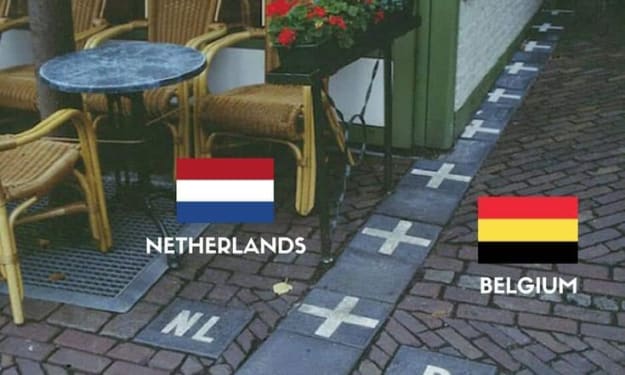
Bizarre International Boarders
Every border in existence today is essentially a line drawn by humans. This division creates around 200 separate sovereign countries worldwide. Many of these countries have peculiar borders, resulting in complex situations. For example, the villages of Barl Hertog and Barl Nisa epitomize this complexity. Their border interweaves Belgium and the Netherlands, forming a mosaic of enclaves and exclaves. This situation is so intricate that some homes are split by the international boundary. Residents may find they have different nationalities depending on which room they are in.
By Tafara Sibotshiwe2 years ago in History
Metro 2: The Forbidden Underground System of Moscow
Beneath the bustling streets of Moscow lies a network shrouded in secrecy, intrigue, and speculation—Metro 2. Allegedly constructed during the Cold War era, this clandestine subway system is rumored to serve as an emergency escape route, a military transport system, and a hidden hub of government operations. Despite its existence being neither confirmed nor denied by the Russian government, Metro 2 has captured the imagination of historians, urban explorers, and conspiracy theorists alike. Its forbidden nature makes it one of the most enigmatic underground mysteries in the world.
By mariam elghazaly2 years ago in History
The Vatican Secret Archive: Unveiling the Mysteries of a Forbidden Vault
Shrouded in mystery and intrigue, the Vatican Secret Archive (recently renamed the Vatican Apostolic Archive) is one of the most enigmatic repositories in the world. Located within the Vatican City, this vast collection of documents spans centuries of history, religion, politics, and culture. Despite its allure, the archive remains largely inaccessible to the general public, with strict regulations governing who can access its treasures. This inaccessibility fuels fascination and speculation, making it a perennial subject of curiosity and conspiracy theories.
By mariam elghazaly2 years ago in History