Places
The Thunder of the Crescent: The Epic Life of Mehmed the Conqueror
Born for Glory In the year 1432, under the golden crescent moon of Edirne, a child was born to the Ottoman Sultan Murad II and his wife Hüma Hatun. They named him Mehmed — the name of a prophet, the name of destiny.
By Md Ajmol Hossainabout a year ago in History
The Anunnaki and the Neteru: Were They the Same Sky Gods?
The Anunnaki and the Neteru: Were They the Same Sky Gods? Across the ancient world, civilizations spoke of powerful beings who descended from the heavens, shaping humanity and guiding our early societies. In Sumer, they were known as the Anunnaki. In Egypt, they were called the Neteru.
By The Secret History Of The Worldabout a year ago in History
A Great Chapter of Bengal's Legacy
A Great Chapter of Bengal's Legacy: Sonargaon is known as one of the foremost important and antiquated cities within the history of Bangladesh. Though it is right now portion of Narayanganj locale, within the past it served as a major political, financial, and social center of Bengal. The title Sonargaon quickly brings out recollections of old eminence, wealthy creativity, and dynamic people conventions.
By Siyam Islamabout a year ago in History
7 Fascinating Facts About the Egyptian Museum in Cairo
The Egyptian Museum in Cairo is one of the world’s most important cultural landmarks, housing a staggering collection of ancient treasures and historical artifacts. If you're planning a trip to Egypt, this museum is an absolute must-see. Located in Tahrir Square, it is a treasure trove of Egyptian history, showcasing everything from ancient mummies to the famed Tutankhamun treasures. In this blog, we’ll uncover seven fascinating facts about the museum, from its history to the incredible artifacts on display.
By Radhiya Furatabout a year ago in History
Hamas formally rejects Israeli ceasefire offer
Hamas officials had already indicated to the BBC earlier in the week that they would reject the plan. "Netanyahu and his government use partial agreements as a cover for their political agenda, which is based on continuing the war of extermination and starvation, even if the price is sacrificing all his prisoners [hostages]," Hayya said. He added the group was "ready to immediately negotiate a deal to swap all hostages with an agreed number of Palestinians jailed by Israel" and end the war. Hamas has previously said it would contemplate an overall deal to end the war but the two sides are nowhere near any kind of agreement that would bring that about. Israel's stated aim is the complete disarmament and destruction of Hamas. Meanwhile dozens of Gazans are dying each day in air strikes with no humanitarian aid entering the strip at all. The latest series of Israeli strikes killed at least 37 people, the majority of them displaced civilians living in a tented camp, according to Gaza's Hamas-run civil defence agency. Witnesses in al-Mawasi said dozens of Palestinians including children had died after tents were set ablaze following a "powerful" explosion. "I rushed outside and saw the tent next to mine engulfed in flames," a man told the BBC's Gaza Lifeline programme. The Israeli military did not immediately comment but said that it was looking into reports of the strikes. Israel has previously told Palestinians to evacuate from other parts of Gaza to al-Mawasi. The Israeli military said attacks over the past two days had "struck over 100 terror targets" including "terrorist cells, military structures and infrastructure sites". Israel said there was no shortage of aid and that it was maintaining the blockade installed on 1 March to pressure Hamas to release the remaining hostages. However the heads of 12 major aid groups said the humanitarian aid system in Gaza was "facing total collapse". The war began on 7 October 2023 when Hamas carried out a cross-border attack on Israeli communities, killing around 1,200 people and seizing 251 hostages according to Israeli tallies. Israel's military campaign against Hamas has killed at least 51,065 people, according to the territory's Hamas-run health ministry.Hamas has formally rejected Israel's latest ceasefire offer, saying it is prepared to immediately negotiate a deal that would see the release of all remaining hostages in return for an end to the war and the release of Palestinian prisoners. In a video statement, Hamas' chief negotiator, Khalil al-Hayya, said: "We will not accept partial deals that serve [Israeli Prime Minister Benjamin] Netanyahu's political agenda." Fifty-nine hostages remain in captivity and 24 are thought to be alive. Israel's latest offer involved a 45-day ceasefire in return for the release of 10 hostages. Far-right Israeli Finance Minister Bezalel Smotrich said it was time "to open the gates of hell" on Hamas.The BBC had already heard from Hamas officials earlier in the week that they would reject the plan. According to Hayya's statement, "Netanyahu and his government use partial agreements as a cover for their political agenda, which is based on continuing the war of extermination and starvation, even if the price is sacrificing all his prisoners [hostages]." He added the group was "ready to immediately negotiate a deal to swap all hostages with an agreed number of Palestinians jailed by Israel" and end the war. Hamas has previously said it would contemplate an overall deal to end the war but the two sides are nowhere near any kind of agreement that would bring that about. Israel's stated aim is the complete disarmament and destruction of Hamas. Meanwhile dozens of Gazans are dying each day in air strikes with no humanitarian aid entering the strip at all. The latest series of Israeli strikes killed at least 37 people, the majority of them displaced civilians living in a tented camp, according to Gaza's Hamas-run civil defence agency. Witnesses in al-Mawasi said dozens of Palestinians including children had died after tents were set ablaze following a "powerful" explosion. "I rushed outside and saw the tent next to mine engulfed in flames," a man told the BBC's Gaza Lifeline programme. The Israeli military did not immediately comment but said that it was looking into reports of the strikes. Palestinians have previously been instructed by Israel to move to al-Mawasi from other parts of Gaza. Over the past two days, the Israeli military said, "over 100 terror targets" had been hit, including "terrorist cells, military structures, and infrastructure sites." Israel said there was no shortage of aid and that it was maintaining the blockade installed on 1 March to pressure Hamas to release the remaining hostages. However the heads of 12 major aid groups said the humanitarian aid system in Gaza was "facing total collapse". According to Israeli statistics, a cross-border attack by Hamas on Israeli communities on October 7, 2023, killed approximately 1,200 people and captured 251 hostages. Israel's military campaign against Hamas has killed at least 51,065 people, according to the territory's Hamas-run health ministry.
By Sabbir Hossenabout a year ago in History
Returning Without Questions
Returning Without Questions They came a little closer to me one odd evening, I recall. Despite its simplicity, the relationship had an odd depth. There was a kind of connection between them that spoke before words, the language of their eyes—even when they were silent in front of each other, they understood each other. However, despite being by each other's side, there are times in life when people move on. There came a time when the two of them moved far away from each other.
By Arshad Aliabout a year ago in History
Hatshepsut's Revenge
Chapter One: The Beginning of Revenge The grand hall of the king's palace was filled with sorrow and hushed whispers. Hatshepsut, the heir to the Egyptian throne, sat beside the body of her late father, the king, trying to conceal her inner turmoil behind a mask of royal grief. She wasn’t just grieving; she was increasingly anxious about the future of her reign following her father’s death.
By mohamed elsayedabout a year ago in History
Just How Effective Were Rhodesian Guerrillas?
Rhodesia, a country that is now divided into Zimbabwe and Zambia, with many people today only knowing of its existence as a result of Leonardo DiCaprio's cutthroat character in the 2006 film, Blood Diamond. One thing that you aren't able to learn from the movie, is the 15 year long civil war that tore apart the country's Southern region (present day Zimbabwe.) The Rhodesian Bush War was the result of a multitude of complex political factors, most notably the majority white government declaring independence from Britain without any kind of consent from the crown in 1965, as the South of Rhodesia was a self-governing colony since 1923.
By Jacob Newsonabout a year ago in History
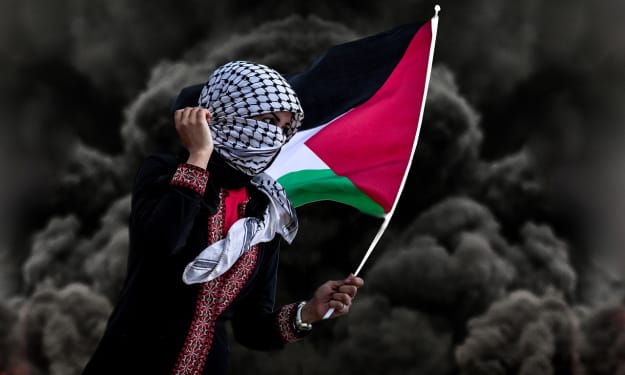
History of Israel and Palestine
Land, identity, and sovereignty are at the heart of the Israeli–Palestinian conflict, which continues to this day in the historically Palestinian region. Its origins trace back to the late 19th century with the rise of Zionism and Arab nationalism during the decline of the Ottoman Empire. ikipedia The British mandate in the early 20th century and rising tensions Following World War I, the British took control of Palestine under the Mandate system. The 1917 Balfour Declaration expressed British support for a "national home for the Jewish people" in Palestine, leading to increased Jewish immigration. This influx heightened tensions with the Arab population, who opposed the growing Zionist movement and feared displacement. Wikipedia 1947–1949: UN Partition Plan and the First Arab–Israeli War In 1947, the United Nations proposed partitioning Palestine into separate Jewish and Arab states. Jewish leaders accepted the plan, but Arab leaders rejected it. Upon Israel's declaration of independence in 1948, neighboring Arab states invaded, resulting in the first Arab–Israeli war. By the war's end in 1949, Israel controlled a significant portion of the territory, while Jordan and Egypt occupied the West Bank and Gaza Strip, respectively. The Nakba, or "catastrophe," refers to the displacement of approximately 750,000 Palestinians during this time. Reuters
By J P PRINCE about a year ago in History
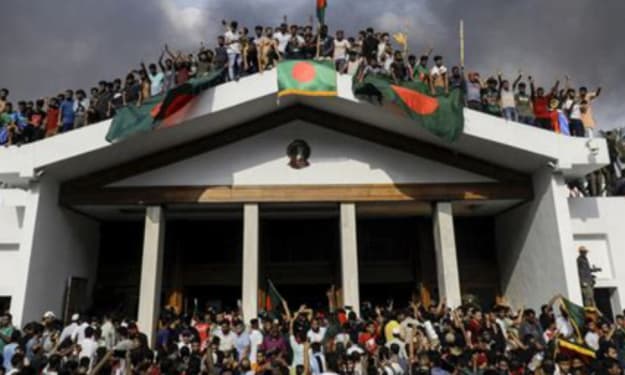
JULY REVOLUTION IN BANGLADESH (2024)
This article is about the combined timeline of the quota reform and anti-government movements. For the quota reform movement, see 2024 Bangladesh quota reform movement. For the anti-government phase, see Non-cooperation movement (2024). For other uses, see July Revolution (disambiguation).
By Md. Shihababout a year ago in History