Narratives
Boudica – The Warrior Queen Who Defied an Empire
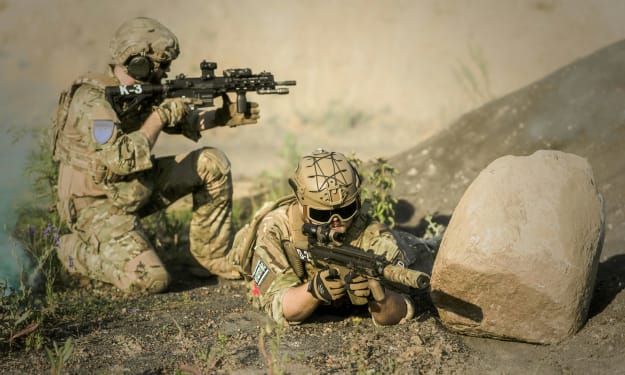
art writing... In an era when women were barely allowed to speak, Boudica roared. She took up the sword not as a symbol of power, but of protection—for her daughters, for her tribe, for every soul crushed under the Roman boot. This makes her one of history’s most powerful examples of female leadership—ferocious, yet rooted in purpose. Across cultures and countries, Boudica’s story has come to mean different things. To some, she’s a freedom fighter. To others, she is a symbol of national identity, especially in Britain where she is often cited as a proto-nationalist figure. Feminists see in her a beacon of resistance against patriarchal systems. To historians, she represents the cost of imperial arrogance and the strength of indigenous resistance. Her name lives not just in books and memorials, but in the very soil where she once walked. Archaeological discoveries have revealed layers of burnt Roman settlements, traces of the very destruction she brought. Coins, weapons, and ruins bear silent witness to her fury. But Boudica’s memory continues to challenge the way we view resistance and authority. Her story isn’t just about a queen or a battle—it is about the timeless power of standing up when everything tells you to stay down. Her cry wasn’t only for vengeance—it was for dignity stolen, for voices silenced, for futures denied. And that is what makes her tale resonate with every generation that seeks truth and justice. Across the world, in places where people are still denied basic rights, Boudica’s defiance feels deeply personal. She may have lived two thousand years ago, but her courage breaks through time, reminding us that silence in the face of injustice is its own kind of defeat. Her actions asked a question that still lingers: What will you do when the powerful come for what is yours?
By GillanI Media about a year ago in History
Sykes-Picot Agreement
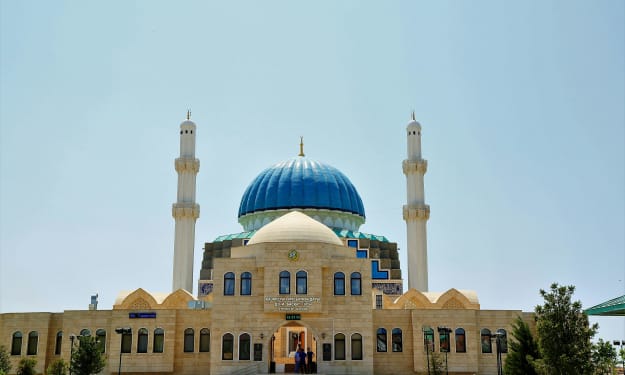
There are moments in history that are invisible to the naked eye, but have an impact that lasts for centuries. If one agreement is to be blamed for the geographical and political decline of the Muslim world, it would undoubtedly be the “Sykes-Picot” agreement of 1916. This secret agreement was actually a stab in the back of Muslims—a fratricidal conspiracy through which the Western colonial powers shattered the heartland of the Muslim Ummah, that is, the Arab world.
By Abdul Barikabout a year ago in History
Why Trump’s Kashmir Statement Gives Millions of Us a New Hope. AI-Generated.
artriting The Kashmir conflict has persisted for more than seventy-five years, leaving generations of Kashmiris trapped in a cycle of violence, political uncertainty, and broken promises. For those of us who call this land home, every news headline carries the potential to change our lives — or deepen our wounds.
By GillanI Media about a year ago in History
Fall of the Ottoman Caliphate
The fall of the Ottoman Caliphate is a tragic chapter in the history of the Muslim world, the impact of which is still felt in every corner of the Muslim world. This nearly six-hundred-year-old regime was not just a political structure—it was a symbol of the unity, solidarity, and Islamic civilization of the Ummah. The formal abolition of the Caliphate in 1924 marked the end of a chapter, but began a long era of confusion and division that has not ended to this day.
By Abdul Barikabout a year ago in History
10 Alleged Giant Skeleton Discoveries the Smithsonian Never Explained
Newspaper articles. Old excavation logs. Family stories passed down for generations. All speak of giant human skeletons unearthed across North America, often measuring 7 to 12 feet tall, often found with ancient artifacts, and almost always… quietly handed over to the Smithsonian Institution.
By Rukka Novaabout a year ago in History
The Last Giants of America: Who Killed Them and Why the Silence Remains
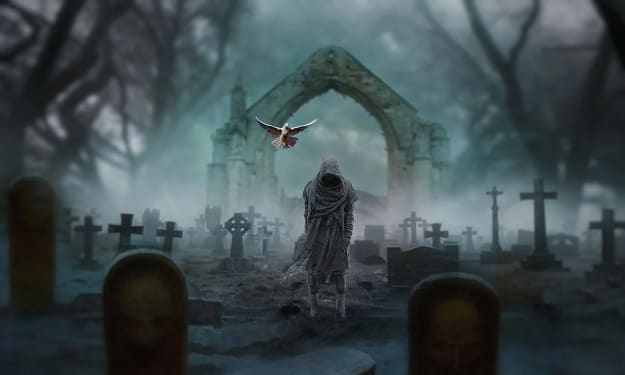
Shadows of Forgotten Giants Across the vast plains, valleys, and mounds of North America, whispers of giants echo through forgotten legends, early settler accounts, and the dusty pages of 19th-century newspapers. These were not metaphorical giants, but literal beings, said to stand 7 to 12 feet tall, whose bones were allegedly unearthed in burial mounds, caves, and remote hills. Yet today, no such skeletons exist in public museums. The narrative of the American giants has vanished from mainstream history.
By The Secret History Of The Worldabout a year ago in History
The Forgotten Shepherd
Among the initial leaders of the Christian Church, few individuals exhibit the same quiet dignity and spiritual authority as Pope Clement I, also referred to as Clement of Rome. Esteemed as the third successor of Saint Peter and one of the Apostolic Fathers, Clement's life and contributions were crucial in defining the identity and unity of the early Church. While the specifics of his biography are scarce and frequently shrouded in legend, his works—particularly his letter to the Corinthians—serve as a significant testament to early Christian theology, pastoral care, and church governance.
By A Históriaabout a year ago in History
The Truth About Slavery in America
When we speak about the United States of America, we often highlight liberty, democracy, and opportunity. But beneath the surface of the "American Dream" lies a dark and painful truth—the era of slavery, a chapter that continues to shape the nation’s identity, struggles, and societal divisions to this very day.
By labib hossainabout a year ago in History
Dark Shadow in the Clear Sky
"Dark Shadow in the Clear Sky: A Tragedy of the Bermuda Triangle" Writer: Aranya Chowdhury The sky was awash in a gentle blue light. Gliding over the Atlantic Ocean was a small cargo plane—“Skyline 742.” At its helm was Captain Imtiaz Rahman, a seasoned pilot who had made the skies his home for over twenty years. Beside him sat his only crew member, Tamanna Afroze, a young and courageous co-pilot.
By Books Loverabout a year ago in History