Narratives
Pulwama and Balakot
February 14, 2019. On Valentine's Day, one of the worst terrorist attacks in Indian history took place in Pulwama district of Jammu and Kashmir. At least 40 paramilitary personnel were killed in a suicide blast on a CRPF convoy. There was grief, anger and demands for revenge across India. In just twelve days, in the early hours of February 26, the Indian Air Force carried out an airstrike on a so-called "JeM" base in Balakot inside Pakistan. The BJP government, especially Prime Minister Narendra Modi, claimed: "This revenge is India's new bravery."
By Abdul Barikabout a year ago in History
Becoming Gandhi: From Fearful Child to Fearless Father of a Nation
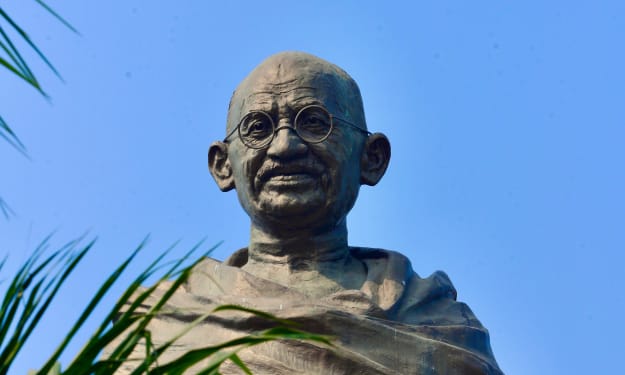
“Who has ever gained freedom without a battle?” asked a poet. Yet India’s path to independence defied that logic—a revolution led without swords, built on the strength of truth, humility, and nonviolence. At its heart stood Mahatma Gandhi—the man who transformed fear into a nation’s courage.
By Kadam's Publishing Companyabout a year ago in History
"Israel in the Quran: The Legacy of the Children of Israel"
The Role of Bani Isra'il in Islamic Scripture and Beliefs Bani Isra'il, or the Children of Israel, hold a significant place in Islamic history and theology. The Quran, the holy book of Islam, references the Children of Israel extensively, presenting their story as an important part of the broader narrative of divine guidance and prophetic missions. From the time of Prophet Musa (Moses) to the eventual emergence of Prophet Isa (Jesus), the Children of Israel are depicted as a community chosen by God, tasked with upholding His commandments and serving as a model for righteousness. The Quranic portrayal of Bani Isra'il emphasizes not only their religious and spiritual journey but also the lessons to be learned from their successes and failures. The Quranic Depiction of Bani Isra'il In Islamic belief, Bani Isra'il refers to the descendants of Prophet Ya'qub (Jacob), who was the grandson of Ibrahim (Abraham). Ya'qub’s twelve sons, the forefathers of the twelve tribes of Israel, are central figures in Islamic tradition. The Quran recounts various aspects of their lives, beginning with the trials and blessings that befell Prophet Musa, a member of Bani Isra'il. The Children of Israel are portrayed as recipients of divine favor and guidance, but their story is also marked by periods of rebellion, ingratitude, and failure to follow God’s commandments. One of the most significant themes in the Quran’s account of Bani Isra'il is their liberation from the tyranny of Pharaoh. According to the Quran, God sent Prophet Musa to free the Israelites from Egyptian bondage. The Quran highlights the miraculous events surrounding the liberation, including the parting of the Red Sea, which allowed the Israelites to escape, and the destruction of Pharaoh and his army. This event symbolizes God’s deliverance of the oppressed and the triumph of divine justice over tyranny. In Surah Al-Baqarah, the second chapter of the Quran, Bani Isra'il are mentioned repeatedly, emphasizing their role in the divine plan. The Quran recounts their history in a way that underscores the lessons to be learned from their experiences, both positive and negative. The Israelites were favored by God with prophets, miracles, and a clear code of law, yet they often strayed from the path of righteousness. Their story serves as a reminder of the consequences of turning away from divine guidance. The Lessons of Disobedience and Repentance The Quran does not merely recount the successes of Bani Isra'il; it also emphasizes their failures and the consequences of disobedience. One of the most prominent examples is their repeated rejection of the messengers sent to them. After being saved from Pharaoh, the Children of Israel were guided by Prophet Musa, who received the Torah, the divine law. However, despite these blessings, many among Bani Isra'il disobeyed the commandments of God. A significant example of this disobedience is the episode of the golden calf, which is mentioned in Surah Al-A'raf. After Musa had gone to Mount Sinai to receive divine commandments, some of the Israelites fashioned a golden calf and began worshipping it. This act of idolatry angered God, and the disobedient ones were punished. The Quran underscores that such acts of disobedience led to hardship and divine wrath. However, the story of Bani Isra'il is not one of complete despair. Throughout the Quran, God calls on the Children of Israel to repent and return to righteousness. In Surah Al-Baqarah, God reminds them of the numerous blessings they have received and urges them to adhere to His guidance. The Quran portrays repentance as a key theme in the relationship between God and His people. Even when the Children of Israel faltered, the possibility of redemption through sincere repentance was always available. The Prophets and Their Role Bani Isra'il were recipients of many of the great prophets mentioned in the Quran. From the time of Prophet Musa, the Children of Israel were continually guided by prophets who taught them the commandments of God and urged them to follow the straight path. The Quran recounts the stories of Prophets like Dawud (David), Sulayman (Solomon), and Isa (Jesus), who are also from Bani Isra'il. These prophets not only provided spiritual guidance but also served as leaders, warriors, and teachers of divine wisdom. Prophet Isa (Jesus) is particularly significant in Islamic thought. Although his story is closely associated with Christianity, the Quran presents Isa as a prophet and messenger of God. His role in guiding Bani Isra'il and calling them back to the true worship of God is central to the Quranic narrative. Isa’s teachings emphasized monotheism and righteousness, but his message was often met with opposition. The Quran presents his crucifixion in a different light from Christian tradition, suggesting that he was not crucified but rather raised up by God. In the Islamic view, the prophets sent to Bani Isra'il were all part of a long line of messengers, culminating in the final prophet, Muhammad. Muhammad, although not from the lineage of Bani Isra'il, was seen as the last messenger to humanity, bringing the final revelation, the Quran, which affirmed the messages of the previous prophets, including those sent to the Children of Israel. The Legacy of Bani Isra'il in Islamic Beliefs The legacy of Bani Isra'il in Islam is multifaceted. On the one hand, they represent a community that received divine favor, guidance, and revelation. They were given the Torah, sent numerous prophets, and witnessed miracles that testified to the power and mercy of God. On the other hand, their story serves as a warning to future generations about the dangers of pride, ingratitude, and disobedience. For Muslims, the story of Bani Isra'il is a reminder of the importance of following the guidance of God’s messengers, maintaining humility, and adhering to the commandments in the face of trials and temptations. The Quran emphasizes that all the prophets, including those sent to Bani Isra'il, preached the same core message: the worship of the One true God and the importance of righteous deeds. In conclusion, Bani Isra'il’s role in Islamic scripture is one that offers both lessons and inspiration. Their narrative in the Quran serves as a profound reminder of divine justice, mercy, and the potential for redemption through repentance. Their legacy continues to shape Islamic thought and teachings, influencing the way Muslims understand their relationship with God and the importance of upholding His commandments.
By World politics about a year ago in History
Kashmir: War of two states
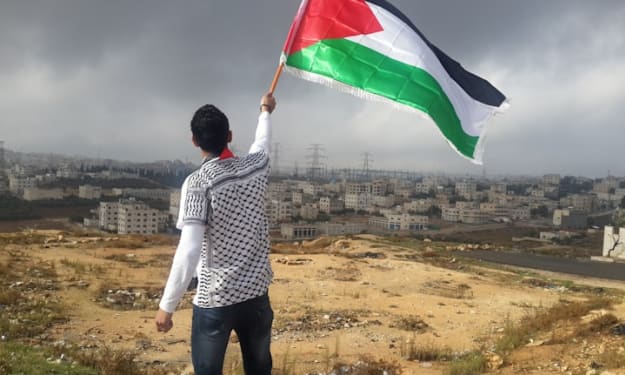
Kashmir: The War of Two States, the Poverty of a Nation Kashmir. When you hear the word, snow-capped mountains, blue rivers, and flower-filled valleys come to mind. But behind this natural beauty lies the sigh of a nation, a bloody chapter in history, and a battlefield of pride for two states. For India and Pakistan, Kashmir is a symbol of national pride. But those who have repeatedly been deprived in the game of these two states are the Kashmiris—the original inhabitants of this valley, whose very existence is questionable.
By Abdul Barikabout a year ago in History
A golden chapter
There are some eras in history that serve as a model of learning for not just one nation, but for all of humanity. One such era in Islamic history is the “Khilafah Rashidah” or “Era of the Rightly Ruled Caliphate”—which was established after the death of the Prophet Muhammad (peace and blessings of Allah be upon him) under the leadership of his closest companions. During this era, four caliphs took office one after the other: Abu Bakr (may Allah be pleased with him), Umar (may Allah be pleased with him), Uthman (may Allah be pleased with him), and Ali (may Allah be pleased with him). These four are called the ‘Al-Khalifa’ or ‘The Rightly Guided Caliphs’ because they embodied the ideals of the Prophet in practical politics, administration, social order, and justice.
By Abdul Barikabout a year ago in History
The Rise and Fall of the Baghdad Pact: Why CENTO Failed in the Middle East
Baghdad Pact and the 'Wall of Allies': That Military Alliance Like NATO Which Did Not Help Pakistan When Needed When you hear the name of Baghdad, the capital of Iraq, many thoughts come to mind — from Harun al-Rashid and the capital of the Abbasid Caliphate to Saddam Hussein. However, it may not come to your mind that this name was once, in the 1950s, also a reference to a military alliance of the Western Middle East, whose end marked the beginning of the decline of British influence in the Middle East. The Baghdad Pact or Agreement was made in 1955, which included the United Kingdom, Iraq, Turkey, Pakistan, and Iran. According to the Encyclopedia Britannica, it was a security organization headquartered in the Iraqi capital Baghdad. After the end of the pro-West monarchy in Baghdad, Iraq withdrew from the agreement, and then the organization's headquarters were moved to Ankara, the capital of Turkey. Its name was also changed to the Central Treaty Organization, i.e., CENTO. In 1979, Iran also withdrew after the Islamic Revolution and the fall of the Shah, and in the same year, the organization was dissolved. So what is the story of this agreement? ‘To Counter the Communist Wave’ After World War II, two major global powers emerged: the United States and the Soviet Union. The conflict between them formed the framework of the Cold War, as both powers tried to expand their political and military influence across the world. Both the United States and the United Kingdom considered the Middle East important for their interests. However, after World War II, Britain's influence was in decline. In the early 1950s, the United States government expressed interest in forming a military alliance in the Middle East to counter the threat of Soviet Communist expansion in important oil-producing regions, and Washington tried to create a regional alliance based on anti-Communism. The Baghdad Pact was part of this strategy, aimed at extending a wall of allied states from Turkey to Pakistan. The Baghdad Pact was formed at the same time as NATO and the Southeast Asia Treaty Organization. The idea for all three alliances emerged after U.S. Secretary of State John Foster Dulles returned from a tour of the Middle East in May 1953, during which he proposed the formation of a defensive arrangement of countries across Eurasia against Communism. The importance of the Middle East lay in several different factors: First, the presence of oil in many countries of the Middle East meant that the economies of Western Europe, and to some extent the U.S. economy, depended on this region as a source of energy, and Britain obtained about 90 percent of its oil supply from the Gulf. Second, the Middle East is located within several transit routes to the Far East, and the water and air routes passing through Egypt, Iraq, and Jordan made Britain highly reliant on good relations with the countries of the region for communication and trade with the Far East. Third, this region holds strategic importance. On one side, it is adjacent to NATO’s southern flank, and on the other, it can provide bases from which the Soviet Union could be attacked from the south. Britain had bases in Iraq and on the island of Cyprus. In the 1950s, ongoing tensions in the Middle East — such as the Arab-Israel conflict and rising anti-colonial sentiment led by Egypt — made it difficult to form an alliance that included Arab and Islamic states along with Israel and Western powers. Instead, the United States shifted its focus to the northern belt. The idea was to establish an alliance linking NATO’s southernmost member, Turkey, with Pakistan, the western member of the Southeast Asian alliance, CENTO. Turkey and Pakistan signed an agreement in 1954 to enhance security and stability in the region. At the urging of Britain and the U.S., the formation of the Baghdad Pact began on February 24, 1955, when Iraq and Turkey signed a 'Mutual Cooperation Agreement' in Baghdad to resist external aggression, paving the way for other countries in the region to join. In April, the United Kingdom joined, followed by Pakistan on September 1, and then Iran, under the leadership of Shah Mohammad Reza Pahlavi, in November 1955. In this way, the 'Baghdad Pact' was established, comprising the UK, Iraq, Turkey, Pakistan, and Iran. This occurred during the reign of Iraq’s last king, Faisal II, and Prime Minister Nuri al-Said. The purpose of this agreement was to strengthen the defense of the region and to prevent Soviet Union entry into the Middle East. American Position Britain was the third country to join the Baghdad Pact. In contrast, the United States did not become fully involved in this agreement. After Britain joined in 1955, it was expected that the U.S. would also join this alliance. In June 1955, a joint study by the British Ministry of Defence and Foreign Office supported the idea that the defense of the region could only be secured with American assistance. From the beginning, Britain and other member countries lobbied for America’s inclusion in the Baghdad Pact, but this effort failed. Britain continued to pressure its most powerful ally to join the organization. This pressure intensified when the alliance faced a crisis in March 1956 following the dismissal of British officer General Glubb from the command of the Jordanian Arab Legion. However, the U.S. preferred to maintain the status of an observer and completely refused to join the alliance — perhaps one reason being Washington's desire to keep Israel, Egypt, or Saudi Arabia satisfied as well. Factors That Weakened the Alliance From the beginning, the Baghdad Pact failed to garner broad support from Middle Eastern states, which lacked a common identity. Turkey was a nationalist republic, Iran a monarchy, Pakistan an emerging democratic state, and Iraq had recently come out of a colonial system of governance. Attempts by then Iraqi Prime Minister Nuri al-Said to persuade several Arab countries — especially Egypt and Syria — to join the alliance were unsuccessful. These countries believed that the Soviet Union — which had begun to emerge as the only supplier of arms and equipment to Arab countries facing Israel — posed no threat to them. Nevertheless, Britain hoped that Syria and Jordan would join the alliance at a later stage. Syria refused to join, while Jordan’s King Hussein initially hesitated. Eventually, King Hussein sided with his people, who came out in large numbers on the streets to condemn the alliance and refused to join it. In 2003, BBC Middle East analyst Gerald Butt wrote: “At that time, I saw protesters breaking the windows of a British bank where my father worked in the Jordanian capital Amman, and I was disturbed as a child to see the protesters vandalizing our garden.” The President of Lebanon supported the Baghdad Pact because of his good relations with Iraq’s King Faisal and Iran’s Shah Mohammad Reza Pahlavi, but due to widespread domestic opposition, Lebanon did not join the agreement. Meanwhile, Egypt opposed any such alliance that could become a new extension of 'European imperialism,' and the Saudis distrusted the Hashemite rulers of Iraq. The developments in the Middle East in the years following the formation of the alliance further weakened it. In 1956, Egyptian leader Gamal Abdel Nasser took control of the Suez Canal. Israel responded by attacking the Sinai Peninsula, and British and French forces also intervened, which caused Britain to lose prestige in the region and damaged its position in the Baghdad Pact.
By Ikram Ullahabout a year ago in History
Echoes of Stone
The prehistoric figurine known as the Venus de Losange is a small but potent testament to the symbolic world of early Homo sapiens. Carved during the Upper Paleolithic period, estimated at 25,000–30,000 years ago, this enigmatic artifact offers more than artistic intrigue—it opens a rare window into the social, emotional, and spiritual dimensions of our distant ancestors.
By Navinder Dinesh Ramabout a year ago in History
The Hidden God of War: Unmasking Yahweh, the Forgotten Lord of the Skies
Yahweh, The God Of War In the dry winds of the ancient Levant, beneath the crumbled ruins of forgotten cities and among the fractured stone tablets buried beneath the sands, lingers the shadow of a god that few truly know. Today, billions invoke his name in prayer, see him as the father of creation, the sole and omnipotent divine being who shaped the universe. But this name, Yahweh, once belonged not to a universal creator, but to a jealous and fiery god of war, a desert storm deity born from the smoke of battle, molded in tribal warfare, and later crowned the king of a nation. His name was carved in blood long before it was etched into scripture.
By The Secret History Of The Worldabout a year ago in History
Language Evolution Chronicles
Acknowledgement for "Language Evolution Chronicles" Gratitude for the Journey of Exploring Language Evolution The creation of Language Evolution Chronicles has been an enriching and intellectually stimulating journey, one that would not have been possible without the support, guidance, and contributions of numerous individuals and institutions. This project delves into the fascinating transformation of human communication, tracing the roots of language from ancient scripts to modern dialects, and examining the socio-cultural forces that shape linguistic diversity.
By Sabina Islamabout a year ago in History
The Last Days of Bahadur Shah Zafar: The Forgotten Tragedy of the Last Mughal Emperor
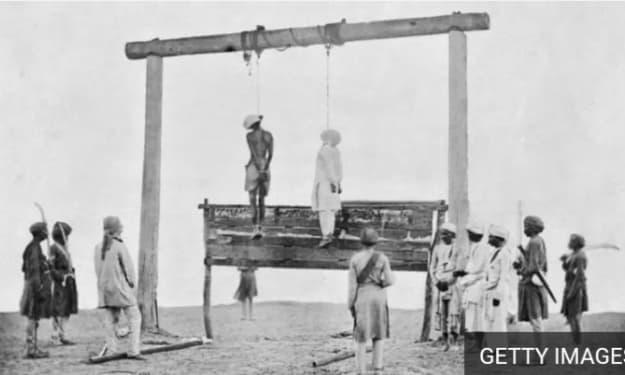
The 1857 'War of Independence': When Delhi Witnessed Death Dancing "I am neither the light of anyone’s eye, nor the solace of anyone’s heart, I am but a handful of dust, of no use to anyone." In today’s world, it is unimaginable for a common person to believe that the poet of these melancholic verses, the last Mughal Emperor Bahadur Shah Zafar, had once led the Indians in the first war of independence against the British in 1857. It was Monday, May 11, 1857, corresponding to 16th of Ramadan. At around 7 in the morning, Bahadur Shah Zafar was offering the Ishraq prayer in the portrait gallery near the river at the Red Fort. At that moment, he noticed smoke rising from the Toll House across the Yamuna River. Alarmed, he immediately sent his messenger to investigate and summoned his Prime Minister, Hakim Ahsanullah Khan, and Captain Douglas, who was in charge of the fort’s security. The messenger returned with troubling news: some Indian cavalrymen, dressed in British military uniforms and wielding naked swords, had crossed the bridge over the Yamuna. They looted and set fire to the toll house on the eastern bank. Upon hearing this, the Emperor ordered the gates of both the city and the fort to be shut. Rebels Seek Royal Blessing By 4 PM that day, the leader of the rebels sent a message requesting a meeting with the Emperor. The rebels assembled in the Diwan-e-Khas (Hall of Private Audience) and fired shots into the air with their guns and pistols. A prominent nobleman of Delhi, Abdul Latif, wrote in his diary on that day: "The Emperor was like a king in a game of chess after being put in check – powerless and trapped." After a long silence, Bahadur Shah Zafar spoke, saying, "Why is an old man like me being insulted in such a manner? What is the reason for this uproar? The sun of my life has already reached its dusk. These are the final days of my life. All I wish for now is solitude." Later, in his book "Two Nations: A Narrative", Charles Metcalfe wrote: "Hakim Ahsanullah Khan told the soldiers: ‘You have worked for the British and are used to regular pay. The Emperor has no treasury – how will he pay you?’" To this, the soldiers replied: "We will bring the wealth of the entire country to your treasury." Zafar responded, "I have no army, no weapons, and no money." The soldiers answered, "We need only your support. We will bring everything else ourselves." Charles notes: "For a moment, Bahadur Shah Zafar remained silent. His inability to make swift decisions was his greatest flaw. But that day, he did not hesitate. He agreed." He sat on a chair as the soldiers, one by one, bowed before him, and he laid his hand on their heads in acknowledgment. The rebels occupied various rooms in the fort, with some even setting up their bedding in the Diwan-e-Aam (Hall of Public Audience). The Silver Throne and New Coins The Emperor, unable to manage or control such a large army, found himself under their control instead. The next day, he donned his royal attire and ascended the silver throne. Coins were minted in his name, and a great cannon blast was heard in celebration. Why and How the Revolt Began The entire episode had started on May 10, 1857, in Meerut, when sepoys of the Bengal Lancers mutinied and marched toward Delhi. Renowned historian Rana Safvi, an expert on the events of 1857, explains: "New rifles had been introduced, and the cartridges had to be bitten open with the mouth. Rumors spread that the grease used in these cartridges was derived from cow and pig fat – offensive to both Hindus and Muslims. Muslims were reluctant due to pigs, and Hindus due to cows." She further elaborates: "There were other grievances as well – they were being sent to fight overseas, which, for Brahmins, meant loss of caste. Their promotions were also limited – Indian soldiers could not rise beyond the rank of Subedar. These frustrations simmered over time." Some called it a mutiny, others called it the First War of Independence. The People of Delhi Did Not Welcome the Rebels Initially, the people of Delhi did not warmly receive the rebels. In fact, some circles – including those close to Bahadur Shah – opposed them. It was said that the rebels disrespected the Emperor and disregarded court etiquette. The courtiers complained that they did not remove their shoes before entering the royal court and came armed before the Emperor. Historian Mehboob Faruqi, author of "Besieged 1857: Voices of Delhi", explains: "Yes, Delhi’s people were upset, but that doesn’t mean they didn’t want to fight the British. Everyone wanted to resist the British in their own way – but no one wanted forty armed men suddenly taking over their home." "Even during later freedom movements with Gandhi or Bhagat Singh, there were millions who didn’t want trouble at their doorstep or police raids on their homes. The same logic applies to 1857." Order Amidst Chaos It is often said that the events of 1857 brought great upheaval to Delhi. However, Faruqi argues that despite the turmoil, order remained largely intact. "People often claim there was chaos, no leadership, no structure. But in my book, I argue that this was not the case." "Naturally, when 70–80,000 soldiers flood into a city of 150,000, there will be disruption. If, today, 3 million troops entered modern Delhi, imagine the state of the city." "Still, what’s truly astonishing is that if the Commander-in-Chief told the police chief to arrest four soldiers for skipping duty – and those four were indeed caught, brought back, and apologized – that shows a certain discipline." "If you needed 400 beds at the front lines and they were delivered – someone ordered them, someone fetched them, someone paid. That’s logistical order. Even today, wars require not just soldiers, but porters, laborers, water carriers – and back then, too, the same was true." The British Were Killed By the morning of May 12, Delhi had been completely emptied of British control. However, a few British women had taken shelter in rooms near the palace kitchen. Despite the Emperor's opposition, the rebels killed them all. Rana Safvi remarks: "On the 11th and 12th, when the rebels attacked the British, many fled the city, while others were killed. Some women sought refuge in the fort . At that very place, out of enmity, they killed 56 people—most of them were women and children, although there were one or two men among them. According to him, “When Bahadur Shah Zafar was tried, the biggest charge against him was that he had them killed. However, if you read Zahir Dehlvi’s book, it becomes clear from eyewitnesses present in the fort during the 1857 rebellion that the king had repeatedly said: ‘No religion allows the killing of innocent people.’” When the British returned and began punishing the rebels, their grip started weakening, and the Englishmen who had fled Delhi began to return. Troops from Ambala turned the tide, and the British once again entered Delhi. “He was sitting. His long white beard reached down to his stomach. He was dressed in white clothes and wore a white turban. Behind him stood two orderlies, fanning him with fans made from peacock feathers. He didn’t utter a single word, his eyes fixed on the ground.” According to him, “Just three feet away from the king, on another cot, sat a British officer. On both sides stood British sentries with bayonets, ordered to kill him immediately if anyone tried to rescue the king.” Bahadur Shah Zafar was humiliated to such an extent that crowds of British people came just to see what a Mughal emperor looked like. Historian Mahmood Farooqui says, “After his arrest, Bahadur Shah Zafar was kept in a cell in the Red Fort. British tourists would come and, just like people visit the Red Fort today, they would go to his cell to see him—this is Bahadur Shah Zafar.” “For a man, for a king of India, to be in such a condition in Delhi—it's obvious that he spent the rest of his years in yearning for death. From there, he was sent to Rangoon, and around the same time, the king of Rangoon was brought to Maharashtra.” “Such was the British rule across the world that kings were being traded from one place to another. Bahadur Shah’s final days were tragic and painful. It was in this situation that he said: ‘How unfortunate is Zafar, for burial Not even two yards of land were found in the land of his beloved.’” “What more could have happened to him? In my opinion, everything had already happened to him during and after 1857. What could be worse than keeping a Timurid successor, the emperor of India, locked in a cell, while British women and children came to gawk at him and say: ‘Oh, so this was Bahadur Shah!’” The king died on November 7, 1862, in a prison-like house in Rangoon. Some British soldiers carried the body of the 87-year-old man to a grave dug within the premises. His funeral included only two sons and a cleric. No women were allowed to attend. When some people in the market heard whispers of this, they tried to join the funeral, but armed soldiers did not allow them to come close. Before burial, soldiers poured lime into the grave so the body would decompose quickly and mix with the soil. A week later, British Commissioner H.N. Davies wrote in a report sent to London: “Afterward, I visited the residence of the remaining royal prisoners. All were fine, and none seemed affected by the old man’s death. He died due to paralysis of the throat.” “He passed away at five in the morning. A bamboo fence has been erected around his grave. By the time the fence wears out, grass will have covered the ground, and no one will know that the last Mughal emperor is buried here.”
By Ikram Ullahabout a year ago in History
Trump says he will cut prescription drug prices by 59% as shares drop
Trump's Bold Prescription Drug Price Cut: A 59% Reduction Amid Market Turmoil On May 12, 2025, President Donald Trump announced a sweeping initiative to reduce prescription drug prices in the United States by up to 59%. This move, which he plans to implement through an executive order adopting a "Most Favored Nation" (MFN) pricing model, aims to align U.S. drug prices with those of other developed nations, ensuring Americans pay no more than the lowest price paid abroad.
By Abjol Hussain Laskarabout a year ago in History