Narratives
The Mysterious Disappearance of the Roanoke Colony. AI-Generated.
In 1587, over a hundred men, women, and children set sail from England to the New World, filled with hope and dreams of a new life. Their destination: Roanoke Island, off the coast of what is now North Carolina. But when their leader returned three years later, they had vanished without a trace. What happened to the Lost Colony of Roanoke?
By Rousela Funfacts2 years ago in History
The Tale of the Mischievous Badger
Many years ago, a peaceful elderly couple decided to leave behind the chaos of city life and settle in the quiet, remote mountains, far from any other civilization. They longed for a life of tranquility, where they could tend to their farm and enjoy the beauty of nature. For a while, their life was peaceful, and their rice and vegetable fields flourished. But their serenity was shattered by an unexpected and persistent visitor: a mischievous badger.
By A História2 years ago in History
The Road to Success
Success is rarely a straight path. It is often fraught with challenges, setbacks, and moments of doubt. Yet, it is through these trials that the seeds of greatness are sown. The stories of those who have achieved remarkable success are not just tales of triumph, but also of unwavering perseverance and resilience. This article delves into true stories of individuals who exemplified these qualities, ultimately achieving their dreams and inspiring others along the way.
By Sazeeb Chowdury2 years ago in History
The Mokoi
In the rich tapestry of Aboriginal Australian mythology, the Mokoi is a figure of fear and mystery. A malevolent spirit associated with death, disease, and witchcraft, its name literally means "evil spirit." This dark entity is described as a tall, thin, and shadowy figure, with glowing eyes and skeletal limbs. Its haunting presence lurks in remote, dark areas of the bushland, where it waits to strike. The Mokoi is not bound by the limits of the physical world, capable of swift movement through the air, making it nearly impossible for its victims to escape. The origins of the Mokoi trace back to a tale of dark magic. According to Aboriginal legend, a powerful sorcerer, in his quest for eternal life, struck a sinister deal with a malevolent spirit. The spirit promised to grant the sorcerer his wish, but the price was steep: the sorcerer had to serve the spirit for eternity. Desperate for immortality, the sorcerer agreed, and as a result, he was transformed into the Mokoi—a creature of darkness, forever tasked with carrying out the wicked deeds of the spirit.
By A História2 years ago in History
Echoes of a Forgotten City
Beneath the surface of the world’s oceans, hidden from the eyes of modern civilization, lie remnants of a time long forgotten an ancient empire submerged beneath the waves. This is the story of Echoes of a Forgotten City, where explorers and archaeologists, driven by curiosity and ambition, uncover the ruins of a once-great civilization, lost to history. But as they delve deeper into the mysteries of this underwater metropolis, they realize that the secrets they uncover could reshape humanity’s understanding of its past and threaten its future.
By Momoh Godfrey2 years ago in History
History's Footprints
History is a vast tapestry woven with countless events, each leaving an indelible mark on the fabric of our existence. From groundbreaking discoveries to pivotal moments of triumph and tragedy, the past is replete with stories that have shaped the world we live in today. This article delves into some of these remarkable events, tracing the footprints of history and exploring their enduring impact on our society.
By Sazeeb Chowdury2 years ago in History
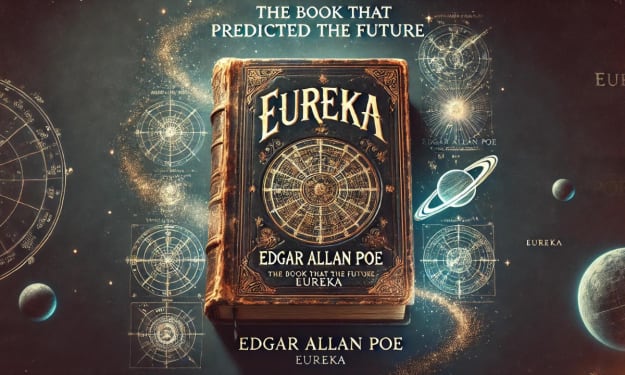
The Book That Predicted the Future: Edgar Allan Poe’s Eureka
When we think of Edgar Allan Poe, we envision tales of Gothic horror, mystery, and melancholy. Stories like The Tell-Tale Heart, The Raven, and The Fall of the House of Usher have cemented Poe’s legacy as a master of the macabre. However, few are aware that Poe also ventured into a different genre—one that was far removed from the eerie corridors of haunted mansions and dark forests. In 1848, Edgar Allan Poe wrote an essay called Eureka, an audacious attempt to explain the origins, nature, and future of the universe. What makes Eureka so remarkable is not just its radical departure from Poe’s typical style, but that it eerily predicted some of the most groundbreaking scientific discoveries that would only come to light nearly a century later. From the Big Bang Theory to black holes, Poe’s vision of the cosmos was uncannily accurate, leading many to regard Eureka as a work of both literary and scientific genius.
By Marveline Merab2 years ago in History
The Fifth Son Of The Loong king
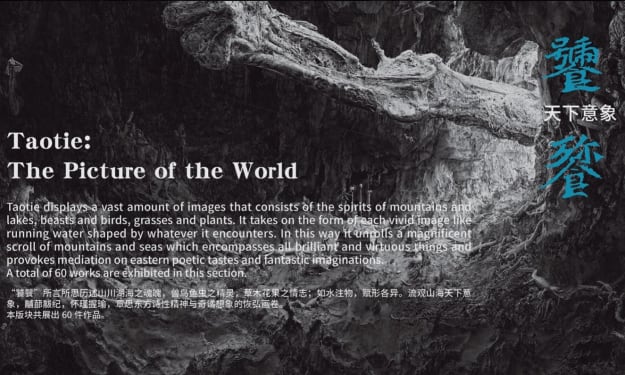
In ancient China, there was a book called *Shan Hai Jing* (*The Classic of Mountains and Seas*). This is an ancient text, a compilation of Chinese mythological geography, cosmology, and folklore. It describes a variety of magnificent and mysterious ancient Chinese creatures, which have inspired countless readers throughout history, leading them to create even more astonishing works based on *Shan Hai Jing*. Today, as Chinese culture gains increasing recognition and importance around the world, this ancient text, which to some extent represents Chinese mythology, has once again been carefully revisited. And today, the creature we are going to talk about comes from within its pages. Taotie, whose existence can be traced back even earlier than *Shan Hai Jing*, became widely known thanks to this ancient text. There are at least three versions of its origin. The most famous one naturally comes from the description in *Shan Hai Jing*. In the *Classic of Northern Mountains* within *Shan Hai Jing*, Taotie is depicted as a fierce beast with the body of a sheep, the face of a human, and eyes under its armpits. It was born in the Northern Mountains and symbolizes greed and gluttony. It is often mentioned alongside the other three great malevolent beasts of ancient China, collectively known as the “Four Great Malevolent Beasts.” However, Taotie has another widely spread origin. During the Ming Dynasty (1368–1644), another great work emerged: *Sheng’an Waiji* (*Outer Collection of Sheng’an*), which documented the nine sons of the Chinese dragon. The saying "the dragon has nine sons, each different" comes from this book. In its records, Taotie is the fifth child of the Dragon King. In this version, Taotie is a divine beast that devours all the suffering and misery in the human world. It consumed all the world's bitterness, bringing temporary peace to this less-than-perfect world. Unfortunately, this peace was short-lived. Even in this book, Taotie came to represent an insatiable desire for gluttony. But as a living creature, it couldn’t stop eating just because "all the food was in its belly." Eventually, starving and desperate, Taotie turned its gaze to the only source of food left—its own stomach. Ravenous, it tore apart its own body, gaining temporary satisfaction. However, since Taotie's stomach was filled with all the world's negative emotions and disasters, once its body was torn apart, these vast negative emotions, with no place to be contained, scattered back into the world like wild beasts escaping their cage. Even worse, without its body, Taotie could no longer store the calamities, even if it consumed them again. From that point on, both Taotie and the world were trapped in a bizarre, cyclical nightmare. Taotie endlessly devoured suffering, but without a body to hold it, the suffering scattered once more, while Taotie’s hunger grew more unbearable. Over time, in this version of the myth, Taotie also became a symbol of greed and gluttony. In fact, whether it devoured its own body out of biological instinct or sheer gluttony has become unclear. But in any case, Taotie has undeniably become an integral part of Chinese civilization. The giant bronze cauldrons unearthed from the Shang Dynasty, engraved with Taotie motifs, and the latest artifacts with Taotie patterns unearthed at Sanxingdui all tell the story of China’s long and profound history, instilling confidence in the Chinese people. At the same time, it has also made an indelible contribution to the development of human spiritual civilization!Start writing...
By Oliver·love Mei Ni2 years ago in History