Narratives
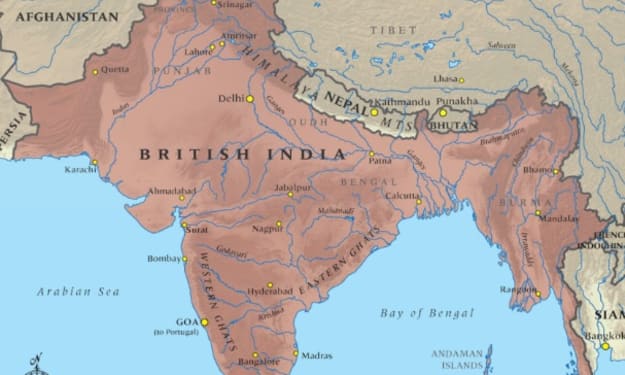
How 'they' occupied India!!
Even in India, there are people who are of the opinion that the colonial British created the idea of a political union called India and provided the tools and institutions needed to hold the union together. However, we need to keep in mind a few points that the concept of “Bharatvarsha” was mentioned in the epic of Mahabharata and Bharata or India was described as a single cultural and also a large political entity. In famous ancient text of India the “Vishnu Purana” specifically describes this land as the ‘Varsha’ (which means piece of land) which is ‘Aasamudra Himachal’ i.e surrounded by Himalayas in the north and by sea in the south, so if anybody sees the map of India can easily relate to that. Then, under the emperor Ashoka in 300 BCE, large parts of the subcontinent enjoyed cultural and administrative unity. On the other hand, 200 years colonial rule did not unite the Indians, instead, they took every possible step to divide us, so that, it becomes easy for them to rule us. The Hindu caste system became more rigid and the communal lines between Hindus and Muslims deepened during British rule in India. Their cruel taxation system destroyed Indian economy and made Britain rich enough to prosper and rule a large portion of the globe as British colonies. Railways, post offices were established so that this large country may be properly administered by them and not for the welfare of the native Indians. We experienced the massacres like Jalianwalabag and deaths of millions of Indians in the man-made famines during the rule. Finally, at the time of leaving India the colonial masters partitioned the Indian subcontinent on communal lines in to India and Pakistan.
By Boddhisatya Tarafdar2 years ago in History
How they engaged in intimate relations
Picture yourself in 50,000 BC, where the biting cold wind swirls around your Neanderthal form as you seek warmth beside your companion for the day. "Nia," you murmur softly, and she responds, "Oh Dag," as she melts into your embrace. You both dive into the moment, oblivious to the fact that she is, in fact, your cousin. Life for Neanderthals was undeniably harsh and wildly unpredictable, particularly in matters of intimacy. These tumultuous romantic entanglements may have played a role in their eventual decline, a phenomenon humorously dubbed "sextinction."
By Faith mukundi 2 years ago in History
Ningyo
In the intricate landscape of Japanese folklore, the Ningyo emerges as one of the most intriguing and enigmatic beings. Frequently compared to mermaids in Western legends, Ningyo embody a distinctive combination of allure, mystery, and an ethereal quality that symbolizes Japan's profound relationship with the ocean and the natural world. However, the Ningyo transcends the role of a mere mythical aquatic entity; it encompasses rich cultural meanings, moral teachings, and even elements of the supernatural.
By A História2 years ago in History
The Impact of Social Media on Mental Health
Social media has transformed the way we communicate, share experiences, and perceive the world around us. With billions of people worldwide using platforms like Instagram, Facebook, Twitter, and TikTok, social media has become a central part of daily life. It offers countless benefits, including staying connected with friends and family, finding support communities, and gaining access to information and entertainment. However, as social media continues to permeate every aspect of our lives, concerns about its impact on mental health have grown significantly. Is social media a tool that enriches our lives, or is it a double-edged sword that can harm our mental well-being?
By dokis sris2 years ago in History
The Enigmatic Legend of El Dorado
The quest for El Dorado is regarded as one of the most intriguing legends associated with European exploration in the Americas. Translated as "The Golden One" in Spanish, El Dorado initially referred to a ceremonial figure within South American mythology rather than a specific city. As time progressed, this concept transformed into the legendary tale of a city or kingdom purportedly overflowing with gold, captivating the imaginations of explorers and adventurers for centuries.
By A História2 years ago in History
1,000 Days of War
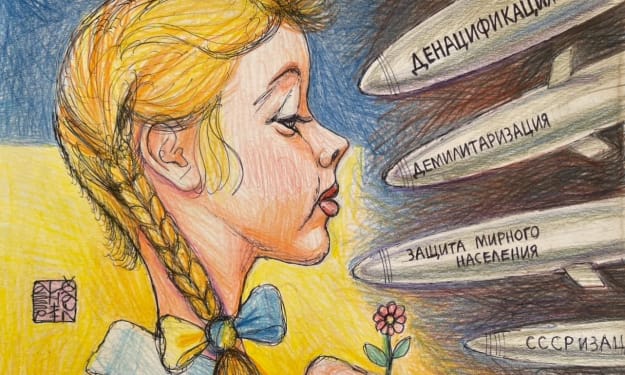
Cartoon explainer: The rockets are labeled with the Russian words that Putin consistently uses to describe his goals for the Ukrainian war: denazification, demilitarization of Ukraine and protection of civilians in Eastern Ukraine. The last rocket has its true goal - "re-Sovietization."
By Lana V Lynx2 years ago in History
The First Automotive Accident in the World: Historical Incident in Transport Modes
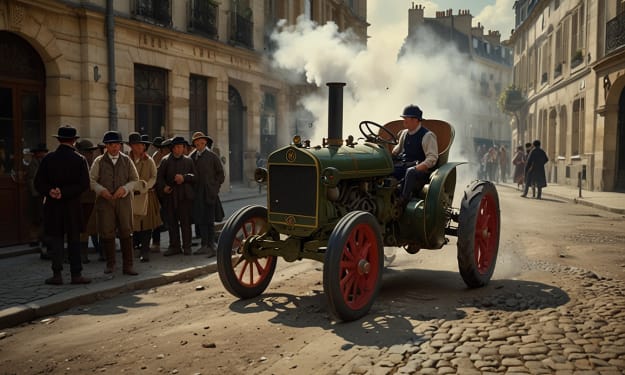
The first known car accident occurred in 1771. Modern road safety and automobile engineering as we know it today has only one particular day to its past. And that was the steam-powered tractor designed by Nicolas-Joseph Cugnot, the first automobile, crashing on the streets of Paris. It is rather difficult to imagine an automobile accident in a time when cars such as we understand them did not exist. Actually, the steam contraption, invented by Cugnot was one of the crucial moments in modern history. And the accident, though minor, became an historical event.
By Abhay kumar chauhan2 years ago in History
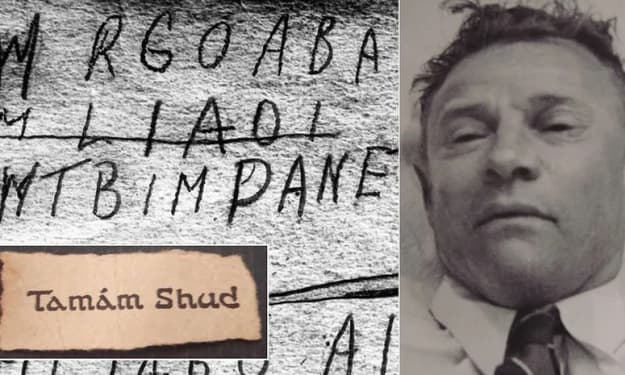
The Enduring Mystery of the Somerton Man: A Beachside Enigma
The year is 1948. Adelaide, Australia basks under the summer sun. Yet, a stark discovery on Somerton Beach casts a long shadow of intrigue. A man, unidentified to this day, lies lifeless, his death shrouded in mystery. This is the story of the Somerton Man, a case that continues to tantalize and baffle investigators over seven decades later.
By David Andrews2 years ago in History
Ayatollah Ali Khamenei: Iran's Supreme Leader and His Resilient Legacy
Ayatollah Ali Khamenei has been Iran's Supreme Leader since 1989. He sits atop this country with huge influence in this country's government, military, and institutions of faith. Most of this nation's foreign and domestic policy undertaken is through the leadership adopted by Ayatollah Ali Khamenei. His longevity and influence have placed him at the heart of the country's politics.
By Abhay kumar chauhan2 years ago in History
Ukrainian Theatre of National Identity - Russia's Nationalist Problem
With that said, I want to set the stage for the rest of this thesis by calling to attention what I will refer to as Soviet Russia’s “Nationalist Problem.” In a multinational empire, assembled after years of war, civil war, and rebellion, the main concern of the Soviet Union was to make the mechanism of a socialist nation function. Political policies were tried and tested in the early years of the USSR. After the nation had stabilized, for example, a policy of Ukrainization was implemented in the Ukrainian lands, offering the Ukrainian people educational and cultural autonomy. This policy was reversed under Stalin, who instead persecuted Ukrainians who explored ideas related to the nation and criticism of the USSR. Culture and politics were inextricably intertwined; in Russia, theate and theatrical spectacles were explored as strategies to propagandize the public into a sense of Soviet pride. Because the arts were so linked to the political mechanism at the time, an artist operating outside or against that political mechanism was subject to excommunication, imprisonment, and/or death. One political party—the Communist Party—dominated, and lack of membership to it was a fast track to pariah status.
By Steven Christopher McKnight2 years ago in History
Ukrainian Theatre of National Identity - Chapter Breakdown
Chapter Breakdown & Goals In the first chapter, I set up the key facets of nationalism and nation-building in Ukraine, and bring to light the key figures in the Ukrainian literary pantheon which guided the development of Ukrainian culture for the century following their deaths. To define nationalism and its associated terms in specific relation to the drama, I bring in scholars such as Nadine Holdsworth and Kiki Gounaridou, who introduce terms such as “nation under duress,” “state of the nation play,” “cosmopolitanism,” and “national iconography.” These terms are to be kept in mind for future sections while exploring and discussing specific works in the Ukrainian canon. Afterwards, I dive into the history of early Ukraine under control of the Russian Empire, explore the lives of Taras Shevchenko, Ivan Franko, and Lesia Ukrainka, and discuss their contributions to the Ukrainian literary canon.
By Steven Christopher McKnight2 years ago in History
Ukrainian Theatre of National Identity - Intro
The following is the introduction to my Master's Thesis, The Construction of National Identity through Theatre in Ukraine in the 1920s and 2020s. In the coming days, I will be posting the full thesis, chapter by chapter. I struggled deciding whether or not to post this here, but I decided ultimately that if it were submitted to academic journals, it would be behind a paywall. This information is important to me, and I would like it to be shared as freely as possible. If you would like the full PDF, click here.
By Steven Christopher McKnight2 years ago in History