Medieval
The Mystery of the Pingyan Giant Footprint: Fact or Fiction?
For centuries, people have been fascinated by stories of giants. Different cultures have shared legends about huge human-like beings, like the Titans in Greek myths or the Nephilim in the Bible. These stories have sparked our imagination and curiosity. But finding real evidence of giants has always been challenging and controversial. This changed for some people when a massive footprint was discovered in the remote village of Pingyan, China, sparking debates about whether it could be proof of giants.
By Muhammad Waseem 2 years ago in History
The Tomb Of Agamemnon
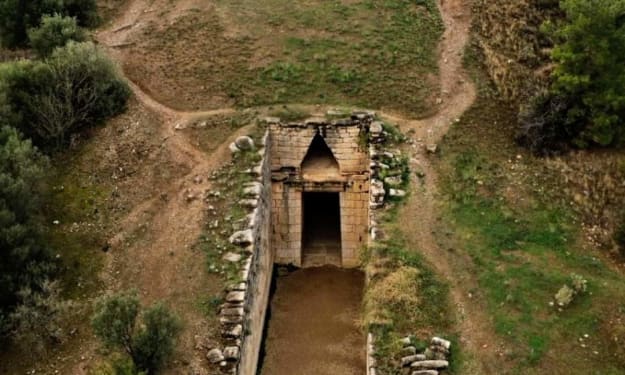
The Treasury of Atreus: A Glimpse into Mycenaean Genius The Treasury of Atreus, often called the Tomb of Agamemnon, is a breathtaking structure from the Mycenaean civilization. Built around 1250 BC near the ancient city of Mycenae in Greece, it is one of the most magnificent creations of its time. Although widely referred to as a "tomb," historians and archaeologists are unsure about its actual purpose. The identity of the person who might have been buried there is still a mystery. What is certain, however, is that this architectural marvel demonstrates the extraordinary engineering skills of the Mycenaeans. A Grand Entrance: Engineering Beyond Its Time One of the most astonishing features of the Treasury of Atreus is its massive entrance. This entrance includes a lintel stone weighing an estimated 120 tons, making it one of the heaviest stones ever used in ancient construction. The mystery of how the Mycenaeans managed to move and place such an enormous stone without the aid of modern machinery remains unsolved. Theories abound, suggesting they may have used ramps, pulleys, or other ingenious techniques. Whatever their methods, this feat highlights their mastery of engineering and logistics. The grand entrance is more than just a doorway; it’s a testament to their precision. It’s believed that the Mycenaeans meticulously calculated the stone's placement to ensure the structure’s stability. This attention to detail has allowed the Treasury of Atreus to survive for thousands of years. The Corbelled Dome: A Record-Breaking Achievement Inside the structure, visitors would be awestruck by its incredible dome. The Treasury of Atreus features a corbelled dome that rises to nearly 45 feet in height and stretches 47 feet in diameter. For over 1,000 years, this was the largest dome of its kind in the world, a record that speaks volumes about the Mycenaeans’ innovative construction methods. The dome was built using a technique called corbelling. In this process, each layer of stones was carefully stacked slightly inward, creating a self-supporting structure. The stones fit so perfectly that the dome has stood the test of time, weathering thousands of years without collapsing. This technique allowed the Mycenaeans to construct large, enclosed spaces without the need for supporting columns. Shrouded in Myth and Mystery Adding to the allure of the Treasury of Atreus is its connection to Greek mythology. Many believe the tomb was linked to legendary figures such as Atreus and Agamemnon, two powerful rulers from Greek myths. Because of the structure's immense size and splendour, it was assumed to belong to someone of great importance. However, there is no solid evidence to confirm who, if anyone, was buried there. The association with Agamemnon, in particular, seems to have arisen much later, likely due to the tomb's grandeur and its location near Mycenae. Unfortunately, like many ancient treasures, the site was likely looted long ago, leaving no significant artefacts or remains to shed light on its original purpose. Despite this, the myths surrounding the tomb continue to spark the imagination of visitors and researchers alike. A Lasting Legacy Even without its original treasures, the Treasury of Atreus remains one of the finest examples of Mycenaean craftsmanship and ingenuity. Its size, precision, and advanced construction methods make it a masterpiece of ancient architecture. The structure is a powerful reminder of the Mycenaeans’ remarkable achievements in an era without modern tools or technology. Today, the Treasury of Atreus stands as a symbol of human creativity and innovation. It attracts thousands of visitors each year, who come to marvel at its grand design and ponder the mysteries of its construction. Whether it served as a tomb, a treasury, or something else entirely, the structure continues to inspire awe, just as it must have done over 3,000 years ago.
By Muhammad Waseem 2 years ago in History
The Most Fascinating Unsolved Mysteries of History
Throughout history, countless events and phenomena have puzzled historians, scientists, and the general public. While many questions have been answered with time and research, some mysteries remain unsolved, offering glimpses into the unknown. These enigmas not only challenge our understanding of the past but also inspire endless theories and speculation. Here, we explore some of the most fascinating unsolved mysteries in history.
By Marius Lungu2 years ago in History
Forgotten Trades of Rural Spain
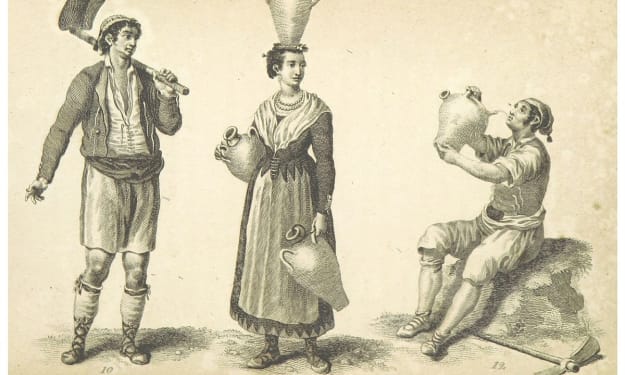
Driving through much of rural Spain today, it’s hard to picture what it looked like before the mid-20th century. The silent streets, main squares, local fountains and fields have little left to show for their industrious past beyond the lined worn faces of the old men assembled on stone benches watching the cars pass through their village. Tourists on their way to a hiking route may stop, take a photo or two, maybe pop into the local museum, but the scythes, threshing sledges and washing boards hanging on the wall are only a superficial reminder of its rich historic traditions.
By Kimberley Silverthorne2 years ago in History
The Legendary Journey of Eight Andalusian Adventurers: Al-Idrisi’s Account of the Voyage Beyond the Sea of Darkness
The annals of history are brimming with stories of courage, curiosity, and the quest for knowledge. One of the most fascinating yet lesser-known tales comes from Al-Idrisi, the 12th-century Arab geographer and scholar. This narrative recounts the daring voyage of eight young men from Andalusia who set sail into the vast and mysterious Atlantic Ocean, referred to at the time as the "Sea of Darkness" (Bahr al-Zulumat). Their journey remains an evocative chapter in the chronicles of exploration and has sparked intrigue among historians, scholars, and enthusiasts of medieval seafaring tales.
By mariam elghazaly2 years ago in History
The Epic Voyages of Christopher Columbus: Discovering New Lands and Shaping History
Christopher Columbus’s journey across the Atlantic Ocean stands as one of the most transformative events in world history. His voyages in the late 15th century were not only feats of navigation and maritime courage but also pivotal moments that linked continents and altered the course of human civilization. In this article, we’ll explore Columbus’s famous expeditions, the lands he encountered, and the profound impact his discoveries had on the world.
By mariam elghazaly2 years ago in History
The Role of Women Pirates and Their Unique Styles
When we think of pirates, the image that often comes to mind is of rugged men with swords and eyepatches. However, women pirates also played a crucial role in pirate history. These fearless women didn’t just conquer the seas; they also revolutionized fashion. Figures like Anne Bonny, Mary Read, and Ching Shih each brought their own twist to pirate attire, combining function with flair in ways that still inspire fashion today.
By Aditya Agarwal2 years ago in History
The Difference Between European and Caribbean Pirate Styles
Pirates—those iconic outlaws of the high seas—are often depicted in similar fashion, but the reality is that their styles varied widely depending on region, culture, and climate. The pirate looks we recognize today are primarily shaped by two key influences: European pirates and Caribbean pirates. Both groups wore distinct outfits, crafted from different materials and tailored to different environments. In this post, we'll break down the key differences between European and Caribbean pirate styles, revealing how each region’s unique conditions shaped their fashion.
By Aditya Agarwal2 years ago in History
Old Leanach Cottage: A Surviving Relic of the Battle of Culloden
Standing on the windswept Culloden Battlefield in Scotland, Old Leanach Cottage is more than just a structure; it’s a poignant survivor of a turbulent past. Thought to be the only remaining building from the infamous Battle of Culloden in 1746, this humble cottage has borne witness to one of the bloodiest chapters in Scottish history. Today, it stands as a testament to resilience, a quiet guardian of memory that invites us to reflect on the events that unfolded around it centuries ago. The Battle of Culloden: A Defining Moment in Scottish History On April 16, 1746, the forces of the British government, led by the Duke of Cumberland, clashed with the Jacobite army under Prince Charles Edward Stuart—known to history as Bonnie Prince Charlie—on the marshy ground of Culloden Moor. The battle was swift and brutal, with the government forces decimating the Jacobite ranks in under an hour. This confrontation effectively ended the Jacobite Rising, a series of attempts by the House of Stuart to reclaim the British throne. The aftermath of Culloden was particularly harsh. The government’s response to the Jacobite defeat included punitive measures that suppressed Highland culture, from dismantling the clan system to banning the wearing of tartan. Culloden thus marks a pivotal point in Scottish history, and its battlefield remains hallowed ground. Among the sites associated with this history, Old Leanach Cottage stands out as a rare, tangible link to the people who lived through these dramatic times. The Origins of Old Leanach Cottage Although its precise age is uncertain, Old Leanach Cottage is believed to date back to the early 18th century, making it contemporary with the Battle of Culloden. Built in the traditional Scottish style, the cottage features thick stone walls, a thatched roof, and a single-story design, blending perfectly with the rugged Highland landscape. At the time of the battle, the cottage likely served as a simple dwelling for local farmers or laborers, typical of rural life in the Scottish Highlands. Historians and preservationists believe that Old Leanach Cottage may have been used as a field hospital after the battle, treating wounded soldiers from both sides. If true, this adds another layer to its historical significance, transforming it from a mere building to a silent witness of the human cost of war. As soldiers fought and died on the battlefield outside, the cottage might have sheltered those lucky—or unlucky—enough to survive the initial clash. Preservation Efforts and Restoration Over the centuries, Old Leanach Cottage fell into disrepair, weathered by the harsh Highland climate and the passage of time. However, its historical importance did not go unnoticed. In the 20th century, efforts began to preserve the cottage and the surrounding battlefield. The National Trust for Scotland (NTS) has since taken responsibility for its maintenance, ensuring that this rare piece of history remains intact. The restoration of the cottage was no small task. Efforts to retain its authenticity meant adhering to traditional building techniques and materials. The thatched roof, for example, was restored using locally sourced materials and skilled craftsmanship to replicate its original look. Inside, the cottage has been carefully preserved to give visitors a sense of what life might have been like in 18th-century Scotland. Old Leanach Cottage Today Today, Old Leanach Cottage is part of the Culloden Battlefield visitor experience, drawing tourists, historians, and those with a passion for Scottish heritage. The cottage’s weathered walls and rustic charm evoke a feeling of stepping back in time, allowing visitors to imagine the lives of those who once inhabited it. The landscape around the cottage, with its sweeping views of Culloden Moor, adds to the haunting sense of history. Culloden Battlefield, now preserved as a memorial site, includes markers and mass graves for the fallen. Old Leanach Cottage provides a unique dimension to this memorial. Unlike the battlefield, which commemorates the violence and loss, the cottage offers a glimpse into everyday life that continued amidst the turmoil. In its modest structure and timeless simplicity, it reminds us of the resilience of ordinary people, who lived through and survived extraordinary events. A Symbol of Resilience and Memory For many, Old Leanach Cottage symbolizes resilience in the face of adversity. It survived not only the chaos of the battle but also the societal upheavals that followed. Standing the test of time, the cottage reminds us of the enduring spirit of the Highland people and the deep scars left by the battle. It is a rare, tangible piece of the past that allows visitors to feel the connection between history and the present day. The cottage also serves as a powerful tool for education, helping visitors to understand the battle's impact on Highland culture and Scotland’s history. With the rise of Scottish tourism and renewed interest in Highland heritage, Old Leanach Cottage plays an important role in preserving and sharing Scotland’s past with the world. A Visit to Culloden and the Legacy of Old Leanach Cottage Visiting Culloden Battlefield and Old Leanach Cottage is a sobering experience, inviting contemplation of Scotland’s history, culture, and identity. The battlefield itself, marked with stones for each clan that fought and perished, is a somber reminder of the cost of war and the price of loyalty. And yet, Old Leanach Cottage offers a different perspective—one of survival, resilience, and the enduring spirit of those who call the Highlands home. In its humble walls, Old Leanach Cottage holds stories of the past. It stands as a quiet yet powerful reminder of the lives that were intertwined with one of Scotland’s most defining historical moments. For those who walk its grounds, it is an invitation to remember, to reflect, and to honor the heritage of a people shaped by Culloden’s legacy.
By Deji Akomolafe2 years ago in History
No Time for Sorrow
Mara was a medical caretaker — a title she'd worn proudly once. Be that as it may, presently, she felt more like a scrounger. Supplies were waning, and she expected to return food and medication once again to the facility. She lacked the opportunity and energy to contemplate the companions she'd lost, or the patients she wasn't ready to save. There was no time for anguish. Consistently spent grieving was a second squandered, and in circumstances such as these, seconds could mean endurance. She rushed through the vacant roads, her heart beating as she dodged into the back streets, staying away from watches. Each corner brought another risk, each shadow could conceal somebody standing by to snare her. Mara's brain was well-honed, working out each move. She didn't permit herself to choose not to move on, to ponder the countenances she'd once known or the recollections she'd appreciated. They were covered now, locked away in some piece of her brain that she was unable to bear to get to. Not at present. As she approached the center, Mara saw a young man, no more seasoned than twelve, sitting by a heap of rubble. His face was smeared with soil, and his eyes were empty, empty such that somebody who had seen a lot of it could be. Mara felt an ache in her chest, a glimmer of sympathy she hadn't permitted herself to feel in weeks. She realized she ought to continue to move — her provisions were required back at the facility — however, something made her interruption. The kid didn't gaze upward as she drew nearer; he was gazing at his hands, which gripped a little, messy toy — a reminder of a day-to-day existence before the conflict. She hunched next to him, delicately putting a hand on his shoulder. "Are you alone?" she asked delicately. The kid gazed upward, and briefly, Mara saw the profundity of his anguish. His lips shuddered, however, he gestured. She didn't have to inquire as to whether he had family. She knew the response as of now; she had seen that look too often. The inclination to help him was overpowering. In any case, Mara's brain was at battle with her heart. She didn't have the assets to take on someone else, particularly not a youngster who might require security. The center was at that point packed, and every patient was barely surviving. She was unable to allow herself to be answerable for another life. Not when so many others were relying upon her. "I… I don't have any place to go," the kid said, his voice scarcely over a murmur. Mara gulped, the contention seething inside her. The consistent piece of her brain shouted that she was unable to take him with her. Yet, something more profound, something more human, overwhelmed that rationale. "Accompany me," she said at last, realizing that this choice could cost her and others. "I'll take you someplace safe." The kid didn't grin or say thanks to her; he essentially gestured, like he'd lost the capacity to expect much else. Together, they advanced back to the center. Mara kept a tight hang on his hand, her faculties increased. She examined the roads, alert for any indication of risk. The facility was concealed in the cellar of an old emergency clinic building. It was dull, cold, and squeezed, yet it was a shelter. Inside, volunteers moved discreetly, keeping an eye on the injured and the debilitated. The space was loaded up with the aroma of germ-killers and the low mumbles of patients. Mara directed the kid to a corner where an improvised bed lay. She gave him a little slice of bread and a taste of water, the main arrangements she could save. As she went to leave, the kid got her hand. "Will… will you return?" Mara faltered, feeling a peculiar feeling of obligation for him. "I'll be here," she guaranteed, however, she couldn't say whether it was a commitment she could keep. In this world, conviction was an extravagance she was unable to bear. The hours obscured into one another. Mara treated injuries, watched out for fevers, and held the hands of those whose time was getting ceaselessly. She lacked the opportunity and energy to think, process, or lament. The essence of the withering tormented her, however she constrained herself to keep on track. Every life was a sign of why she was unable to permit herself to feel. Sorrow would just dial her back, and she was unable to bear the cost of that. Days passed, and the kid remained close by, helping in little ways — getting water, consoling more youthful youngsters, and figuring out how to change basic dressings. Mara could see the versatility working in him, and in some little way, it gave her expectations. Perhaps, she thought, they could endure this together. In any case, she held her feelings under tight restraints, reluctant to allow herself to become connected. Each bond was a potential injury, another misfortune in the works. One night, as Mara was keeping an eye on a patient, she heard a stunning blast close by. The walls shook, dust tumbling from the roof. The patients and volunteers crouched together, dread obvious in their eyes. Mara's heartbeat, and without precedent for months, she felt genuine fear. She looked around, looking for the kid, yet he was no place to be seen. Alarm flooded inside her. Disregarding her security, she darted into the passage, calling out to him. She went through the hallways, her psyche dashing. She had sworn not to mind, not to give anybody access, but rather she understood, at that time, that she had fizzled. She minded profoundly, and the prospect of losing him tore at her heart. At last, she found him close to the entry, assisting a harmed man with limping to somewhere safe and secure. Alleviation washed over her, and she maneuvered him into her arms, holding him firmly. "Never run off that way," she murmured, her voice stifled with feeling. The kid saw her, shock in his eyes. "I thought… I figured you couldn't have cared less." Mara dealt with a powerless grin. "I lack opportunity and willpower to mind," she expressed, attempting to conceal reality, however, the untruth felt empty. The conflict had stripped her of numerous things, however, it hadn't taken her mankind. Not totally. She understood, with a combination of trouble and acknowledgment, that regardless of how enthusiastically she attempted, she was unable to protect herself from pain or love. It was essential for what her identity was, a section she couldn't just stop. The days became hazier, and the difficulties just increased. Yet, Mara and the kid confronted them together, tracking down comfort in one another's presence. They figured out how to track down little snapshots of satisfaction amid the bedlam, and in those minutes, Mara permitted herself to trust. She realized the street ahead would be hard, yet she additionally knew that, as long as they had one another, they would continue to push ahead. There was no time for melancholy, yet maybe, quite possibly, there was the ideal opportunity for trust.
By Hridoy Hasan2 years ago in History