Medieval
The Enigma of London Stone
Every day, thousands of commuters shuffle along Cannon Street, making their way through the dense fog that rolls over London’s financial district. But among the hustle and bustle, few notice an oddity standing almost inconspicuously in a glass enclosure: London Stone. It’s a lump of rock, certainly not impressive at first glance, but this stone holds a mysterious past that has captivated Londoners for centuries.
By llaurren's reads2 years ago in History
Katherine of Aragon and the Unfulfilled Marriage Dreams of Princess Mary
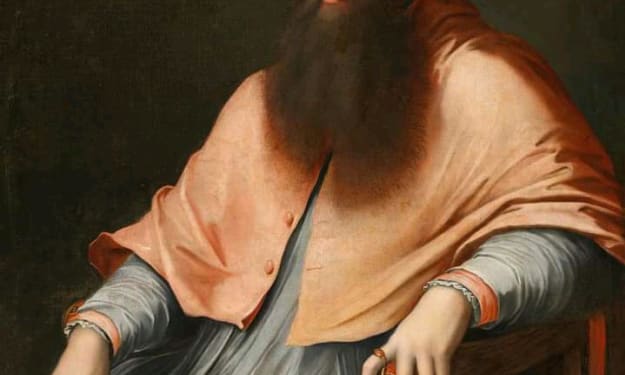
The history of the Tudor dynasty is filled with drama, political intrigue, and tangled webs of ambition. One of the lesser-known but deeply significant stories revolves around Princess Mary, the daughter of Katherine of Aragon and King Henry VIII, and her potential marriage to Reginald Pole, a prominent English cardinal. This marriage, which could have had profound implications for both the English monarchy and the Catholic Church, was thwarted by the very man whose actions would dramatically shape both: Henry VIII. The Marriage Proposal Before Henry VIII’s famous break with Rome and the subsequent establishment of the Church of England, his first wife, Katherine of Aragon, had hoped for a marriage between her daughter Mary and Reginald Pole. Reginald was not only a talented and respected scholar but also a member of a prominent English family. His mother, Margaret Pole, was a close friend of Katherine of Aragon, and the two women shared a strong bond. It was this friendship that sparked the idea of a marriage between their children. At the time, Reginald Pole was seen as one of the most suitable matches for Princess Mary. He was well-educated, ambitious, and had a good standing within the Catholic Church, having been made a cardinal by Pope Clement VII in 1519. Moreover, his lineage as a member of the Pole family, which was closely related to the royal family, made him a noble match that many would have considered advantageous. For Katherine, the union seemed like a natural progression. She had already suffered greatly at the hands of Henry VIII, who had sought an annulment of their marriage to marry Anne Boleyn. By the time her daughter Mary had grown into womanhood, Katherine had been cast aside, and her hopes for a secure future for Mary were fading. A marriage to Reginald Pole would have not only cemented Mary's status but also strengthened ties with the Catholic Church, which Katherine remained loyal to even after her marriage had been dissolved. Reginald Pole’s Rising Star Reginald Pole was a man of immense intellect and had already garnered a great reputation across Europe, particularly for his writings on theology and his opposition to King Henry VIII’s actions, which had led to England’s break from the Catholic Church. In the early 1530s, Pole became a staunch critic of Henry’s divorce from Katherine and his subsequent marriage to Anne Boleyn. His opposition to Henry’s policies and his alignment with the papacy marked him as a key figure in the Catholic resistance against the king’s religious reforms. Because of his ecclesiastical status and his strong Catholic credentials, Pole was considered one of the most eligible bachelors in Europe. His marriage to Mary, therefore, seemed like a perfect solution to Katherine’s predicament. A union between the two would have united English Catholicism under a powerful religious figure and could have kept England aligned with Rome, had it been allowed to happen. Henry VIII’s Opposition However, Henry VIII’s relationship with both his daughter and his former wife had soured. By the time Mary had reached marriageable age, Henry had divorced Katherine and declared himself Supreme Head of the Church of England, cutting ties with the papacy. Henry’s desire for absolute control over his marriages and the future of his dynasty took precedence over any attempts to solidify Mary’s position through a political marriage. The proposal between Mary and Reginald Pole was one of many that Henry rejected for his daughter. Henry had, by this point, turned his back on Katherine and Mary’s Catholic heritage, and he would go to great lengths to ensure that Mary did not find a suitable Catholic match. While Mary was still considered a legitimate heir to the throne, Henry was determined to distance her from the old order, which included any suggestion that she might marry a man loyal to the Pope. Henry’s interference with Mary’s romantic prospects was not merely a matter of royal power; it was also driven by a deep fear of opposition. Pole, who had vocally denounced Henry’s actions, was seen as a potential leader of a Catholic rebellion. To align Mary with someone so strongly opposed to his own authority would have been politically disastrous. Furthermore, Henry’s efforts to control his daughter’s future were also a manifestation of his desire to establish his own line of succession, one that would be uncontested by the likes of Mary and her Catholic allies. The Broken Dreams of Katherine and Margaret For Katherine of Aragon and Margaret Pole, the prospect of a marriage between their children was more than just a political maneuver—it was a personal dream. Both women were committed to preserving Catholicism in England and were devoted to the legacy of their shared faith. A marriage between Mary and Reginald would have symbolized a reunion with the old religious order and a potential for hope in the face of Henry’s devastating reforms. But Henry’s rejection of the match between Mary and Reginald Pole not only crushed Katherine and Margaret’s dreams but also deepened the rift between the Catholic and Protestant factions in England. While Henry would go on to marry Anne Boleyn and later Jane Seymour, the issue of Mary’s marriage remained unresolved, and her future continued to hang in the balance. The Political and Religious Fallout In the years that followed, Mary’s position became increasingly precarious. After the deaths of both Anne Boleyn and Jane Seymour, Henry’s plans for the English succession remained fluid. It wasn’t until after Henry’s death and Mary’s eventual ascension to the throne that the religious and political landscapes shifted once more. Interestingly, Reginald Pole, who had long been estranged from Henry, would eventually return to England during Mary’s reign. In 1554, he was appointed Archbishop of Canterbury and played a significant role in the religious restoration of Catholicism under Mary. Though Mary and Pole never married, their political and religious alliances did finally come to fruition—albeit under very different circumstances than either Katherine or Margaret had envisioned. Conclusion The failed marriage between Princess Mary and Reginald Pole is a story of unfulfilled ambitions and thwarted hopes. For Katherine of Aragon, it was a missed opportunity to secure her daughter’s future and maintain England’s Catholic allegiance. For Reginald Pole, it was a reminder of how deeply personal and political struggles often intersected during the turbulent years of the Tudor dynasty. Though the marriage never came to pass, the legacy of these untold stories continues to shape our understanding of the complex web of loyalty, power, and religion that defined the Tudor era.
By Deji Akomolafe2 years ago in History
The Head of Henry VII's Funeral Effigy: A Masterpiece of Renaissance Portraiture
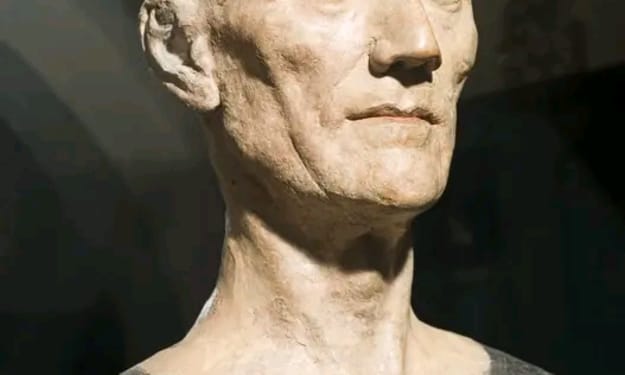
In the world of royal funerary art, few pieces stand out as prominently as the head from Henry VII’s funeral effigy. This exquisite work of craftsmanship not only captures the likeness of England’s first Tudor monarch but also provides a remarkable insight into the evolving sophistication of royal portraiture during the Renaissance period. As one of the finest examples to survive from the era, the head serves as a testament to the artistry and historical significance of effigies, which were an essential part of royal funerals from the 14th to the 17th centuries. --- Funeral Effigies: A Tradition in Royal Burials Royal funerals during the medieval and Renaissance periods were elaborate events designed to honor the deceased monarch’s life and legacy. One of the most notable features of these ceremonies was the effigy, a life-sized sculptural representation of the monarch, which was carried in the funeral procession. These effigies were created to reflect the royal individual in death, often in a highly idealized form, and played a central role in public mourning. Effigies were traditionally made from wood, wax, or cloth and could take on a variety of forms depending on the time period and available resources. For a king or queen, the effigy was not only a representation of their physical appearance but also a symbol of their power and the enduring legacy of their reign. In some cases, these effigies were so realistic that they seemed to come to life, capturing the solemnity and reverence of the funeral proceedings. --- The Effigy of Henry VII Henry VII, the founder of the Tudor dynasty, reigned from 1485 until his death in 1509. His reign was marked by significant political and cultural changes in England, including the consolidation of the Tudor family’s hold on the throne following the tumultuous Wars of the Roses. After his death, Henry VII’s funeral was a grand affair befitting his royal status. At the heart of the procession was his funeral effigy, created to reflect his likeness for the last time before he was laid to rest at Westminster Abbey. Unlike many earlier effigies, which were relatively crude in their depiction of the deceased, Henry VII’s effigy was a work of art that showcased the growing sophistication of royal portraiture during the Renaissance. The attention to detail in the effigy’s creation reflects not only the skill of the artists but also the importance placed on the monarch’s image at the time. This was a period when portraiture was becoming an essential means of communicating power, prestige, and lineage, particularly for royal families. --- A Study in Renaissance Portraiture The head from Henry VII’s effigy stands out as one of the finest examples of royal portraiture from the period. Created with remarkable skill, it offers a strikingly realistic depiction of the king’s facial features, capturing both the dignity and the personality of the ruler. The facial expression is serene and noble, conveying a sense of calm and authority that was essential for any king. The sculptor also took great care in rendering the king’s features in minute detail, from the carefully carved beard and hair to the regal folds of his attire. This realism was part of a broader shift in art during the Renaissance, where there was a growing emphasis on humanism and the accurate representation of the individual. Portraits were no longer idealized or stylized; instead, artists sought to create lifelike depictions of their subjects, capturing their essence and personality. This development was evident not only in paintings but also in sculpture, as seen in Henry VII’s funeral effigy. The head, in particular, reflects this trend, offering a rare glimpse into the king’s appearance and the artistic standards of the time. --- Symbolism and Significance The funeral effigy of Henry VII was not only an accurate representation of the king’s physical likeness but also a symbol of his royal authority. During the procession, the effigy would have been carried through the streets, where it was viewed by the public as a final display of the king’s power and influence. The effigy, as with other royal representations, served to reinforce the monarch’s status and legacy, ensuring that their memory lived on long after their death. The highly detailed and refined nature of the head from the effigy also speaks to the importance of royal portraiture as a tool for shaping public perception. For Henry VII, the effigy served as both a commemorative and political symbol, reinforcing his rightful place on the throne and the strength of the Tudor dynasty. By presenting an idealized, yet realistic, image of the king, the effigy allowed the people to mourn their monarch while also remembering the greatness of his reign. --- The Legacy of the Effigy The head from Henry VII’s funeral effigy is an invaluable artifact, not only because of its artistic beauty but also because it offers a rare window into the world of royal funerary practices in Renaissance England. As one of the finest surviving examples of its kind, the effigy reflects the cultural and political climate of the time and marks a pivotal moment in the evolution of royal portraiture. Though much of the funeral effigy has been lost to time, the surviving head continues to captivate historians, art lovers, and royal enthusiasts alike. It serves as a reminder of the skill and artistry of the period, as well as the enduring importance of the monarch’s image in shaping the legacy of a ruler. --- Conclusion The head from Henry VII’s funeral effigy remains one of the most significant pieces of Renaissance portraiture to survive from the period. Its creation is a testament to the skill of the artists and the growing sophistication of royal image-making during the late 15th and early 16th centuries. More than just a lifelike depiction of a monarch, the effigy served as a powerful symbol of royal authority, reflecting both the political climate of the time and the importance placed on the king’s legacy. As we continue to study and admire this remarkable artifact, we are reminded of the complex interplay between art, power, and memory in the world of Renaissance England. Through its exquisite craftsmanship and symbolic meaning, Henry VII’s funeral effigy continues to serve as a link between the past and the present, offering a timeless representation of one of England’s most important monarchs.
By Deji Akomolafe2 years ago in History
The Impact of Social Media on Mental Health
Social media has transformed the way we communicate, share experiences, and perceive the world around us. With billions of people worldwide using platforms like Instagram, Facebook, Twitter, and TikTok, social media has become a central part of daily life. It offers countless benefits, including staying connected with friends and family, finding support communities, and gaining access to information and entertainment. However, as social media continues to permeate every aspect of our lives, concerns about its impact on mental health have grown significantly. Is social media a tool that enriches our lives, or is it a double-edged sword that can harm our mental well-being?
By dokis sris2 years ago in History
Elizabeth I: The Golden Age Queen
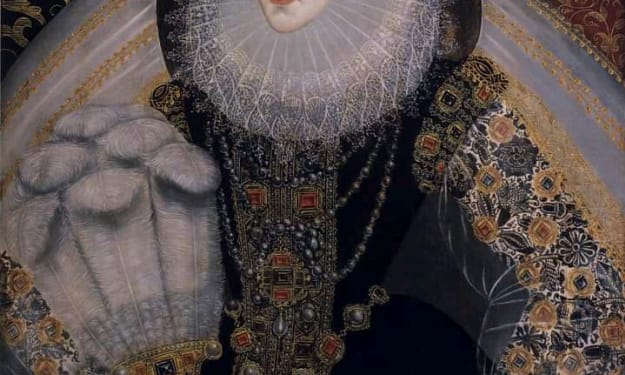
In 1558, Elizabeth Tudor ascended the throne of England, ushering in a transformative era now famously remembered as the Elizabethan Age. The only surviving child of Anne Boleyn and Henry VIII, Elizabeth overcame numerous challenges to become one of Britain’s most iconic monarchs. Her nearly 45-year reign marked a period of cultural flourishing, military triumph, and political stability that shaped the course of English history. --- Elizabeth’s Path to the Throne Born on September 7, 1533, at Greenwich Palace, Elizabeth’s life began amidst the dramatic upheaval of the Tudor court. Her mother, Anne Boleyn, was executed when Elizabeth was just two years old, leaving her declared illegitimate and removed from the line of succession. Despite these early setbacks, Elizabeth received a rigorous education, excelling in languages, philosophy, and politics under the guidance of some of the finest tutors of the time. Following the brief reigns of her half-brother, Edward VI, and her half-sister, Mary I, Elizabeth’s claim to the throne was fraught with danger. Mary’s reign was marked by religious turmoil as she sought to restore Catholicism, creating deep divisions within England. When Mary died childless in 1558, Elizabeth inherited a kingdom in desperate need of unity and stability. --- The Golden Age of Elizabeth Elizabeth’s reign is often called "The Golden Age" for its remarkable contributions to culture, exploration, and national identity. One of her most significant achievements was establishing a Protestant Church of England, solidifying the country’s religious direction after decades of instability. The 1559 Act of Uniformity and Act of Supremacy reaffirmed her position as Supreme Governor of the Church, balancing Protestant reforms with policies designed to appease moderate Catholics. This period also witnessed a cultural explosion, with figures like William Shakespeare and Christopher Marlowe revolutionizing English literature and drama. The Elizabethan stage became a platform for exploring themes of love, power, and identity, cementing England’s literary legacy. Meanwhile, explorers such as Sir Francis Drake and Sir Walter Raleigh expanded England’s horizons, laying the groundwork for its future as a global empire. The Age of Exploration not only brought wealth to England but also fostered a spirit of adventure and innovation. --- The Defeat of the Spanish Armada One of Elizabeth’s defining moments came in 1588 with the defeat of the Spanish Armada. King Philip II of Spain, a staunch Catholic, sought to invade England and depose its Protestant queen. Despite being outnumbered and outgunned, the English navy, aided by unfavorable weather conditions for the Spanish fleet, achieved a resounding victory. The triumph bolstered Elizabeth’s reputation as a strong and capable leader, reinforcing England’s naval supremacy and national pride. Her speech to the troops at Tilbury, where she declared, "I know I have the body but of a weak and feeble woman, but I have the heart and stomach of a king," remains one of the most iconic moments of her reign. --- A Legacy of Diplomacy and Independence Elizabeth’s reign was characterized by her astute political instincts and careful diplomacy. She skillfully navigated a male-dominated world, earning the respect of her advisors and foreign leaders alike. Known as the “Virgin Queen,” Elizabeth never married, a decision that allowed her to maintain independence and avoid the potential power struggles that a royal consort might bring. Her unmarried status also became a symbol of her devotion to her country, with England often described as her “husband.” This personal sacrifice underscored her commitment to her role as monarch, strengthening her bond with her subjects. --- The End of the Tudor Dynasty Elizabeth’s death on March 24, 1603, marked the end of the Tudor dynasty, a lineage that had ruled England for over a century. Without an heir, the crown passed to James VI of Scotland, the son of Mary, Queen of Scots, uniting the crowns of England and Scotland under the Stuart dynasty. This transition, though peaceful, signaled the end of an era. Elizabeth’s reign had been one of relative stability and prosperity, and her passing left a significant void. Yet, her influence endured, shaping the identity of England for generations to come. --- Elizabeth’s Enduring Legacy Elizabeth I is remembered as one of Britain’s greatest monarchs, a ruler who defied expectations and steered her nation through a tumultuous period of history. Her reign not only solidified England’s position as a world power but also ensured that the legacy of her mother, Anne Boleyn, lived on through her accomplishments. The Elizabethan Age remains a source of pride and inspiration, celebrated for its cultural achievements, military victories, and the enduring image of a queen who stood resilient in the face of adversity. Elizabeth’s ability to unite her people, foster innovation, and maintain a delicate balance of power solidifies her place as a pivotal figure in history. Her life and reign continue to captivate historians, writers, and audiences, symbolizing the enduring power of leadership, intellect, and vision. As the last Tudor monarch, Elizabeth I left behind a legacy that defined an era and continues to shape the story of England to this day.
By Deji Akomolafe2 years ago in History
Leif Eriksson and the Discovery of Vinland: A Viking Saga of Exploration
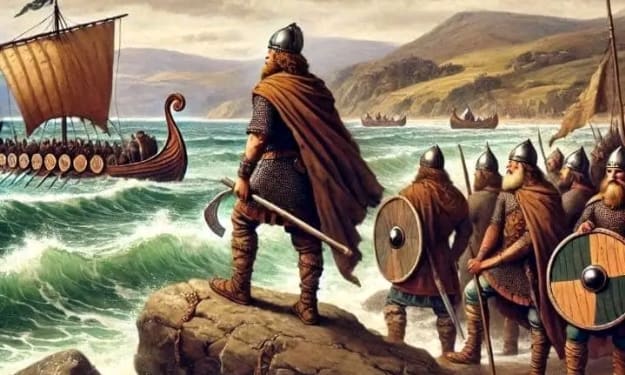
Over 500 years before Christopher Columbus set sail across the Atlantic, a Viking explorer named Leif Eriksson charted a course to North America. The son of Erik the Red, who established settlements in Greenland, Leif Eriksson is celebrated as one of history's greatest explorers. Around 1000-1001 AD, according to Icelandic sagas, Eriksson and his crew reached a mysterious land they called “Vinland.” This "land of grapes" or "land of wine" was so named for the abundance of wild grapes or berries found there. Leif Eriksson’s journey to Vinland marked a significant moment in history, providing the earliest known evidence of Europeans reaching the Americas. His story, preserved in the sagas, offers a fascinating glimpse into the Viking Age and their remarkable seafaring prowess. --- The Viking Spirit of Exploration The Norse people of the Viking Age were renowned for their maritime skills and exploratory spirit. Beginning in the late 8th century, Vikings ventured far beyond their Scandinavian homelands, establishing settlements, trade routes, and colonies across Europe, the North Atlantic, and even as far as the Mediterranean and Central Asia. By the late 10th century, Erik the Red had founded a settlement in Greenland after being exiled from Iceland. Greenland’s harsh environment spurred the Vikings to look further afield for new lands with richer resources. This adventurous spirit was inherited by Erik’s son, Leif Eriksson, who would go on to lead one of history’s most daring voyages of exploration. --- The Journey to Vinland Leif Eriksson’s journey to North America is recounted in two Icelandic sagas: the Saga of the Greenlanders and the Saga of Erik the Red. These medieval texts, though written centuries after the events they describe, provide a detailed narrative of Eriksson’s voyage. According to the sagas, Leif Eriksson set sail from Greenland with a crew of around 35 men. Some accounts suggest that he had heard tales of lands to the west from another Norseman, Bjarni Herjólfsson, who had sighted the coast of North America but did not land. Determined to explore further, Eriksson followed Bjarni’s route and made landfall in a series of locations that he named based on their characteristics. The first land he encountered was a barren, rocky area he called Helluland (“Land of Flat Stones”), thought to be modern-day Baffin Island. From there, he sailed south to a forested region he named Markland (“Land of Forests”), likely Labrador. Finally, he reached a place he called Vinland (“Land of Grapes”), which many historians believe corresponds to the coastal areas of Newfoundland. --- Life in Vinland Eriksson and his crew spent the winter in Vinland, establishing a temporary settlement. The sagas describe Vinland as a fertile land with an abundance of natural resources, including fish, game, and wild berries. Most famously, the land was said to produce wild grapes, which the Vikings associated with wine production. While scholars debate whether the "grapes" were actual grapes or another type of berry, such as cranberries or gooseberries, the name Vinland reflects the Vikings’ perception of the land’s richness and potential. The temporary settlement in Vinland is often identified with L’Anse aux Meadows, an archaeological site on the northern tip of Newfoundland. Discovered in 1960, this site provides physical evidence of Norse presence in North America, including the remains of Viking-style buildings, tools, and artifacts. While L’Anse aux Meadows is small and likely served as a seasonal camp, it confirms the accuracy of the sagas’ accounts and establishes Eriksson’s voyage as the earliest known European exploration of the Americas. --- Vinland’s Legacy Despite its promise, Vinland was not permanently settled by the Norse. The sagas suggest that the Vikings faced challenges in maintaining their foothold in the New World, including conflicts with the indigenous peoples they called Skrælings. These encounters, combined with the logistical difficulties of maintaining a colony so far from Greenland and Iceland, likely deterred further attempts at settlement. Nevertheless, Eriksson’s journey to Vinland left a lasting legacy. It demonstrated the incredible range of Viking exploration and their ability to navigate vast, uncharted waters. It also added a new chapter to the history of human migration, challenging the traditional narrative that Columbus “discovered” the Americas in 1492. While the Norse presence in Vinland was brief, it symbolizes a remarkable moment in the history of exploration. The story of Leif Eriksson and his voyage to the New World continues to inspire curiosity and admiration, offering a glimpse into the courage and determination of the Viking Age. --- Leif Eriksson’s Place in History Leif Eriksson is remembered as one of the greatest explorers of all time, and his achievements are celebrated in modern culture. In the United States, Leif Erikson Day is observed annually on October 9, honoring his pioneering spirit and early contributions to the history of the Americas. Eriksson’s journey to Vinland stands as a testament to the adventurous spirit of the Vikings and their remarkable achievements in exploration. It challenges us to reconsider the complexity of human migration and the interconnectedness of ancient civilizations. --- Conclusion: The First European to Reach the Americas Leif Eriksson’s voyage to Vinland around 1000 AD represents a pivotal moment in the history of exploration. As the first known European to set foot in North America, Eriksson paved the way for future exploration and highlighted the extraordinary capabilities of the Norse people. The sagas of Vinland, combined with archaeological discoveries like L’Anse aux Meadows, remind us of the richness and complexity of history. They also invite us to marvel at the courage and ingenuity of those who ventured into the unknown, leaving an indelible mark on the story of humanity.
By Deji Akomolafe2 years ago in History
The Anglo-Saxon Settlement of Britain: A Turning Point in History
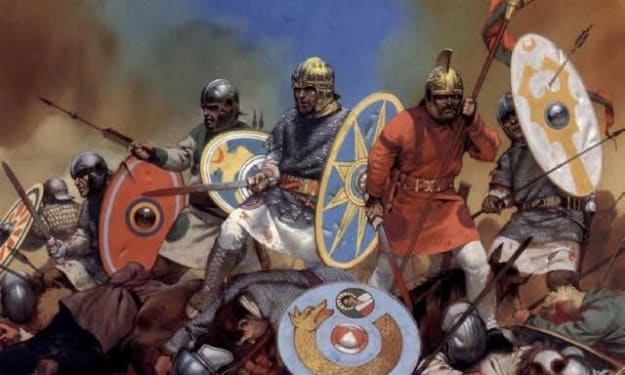
In 410 AD, as the Roman Empire retreated from Britain, a significant and transformative migration began. Germanic tribes, particularly the Anglo-Saxons, started settling in the fertile lands of the island. This migration not only reshaped the demographic and cultural makeup of Britain but also left a lasting imprint on its language, traditions, and place names. Among the most notable legacies of this period is the naming of "Wales" and the term "Welsh," both of which stem from Germanic words meaning "strangers" or "foreigners." The story of the Anglo-Saxon settlement and its impact on the native Celtic peoples of Britain is a tale of displacement, cultural transformation, and the forging of a new identity for the island. --- The Context of Anglo-Saxon Migration The departure of the Romans in 410 AD marked the end of an era of centralized governance and infrastructure in Britain. The island, which had been part of the Roman Empire for nearly four centuries, was left vulnerable to external invasions and internal strife. Without the Roman legions to defend them, the Britons faced increasing pressure from northern tribes like the Picts and Scots, as well as seafaring raiders from across the North Sea. It was in this climate of instability that the Anglo-Saxons arrived. Comprising various Germanic tribes, including the Angles, Saxons, and Jutes, these newcomers were initially invited as mercenaries to help defend Britain from external threats. However, they soon began settling the land themselves, establishing control over large swathes of territory and pushing the native Celtic population to the peripheries of the island. --- The Displacement of the Celtic Britons As the Anglo-Saxons established their dominance in Britain, the native Celtic Britons were gradually displaced from their ancestral territories. This displacement was not a sudden event but rather a gradual process that unfolded over several centuries. The Anglo-Saxons settled primarily in the fertile lowlands, where they established new villages, towns, and kingdoms. Meanwhile, the Celtic Britons retreated to the mountainous and less accessible regions of the island, such as modern-day Wales, Cornwall, and Scotland. This movement of peoples led to the creation of distinct cultural and linguistic regions in Britain. The Celtic Britons retained their own languages, such as Welsh, Cornish, and Cumbric, which were derived from the earlier Brythonic language. In contrast, the Anglo-Saxons brought their Germanic dialects, which eventually evolved into Old English. The linguistic divide between these two groups would shape the cultural landscape of Britain for centuries to come. --- The Origin of "Wales" and "Welsh" One of the most enduring legacies of the Anglo-Saxon settlement is the naming of Wales and the Welsh people. The Anglo-Saxons referred to the Celtic Britons as "wealas," a term derived from the Old English word for "foreigners" or "strangers." This reflects the Anglo-Saxon perspective of the Celtic Britons as an alien population, despite their deep historical roots in the land. The term "wealas" eventually gave rise to the modern English name "Wales" and the adjective "Welsh." Ironically, the Celtic Britons were the original inhabitants of the island, yet they were labeled as outsiders by the Anglo-Saxon settlers. This linguistic legacy highlights the power dynamics of the period and the cultural dominance of the Anglo-Saxons in shaping the narrative of Britain’s history. --- The Cultural and Political Transformation of Britain The arrival of the Anglo-Saxons did not merely displace the Celtic Britons—it also brought about a profound cultural transformation. The Anglo-Saxons introduced their own customs, laws, and religious practices, many of which became foundational to English identity. Pagan beliefs dominated in the early years of settlement, but by the 7th century, the Anglo-Saxons had largely converted to Christianity, blending their traditions with those of the Celtic Church. Politically, the Anglo-Saxons established a patchwork of kingdoms, including Wessex, Mercia, and Northumbria, each vying for supremacy over the others. These kingdoms laid the groundwork for the eventual unification of England in the 10th century. The influence of Anglo-Saxon governance, with its emphasis on local rule and tribal loyalty, can still be traced in aspects of English law and culture today. --- The Enduring Legacy of the Celtic Britons While the Anglo-Saxons dominated much of Britain, the Celtic Britons retained their identity and culture in the regions to which they retreated. In Wales, for example, the Welsh language and traditions have endured for over a millennium, serving as a living testament to the resilience of the Celtic people. The term "Welsh," once used to mark the Britons as outsiders, has been reclaimed as a badge of cultural pride. Today, Wales celebrates its unique heritage through its language, literature, and festivals, such as the Eisteddfod, which showcases Welsh music and poetry. Similarly, the Cornish language has seen a revival in recent years, and Scotland continues to embrace its Gaelic traditions. --- Conclusion: A Story of Displacement and Resilience The Anglo-Saxon settlement of Britain in 410 AD was a turning point in the island’s history. It marked the beginning of a new cultural era, one in which the native Celtic Britons were pushed to the margins of their own land. Yet, despite the displacement and cultural dominance of the Anglo-Saxons, the Celtic peoples of Britain preserved their identity and traditions, leaving an indelible mark on the island’s history. The names "Wales" and "Welsh," rooted in the Anglo-Saxon perception of the Britons as foreigners, serve as a reminder of this complex and layered history. They reflect not only the divisions of the past but also the enduring strength of the Celtic identity in the face of adversity. As we look back on this pivotal period, we gain a deeper appreciation for the resilience of the Celtic Britons and the profound cultural transformations that shaped the Britain we know today.
By Deji Akomolafe2 years ago in History
The First Automotive Accident in the World: Historical Incident in Transport Modes
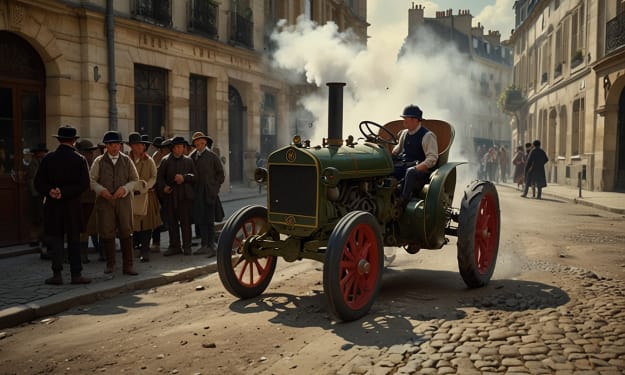
The first known car accident occurred in 1771. Modern road safety and automobile engineering as we know it today has only one particular day to its past. And that was the steam-powered tractor designed by Nicolas-Joseph Cugnot, the first automobile, crashing on the streets of Paris. It is rather difficult to imagine an automobile accident in a time when cars such as we understand them did not exist. Actually, the steam contraption, invented by Cugnot was one of the crucial moments in modern history. And the accident, though minor, became an historical event.
By Abhay kumar chauhan2 years ago in History
Ayatollah Ali Khamenei: Iran's Supreme Leader and His Resilient Legacy
Ayatollah Ali Khamenei has been Iran's Supreme Leader since 1989. He sits atop this country with huge influence in this country's government, military, and institutions of faith. Most of this nation's foreign and domestic policy undertaken is through the leadership adopted by Ayatollah Ali Khamenei. His longevity and influence have placed him at the heart of the country's politics.
By Abhay kumar chauhan2 years ago in History