Medieval
Secrets of Viking Life
At the stature of the Viking Age, marine Scandinavian warriors ruled preeminent in northern Europe and past. However indeed as they were terrorizing, say, the British Isles, they were losing the battle against verbal microscopic organisms. As it turns out, numerous Vikings endured from cavities, plaque buildup, and tooth diseases, and they utilized different methodologies to reduce the pain.
By Shams Says2 years ago in History
Rescuing Humanity
German industrialist Oskar Schindler is well known nowadays (much obliged to a 1993 Steven Spielberg motion picture) for sparing the lives of more than 1,000 of his Jewish workers amid the Holocaust. In any case, Schindler’s story and inclusion in the Nazi party is more complex than its Hollywood portrayal.
By Shams Says2 years ago in History
The Diplomat’s Dual Life
The Chevalier d’Éon was born Charles d'Eon de Beaumont on October 5, 1728, and would go on to be a French trooper, spy, ambassador and in mid-life, a lady named Charlotte. D’Eon’s military abuses in the Seven Years’ War, part in arranging the Paris Peace Arrangement, and brave benefit as a spy for French Ruler Louis XV was dominated by theory around their gender.
By Shams Says2 years ago in History
Monroe and DiMaggio
Marilyn Monroe was a 25-year-old rising star when she met baseball incredible Joe DiMaggio in 1952. DiMaggio, 12 a long time her senior, had fair resigned from the Modern York Yankees. The press was charmed with the matching of sports and cinema royalty.
By Shams Says2 years ago in History
Medieval Box Beds: A Cozy Window into the Past
In the world of medieval Europe, the comforts of modern heating and insulated homes were unimaginable luxuries. To combat the harsh winters and maintain privacy in often crowded living spaces, a unique and ingenious solution emerged: the box bed. This snug sleeping arrangement, which gained immense popularity around 600 years ago, was not just practical but also a symbol of warmth and security. Medieval box beds have long since disappeared from common use, but their charm and ingenuity continue to captivate historians and enthusiasts of historical design. In this blog, we delve into the history, functionality, and cultural significance of these cozy wooden enclosures. --- What Were Medieval Box Beds? A box bed was essentially a wooden structure with walls, a roof, and a sliding or hinged door. It resembled a small cupboard or alcove built to house a mattress and bedding. These beds were often built into the walls of a home or stood as standalone furniture, making the most of the available space. The key feature of a box bed was its enclosed design. Unlike modern open-framed beds, the box bed created a cocoon-like environment, trapping the sleeper's body heat and shielding them from drafts. This was particularly valuable in medieval homes, which often had poor insulation and relied on fireplaces for warmth. --- A Cocoon of Comfort and Privacy One of the primary reasons for the popularity of box beds was their ability to provide warmth. In an era when winters were harsh and central heating was nonexistent, retaining body heat during sleep was vital for comfort and health. The enclosed design of box beds made them exceptionally effective at conserving warmth. Box beds also offered privacy, a valuable feature in medieval households where multiple family members often shared a single room. The sliding doors or curtains of the bed created a personal sanctuary, allowing individuals to retreat into their own space, even in crowded living conditions. --- Design and Craftsmanship Medieval box beds were as varied as the homes they occupied. Wealthier households often featured elaborately carved box beds made from high-quality wood, adorned with intricate designs and motifs. These beds were not only functional but also served as symbols of status and taste. In simpler households, box beds were more utilitarian in design, built from readily available materials like oak or pine. Despite their simplicity, these beds were robust and carefully crafted to withstand daily use. The design of box beds also catered to different needs. Some were built into walls or alcoves, saving floor space in small homes, while others were standalone pieces of furniture that could be moved if necessary. --- Cultural Significance Box beds were more than just furniture; they were an integral part of medieval life. Their design reflected the values and challenges of the time, such as the need for warmth, privacy, and efficient use of space. These beds also played a role in social customs and traditions. In some regions, the bed was a place where important conversations took place, and its enclosure provided an intimate setting for family bonding. The box bed’s association with comfort and security made it a cherished feature of medieval homes. --- The Decline of Box Beds As living conditions improved and homes became better insulated, the need for box beds diminished. By the 18th and 19th centuries, they were gradually replaced by open-framed beds, which allowed for greater ventilation and accommodated changing tastes in interior design. Despite their decline, box beds remained a beloved feature in certain rural areas, particularly in colder regions like Brittany in France and parts of Scotland. In these places, they persisted well into the 19th century, valued for their practicality and charm. --- Modern Interest in Box Beds Today, box beds are experiencing a revival of interest among history enthusiasts and lovers of unique furniture. Their cozy design and historical significance have inspired modern reinterpretations, with craftsmen creating contemporary box beds that combine medieval charm with modern comforts. In museums and historical homes, original box beds are preserved as fascinating artifacts of medieval life. They offer a tangible connection to the past, allowing visitors to imagine the daily lives of people who relied on these ingenious structures for warmth and rest. --- Lessons from Medieval Design The box bed is a testament to human ingenuity and adaptability. In an age of limited resources and harsh conditions, medieval craftsmen created a solution that addressed multiple needs with elegance and practicality. For modern homeowners, the concept of the box bed offers valuable insights into efficient use of space, sustainable living, and the importance of creating personal sanctuaries. The resurgence of interest in cozy, enclosed sleeping spaces reflects a timeless desire for comfort and security, even in our technologically advanced world. --- Conclusion Medieval box beds were more than just a place to sleep—they were a vital part of everyday life, offering warmth, privacy, and a sense of security. Their enduring charm and historical significance make them a fascinating subject for anyone interested in medieval history, design, or the art of living simply. As we marvel at these ingenious creations, we are reminded of the resourcefulness and creativity of our ancestors. The box bed, with its cozy enclosure and timeless appeal, remains a symbol of comfort and resilience in the face of life’s challenges.
By Deji Akomolafe2 years ago in History
Sermoneta: A Journey Back to the 12th Century
Nestled 56 kilometers south of Rome, the enchanting village of Sermoneta feels like a step back in time. With its cobblestone streets, medieval architecture, and the aura of mystery surrounding the Knights Templar, this village has become a captivating destination for history enthusiasts and travelers alike. Perched on a hill overlooking the Pontine Plain, Sermoneta seems frozen in the 12th century, offering visitors an immersive experience into the past. This blog takes you through the streets, history, and cultural significance of Sermoneta, highlighting why it’s one of Italy’s most charming and well-preserved medieval villages. --- A Village Steeped in History Sermoneta’s history dates back over a thousand years, but it flourished during the 12th century when the Knights Templar sought refuge there. The village was strategically important due to its elevated location, offering a vantage point to monitor the surrounding plains. Its medieval castle, built by the powerful Caetani family, became a stronghold for the Knights and a symbol of Sermoneta’s enduring legacy. The village’s medieval charm is remarkably intact. Walking through its narrow streets, you’ll encounter ancient walls, arched doorways, and quaint stone houses that transport you to a time when knights roamed the land and monasteries served as centers of learning and refuge. --- The Castle of Sermoneta The heart of Sermoneta is its magnificent castle, known as Castello Caetani. Built in the 13th century and later expanded, the castle dominates the village skyline. It was once home to the Caetani family, one of the most influential families in medieval Italy, who played a pivotal role in the region's politics and religion. The castle’s thick stone walls, watchtowers, and crenellated battlements reflect its role as both a defensive fortress and a luxurious residence. Within its walls, visitors can explore grand halls, secret passageways, and the remnants of frescoes that hint at the castle’s opulent past. The Knights Templar are believed to have found refuge within the castle during times of turmoil, adding an element of mystery and legend to its history. For many visitors, the connection to the Templars adds an intriguing layer to the already fascinating story of Sermoneta. --- Medieval Streets and Timeless Atmosphere One of the most captivating aspects of Sermoneta is its streets. Narrow and winding, these cobblestone paths are flanked by stone houses adorned with flower-filled balconies. Every corner reveals a new detail: a carved doorway, a weathered statue, or a hidden courtyard. The village square, Piazza del Popolo, serves as a gathering place and a hub of activity. Here, you can find local artisans selling handmade crafts, traditional Italian cafes serving espresso and gelato, and visitors soaking in the serene atmosphere. The timeless charm of Sermoneta makes it a popular location for filmmakers and photographers seeking to capture the essence of medieval Italy. --- The Knights Templar and Their Legacy The Knights Templar, the legendary Christian military order, played a significant role in Sermoneta’s history. Known for their role in the Crusades and their mysterious rituals, the Templars found refuge in Sermoneta after facing persecution in other parts of Europe. The village’s castle and monastery became safe havens for the Knights, where they could regroup and plan their next moves. This connection to the Templars has given Sermoneta an air of mystique, attracting historians and conspiracy theorists who are eager to uncover the secrets of this enigmatic order. Although the Templars’ presence in Sermoneta was relatively short-lived, their influence is still felt in the village’s architecture and cultural heritage. --- The Monastery of San Michele Arcangelo Another highlight of Sermoneta is the Monastery of San Michele Arcangelo, a spiritual retreat that has stood for centuries. The monastery’s serene setting and simple architecture reflect its original purpose as a place of worship and contemplation. Visitors can explore the monastery’s frescoed chapels, cloisters, and ancient crypts, gaining insight into the religious practices of the time. The monastery’s connection to the Knights Templar adds another layer of intrigue, as it is believed to have been a key site for the order during their time in Sermoneta. --- A Haven for Modern Travelers Today, Sermoneta remains a small, peaceful village that feels untouched by the passage of time. Its proximity to Rome makes it an ideal day trip for those seeking a break from the hustle and bustle of the Eternal City. Visitors can enjoy guided tours of the castle and monastery, as well as leisurely strolls through the village’s streets. Local restaurants serve traditional Italian cuisine, including dishes that showcase the flavors of the Lazio region. Sermoneta is also known for its olive oil, wine, and handmade pasta, making it a haven for food lovers. For those who wish to stay longer, charming bed-and-breakfasts and guesthouses offer a cozy base for exploring the village and its surroundings. --- Why Visit Sermoneta? Sermoneta is more than just a village—it’s a living museum where history and legend converge. Whether you’re drawn by the allure of the Knights Templar, the beauty of medieval architecture, or the tranquility of the Italian countryside, Sermoneta offers an unforgettable experience. As you wander through its streets and gaze out over the Pontine Plain, it’s easy to imagine life in the 12th century, when the village served as a sanctuary for knights and a beacon of resilience. Sermoneta’s enduring charm and historical significance make it a destination that lingers in the heart and mind long after you leave. So, if you’re planning a trip to Italy, be sure to include Sermoneta on your itinerary. It’s a journey back in time that promises to enchant, inspire, and leave you with a newfound appreciation for the timeless beauty of medieval Europe.
By Deji Akomolafe2 years ago in History
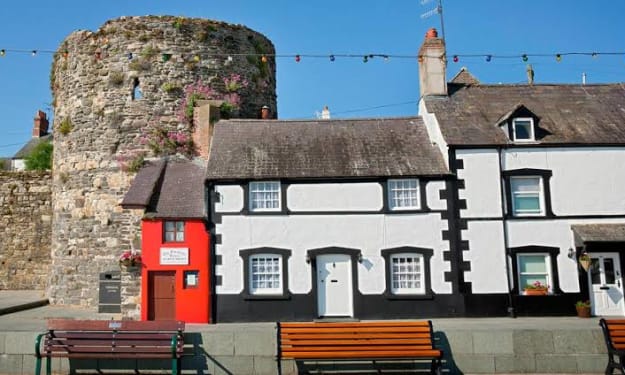
The Smallest House in Great Britain: A Charming Slice of History
Nestled along the quay in the picturesque town of Conwy, Wales, lies an architectural curiosity that has captured the imagination of visitors for centuries. Known as the Smallest House in Great Britain, or Quay House, this tiny structure stands as a testament to the ingenuity of historical living spaces and the charm of Welsh heritage. With a floor area of just 3.05 by 1.8 meters (10.0 by 5.9 feet) and a height of 3.1 meters (10 feet 2 inches) to the eaves, the Smallest House is as diminutive as it is fascinating. Built into the medieval walls of Conwy Castle, it served as a residence from the 1500s until 1900, providing a home to a series of occupants despite its modest dimensions. Today, it stands as a beloved tourist attraction, drawing visitors from around the world who are eager to step inside and experience its unique history. --- A Peek Into Its Dimensions The Smallest House is exactly as its name suggests—a minuscule dwelling that is smaller than most modern bathrooms. Its dimensions were dictated by its unique location along the medieval Conwy Castle walls, making use of the available space in a highly resourceful manner. The interior of the house is divided into two levels. The ground floor features a simple living area with just enough space for a fireplace, a single chair, and a small table. A steep ladder leads to the upper floor, where the bedroom contains little more than a single bed and a tiny nightstand. There is no bathroom, as outdoor facilities were used during its time of occupancy. While the house's small size may seem impractical by today’s standards, it speaks to the resilience and adaptability of its former inhabitants, who managed to make the space their home. --- A History of Remarkable Occupants The Smallest House’s history stretches back to the 16th century. Over the years, it provided shelter for a variety of residents, including fishermen, laborers, and tradespeople. The house’s most famous resident, however, was Robert Jones, a fisherman and coal merchant who lived there until 1900. What makes Jones’s story particularly astonishing is that he stood at a towering 6 feet 3 inches (1.91 meters). How a man of such stature managed to live comfortably in such a confined space remains a mystery, but it is a testament to his resourcefulness and perhaps a bit of humor about his living situation. In 1900, local authorities declared the house unfit for habitation, largely due to its lack of modern amenities. However, instead of being demolished, the house was preserved as a historical curiosity and opened to the public as a tourist attraction. --- Built Into History: The Connection to Conwy Castle The Smallest House is uniquely tied to the medieval walls of Conwy Castle, which date back to the late 13th century. Constructed under the reign of King Edward I, the castle and its surrounding walls are among the finest examples of medieval fortifications in Europe. By integrating the Smallest House into the castle walls, its builders demonstrated how medieval townspeople maximized available space in densely populated areas. The house’s location also provides stunning views of the Conwy estuary, making it not only a historical gem but also a scenic one. --- A Tourist Attraction Like No Other Today, the Smallest House is one of Conwy’s most popular tourist attractions. Visitors are welcomed by guides dressed in traditional Welsh costume, who share the history of the house and its former occupants. Despite its small size, the house has an outsized ability to charm and captivate. The experience of stepping inside the Smallest House is like taking a step back in time. The simple furnishings and modest layout offer a glimpse into the lives of its past residents, showcasing how people once lived with far fewer material possessions than we have today. --- Symbolism and Legacy The Smallest House is more than just a quirky tourist attraction—it is a symbol of the resilience and adaptability of past generations. Its very existence challenges our modern notions of space and comfort, reminding us of a time when practicality often trumped luxury. It also serves as a poignant reminder of the importance of preservation. Instead of being lost to time, the Smallest House has been lovingly maintained, allowing visitors to connect with a tangible piece of history and better understand the lives of those who came before. --- Planning Your Visit If you’re planning a trip to Conwy, a visit to the Smallest House is a must. The house is conveniently located on the quay, just a short walk from other attractions such as Conwy Castle and the town’s charming high street. The house is open to visitors during the warmer months, and the modest entrance fee helps support its upkeep. While it only takes a few minutes to tour the house, its story and charm will stay with you long after you leave. --- Conclusion: A Tiny House With a Big Story The Smallest House in Great Britain may be small in size, but it holds a giant place in the hearts of those who visit. Its unique history, connection to Conwy’s medieval heritage, and enduring charm make it a must-see attraction for anyone exploring Wales. As you step into this tiny abode, you’ll find yourself transported to a simpler time, marveling at how such a small space could contain so much history and character. Whether you’re a history enthusiast, a lover of unique architecture, or simply curious, the Smallest House is sure to leave a big impression.
By Deji Akomolafe2 years ago in History
Clackmannan Tower: A Silent Witness to Scottish History
Perched atop King’s Seat Hill, Clackmannan Tower is a striking monument to Scotland’s storied past. Overlooking the town of Clackmannan from the west, this medieval stronghold holds centuries of history within its weathered stone walls. While it now stands in lofty isolation, its origins, transformations, and connections to the Bruce family make it a fascinating subject for those passionate about Scottish heritage. --- A Site of Ancient Significance The location of Clackmannan Tower is steeped in antiquity. King’s Seat Hill, with its commanding views over the Forth Valley, has likely been significant for centuries, possibly even millennia. Its name suggests a regal connection, and it is believed that a royal residence—likely a hunting lodge—once stood on this site as early as the 12th century. The tower first enters recorded history in 1330 when David II, the son of Robert the Bruce and future king of Scotland, celebrated his sixth birthday here. At that time, it served as a royal residence, symbolizing the site’s importance within the Scottish crown’s territories. --- The Bruce Connection In 1359, King David II granted the lands of Clackmannan to his kinsman, Sir Robert Bruce, a move that tied the tower to one of Scotland’s most illustrious families. Sir Robert was a descendant of the legendary Robert the Bruce, the hero of Bannockburn and one of Scotland’s greatest kings. The Bruce family began transforming the site into a more permanent stronghold. The earliest sections of the current tower likely date from this period, marking a shift from the earlier royal residence to a fortified home suitable for a noble family. --- Architectural Evolution Clackmannan Tower, as it stands today, is a fascinating palimpsest of architectural styles, reflecting centuries of adaptation and expansion. The 14th Century Origins The original structure was a simple yet imposing tower house, a common feature of Scottish noble residences in the medieval period. Built for defense, its thick stone walls and small windows offered protection from potential attacks. 15th Century Expansion In the 1400s, significant alterations transformed the tower. It was heightened to enhance its defensive capabilities and to serve as a more prominent symbol of the Bruce family’s status. A second tower was added to the south, creating an ‘L’ plan. This new layout not only provided additional living space but also improved the stronghold’s defensibility, as the design allowed for overlapping fields of fire against attackers. Later Additions By the late 1500s or early 1600s, a mansion was added to the complex. This reflected the changing needs of the Bruce family, who sought greater comfort and a more modern living environment. The mansion introduced larger windows and more refined interiors, aligning with the architectural trends of the Renaissance period. --- The Decline of Clackmannan Tower Despite its grandeur and historical significance, Clackmannan Tower's fortunes began to wane in the late 18th century. The Bruce family eventually abandoned the site, likely due to the challenges of maintaining such an aging structure. The mansion, once a symbol of their prosperity, fell into disrepair and was demolished in the early 1800s. The tower itself, though weathered by time, remained standing. Its abandonment left it exposed to the elements, and its isolated location added to its air of melancholy. Yet, even in decline, Clackmannan Tower retained its dignity, standing as a testament to Scotland’s medieval past and the enduring legacy of the Bruces. --- Clackmannan Tower Today Today, Clackmannan Tower is a protected historical monument managed by Historic Environment Scotland. Though no longer inhabited, it continues to captivate visitors with its rugged beauty and the stories it holds. Its silhouette against the sky is a reminder of Scotland’s feudal era and the resilience of its architecture. Efforts have been made to preserve the tower, ensuring that future generations can marvel at this link to Scotland’s past. While access to the interior may be limited, the surrounding area offers stunning views of the Forth Valley and the chance to imagine life in a bygone era. --- The Legacy of Clackmannan Tower Clackmannan Tower’s significance extends beyond its architectural features. It represents a connection to the Bruce family, whose members played pivotal roles in Scotland’s history. As a royal residence, a noble home, and finally a silent ruin, the tower has borne witness to centuries of change. Its story is a microcosm of Scotland’s broader history—a tale of resilience, adaptation, and the passage of time. From its origins as a hunting lodge in the 12th century to its abandonment in the 18th century, Clackmannan Tower reflects the changing priorities and fortunes of its inhabitants. --- Why Visit Clackmannan Tower? For history enthusiasts, Clackmannan Tower is a must-see. Its connections to the Bruce family and its role in Scottish history make it an invaluable site. The tower also offers a sense of tranquility, standing alone on its hill with panoramic views of the surrounding landscape. Visiting Clackmannan Tower is not just an exploration of architecture but a journey through time. It invites us to reflect on the people who lived there, the decisions they made, and the legacy they left behind. --- Conclusion Clackmannan Tower stands as a poignant reminder of Scotland’s rich history. Its walls echo with the footsteps of kings, nobles, and commoners who lived, worked, and celebrated within its confines. Though it may now stand in isolation, its significance remains undiminished. To gaze upon Clackmannan Tower is to connect with a time when Scotland was shaped by powerful families, shifting allegiances, and towering ambitions. It is a monument not just to the Bruce family but to the enduring spirit of Scotland itself.
By Deji Akomolafe2 years ago in History
Two conflicts changed Syria's fortune. What comes next is difficult to be aware
It has been in the grasp of a terribly fierce fascism for a really long time. Hama, Homs, Damascus - all again in the titles for the time being a result of the system's quick fall, yet excessively home to the most egregious pieces of its set of experiences - separately the 1982 slaughter of 20,000 in Hama, or the 2012 attack and afterward starvation of Homs, or the gassing with Sarin in Ghouta, close to Damascus, of kids in storm cellars in 2013. Then there was ISIS from 2014 to 2017. There appeared to be minimal more you could expose Syria to, until this week brought it freedom, so far at an obscure expense, with immense provisos. The quickly changing destiny of Bashar al-Assad was not exactly made in Syria, but rather in southern Beirut and Donetsk. Without the actual braces of Russia's aviation based armed forces and Iran's intermediary muscle Hezbollah, he overturned when at last pushed.Israel's severe yet viable two-month battle on Hezbollah most likely didn't pay a lot of brain to Assad's destiny. Yet, it might have chosen it. Moreover, the Russian attack of Ukraine, 34 months prior, reasonable considered little what a limited number of planes or troops it could pass on Moscow to maintain its Center Eastern partners with. In any case, the conflict of wearing down has left Russia "unable" of helping Assad, even President-elect Donald Trump noted on Saturday. Furthermore, without a doubt Russia's Unfamiliar Pastor Sergei Lavrov cut a debilitated figure this end of the week, saying: "What is the conjecture? I can't figure. We are not in that frame of mind of speculating." These are not the expressions of an immovable and proficient underwriter, somewhat those of a territorial power seeing its turning plates hit the floor.Iran has been fiercely hamstrung in the beyond a half year, as its conflict with Israel, for the most part in the shadows or deniable, developed into high-stakes and to a great extent ineffectual long-range rocket assaults. Its fundamental intermediary, Hezbollah, was disabled by a pager assault on its ordered progression, and afterward by long stretches of horrendous airstrikes. Tehran's vows of help have done little up to this point however bring about a joint proclamation with Syria and Iraq on "a requirement for aggregate activity to face" the rebels.The Center East is reeling in light of the fact that thoughts taken as guaranteed - like unavoidable Iranian strength, and Russian robustness as a partner - are disintegrating as they meet new real factors. Assad won as the head of a blood-doused minority, not through cleverness or coarseness, but rather on the grounds that Iran killed for himself and Moscow besieged for him. Presently these two partners are ridiculously overextended somewhere else, the unevenness that kept Assad and his decision Alawite minority in charge is additionally gone. At the point when laid out provincial powers appear to be out of nowhere unfit to act, there is much of the time a snapshot of critical gamble. Be that as it may, this is one seized by Turkey, a NATO part which has managed the most aftermath from Syria's turmoil.Ankara has needed to remember the big picture over Syria, and housed more than 3,000,000 of its evacuees starting around 2012. It has needed to see the Kurdish aggressors - the Syrian Vote based Powers (SDF) that the US prepared, prepared and assisted with battling ISIS - foster a fortification along its line. According to Ankara's viewpoint, the Syria issue has never disappeared despite the fact that thoughtfulness regarding it blurred; it would one day need to change the persevering through wreck in its favor.The clearing hostile by Hayat Tahrir al-Hoaxes (HTS) - with its force, hardware and comprehensive correspondences technique, telling Syria's divergent and overreacted ethnic gatherings their new society would see them generally as one - discussed a modern hand behind it. Turkish President Recep Tayyip Erdoğan made his most grounded idea to date whose hand that was the point at which he said Friday he had attempted to arrange the eventual fate of Syria with Assad, fizzled, and he hoped everything would turn out great for the hostile, the entire way to the Syrian capital. It was anything but an unpretentious message. Yet, it needn't bother with to be during a period of seismic change Erdogan has likely lengthy awaited.Exactly who Turkey has enabled stays hazy. HTS's more elite classes, so, started as al-Qaeda, tracked down ISIS excessively outrageous, and are presently attempting to recommend they've grown up. From Ireland to Afghanistan, the historical backdrop of this kind of development is muddled. It's not generally basic for fanatics to change, yet likewise conceivable now and again they can change pretty sufficiently much. Independently, while Turkey might have lit the touch paper of HTS attacks, the speed of Assad's breakdown might not have been expected. There is such an incredible concept as too extraordinary a success.The mysterious effect of huge, quick change left Syria buried in half-strategies and US inaction previously. Back in 2013, then, at that point US President Barack Obama said he would fight back militarily assuming Assad utilized compound weapons, yet didn't uphold this "red line" when Assad conveyed Sarin in Ghouta in 2013. His authorities to some extent legitimized his walkback by proposing an excessive amount of additional harm to the generally slight Assad system could let progressively jihadist dissidents to progress so quick, they could be in charge of Damascus in months. It is potential they were right in those days; it is yet almost certain the disappointment by Obama to act encouraged Russia and Iran for a really long time.
By Parmesh Patil2 years ago in History
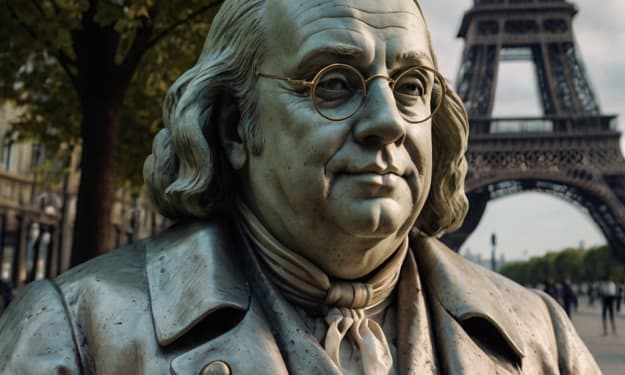
Franklin's Paris Mission
The Establishing Fathers may have been optimistic approximately Edification standards like “Life, Freedom and the interest of Happiness,” but they were profoundly reasonable around the chances of a crude, underfunded colonial armed force to overcome the affluent and effective British Empire.
By Shams Says2 years ago in History
Lancaster Castle Gatehouse: A Timeless Icon of English Heritage
Lancaster Castle, located in the historic city of Lancaster in northwest England, is a stunning architectural and historical monument that has stood the test of time. Its magnificent gatehouse, considered one of the most impressive in England, offers a fascinating glimpse into the past while continuing to awe visitors in the present day. In this article, we delve into the history of this iconic structure, its transformation over 250 years, and its enduring significance. The Gatehouse in 1778: A Guardian of Power In 1778, the Lancaster Castle Gatehouse stood as a symbol of authority and strength, guarding the castle with its imposing twin towers and crenellated parapets. Built during the reign of Henry IV in the early 15th century, the gatehouse was not just a defensive structure but also a statement of power. Its design combined functionality with grandeur, reflecting the might of the Crown and the strategic importance of Lancaster. During this period, the castle served multiple purposes. It was a fortress, a prison, and a court of law. The gatehouse was the main point of entry, controlling access to the castle grounds. Its robust stone construction and commanding presence served as a deterrent to would-be attackers, while its architectural embellishments conveyed the prestige of the Duchy of Lancaster. In 1778, the gatehouse would have been surrounded by a landscape vastly different from today. The town of Lancaster was a thriving hub of commerce and trade, but it lacked the modern urban sprawl and infrastructure we now associate with cities. The gatehouse, with its medieval charm, would have dominated the skyline, serving as a constant reminder of the castle’s historical and political significance. The Gatehouse Today: A Window into the Past Fast forward to today, and the Lancaster Castle Gatehouse remains one of the most iconic landmarks in England. While the structure has undergone restorations and adaptations over the centuries, its essence has been remarkably preserved. The gatehouse continues to inspire awe with its architectural elegance and historical resonance. Visitors to Lancaster Castle today are greeted by the same towering gatehouse, but the surrounding environment has changed dramatically. Modern Lancaster is a bustling city with a rich blend of historical and contemporary elements. The gatehouse now stands as a bridge between the past and the present, a testament to the endurance of heritage amid the ever-changing landscape. One of the most significant changes over the centuries has been the castle’s role. While it still houses a working Crown Court and remains the property of the Duchy of Lancaster, the castle is now a popular tourist attraction and cultural venue. Guided tours offer insights into its history, including its role as a prison and the trials held within its walls. The gatehouse, once a barrier to intruders, now welcomes visitors from around the world. Architectural Details: Then and Now The gatehouse's architecture is a masterclass in medieval design. Its twin towers, which flank the arched entrance, are crowned with battlements, creating a striking silhouette against the sky. In 1778, these features would have been essential for defense, allowing archers and guards to monitor and repel attackers. Today, the gatehouse's defensive purpose is obsolete, but its architectural beauty remains intact. Restoration efforts have ensured that the stonework retains its original character, while modern lighting highlights the intricate details of its design. The addition of interpretive displays and information panels helps visitors appreciate the craftsmanship and historical context of the gatehouse. A Symbol of Resilience The Lancaster Castle Gatehouse is more than just an architectural marvel; it is a symbol of resilience. Over its 600-year history, it has witnessed wars, political upheavals, and social transformations. From its role in the infamous Lancashire Witch Trials of 1612 to its use as a prison during the Industrial Revolution, the gatehouse has been a silent witness to the ebb and flow of history. In 1778, the gatehouse would have been a stark reminder of the harsh realities of justice in medieval and early modern England. Today, it serves as a reminder of the importance of preserving our heritage. Its transformation from a fortress to a cultural landmark reflects the evolving relationship between history and modern society. The Future of the Gatehouse As we admire the Lancaster Castle Gatehouse today, it is essential to consider its future. Preserving such historical landmarks requires ongoing effort and investment. Conservation projects ensure that the gatehouse remains structurally sound and accessible to future generations. In addition to preservation, the gatehouse continues to play a role in educating and inspiring people. Its story is not just about the past but also about the values we carry forward—resilience, adaptability, and a deep respect for our heritage. Conclusion The Lancaster Castle Gatehouse is a remarkable example of how history and architecture can transcend time. From its imposing presence in 1778 to its role as a cherished cultural treasure today, the gatehouse has stood as a guardian of Lancaster’s rich heritage. It invites us to step back in time, to explore the stories etched into its walls, and to appreciate the beauty and resilience of our shared past. Whether you’re a history enthusiast, an architecture aficionado, or simply someone seeking inspiration, the Lancaster Castle Gatehouse is a must-visit. It reminds us that even as the world changes, some things remain timeless.Start writing...
By Deji Akomolafe2 years ago in History