Medieval
The Vatican Secret Archive: Unveiling the Mysteries of a Forbidden Vault
Shrouded in mystery and intrigue, the Vatican Secret Archive (recently renamed the Vatican Apostolic Archive) is one of the most enigmatic repositories in the world. Located within the Vatican City, this vast collection of documents spans centuries of history, religion, politics, and culture. Despite its allure, the archive remains largely inaccessible to the general public, with strict regulations governing who can access its treasures. This inaccessibility fuels fascination and speculation, making it a perennial subject of curiosity and conspiracy theories.
By mariam elghazaly2 years ago in History
Napoleon’s Egyptian Campaign: The Birth of Modern Egyptology and Scientific Discovery
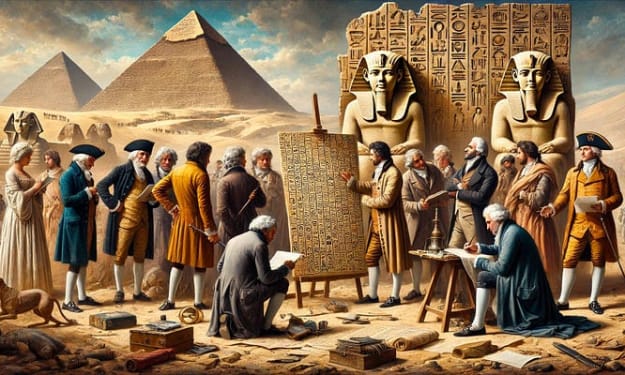
In addition to being a military operation, Napoleon Bonaparte's invasion of Egypt in 1798 changed the scientific landscape. It was an expedition of world-historic significance in the fields of archaeology and anthropology, botany, ophthalmology, and the general science of Egypt's ancient civilization. It was more than just a resounding failure of a campaign intended to obstruct British access to India and to increase French prestige in the Middle East. This expedition, which included Napoleon, was made up of about 150 academics, scientists, and intellectuals known as the "savants" who were dispatched to investigate, record, and analyse Egypt's rich historical and cultural heritage. This study by the savants marked the beginning of modern Egyptology.
By Canva Pro Teams2 years ago in History
Medieval Masonry: The Craftsmanship Behind Iconic Structures
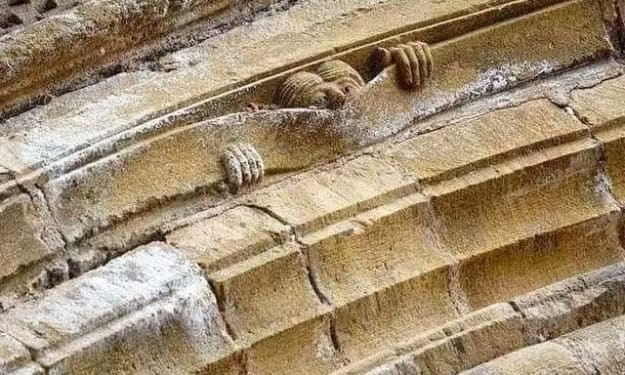
Medieval Masonry: The Craftsmanship Behind Iconic Structures The medieval era, spanning roughly from the 5th to the 15th century, was an age of remarkable architectural innovation. From soaring cathedrals to fortified castles, medieval masonry laid the foundation—quite literally—for some of the world’s most enduring structures. These buildings, with their intricate stonework and enduring strength, not only showcased the skill of medieval masons but also reflected the cultural, religious, and technological advancements of the time. This blog delves into the medieval mason style of building, exploring its techniques, materials, and the legacy it has left behind. --- The Role of the Mason in Medieval Society Masons were among the most skilled craftsmen of the medieval period. Their work required not only physical strength but also a deep understanding of geometry, physics, and aesthetics. Masons often belonged to guilds, organizations that maintained standards, trained apprentices, and protected trade secrets. Guilds played a crucial role in the evolution of masonry techniques, and their influence is evident in the uniformity and precision of medieval stonework. These craftsmen were responsible for building structures that served religious, defensive, and residential purposes, shaping the medieval landscape in the process. --- Techniques and Tools of the Trade Medieval masons relied on a combination of hand tools and ingenious techniques to craft their masterpieces. 1. Tools: - Chisels and Mallets: Used for shaping stones. - Plumb Bobs and Levels: Ensured structures were straight and balanced. - Compasses: Assisted in creating precise curves and circles for arches and windows. - Hammers: Broke larger stones into manageable sizes. 2. Techniques: - Ashlar Masonry: This involved cutting stones into uniform shapes for a smooth and polished appearance. - Rubble Masonry: Used irregular stones, often for less visible or fortified sections. - Vaulting and Arches: Key features in gothic and Romanesque styles, requiring mastery of geometry. - Buttressing: Counteracted the lateral forces of vaulted ceilings, allowing for taller and more intricate designs. Masons used scaffolding and wooden frames to ensure stability during construction, particularly for arches and domes. --- Materials in Medieval Masonry The choice of materials depended largely on local availability and the purpose of the structure. - Stone: Limestone, sandstone, and granite were popular due to their durability. Some structures incorporated marble for decorative elements. - Mortar: Made from lime and sand, mortar bonded stones together and added to the structure’s longevity. - Timber: Often used as a framework or for scaffolding during construction. Masons meticulously sourced and prepared materials, as the quality of the stone and mortar significantly influenced the durability of the building. --- Styles of Medieval Masonry Medieval architecture evolved over time, with distinct styles emerging in different periods and regions. 1. Romanesque Style (10th–12th Century): Characterized by thick walls, rounded arches, and small windows, Romanesque structures emphasized strength and stability. Examples include the Abbey of Sainte-Foy in France and Durham Cathedral in England. 2. Gothic Style (12th–16th Century): Gothic architecture brought a revolution in masonry, featuring pointed arches, ribbed vaults, and flying buttresses. This style allowed for taller buildings and larger windows, often filled with intricate stained glass. Iconic examples include Notre-Dame de Paris and Chartres Cathedral. 3. Defensive Masonry: Castles and fortifications required robust masonry to withstand attacks. Thick walls, crenellations, and moats were hallmarks of defensive structures like the Tower of London and Carcassonne in France. --- The Legacy of Medieval Masonry Medieval masons left behind a legacy of craftsmanship and innovation. Many of their buildings still stand today, a testament to their skill and ingenuity. These structures not only serve as historical landmarks but also inspire modern architecture. The enduring popularity of medieval-style buildings in modern designs speaks to the timeless appeal of their symmetry, strength, and beauty. Architects and masons today often study medieval techniques to understand the principles of durability and aesthetics that defined this era. --- Challenges of Medieval Masonry Despite their remarkable achievements, medieval masons faced significant challenges. Building large structures took years—sometimes decades or even centuries. Funding was often a constraint, particularly for cathedrals and churches. The lack of advanced machinery meant that every stone was shaped and placed by hand, requiring immense labor and precision. Yet, these challenges only highlight the incredible dedication and skill of medieval masons. --- Conclusion Medieval masonry is a cornerstone of architectural history, blending artistry with engineering in ways that continue to awe and inspire. The masons of the Middle Ages created structures that were not only functional but also profoundly beautiful, reflecting the values and aspirations of their society. From the grandeur of Gothic cathedrals to the impenetrable walls of medieval castles, the craftsmanship of medieval masons has stood the test of time, reminding us of an era when stone and skill converged to create enduring masterpieces. Today, these buildings stand as monuments to human ingenuity and creativity, offering a window into a world where every stone told a story and every structure reached for the heavens.
By Deji Akomolafe2 years ago in History
Stay on the island
On a sunny day, Sami, an adventurous young man who loves exploring new places, decided to embark on a sailing trip with his friends. The weather was perfect at first, but things quickly changed. While sailing, they were hit by a powerful storm, with massive waves and strong winds. Despite their efforts, their boat was shattered amidst the chaos. Sami awoke on the shore of a deserted island, alone and injured. The waves crashed against the beach, and the sun was setting rapidly, increasing his sense of worry. He began searching for water and found a small stream trickling between the rocks. However, the water was murky, and after drinking it, he felt sharp pains in his stomach. He realized he needed to find a safer source of water. Building Shelter After several attempts, Sami managed to gather some branches and leaves to make a shelter. But on a stormy night, strong winds swept through the island, causing the shelter he built to collapse. He suffered from the biting cold and spent the night under the rain, shivering from fear and uncertainty. That night was the most terrifying of his life, as he heard strange sounds from the forest, adding to his anxiety. Searching for Food As days passed, Sami started learning how to obtain food. He explored the island in search of fruits, but they were scarce. He tried to catch fish using a spear he fashioned from a stick and a stone, but faced significant challenges. On one occasion, he slipped into the water and got completely soaked, feeling the cold biting at him. When he finally managed to catch a fish, he felt a great sense of pride, but discovered that starting a fire was difficult, and he struggled to cook his food. Loneliness and Longing Loneliness began to take a toll on Sami's mind. He would sit on the beach in the evening, writing his diary on leaves, expressing his feelings and thoughts. He missed his family and friends and felt nostalgic for the times they spent together. One night, he cried because of his overwhelming loneliness while listening to the sound of the waves. Searching for an Exit After weeks of isolation, Sami decided he needed to search for a way off the island. He began exploring more areas, facing significant difficulties navigating through the dense forests. He slipped and fell into one of the rivers, injuring his ankle. Despite the pain, he persevered. He walked slowly, leaning on trees to maintain his balance. Facing Challenges One night, while trying to start a fire, he struggled due to the strong winds. He used patience and focus until he finally managed to light a fire, which became his source of warmth and cooking. However, on another night, a severe storm hit the island, filling him with dread. The winds were howling, and he heard the sounds of trees breaking around him. At that moment, Sami felt that this might be the end. But instead of giving up, he decided to fight for survival. He started looking for materials to strengthen his shelter, gathering stones and wood to build a barrier to protect himself from the winds. He spent the night working, and when he finished, he lay down in his shelter, feeling extremely tired but somewhat reassured. Hope for Rescue On day 100, while sitting around the fire, he noticed a distant light on the horizon. It was the hope he had been waiting for. He began waving his arms and shouting at the top of his lungs, trying to attract the attention of the ship's crew. The boat slowly approached, and when the crew realized he was there, they sent a small boat to rescue him. Sami felt overwhelming joy as the rescuers approached him. They took him to safety, and he returned home after an unforgettable experience. That journey taught him a great deal about strength and resilience. His life returned to normal, but he kept the memories of those days as a lesson he would never forget. He learned that even in the toughest times, willpower and determination can open doors to hope, and that a person can overcome the most challenging circumstances.
By youssef mohammed2 years ago in History
Comfort Women: The Silence and Strength of Their Stories. Content Warning.
The details of their enslavement remain painful and controversial in Japan and the former occupied countries, despite the fact that the first women were forced into sexual slavery for Imperial Japan nearly a century ago. The subjugation of women is not well documented; only a small percentage of "comfort women" survived the war, with an estimated 90% of them dying. Despite having existed in the Japanese military since 1932, military brothels gained significant traction after the Rape of Nanking, one of the most well-known incidents in imperial Japan's campaign.
By Hridya Sharma2 years ago in History
Why algorithms are called algorithms
If you’ve ever typed something into Google, relied on social media feeds, or cursed at your phone’s autocorrect for changing “I’m hungry” to “I’m Hungary”—you can thank (or blame) algorithms. Yes, these invisible lines of logic run our modern world, determining everything from the best route to work to which cat video you really need to see next.
By Marveline Merab2 years ago in History
The Appearance of Lord Jagannatha
The Divine Plan for Jagannatha’s Manifestation Five thousand years ago, Lord Krishna, along with His elder brother Balarama and His younger sister Subhadra, visited Kurukshetra in a chariot during a solar eclipse. This event became the inspiration for the later manifestation of the deities of Jagannatha, Balarama, and Subhadra. About two thousand years after this visit, King Indradyumna of Orissa, a great devotee of Lord Vishnu, desired to establish a temple in Puri with deities representing this divine journey.
By Himansu Kumar Routray2 years ago in History
'Tis But A Scratch Podcast
I think that podcasting is a communications medium designed perfectly for relating history as a subject. If done correctly, relating historical narratives appeals more to the ears than the eyes. I don't need to see Genghis Khan to know that he spread his seed over a significant portion of Europe and Asia.
By Frank Racioppi2 years ago in History
THE LAST ARENA
The Last Arena Eirik remained at the edge of the precipice, the salt breeze pulling at his hair as the principal light of day break broke into the great beyond. Underneath him, the town of Eldfjall mixed to life. The crash of mallet on metal reverberated from the smithy, where metal forgers molded blades and safeguards for the champions getting ready for the fight to come. The air was thick with the scents of fire, steel, and ocean. It was a universe of solidarity, yet underneath that strength, Eirik felt something different—something weighty, a biting sense that the next few days would request a greater amount of him than he was prepared to give.
By Chronicle Canvas2 years ago in History