Lessons
Andalusia: The Forgotten Beacon of Civilization
The Forgotten Glory of Andalusia: A Legacy of Civilization, Now Overshadowed It is a historical fact that when the streets of Europe were overflowing with filth and plagued by disease—when people in many European cities were compelled to wear high wooden clogs just to avoid stepping in their own waste—Andalusia stood as a beacon of cleanliness, culture, and unparalleled development. In that golden era of Islamic Spain, not only did every Muslim household boast a private bath, but a well-structured sewage and drainage system also existed—an advanced infrastructure that was centuries ahead of its time and of anything found in Europe. Andalusia (Al-Andalus), under Muslim rule, was not merely a center of learning and arts; it was a symbol of a comprehensive civilizational and social transformation. While the rest of Europe was still entrenched in the Dark Ages—grappling with ignorance, superstition, epidemics, and backwardness—cities like Córdoba, Granada, and Seville shone brightly as centers of enlightenment, refinement, and scientific progress. The legacy of Al-Andalus is not limited to its majestic palaces or poetic gardens; it includes its libraries, universities, public baths, hospitals, and intricate urban planning. The city of Córdoba alone, in the 10th century, had over 70 libraries and 300 public baths, while most of Europe at that time had barely any public sanitation infrastructure. Streets were lit at night, water was supplied through aqueducts, and education was freely available to all segments of society—regardless of class, religion, or gender. Muslim Spain welcomed scholars of all backgrounds, promoting a culture of tolerance, dialogue, and intellectual curiosity. The knowledge preserved and produced there—ranging from medicine to astronomy, from architecture to philosophy—became the foundation upon which modern European renaissance was later built. It is not an exaggeration to say that the seeds of today’s Western progress were first planted in the soil of Al-Andalus. But today? Those very nations, which once lived in darkness and filth, now consider themselves the torchbearers of modern civilization. They now attempt to teach us the very principles of hygiene, discipline, urban planning, and civil society that we once taught them. This twist of history is not only ironic but deeply thought-provoking. It prompts us to reflect: How did a civilization that once led the world in every sphere of life fall so far behind? The answer lies not just in historical invasions or political failures. The real tragedy began when we forgot our own legacy. We ceased valuing knowledge, stopped nurturing critical thought, and turned away from our commitment to justice, excellence, and innovation. When a nation loses connection with its glorious past, it not only loses direction but also dignity. It is then forced to look up to others who were once its students. This loss of historical consciousness is more than just forgetfulness—it is a form of collective amnesia. Today’s generation often views Western achievements as independent developments, disconnected from the contributions of their ancestors. This ignorance leads to a dangerous inferiority complex, where we assume others are inherently superior and we are forever to play catch-up. However, history does not have to be a burden—it can be a guiding light. The example of Al-Andalus can inspire a revival. The Muslims of Spain were not superhumans; they were ordinary people with extraordinary commitment to values: the pursuit of knowledge, societal reform, cleanliness, justice, and the welfare of all. Their mosques were not just places of prayer but centers of education and public service. Their homes were not just private shelters but embodiments of beauty, order, and hygiene. What made their civilization great was not just what they built, but what they believed in. They believed in progress not for the sake of competition, but for the service of humanity. Their advancements in medicine were not designed to dominate but to heal. Their architecture was not built to intimidate but to inspire. Their governance was not aimed at control, but at delivering justice to the poor, the weak, and even the non-Muslim subjects under their rule. If we truly wish to rise again, we must reconnect with the values that made our ancestors worthy of admiration. We must learn to value knowledge not merely as a tool for earning a livelihood, but as a sacred trust for the betterment of society. We must take pride in cleanliness not just as a religious duty but as a public responsibility. We must understand that civilization is not about skyscrapers and machines alone, but about manners, ethics, and respect for all forms of life. Let us not lament the loss of Al-Andalus as a tale of the past, but let us take it as a call to rebuild. The rise of others is not a threat—it is a reminder of what is possible. But if we continue to forget our own history, we will forever be students of those who once learned from us. The lesson of Al-Andalus is clear: greatness is not inherited—it is earned, through consistent effort, vision, and unity. And those who forget their past are destined to live at the mercy of others’ futures.
By Ikram Ullahabout a year ago in History
The Unseen World of Abandoned Places: A Journey Through Time
** Have you ever wondered what happens to places when they're left behind? The silence, the stillness, and the secrets they keep are a mystery to many. Abandoned places are a window into the past, a glimpse of what once was, and a reminder of the transience of time. In this article, we'll embark on a journey to explore the unseen world of abandoned places, and uncover the stories they tell. *The Allure of Abandoned Places* There's something hauntingly beautiful about abandoned places. The crumbling structures, the overgrown gardens, and the eerie silence all seem to whisper stories of the past. These places are a testament to the passage of time, a reminder that everything that rises will eventually fall. Yet, despite their neglect and decay, abandoned places hold a certain allure, a mystique that draws us in. *A Window into the Past* Abandoned places are a window into the past, a glimpse of what life was like in a bygone era. They tell stories of people, places, and events that shaped the world we live in today. From abandoned factories to ghost towns, each place has its own unique history and significance. By exploring these places, we can gain a deeper understanding of the past and its relevance to our present. *The Psychology of Abandonment* Abandonment is a complex phenomenon that can be triggered by various factors, including economic decline, natural disasters, or simply a change in societal values. When a place is abandoned, it's not just the physical structure that's left behind; it's also the memories, the emotions, and the stories that were once associated with it. The psychology of abandonment is a fascinating topic that reveals the intricate relationships between people, places, and things. *Exploring Abandoned Places* Exploring abandoned places can be a thrilling experience, but it's not without its risks. From structural hazards to environmental concerns, there are many factors to consider before venturing into an abandoned place. However, for those who are willing to take the risk, the rewards can be immense. Whether it's the thrill of discovery, the rush of adrenaline, or the sense of adventure, exploring abandoned places can be a truly unforgettable experience. *The Art of Urban Exploration* Urban exploration, or urbex, is a growing trend that involves exploring abandoned places and capturing their beauty through photography and videography. Urban explorers are drawn to the aesthetic appeal of abandoned places, the textures, the colors, and the compositions that can be found in these forgotten spaces. Through their art, urban explorers can reveal the beauty in decay, the elegance in neglect, and the stories that lie hidden in plain sight. *Preserving the Past* As we explore abandoned places, we're often faced with the question of preservation. Should we preserve the past, or let it fade away? The answer is complex, and it depends on the context and significance of the place. Some abandoned places are historic landmarks that deserve to be preserved, while others are mere relics of a bygone era that can be left to nature. The key is to strike a balance between preservation and progress, to respect the past while embracing the future. *Conclusion* Abandoned places are a mysterious and fascinating world that holds many secrets and stories. By exploring these places, we can gain a deeper understanding of the past, appreciate the beauty in decay, and uncover the hidden narratives that lie within. Whether you're an urban explorer, a historian, or simply a curious individual, abandoned places have something to offer. So, the next time you come across an abandoned place, take a moment to pause, reflect, and appreciate the stories it tells.
By Umair Khanabout a year ago in History
In the shadow of the Sultan
The beginning of the mystery Year 1566 On a gloomy night in Istanbul, the capital of the Ottoman Empire, a thick fog covers the city. Beneath the high walls of the palace a lonely boat floats in the black waters of the Bosphorus. Year 1566 On a gloomy night in Istanbul, the capital of the Ottoman Empire, a thick fog covers the city. Beneath the high walls of the palace a lonely boat floats in the black waters of the Bosphorus.
By MD. Tanvir Hossainabout a year ago in History
“How far you go in life depends on your being tender with the young, compassionate with the aged, sympathetic with the striving and tolerant of the weak and the strong. Because someday in life you will have been all of these.” —George Washington Carver
Black homesteaders were part of a larger land ownership movement in which settlers acquired and developed public lands for farming in 30 US states over a period of 100 years. The US federal government enacted these policies in areas that it wanted to populate with American citizens or prospective citizens (often to the detriment of the interests of the Native Americans who had previously occupied these lands. In total, some 30,000 black homesteaders obtained land claims in the course of this movement.
By Antoni De'Leonabout a year ago in History
Timeless Glory: Colosseum’s Enduring Legacy
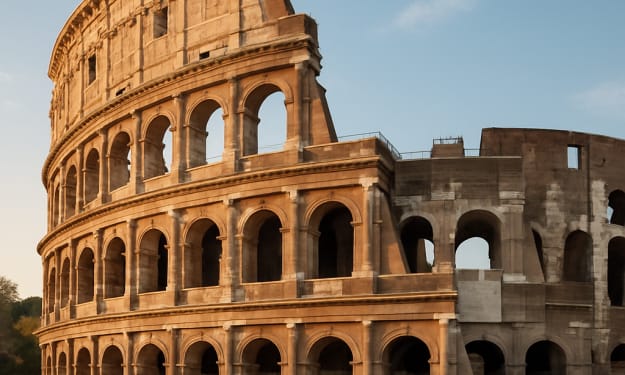
Rising majestically in the heart of Rome, the Colosseum stands as one of the most iconic and enduring symbols of the Roman Empire. Known in ancient times as the Flavian Amphitheatre, this monumental structure was commissioned around 70–72 AD by Emperor Vespasian of the Flavian dynasty and completed by his son Titus in 80 AD. Built to demonstrate the might of the new regime, the Colosseum served not just as a center for entertainment but also as a powerful tool for political propaganda, showcasing the glory, wealth, and engineering genius of the empire.
By Mukhtiar Ahmadabout a year ago in History
Timeless Majesty of Giza Pyramids
Rising from the golden sands of the Giza Plateau, just outside modern-day Cairo, the Pyramids of Giza are among the most iconic and enduring symbols of ancient Egypt. These colossal monuments—the Great Pyramid of Khufu, the Pyramid of Khafre, and the Pyramid of Menkaure—were constructed during Egypt’s Fourth Dynasty, over 4,500 years ago. They are not only architectural marvels but also bear powerful testimony to the grandeur, innovation, and spiritual depth of ancient Egyptian civilization.
By Mukhtiar Ahmadabout a year ago in History
"I Spent a Week Living Like a 19th Century Aristocrat — Here’s What Modern Life Has Completely Forgotten"
My best friend, a history nerd with a flair for dramatics, challenged me to live an entire week like a 19th-century aristocrat. No electricity. No phones. No Uber Eats. Just corsets, candlelight, and carriages—or at least, their closest modern-day equivalents. I laughed. How hard could it be? A week of tea, long baths, and lounging around in lace sounded like a luxury spa retreat. Right? Wrong. Day One: The Corset Conundrum Before I even opened my eyes on Monday morning, I was already breaking modern rules. No alarm clock. Instead, I’d instructed a friend to knock on my door at 7 a.m. sharp, like a loyal footman. He was less loyal, more amused. I woke up to the sound of him snickering outside my apartment door. Getting dressed was the first hurdle. The corset I ordered online looked beautiful in the photo. In reality, it felt like a boa constrictor with anger issues. After 30 minutes of struggling and googling “how to breathe in a corset” (oops—cheated there), I was finally laced in and barely mobile. My gown, an explosion of ruffles and petticoats, turned a simple walk to the kitchen into a small-scale military operation. Day Two: Tea Time and Typing Trouble I swapped my usual iced coffee for a strong cup of Earl Grey, steeped using a stovetop kettle, naturally. Breakfast was toast and jam, made with ingredients I picked up from a local farmer’s market. So far, so good. Then came the letter writing. Since aristocrats didn’t text, I decided to write a handwritten note to my landlord about a leaky tap. My cursive was atrocious, my ink pen kept blotting, and by the end, my hand ached like I’d just transcribed a Shakespearean play. Still, there was something oddly satisfying about sealing a letter with red wax, like I was sending battle plans. Day Three: Candlelit Chaos That evening, I banned all artificial light. Out came the candles—dozens of them—giving my apartment a warm, flickering glow. It was romantic in theory. In practice, it was a fire hazard. I nearly set my curtain ablaze trying to light the chandelier knockoff I’d found at a thrift store. Bath time was another ordeal. I heated water on the stove and filled the tub, bucket by bucket. By the time it was ready, the water was lukewarm and I was exhausted. Aristocrats had staff. I had sore arms and a newfound appreciation for water heaters. Day Four: Dining with Decorum I hosted a dinner party, 19th-century style. No pizza. No takeout. Just roast chicken, potatoes, and an attempt at a pudding that resembled a Victorian jellyfish. My friends showed up in thrifted vintage outfits and were oddly excited to follow strict etiquette rules. No elbows on the table, napkins in laps, speak only when spoken to. Conversation, though, was the highlight. Without phones, we actually talked. For three full hours. About books, relationships, ambitions. It was intimate in a way I hadn’t experienced in years. Nobody checked their notifications. Nobody posted their plate on Instagram. We were fully present. And it felt… revolutionary. Day Five: The Great Outdoors (and Inconveniences) I decided to “take the air,” as 19th-century folks called it. I strolled through the park with a lace parasol and drew a few confused glances and more than one compliment. Without earbuds, I noticed birdsong, wind in the trees, and even a child giggling on a swing set. Nature felt louder. But so did the blisters from my leather boots. Fashion was pain back then—and let me tell you, they weren’t exaggerating. Day Six: Letters and Loneliness By now, the novelty was wearing off. My back ached from corsets, and I missed the convenience of streaming Netflix in my pajamas. The silence became louder too. Without constant digital distractions, I was left with my own thoughts. It was both peaceful and jarring. I wrote long letters to family members, which felt more vulnerable than a quick text or meme. Somehow, putting feelings on paper made them more real. I began to see why people once treasured love letters and journals. They were physical proof of connection. Day Seven: Reflection and Reality On the final day, I lay in bed—corset-free—watching the morning light pour in through the window. I hadn’t touched my phone in a week. I missed it, but not the way I expected. What I craved wasn’t the screen itself, but the illusion of productivity it gave me. The truth was, I’d gotten more done this week than in a month of multitasking. I’d read an entire book. Cooked actual meals. Slept like a log. I’d also learned what modern life has forgotten. We’ve forgotten how to be still. To truly connect. To let one task, one conversation, or one moment hold our full attention. We’ve traded presence for productivity, speed for depth. Living like a 19th-century aristocrat was inconvenient, exhausting—and profoundly enlightening. Final Thoughts No, I won’t be giving up my phone permanently or writing every message with a quill. But I’ll be lighting more candles, writing more letters, and treating dinner like a sacred pause rather than a pitstop. The past isn’t a place I want to live in forever—but it’s a place worth visiting. Because sometimes, the slowest way is the richest way.
By Nizam khanabout a year ago in History
Why the Past 10 Years of American Life Have Been Uniquely Stupid
The past decade in America has been marked by a peculiar kind of chaos—one that feels both unprecedented and self-inflicted. From political dysfunction to social media-fueled outrage, from the erosion of public trust to the glorification of ignorance, the 2010s and early 2020s have often seemed like an experiment in mass irrationality. But why has American life felt so uniquely stupid in recent years? The answer lies in a combination of technological disruption, political polarization, economic anxiety, and cultural decay. These forces have converged to create an era where bad ideas spread faster than good ones, where institutions crumble under the weight of distrust, and where public discourse often feels like a race to the bottom.
By Silas Blackwoodabout a year ago in History