Lessons
Served the breast-tax
The day before the history exam (Social Studies), it was my mom who studied the whole book and taught me what was in each chapter. I tried to note down the years and the crucial events, believing that I would fail for sure, and only god could help me. But somehow, I landed on the margin of the pass mark, and I moved on to the next class. This was my way of learning history. I still wonder how I passed just by listening to my mother's recitations. I bow down to her strength and patience to sit down with me without raising her voice, with endurance and confidence as she prepared for my exam.
By Parvathi Jabout a year ago in History
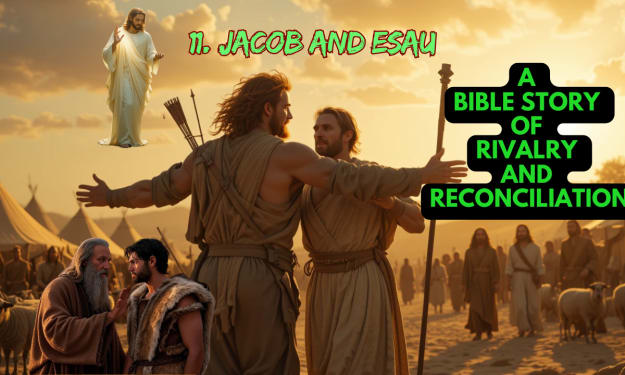
11. Jacob and Esau: A Bible Story of Rivalry and Reconciliation. AI-Generated.
In the ancient land of Canaan, around 1800 BC, a man named Isaac and his wife Rebekah lived as nomads, blessed by God with twin sons, Esau and Jacob. The story of Jacob and Esau, found in the Book of Genesis (25:19-34, 27:1-45, 33:1-20), is a dramatic tale of sibling rivalry, deception, and eventual reconciliation, revealing God’s sovereignty over human flaws and His power to bring healing to broken relationships. This narrative, a cornerstone of biblical history, offers timeless lessons on forgiveness, faith, and the unfolding of God’s plan.
By David Andrewsabout a year ago in History
📚 The Library of Ashurbanipal: The World’s First Great Archive of Knowledge
📚 The Library of Ashurbanipal: The World’s First Great Archive of Knowledge 📜Part I: Discovery Amid Ruins In the mid-1800s, long before archaeology had matured into the scientific discipline we know today, the deserts of northern Iraq were largely unexplored by Europeans. One such explorer was Austen Henry Layard, a British adventurer with a deep fascination for the biblical cities of Nineveh and Babylon. In 1849, while excavating near the village of Kuyunjik, Layard uncovered massive ruins buried under mounds of earth. These ruins belonged to Nineveh, the ancient capital of the Neo-Assyrian Empire — a city that had once been one of the most powerful urban centers in the ancient world.
By History Seekerabout a year ago in History
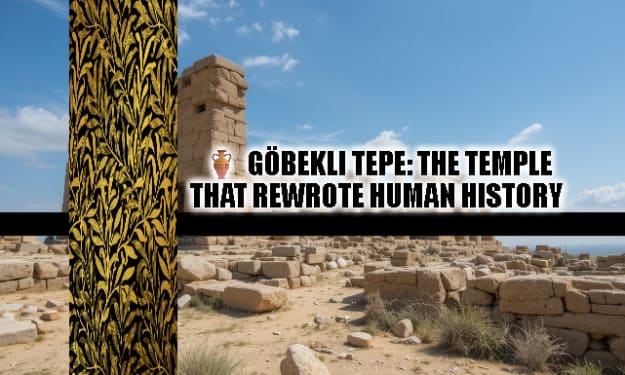
🏺 Göbekli Tepe: The Temple That Rewrote Human History
🏺 Göbekli Tepe: The Temple That Rewrote Human History I. Discovery and Location Göbekli Tepe, which translates from Turkish as “Potbelly Hill,” sits quietly in the dry, rolling hills of southeastern Turkey, near the modern city of Şanlıurfa. Though it had long appeared on maps as a minor mound — a common sight in the region — its true significance wasn’t understood until the mid-1990s. In fact, for decades, local farmers and researchers assumed the mound was a simple Bronze Age burial site or a ruined Byzantine outpost. But in 1994, the German archaeologist Klaus Schmidt, who had worked at nearby Neolithic sites, re-examined the mound and recognized that the flint tools and carved stones scattered across the surface pointed to something far older and more significant.
By History Seekerabout a year ago in History
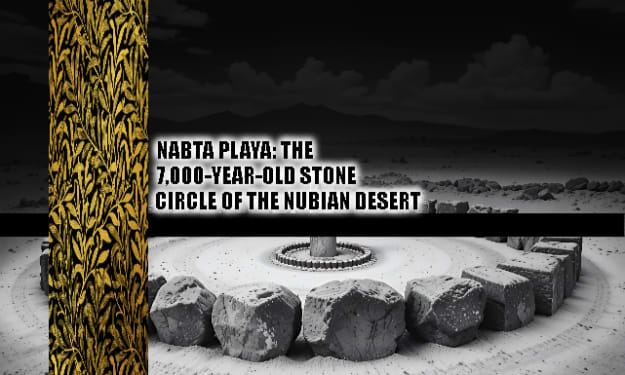
⛏️Nabta Playa: The 7,000-Year-Old Stone Circle of the Nubian Desert
⛏️Nabta Playa: The 7,000-Year-Old Stone Circle of the Nubian Desert Discovery and Location Nabta Playa lies hidden deep within the Nubian Desert, an arid and inhospitable region in southern Egypt, close to the border with Sudan. This vast desert landscape today is characterized by harsh winds, blazing sun, and seemingly endless sand dunes, but approximately 7,000 to 8,000 years ago, this area was dramatically different.
By History Seekerabout a year ago in History
Andalusia: The Forgotten Beacon of Civilization
The Forgotten Glory of Andalusia: A Legacy of Civilization, Now Overshadowed It is a historical fact that when the streets of Europe were overflowing with filth and plagued by disease—when people in many European cities were compelled to wear high wooden clogs just to avoid stepping in their own waste—Andalusia stood as a beacon of cleanliness, culture, and unparalleled development. In that golden era of Islamic Spain, not only did every Muslim household boast a private bath, but a well-structured sewage and drainage system also existed—an advanced infrastructure that was centuries ahead of its time and of anything found in Europe. Andalusia (Al-Andalus), under Muslim rule, was not merely a center of learning and arts; it was a symbol of a comprehensive civilizational and social transformation. While the rest of Europe was still entrenched in the Dark Ages—grappling with ignorance, superstition, epidemics, and backwardness—cities like Córdoba, Granada, and Seville shone brightly as centers of enlightenment, refinement, and scientific progress. The legacy of Al-Andalus is not limited to its majestic palaces or poetic gardens; it includes its libraries, universities, public baths, hospitals, and intricate urban planning. The city of Córdoba alone, in the 10th century, had over 70 libraries and 300 public baths, while most of Europe at that time had barely any public sanitation infrastructure. Streets were lit at night, water was supplied through aqueducts, and education was freely available to all segments of society—regardless of class, religion, or gender. Muslim Spain welcomed scholars of all backgrounds, promoting a culture of tolerance, dialogue, and intellectual curiosity. The knowledge preserved and produced there—ranging from medicine to astronomy, from architecture to philosophy—became the foundation upon which modern European renaissance was later built. It is not an exaggeration to say that the seeds of today’s Western progress were first planted in the soil of Al-Andalus. But today? Those very nations, which once lived in darkness and filth, now consider themselves the torchbearers of modern civilization. They now attempt to teach us the very principles of hygiene, discipline, urban planning, and civil society that we once taught them. This twist of history is not only ironic but deeply thought-provoking. It prompts us to reflect: How did a civilization that once led the world in every sphere of life fall so far behind? The answer lies not just in historical invasions or political failures. The real tragedy began when we forgot our own legacy. We ceased valuing knowledge, stopped nurturing critical thought, and turned away from our commitment to justice, excellence, and innovation. When a nation loses connection with its glorious past, it not only loses direction but also dignity. It is then forced to look up to others who were once its students. This loss of historical consciousness is more than just forgetfulness—it is a form of collective amnesia. Today’s generation often views Western achievements as independent developments, disconnected from the contributions of their ancestors. This ignorance leads to a dangerous inferiority complex, where we assume others are inherently superior and we are forever to play catch-up. However, history does not have to be a burden—it can be a guiding light. The example of Al-Andalus can inspire a revival. The Muslims of Spain were not superhumans; they were ordinary people with extraordinary commitment to values: the pursuit of knowledge, societal reform, cleanliness, justice, and the welfare of all. Their mosques were not just places of prayer but centers of education and public service. Their homes were not just private shelters but embodiments of beauty, order, and hygiene. What made their civilization great was not just what they built, but what they believed in. They believed in progress not for the sake of competition, but for the service of humanity. Their advancements in medicine were not designed to dominate but to heal. Their architecture was not built to intimidate but to inspire. Their governance was not aimed at control, but at delivering justice to the poor, the weak, and even the non-Muslim subjects under their rule. If we truly wish to rise again, we must reconnect with the values that made our ancestors worthy of admiration. We must learn to value knowledge not merely as a tool for earning a livelihood, but as a sacred trust for the betterment of society. We must take pride in cleanliness not just as a religious duty but as a public responsibility. We must understand that civilization is not about skyscrapers and machines alone, but about manners, ethics, and respect for all forms of life. Let us not lament the loss of Al-Andalus as a tale of the past, but let us take it as a call to rebuild. The rise of others is not a threat—it is a reminder of what is possible. But if we continue to forget our own history, we will forever be students of those who once learned from us. The lesson of Al-Andalus is clear: greatness is not inherited—it is earned, through consistent effort, vision, and unity. And those who forget their past are destined to live at the mercy of others’ futures.
By Ikram Ullahabout a year ago in History
The Unseen World of Abandoned Places: A Journey Through Time
** Have you ever wondered what happens to places when they're left behind? The silence, the stillness, and the secrets they keep are a mystery to many. Abandoned places are a window into the past, a glimpse of what once was, and a reminder of the transience of time. In this article, we'll embark on a journey to explore the unseen world of abandoned places, and uncover the stories they tell. *The Allure of Abandoned Places* There's something hauntingly beautiful about abandoned places. The crumbling structures, the overgrown gardens, and the eerie silence all seem to whisper stories of the past. These places are a testament to the passage of time, a reminder that everything that rises will eventually fall. Yet, despite their neglect and decay, abandoned places hold a certain allure, a mystique that draws us in. *A Window into the Past* Abandoned places are a window into the past, a glimpse of what life was like in a bygone era. They tell stories of people, places, and events that shaped the world we live in today. From abandoned factories to ghost towns, each place has its own unique history and significance. By exploring these places, we can gain a deeper understanding of the past and its relevance to our present. *The Psychology of Abandonment* Abandonment is a complex phenomenon that can be triggered by various factors, including economic decline, natural disasters, or simply a change in societal values. When a place is abandoned, it's not just the physical structure that's left behind; it's also the memories, the emotions, and the stories that were once associated with it. The psychology of abandonment is a fascinating topic that reveals the intricate relationships between people, places, and things. *Exploring Abandoned Places* Exploring abandoned places can be a thrilling experience, but it's not without its risks. From structural hazards to environmental concerns, there are many factors to consider before venturing into an abandoned place. However, for those who are willing to take the risk, the rewards can be immense. Whether it's the thrill of discovery, the rush of adrenaline, or the sense of adventure, exploring abandoned places can be a truly unforgettable experience. *The Art of Urban Exploration* Urban exploration, or urbex, is a growing trend that involves exploring abandoned places and capturing their beauty through photography and videography. Urban explorers are drawn to the aesthetic appeal of abandoned places, the textures, the colors, and the compositions that can be found in these forgotten spaces. Through their art, urban explorers can reveal the beauty in decay, the elegance in neglect, and the stories that lie hidden in plain sight. *Preserving the Past* As we explore abandoned places, we're often faced with the question of preservation. Should we preserve the past, or let it fade away? The answer is complex, and it depends on the context and significance of the place. Some abandoned places are historic landmarks that deserve to be preserved, while others are mere relics of a bygone era that can be left to nature. The key is to strike a balance between preservation and progress, to respect the past while embracing the future. *Conclusion* Abandoned places are a mysterious and fascinating world that holds many secrets and stories. By exploring these places, we can gain a deeper understanding of the past, appreciate the beauty in decay, and uncover the hidden narratives that lie within. Whether you're an urban explorer, a historian, or simply a curious individual, abandoned places have something to offer. So, the next time you come across an abandoned place, take a moment to pause, reflect, and appreciate the stories it tells.
By Umair Khanabout a year ago in History