General
World War II: The Global Conflict that Shaped the Modern World
Introduction World War II (1939–1945) remains the largest, deadliest, and most transformative conflict in human history. Spanning across Europe, Asia, Africa, and the Pacific, the war involved more than 30 nations and resulted in the deaths of over 70 million people, both soldiers and civilians. It was a war that reshaped international politics, redrew borders, led to the rise of the United States and the Soviet Union as global superpowers, and established the foundation of the modern world order.
By Hamza Muhammadabout a year ago in History
The United States vs. Venezuela: A Geopolitical Struggle in the 21st Century
Introduction The relationship between the United States and Venezuela has been one of the most contentious diplomatic rivalries in the Western Hemisphere for the past two decades. While once bound by trade and energy cooperation, both nations have grown into ideological adversaries. Venezuela, rich in oil but plagued by economic collapse and political crises, has found itself at odds with the United States, which has often pushed for democratic reforms while simultaneously imposing sanctions.
By Hamza Muhammadabout a year ago in History
Harriet Tubman’s Secret Road: The Underground Railroad’s Untold Stories
History remembers Harriet Tubman as a fearless leader who risked everything to help enslaved people escape into freedom. Her name has become synonymous with bravery, resistance, and unshakable faith. But behind her remarkable story lies a wider, hidden network of untold stories—ordinary people, secret codes, and dangerous journeys that made the Underground Railroad a lifeline to liberty.
By Echoes of Lifeabout a year ago in History
World War I: The Great War That Changed the World
Introduction World War I, also known as the "Great War," was one of the most transformative and devastating events in modern history. Fought between 1914 and 1918, it involved most of the world’s great powers, reshaped global politics, and laid the groundwork for much of the twentieth century’s turbulence. What began as a regional conflict in the Balkans escalated into a global war due to entangled alliances, militarism, imperial rivalries, and rising nationalism. By the time it ended, millions were dead, empires had collapsed, and the world was permanently altered.
By Hamza Muhammadabout a year ago in History
The Silent Struggles of Ordinary People During World War I
Introduction When history recalls World War I, it often highlights the generals, the trenches, and the dramatic battles. Yet behind the clashing armies were millions of ordinary men, women, and children who faced unimaginable struggles. Their lives were filled with hunger, fear, loss, and uncertainty. The Great War, fought from 1914 to 1918, was not only a conflict of nations but also a test of human endurance for everyday people caught in its shadow.
By Waqas Ahmad about a year ago in History
The Last Night of Constantinople (1453)
A City at the Crossroads of History For more than a thousand years, Constantinople stood as the bridge between East and West. Known as the capital of the Byzantine Empire, it was not only a fortress of Christianity but also a hub of trade, culture, and knowledge. Its massive walls, built by Emperor Theodosius II, had repelled countless sieges. For centuries, enemies stood outside its gates and failed. The city was seen as almost invincible—until the spring of 1453.
By Waqas Ahmad about a year ago in History
The Child Who Vanished — and the Man Who Came Back
The Night Everything Changed Saroo Brierley was born in Khandwa, Madhya Pradesh, India. Life was fragile. His father had abandoned the family, and his mother worked carrying stones to earn enough to feed her children. Saroo often begged or scavenged food alongside his older brother Guddu. Despite their hardships, the boys shared laughter, dreams, and the quiet understanding that they only had each other.
By Atif khurshaidabout a year ago in History
Pakistan vs India: A Historic Rivalry and the Global Role of the United States
Introduction The rivalry between Pakistan and India remains one of the world’s most enduring and dangerous conflicts. Emerging in 1947 from the violent partition of British India, the two nations have fought wars, engaged in border clashes, endured terrorism, and faced recurring political hostility. At the heart of this struggle lies the Kashmir dispute, but the rivalry extends to economics, regional influence, religion, and geopolitics.
By Hamza Muhammadabout a year ago in History
Israel, the Muslim World, and the United States: A Geopolitical Triangle of Conflict and Power
Introduction The Middle East has long been the focal point of world politics, not only due to its geographical significance but also because of its cultural, religious, and economic importance. Central to this discourse lies the ongoing conflict between Israel and the Muslim world, a relationship marked by tension, wars, failed peace efforts, and deep mistrust. Adding a further layer of complexity is the role of the United States, which has been Israel’s closest ally while simultaneously maintaining strategic ties with key Muslim-majority nations.
By Hamza Muhammadabout a year ago in History
Zipho Memela: A Tale of Two Careers. Content Warning.
The name Zipho Memela is associated with two different public personas, each having made a mark in their respective fields. While one is a former hip-hop artist from Durban, the other is an entrepreneur and author.
By Kin Mancookabout a year ago in History
The Giants of North America, Bones, Headlines, and a Century of Silence
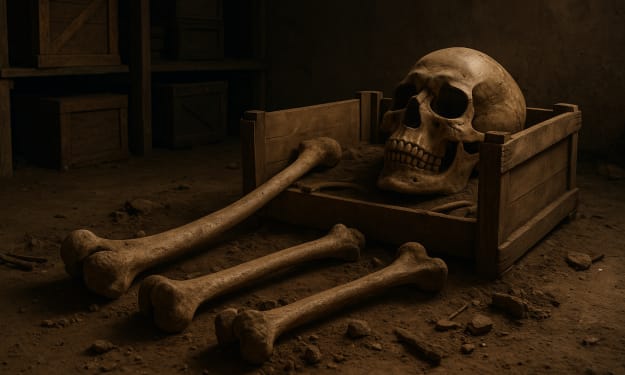
Behind The Scenes The story begins in quiet places, fields along river bends, hills that rise gently over the Midwest, burial mounds shaped by hands far older than the United States itself. In the late nineteenth and early twentieth centuries, farmers cut into those mounds, road crews leveled them for progress, and local papers reported discoveries that should have changed the way we tell history. They described skeletons of unusual size, skulls with features that did not match the average measurements of the day, long bones that drew crowds and curiosity in county seats from Ohio to Wisconsin. Reporters wrote in brisk, matter-of-fact tones, as if describing a sports score or a harvest tally. Then, almost as quickly, the words faded from view, leaving behind a mystery.
By The Secret History Of The Worldabout a year ago in History