General
The Copper Scroll: Directions to Lost Treasure Beyond the Dead Sea
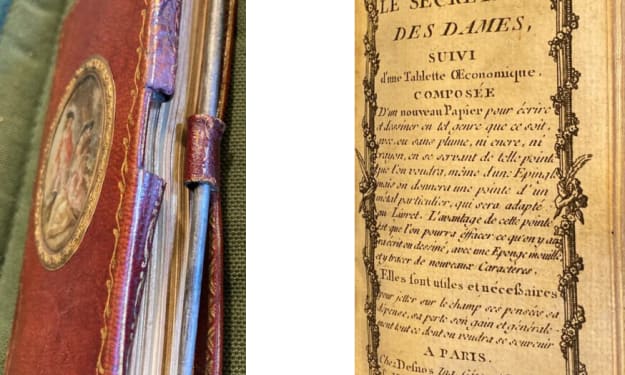
A Discovery Unlike Any Other In 1952, a significant discovery was made within the barren caves near Qumran, located near the Dead Sea. This find, unlike any other in the region, consisted of a pair of scrolls hammered out of copper. These scrolls, unlike the fragile manuscripts written on parchment or papyrus that were typically found, contained a record that read more like instructions, as though someone had left behind a coded guide to something immense.
By The Secret History Of The Worldabout a year ago in History
Oddball Cemeteries of the U.S.: Where Americana Refuses to Stay Buried
America is famous for its highways, diners, neon signs, and baseball diamonds. But if you want a true look at the nation’s eccentric soul, don’t just look at where people lived, look at where they’re buried. From clowns and cowboys to frozen dead guys and epitaphs that double as comedy routines, cemeteries in the U.S. are less about quiet reflection and more about eternal Americana.
By The Iron Lighthouseabout a year ago in History
The Rise and Fall of the French Kingdom: From Glory to Revolution
The Rise and Fall of the French Kingdom: From Glory to Revolution How a thousand years of monarchy shaped France — and how revolution forever changed it. For more than a thousand years, France was not a republic, but a kingdom ruled by powerful dynasties. Kings shaped the nation’s identity, led it through wars and alliances, and left behind a legacy of culture, art, and governance that still echoes through history. Yet, what rose to unimaginable heights of glory would one day crumble in the fires of revolution. The Birth of a Kingdom The story of the French Kingdom begins in the 5th century, with the rise of the Franks. Under the leadership of King Clovis I, the tribes were united into one powerful realm. Clovis’s conversion to Christianity was more than a personal choice; it tied the monarchy to the Roman Catholic Church, giving the crown both spiritual authority and political legitimacy. This foundation allowed the kingdom to grow steadily. Over the centuries, the Capetian dynasty consolidated power, building the early framework of what would become modern France. The Golden Age of Power By the 17th century, France had reached the peak of its influence. The reign of King Louis XIV, famously known as the Sun King, marked the height of French power and prestige. His vision of centralized power turned France into Europe’s cultural and political capital. Louis XIV built the magnificent Palace of Versailles, a symbol of royal glory and absolute power. Under his rule, art, literature, and architecture flourished. French fashion, philosophy, and etiquette spread across Europe, making France the cultural center of the world. But this golden age came at a cost. The extravagance of the monarchy, combined with expensive wars, drained the royal treasury. The seeds of discontent were quietly being sown among the people. Cracks in the Crown As the decades passed, the gap between the monarchy and the common people widened. The tax burden fell heavily on the poor, while the nobility and clergy enjoyed privileges and exemptions. Crops failed, bread prices soared, and frustration simmered in villages and cities alike. By the time King Louis XVI and Queen Marie Antoinette sat on the throne in the late 18th century, the kingdom was drowning in debt and unrest. Their lavish lifestyle, while exaggerated by rumors, became a symbol of royal indifference to the struggles of ordinary people. The Revolution That Changed Everything In 1789, the tension finally snapped. What began as calls for reform erupted into the French Revolution, a movement that would not only topple a monarchy but also reshape the world. The storming of the Bastille marked the beginning of a dramatic transformation. By 1792, the monarchy was abolished. The king and queen were tried, convicted of treason, and sent to the guillotine. For the first time in its history, France declared itself a republic. The principles of liberty, equality, and fraternity spread far beyond France, inspiring movements in Europe, the Americas, and beyond. The Legacy of the French Kingdom Though the monarchy fell, its legacy remains woven into the fabric of France. The stunning palaces, cathedrals, and works of art from the royal era continue to attract millions of visitors every year. The legal and administrative systems shaped under the monarchy laid the foundation for the modern French state. More importantly, the story of the French Kingdom reminds us of the fragility of power and the strength of the human desire for change. What was once the mightiest monarchy in Europe became a lesson in how unchecked privilege can lead to upheaval. A Kingdom That Lives On Today, France stands as a republic, but the echoes of its royal past are everywhere — from the streets of Paris to the quiet countryside castles. The story of the French Kingdom is not just about kings and queens; it’s about a nation’s journey through time, shaped by ambition, struggle, and the unending quest for liberty.
By Behind the Curtainabout a year ago in History
The Chinese Exclusion Act | A Miner’s Lament
The year was 1882, and the mountains of California rang with the steady rhythm of pickaxes striking stone. Gold fever had long faded, but men still chased after the promise of fortune hidden deep in the veins of rock and dirt. Among them worked Li Wei, a man whose hands bore the hardened calluses of years spent in darkness, and whose spirit carried a far heavier burden than the ore-filled baskets he hoisted each day. Li Wei had come from Guangdong, like thousands of others, lured by whispers of Gam Saan—the “Gold Mountain.” His mother had pressed a small pouch of rice into his hand before he left, her eyes wet but proud. “Work hard,” she had told him, “and fortune will follow.” The journey across the Pacific had been brutal, the ship crammed with hopeful souls packed like cattle, all dreaming of wealth and new beginnings. But the America he found was not the one in the stories. From dawn until dusk, he swung his pick in the dim, choking dust of the mines. White miners spat at his feet, muttering curses. “Chinaman, go back where you came from,” they’d sneer, even as they accepted his labor in silence. He and his companions were paid less than half of what others earned, housed in shacks at the edges of town, their food and tools bought at inflated prices from company stores. Still, they endured. For many, there was no turning back. Despite the hardship, there was resilience. In the evenings, after washing the grit from their bodies in the river, the Chinese miners gathered around small fires. They cooked rice and dried fish, told stories of home, and passed around tea from tin cups. In those moments, with the soft glow of lanterns flickering against the trees, the mountains almost felt like Guangdong. Laughter sometimes rose above the crackle of the fire, fragile yet defiant against the weight of their lives. Then came the news of the law. On May 6, 1882, the United States government signed into existence the Chinese Exclusion Act. It barred Chinese laborers from entering the country, and for those already here, it stripped away any chance of citizenship. To Li Wei and his brothers in the mines, it was more than just a decree on paper—it was a wound carved into their very existence. Li Wei remembered the day he first heard the words. The foreman read the newspaper aloud, stumbling over the legal phrases but making the message clear: “No more Chinese.” Some men laughed, others cheered. For Li Wei, it was a moment of silence so heavy it crushed the air from his lungs. Was his labor not enough? He had helped lay the rails that connected the East to the West. He had dug the earth to pull gold from its heart. His sweat had soaked the soil of a land that profited from his pain. And yet, when America looked at him, it did not see a man. It saw a threat. That evening, Li Wei sat by the fire and began writing a letter to his mother. His brush strokes trembled as he tried to capture the ache in his chest. Mother, I am told I do not belong here. They say I am unworthy of this land, though my blood and sweat feed it daily. I cannot return, for I have given all I had to come here. But I cannot stay with honor, for they have closed the doors on my kind. I feel as if I am trapped between two worlds, claimed by neither. He stopped writing then, staring at the paper. He knew he would never send it. To burden her with this sorrow would be cruel. So instead, he folded the paper neatly and tucked it into the pouch of rice she had given him years ago, still carried like a talisman of home. The days after the Act passed were filled with unease. Violence grew sharper. Men who once spat insults now carried fists, stones, or worse. Chinese quarters were burned in some towns; others were forced out entirely. Each sunrise brought uncertainty—would the mine still open? Would the sheriff turn a blind eye to the mob that threatened them? Yet Li Wei continued to work. Each swing of his pickaxe became an act of defiance, each breath drawn in the dusty air a refusal to be erased. He told himself that someday, maybe not in his lifetime, but someday, America would remember the hands that had built its railroads, tilled its soil, and mined its gold. One evening, as the sun bled red across the Sierras, Li Wei stood at the mouth of the mine. The wind carried the smell of pine and earth, and for a moment, silence fell. He whispered into the dusk, his words carried to the hills and beyond: “They wanted our hands, but not our hearts. We built their railroads, dug their gold, tilled their fields—yet still, they call us strangers. Perhaps one day, this land will remember our sweat and our sorrow, even if they will not.” The lanterns flickered behind him as his companions began their meal. He turned, shoulders stooped but unbroken, and joined them by the fire. Together they ate, laughed softly, and carried on. For though the law had tried to silence them, their voices remained, carved into the mountains, waiting for history to listen.
By LUNA EDITHabout a year ago in History
HAARP Technology and Its Role in Global Conflicts and Natural Disasters. AI-Generated.
Introduction Modern warfare is no longer limited to weapons of steel, gunpowder, or nuclear bombs. In the 21st century, technology has expanded the battlefield to domains such as cyberspace, outer space, and even the earth’s atmosphere. Among the controversial technologies often discussed in the context of environmental warfare and strategic manipulation is HAARP (High-Frequency Active Auroral Research Program). Originally developed as a scientific project in the United States, HAARP has become the subject of widespread debate, speculation, and conspiracy theories regarding its ability to influence weather patterns, trigger natural disasters, and affect global security.
By INAM ULLAHabout a year ago in History
Why Germany Did Not Develop the Atomic Bomb. AI-Generated.
The Second World War was not only a conflict of soldiers and armies but also a war of science, engineering, and technology. Among the most transformative developments of the twentieth century was the atomic bomb, whose successful construction by the United States under the Manhattan Project changed the course of history. Yet Germany, despite having some of the world’s leading physicists such as Werner Heisenberg, Max Planck, and others, failed to build the weapon. The question of why Nazi Germany did not develop an atomic bomb remains one of the most compelling debates in the history of science and war. To understand this failure, one must examine the interplay of political ideology, scientific challenges, resource limitations, and the role of individuals—especially Heisenberg—who stood at the center of the German nuclear program.
By INAM ULLAHabout a year ago in History
The First Research on the Moon from Pakistan
The First Research on the Moon from Pakistan On a clear night, when the silver glow of the Moon hangs above the mountains and plains of Pakistan, generations of dreamers have looked up and wondered what secrets lie on that distant world. For decades, space exploration seemed like the domain of global superpowers, but in the mid-21st century, Pakistan took a bold step that changed history: its first research mission on the Moon.
By Wings of Time about a year ago in History
The Woman Who Lived 10 Years Alone in the Amazon
The Woman Who Lived 10 Years Alone in the Amazon A Tale of Survival, Silence, and Self-Discovery When most people imagine the Amazon rainforest, they think of endless greenery, exotic birds, venomous snakes, and rivers that wind like serpents through a living world of mystery. Few, however, would imagine making it their permanent home without a village, without modern tools, and without another human voice for a decade. Yet, that is exactly what happened to Elena Marquez, a woman who chose solitude deep in the Amazon and lived alone there for ten years.
By Farooq Hashmiabout a year ago in History
10 Untold Facts About Saddam Hussein That Changed History
Saddam Hussein, one of the most controversial figures of the 20th century, has fascinated historians, journalists, and the general public alike. While many know him as the former president of IraqAnd a dictator who ruled with an iron fist, there are lesser-known facts about his life and leadership that shaped history in unexpected ways. This story explores his journey, his policies, and the impact of his rule on Iraq and the wider Middle East.
By ✦•············• Freelancer •············✦about a year ago in History
Angel Number 626: Unlocking the Meaning Behind Your Twin Flame Journey
Have you been seeing the angel number 626 everywhere you look? Whether it appears on license plates, clocks, or receipts, this repetitive sequence is more than just a coincidence. It's a divine message from the universe, and its 626 angel number meaning is deeply connected to love, balance, and your soul's purpose. For many, this number holds a special significance, particularly on their twin flame journey.
By Sthephanieabout a year ago in History
The Last Supper portrait might be in error
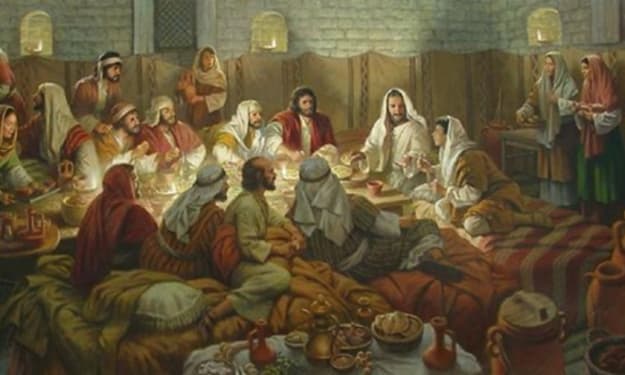
A beloved painting draws controversy Almost everyone at one time or another has seen Leonardo Divinci’s depiction of The Last Supper, which the Bible says is the final meal Christ ate with his followers before being crucified. This famous painting can be found on the walls of many Christian homes and also inside churches.
By Cheryl E Prestonabout a year ago in History
The Untold Story of Elon Musk’s First Million
Today, Elon Musk is a household name—the billionaire behind Tesla, SpaceX, and Neural Ink. But every story of success has a beginning. Before the rockets, before the electric cars, before becoming one of the richest men alive, there was a young man with an idea and a lot of determination.
By ✦•············• Freelancer •············✦about a year ago in History