General
The Roman Salute: History, Misconceptions, and Modern Interpretations"
Introduction The Roman salute, an iconic gesture often associated with ancient Rome, has become a topic of intrigue and controversy. Widely depicted in art and literature as a symbol of allegiance, it is commonly imagined as an outstretched arm raised with the palm facing downward. Despite its widespread recognition, much of what is believed about the Roman salute is rooted in misconceptions and modern reinterpretations rather than historical evidence.
By Razia Aman2 years ago in History
A World Without Violence
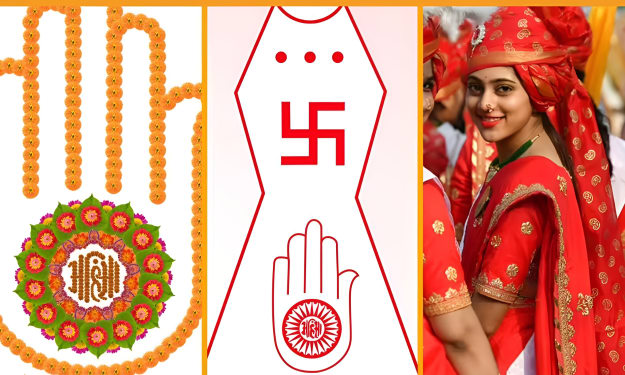
From the dawn of humanity, violence has been a pervasive trait, manifesting in conflicts against other humans and the planet's diverse life forms. The roots of such brutality continue to be a subject of philosophical and scientific debate. But what if the opposite were true? Imagine a world where non-violence isn't merely a philosophy but a daily practice, ingrained as deeply as the air we breathe. Today, we journey back to ancient India, a cradle of wisdom that birthed one of the world's oldest and most profound religions centered on non-violence: Jainism.
By A História2 years ago in History
Snowstorm Weather Forecast for the UK
The United Kingdom is preparing for a significant snowstorm, and weather experts are warning people to get ready. Winter weather can bring beauty, but it can also cause challenges for travel, homes, and daily life. Here's everything you need to know about the upcoming snowstorm in simple terms.
By Farhan Sayed2 years ago in History
Mahakumbh mela
The Mahakumbh Mela is one of the largest spiritual gatherings in the world celebrated with great fervor and devotion by Hindus Rooted in ancient tradition and mythology the event signifies the confluence of faith culture and spirituality Held every twelve years at four holy riverbank locations in India Haridwar Prayagraj Ujjain and Nashik the Mahakumbh is an occasion where millions of devotees come together to take a sacred dip in the holy rivers believing it will purify their souls and wash away their sins Historical and Mythological Significance The origin of the Mahakumbh Mela is deeply embedded in Hindu mythology particularly the tale of the Samudra Manthan Churning of the Ocean According to legend gods Devas and demons Asuras churned the cosmic ocean to extract the nectar of immortality or Amrit As the pot containing Amrit emerged a fierce battle ensued To safeguard the nectar Lord Vishnu in the guise of Mohini took the pot and ensured its distribution among the gods During this pursuit drops of Amrit fell at four places Haridwar Prayagraj Ujjain and Nashik sanctifying these locations The Mahakumbh is celebrated to commemorate this divine event Rituals and Practices The central ritual of the Mahakumbh Mela is the Shahi Snan Royal Bath where devotees bathe in the holy river It is believed that the waters become charged with divine energy during this period offering spiritual benefits Several auspicious dates are chosen for these baths often coinciding with planetary alignments which are considered to amplify the spiritual potency of the ritual
By Anishant Singh2 years ago in History
A cutthroat love story
Some time ago, in a domain where hearts were the most valuable fortunes, there carried on with a young lady named Lyra. Her reality was one of unending magnificence, yet in addition of perpetual distress. The land, called Lumen, was managed by a strong and baffling power known as the Wanton — spirits who had lost their affection, their feelings, and their mankind. They meandered the world, unfilled and empty, trying to take the hearts of others to make up for their own shortcoming.
By Ahmad hasan Tamim2 years ago in History
Why Belize is Emerging as a Leading Hub for Healthcare BPO Services
In recent years, Belize has rapidly gained recognition as a leading destination for Business Process Outsourcing (BPO) services, especially in the healthcare sector. As organizations across the globe look to reduce costs, improve service quality, and leverage global talent, Belize is quickly becoming a preferred choice for outsourcing healthcare-related customer service and support. In this blog, we’ll explore why Belize is emerging as a hub for Healthcare BPO Services, especially in the field of healthcare customer support, and how the Belize call center industry plays a key role in this growing trend.
By Aliocia Johnson2 years ago in History
Exploring the Rules for Wearing a Priest Coat Outside Church
When we think of clergy attire, the priest coat often stands out as a symbol of dignity, tradition, and faith. While it's commonly associated with church services and sacred duties, many wonder: is it appropriate for priests to wear their coats outside the church? The answer isn’t always straightforward. It depends on tradition, cultural expectations, and the role of clergy in public life. Let’s explore the rules, contexts, and considerations surrounding this timeless piece of men’s clergy wear.
By zobia mustafa2 years ago in History
The Hidden Tomb of Genghis Khan: A Legacy of Secrecy and Bloodshed. AI-Generated.
While such occurrences are shocking, they pale in comparison to a historical event involving Genghis Khan. In 1227, the infamous Mongol ruler ensured the secrecy of his burial by ordering the massacre of everyone who attended his funeral. This was not mentioned in any invitation, of course. To further protect the secret, even the soldiers who carried out the killings were slain by another group of soldiers, ensuring no witnesses remained to betray the location of his tomb. This ruthless bloodshed aimed to keep the precise whereabouts of Genghis Khan’s final resting place hidden from the world. Given that he was responsible for the deaths of around 40 million people during his brutal conquests, this additional loss of life seemed almost insignificant by his standards, reflecting the extreme lengths to which he would go to preserve his legacy.
By Ahmed mohsin2 years ago in History
The Complete Guide to Tarot Cards: Origins, Meanings, and Insights
The Origins of Tarot Cards Tarot cards boast a fascinating and multifaceted history. They first emerged in 15th century Europe, where they were initially designed as playing cards. In Italy, the game “Tarocchi” became quite popular, and tarot cards were used in this game for centuries. However, it wasn’t until the 18th century that tarot cards became associated with mysticism and divination. Occultists such as Antoine Court de Gébelin began to link tarot to ancient Egyptian mysteries, a theory that gained traction despite having little historical evidence.
By Diana Crooks2 years ago in History
Can You Read This Cursive Handwriting? The National Archives Wants Your Help
The National Archives houses countless historical documents, many written in cursive and dating back more than two centuries. These records, however, can be challenging to read, particularly for individuals who were never taught cursive in school.
By Rachel LaBella2 years ago in History
Indira Gandhi and the National Emergency: A Turning Point in Indian Democracy. Content Warning.
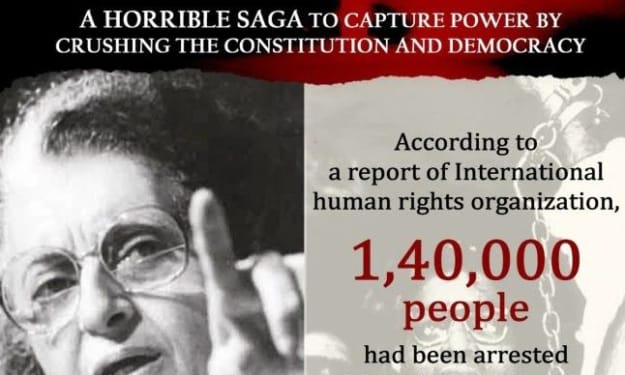
The Civic Emergency of 1975 Declared by Indira Gandhi: Reasons, Advantages, and Consequences The acknowledgment of a civic emergency in India by Prime Minister Indira Gandhi on June 25, 1975, charcoal one of the best arguable and debated capacity in Indian history. This period, abiding until March 21, 1977, greatly impacted the nation’s autonomous framework and governance. Let us analyze the reasons, advantages, disadvantages, causes, and furnishings of this cogent event. Reasons for the Civic Emergency Political Unrest: The 1970s witnessed boundless political agitation in India, primarily led by action leaders like Jayaprakash Narayan (JP). Corruption, bread-and-butter instability, and poor babyminding led to all-embracing protests and strikes, creating anarchy in assorted sectors. Judicial Adjudication Adjoin Indira Gandhi: In 1975, the Allahabad High Court declared Indira Gandhi’s acclamation to Parliament invalid due to balloter malpractices. This adjudication challenged her angary as Prime Minister, accumulative political instability. Economic Crisis: The country was grappling with an bread-and-butter downturn, ascent inflation, aliment shortages, and unemployment. These issues affronted accessible discontent. Call for Revolution: Leaders like JP aboveboard alleged for civilian defiance and a “Total Revolution,” advancement citizens to abolish the government, which Gandhi perceived as a absolute blackmail to capitalism and civic security. External Threats: India faced alien challenges from Pakistan, and there were apropos about civic security. Indira Gandhi argued that the emergency was all-important to aegis the nation. Advantages of the Civic Emergency Restoration of Order: The emergency finer concise the boundless strikes, protests, and riots, bringing actual law and adjustment to the nation. Economic Reforms: The government alien measures to ascendancy aggrandizement and advance agronomical production. Projects like the 20-Point Affairs aimed at abjection advancement and bread-and-butter development. Discipline: Industrial and authoritative sectors accomplished added discipline, with bargain disruptions and added adeptness in government operations. Infrastructure Development: The government focused on developing basement and acclamation basal needs, which saw abstinent advance during the emergency period. Disadvantages and Criticism Suppression of Civilian Liberties: The axiological rights of citizens, including abandon of accent and expression, were acutely restricted. The columnist was heavily censored, and bone was suppressed. Arrests and Detentions: Thousands of action leaders, activists, and critics of the government were arrested beneath the Maintenance of Internal Aegis Act (MISA), generally after trial. Forced Sterilization: One of the best criticized behavior was the affected sterilization affairs accomplished during this aeon as a agency of citizenry control. It led to boundless abhorrence and resentment. Political Manipulation: The Constitution was adapted to favor the cardinal government. The 42nd Amendment, anesthetized during the emergency, concise administrative analysis and adequate the executive's power. Erosion of Democracy: The emergency debilitated autonomous institutions and set a alarming antecedent for absolute governance. Consequences and Aftermath Electoral Defeat of Indira Gandhi: The emergency concluded in 1977, and in the consecutive accepted elections, the Congress Party suffered a massive defeat. The Janata Party, a affiliation of action parties, formed the government, appearance the aboriginal non-Congress administering in India. Strengthening of Autonomous Institutions: The backfire adjoin the emergency led to reforms aimed at attention autonomous institutions and preventing approaching abusage of emergency powers. Public Awareness: The aeon served as a admonition of the accent of civilian liberties and the charge for acuity in attention autonomous values. Indira Gandhi’s Comeback: Despite her defeat, Indira Gandhi alternate to adeptness in 1980, showcasing her animation and the continuing abutment she allowable amid a area of the populace. Cause and Effect Cause: The emergency was primarily a acknowledgment to political instability, bread-and-butter crises, and challenges to Indira Gandhi’s leadership. It additionally reflected her absolute tendencies and assurance to absorb power. Effect: While it briefly adequate adjustment and discipline, the emergency acutely damaged India’s autonomous appearance and larboard a abiding blister on the nation’s political and amusing fabric. It additionally fabricated citizens added acquainted of their rights and the accent of attention democracy. Lessons Learned The civic emergency of 1975-77 was a axis point in Indian history. It accent the aerial antithesis amid babyminding and civilian liberties and underscored the accent of accountability and accuracy in a democracy. While it showcased the government's adeptness to act actually in times of crisis, it additionally served as a abrupt admonition of the after-effects of absolved power. Indira Gandhi’s accommodation to appoint an emergency charcoal a accountable of acute debate. For some, it was a all-important footfall to restore order; for others, it was an absolute move that betrayed the attempt of democracy. The aeon continues to affect discussions about the animation of India’s autonomous institutions and the acuity appropriate to bottle them.
By Say the truth 2 years ago in History
Weather
Weather affects everyone, every day. Whether it’s sunny, rainy, or snowy, weather impacts what we wear, how we travel, and even how we feel. This article explains weather in simple and easy words, helping you understand what it is, how it works, and why it changes.
By Farhan Sayed2 years ago in History