General
10 Shocking Olympic Scandals You’ll Never Forget
The Olympic Games, celebrated for showcasing the pinnacle of athletic prowess and international unity, have also been the stage for numerous controversies that have left indelible marks on their history. Here, we delve into some of the most significant Olympic scandals that have captivated audiences worldwide.
By Only Incredible2 years ago in History
Movies That Went Too Far. Content Warning.
Movies have the power to entertain, shock, and challenge us. But sometimes, filmmakers push the boundaries a bit too far, leaving audiences squirming, gasping, or just outright baffled. From horrifying body transformations to plot twists that make you question reality, here are 10 films that truly crossed the line.
By Only Incredible2 years ago in History
The Forgotten Flame
In the windswept deserts and towering mountains of ancient Persia, over 3,500 years ago, a prophet named Zoroaster—known as Zarathustra—delivered a vision that would echo across millennia. His teachings birthed one of the world's oldest religions, Zoroastrianism, a faith whose profound principles of good thoughts, good words, and good deeds would influence not only mighty empires but also the core philosophies of some of today’s largest religions. This is the story of how a single flame, lit in the heart of Persia, illuminated the path of human spirituality.
By A História2 years ago in History
Stargate
Stargate is a popular science fiction franchise that has captured the imagination of fans around the world. Starting with a single movie, it grew into a universe of TV shows, books, comics, and games. Its unique blend of adventure, science, and mythology makes it a favorite among sci-fi enthusiasts.
By Farhan Sayed2 years ago in History
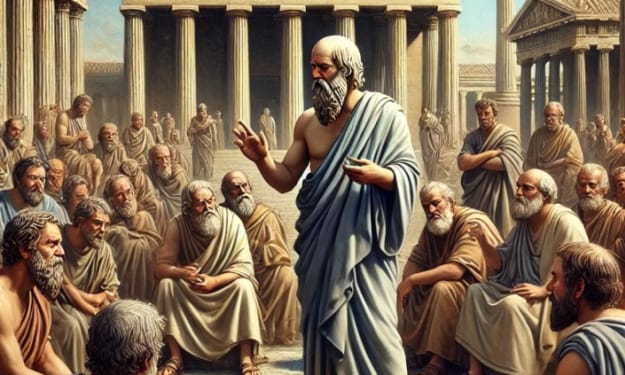
Socrates in the Agora
"Socrates: The Life, Philosophy, and Bequest of the Ancestor of Western Thought" Socrates, a name alike with acumen and the following of truth, is one of the best acclaimed philosophers in history. Built-in in Athens, Greece, about 470 BCE, Socrates laid the foundation for Western philosophy. Despite abrogation no accounting annal of his own, his account and methods greatly afflicted consecutive thinkers like Plato and Aristotle. This commodity explores the life, philosophy, trial, and constant bequest of Socrates, whose following of ability charcoal timeless. Early Activity and Background Socrates was built-in to Sophroniscus, a stonemason, and Phaenarete, a midwife. His bashful accomplishments shaped his apprehensive and aboveboard lifestyle. Unlike added Athenian philosophers of his time, Socrates alone absolute abundance and amusing status, allotment instead to appoint with bodies from all walks of life. Though little is accustomed about his education, Socrates acceptable accustomed a accustomed Greek education, which included literature, music, and concrete training. His aboriginal years were apparent by aggressive service, area he fought bravely in battles such as Potidaea and Delium, earning account for his adventuresomeness and endurance. Philosophical Methods and Beliefs Socrates’ altered access to aesthetics was centered on chat and questioning, a adjustment now accustomed as the Socratic Method. This address complex allurement acid questions to activate analytical cerebration and bare basal assumptions. His ambition was not to advise but to adviser others against self-discovery and bookish clarity. Core Beliefs: The Unexamined Life: Socrates abundantly declared, “The unexamined activity is not account living.” He believed that self-reflection and gluttonous ability were capital to a allusive life. Virtue as Knowledge: For Socrates, advantage and ability were inseparable. He argued that accurate ability leads to blameless accomplishments and that benightedness was the basis of all wrongdoing. The Following of Truth: Socrates admired the following of accuracy aloft all else, generally arduous civic norms and analytic the behavior of his contemporaries. Socrates in Athenian Society Socrates spent abundant of his activity in Athens, agreeable in abstract discussions in accessible spaces like the Agora. He approved out politicians, poets, and craftsmen to catechism their ability and betrayal their abridgement of understanding. This access fabricated him both admired and unpopular. Socrates' antipathy for accustomed acumen and his criticism of Athenian capitalism becoming him a acceptability as a amusing gadfly—a all-important irritant that stirs association into self-reflection. His followers included adolescent Athenians like Plato and Alcibiades, but his access additionally angry suspicion amid the city’s leaders. The Balloon and Afterlife of Socrates In 399 BCE, Socrates was brought to balloon on accuse of impiety and allurement the adolescence of Athens. His accusers claimed he alien new gods and led the adolescent bearing adrift by analytic acceptable values. The Trial During his trial, Socrates delivered a able defense, recorded by his apprentice Plato in The Apology. He argued that his analytic was a account to the gods and a account to society. Despite his eloquence, the board begin him guilty. Socrates was bedevilled to afterlife by arresting a cup of hemlock poison. The Death Socrates' afterlife was a abstruse moment in history, appearance the battle amid alone abandon and civic norms. He accustomed his fate calmly, abnegation to abscond back accustomed the opportunity. His charge to his attempt alike in the face of afterlife fabricated him a agonize for philosophy. Socrates’ Legacy Although Socrates wrote annihilation himself, his account were immortalized by his students, decidedly Plato. Through works like The Apology, Crito, and Phaedo, Plato preserved Socrates' article and alien them to approaching generations. Influence on Philosophy Plato and Aristotle: Plato's aesthetics was acutely afflicted by Socrates, and Aristotle, in turn, was Plato's student. Together, they laid the foundation for Western philosophy. Ethics and Morality: Socrates' focus on belief and the accent of analytic laid the background for moral philosophy. Modern Applications: The Socratic Adjustment is broadly acclimated in education, law, and psychotherapy, emphasizing chat and analytical thinking. Symbol of Bookish Integrity Socrates charcoal a attribute of bookish adventuresomeness and integrity. His alertness to claiming ascendancy and seek truth, alike at abundant claimed cost, inspires thinkers, educators, and activists worldwide. Mysteries and Interpretations Despite his constant legacy, abundant about Socrates charcoal a mystery. Best of what we apperceive comes from accessory sources like Plato, Xenophon, and Aristophanes, anniversary presenting a altered perspective. Some advisers altercate that Plato’s accounts may reflect his own abstract angle rather than Socrates’ absolute teachings. Conclusion Socrates’ activity and aesthetics abide to bell above centuries, reminding us of the ability of analytical cerebration and the following of truth. His methods and article claiming us to appraise our beliefs, catechism civic norms, and strive for a blameless life. As the ancestor of Western philosophy, Socrates' access extends far above age-old Greece, abstraction the bookish traditions that ascertain humanity’s adventure for ability and meaning.
By Say the truth 2 years ago in History
Exploring the Dark Secrets of Paris: The Haunting History of the Catacombs
When you think of Paris, the iconic image of the Eiffel Tower often comes to mind, perhaps accompanied by thoughts of romance, charming streets, and a rich history. However, not many are aware of what lies beneath this bustling city—the mysterious and eerie network of underground tunnels known as the Catacombs. These underground passages house the remains of over 6 million people, a stark contrast to the lively city above. Paris, once a vast swamp, began as a settlement surrounded by water. Over time, as the ground rose above the waterline, it became rich in minerals, especially limestone. By the 14th century, mines were dug to extract this valuable resource, primarily on the right bank of the Seine River. As Paris expanded beyond its city walls, buildings began to be constructed on top of these mines, which posed a serious danger—tunnels caved in, causing roads and buildings to collapse. In 1774, one such collapse resulted in a road sinking 100 feet into the ground. In response to these frequent collapses, authorities decided to abandon the mines and take preventive measures. The tunnels were renovated and reinforced to avoid further disasters. However, it wasn’t until a few years later, in the late 1780s, that the Catacombs became home to the bones of Paris' deceased. With the city's population growing rapidly, cemeteries were overcrowded, and the bodies became a public health concern. The bones were removed and transported to the catacombs, starting with the infamous Les Innocents Cemetery. The bones were moved discreetly during the night to avoid alarming the public. Once in the catacombs, the remains were stacked in large pits and arranged along the tunnels. As the practice continued, the tunnels transformed into an underground ossuary. By the 1860s, Paris had grown significantly, and the catacombs were officially designated as the Paris Municipal Ossuary. However, it was simply called the Catacombs by the public, a name that stuck over time. In 1809, the Catacombs opened to the public for the first time. Tourists could only visit with a prior appointment, signing a guestbook before entering. Among the early visitors were notable figures like future King Charles X and Austrian Emperor Francis II. Over time, the rules for visiting changed, and the Catacombs became a popular tourist attraction. Today, around 5 million people visit the Catacombs each year. What draws so many to the Catacombs is not only their historical significance but also their eerie reputation. Known as one of the most haunted places on Earth, the tunnels are shrouded in mystery. One of the most famous incidents occurred when a camcorder was discovered deep within the Catacombs. The footage, shown in a documentary, captured a man exploring the tunnels alone. The man encountered something strange, causing him to flee in terror, dropping the camera in the process. The man was never found, and his fate remains unknown. There are also numerous reports of people getting lost in the Catacombs. In 1793, a doorkeeper became lost, and his body was found 11 years later. How he passed away remains a mystery. Many people, known as "cataphiles," venture into the forbidden sections of the tunnels, seeking adventure or the thrill of exploration. Some have even discovered secret underground water pools, where people sometimes take a dip. In 2004, police stumbled upon an astonishing find—an entire 5,300-foot cavern complete with a movie theater, projection equipment, and even a restaurant. Yet, when they returned days later with experts, the electricity was mysteriously cut off, and only a note remained: "Do not try to find us." Historically, the Catacombs have also had strange commercial uses. In the 1950s, a group of farmers started cultivating mushrooms in the tunnels, a practice that continued for decades. By 1950, around 100 farmers worked inside, growing mushrooms in the cool, dark environment. However, the Catacombs are not only known for their unusual history; they are also a place of legend. According to one tale, at midnight, unexplainable voices can be heard echoing through the tunnels, coaxing people further inside until they are lost forever. Whether this story is true remains unclear, but the thought of it adds to the mystery surrounding the site. In modern times, visiting the Catacombs has become more regulated. Only a small portion of the Catacombs, less than two miles, is open to the public, and the tour lasts about an hour. While the majority of the tunnels remain off-limits, some adventurers still attempt to explore them. In 2017, two teenagers managed to enter the Catacombs through a secret passage. They were found three days later suffering from hypothermia. The temperature in the tunnels averages 59°F, and the dampness can make the experience uncomfortable. Upon entering the Catacombs, visitors descend a winding staircase, reaching over 65 feet below the surface. The well-lit initial room provides historical information and displays, but as the journey continues, the atmosphere becomes eerily silent. As you venture deeper, the silence is almost overwhelming. The bones themselves are arranged in artistic formations, a design thought up by one of the former overseers. The display includes columns, altars, and strange bone structures, making the Catacombs feel like a dark, underground museum. The Catacombs also gain particular attention around Halloween, when special events and parties are held nearby. One of the most bizarre experiences offered by the Catacombs was through Airbnb. In 2017, the famous rental service allowed two guests to spend the night in the Catacombs for Halloween. Guests were provided with a bed, breakfast, and tales of the history behind the place. For those brave enough to sleep among the remains of 6 million people, the experience was as unique as it was eerie.
By Nora Ariana2 years ago in History
Fascinating Wonders of Nature: From Flying Dogs to Walking Trees
Is that a dog in the sky? Don’t get too excited—dogs haven’t evolved to fly just yet! But we’ve all seen realistic shapes in clouds. Some think it’s Mother Nature sending us coded messages. However, it’s our brain’s ability called pareidolia that makes us see patterns or faces in random objects. This skill likely helped our ancestors survive by spotting potential threats like predators hiding in shadows. Speaking of odd shapes, ever seen an orange “having a baby”? This phenomenon, called vivipary, happens when seeds sprout while still attached to the fruit. It’s rare in plants but fascinating, as it’s comparable to live birth in animals. On the topic of nature’s wonders, the giant African snail can grow up to 8 inches and live 10 years. These snails, while fascinating, are illegal to own in some countries due to their invasive nature and potential health risks. Another striking phenomenon is the "dirty thunderstorm," where volcanic eruptions generate lightning within ash clouds. This occurs when static electricity forms as ash particles collide, creating lightning near the ground. Nature never ceases to amaze! Did you know that tigers have striped skin beneath their fur? Unlike zebras, whose skin is all black, tigers’ striped patterns extend to their follicles. It’s a feature that makes them even more unique. Hailstones the size of tennis balls are another wild occurrence. These form when raindrops are lifted to freezing altitudes by strong updrafts, growing larger as they collect more layers of ice. Once heavy enough, they crash to the ground, often causing significant damage. Ever find a pearl while eating oysters? It’s rare, with a 1 in 10,000 chance, but possible. Pearls form when debris irritates the oyster, prompting it to coat the intruder in layers of nacre. Edible oyster pearls can be worth up to $4,000, while high-end jewelry store pearls fetch much more. Nature’s adaptability is also evident in the walking palm tree, found in Central and South America. It appears to “move” by growing new roots in a desired direction while older ones die off, enabling the tree to shift position slowly over time. In the ocean, the lingcod fish stands out with its electric blue flesh. This unique coloring is linked to a chemical called biliverdin, but the phenomenon remains poorly understood. Interestingly, the blue hue fades when cooked. Have you ever seen Zen stones? These natural formations occur when rocks sit atop melting ice, leaving slender pedestals behind. The process involves sublimation, where ice transitions directly to gas, creating these surreal shapes. Butterflies, with their intricate wing patterns, use them for both survival and attraction. The patterns help them camouflage, warn predators, or impress mates. Some species, like the zebra longwing, have unique feeding habits, consuming pollen directly for better nutrition and longer lifespans. Bioluminescence is another marvel, where creatures like plankton and shrimp emit light. Beaches with glowing waves, caused by these organisms, create magical sights. Similar wonders include Bolivia’s Salar de Uyuni, a salt flat that turns into a giant mirror after rainfall. Lastly, nature’s creativity extends to multi-fruit trees through grafting. By combining compatible fruits on one tree, you can grow several varieties in a single space. However, they require careful maintenance to ensure balance. These natural phenomena remind us of the planet’s beauty and complexity, from striped tigers to glowing oceans and moving trees. Each discovery adds to our appreciation of the world we live in.
By Nora Ariana2 years ago in History
The Paris Climate Treaty
The Paris Climate Treaty, also known as the Paris Agreement, is an important global agreement aimed at fighting climate change. It was created during the United Nations Climate Change Conference (COP21) in December 2015 in Paris, France. Representatives from almost every country in the world came together to make this deal. The goal of the treaty is to protect the Earth by reducing greenhouse gas emissions and keeping global warming under control.
By Farhan Sayed2 years ago in History
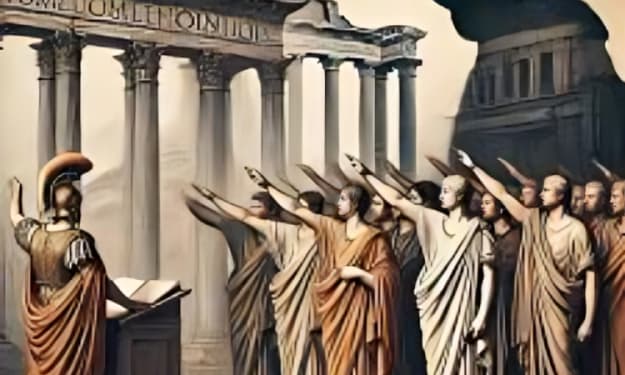
The Roman Salute
The Roman salute is a gesture where a person raises one arm forward with the palm facing down or slightly up. It is often associated with ancient Rome, but its real history and meaning are much more complicated. Over the years, this gesture has taken on different meanings in art, politics, and culture, making it a topic of debate and interest.
By Farhan Sayed2 years ago in History
Learn the Incredible Story of Sgt. Stubby, the War Canine Hero
Learn the Incredible Story of Sgt. Stubby, the War Canine Hero There are remarkable stories of valor that can be told of history, and among the most peculiar ones is the story of Sgt. Stubby, a stray dog that is known to have become one of the most prominent war heroes during World War I. This wonderful canine soldier served together with American soldiers and made acts that would help save numerous lives during battles. From a stray pup to a decorated war hero, the journey of Sgt. Stubby is a journey of courage, loyalty, and resilience. In this article, we are going to discover his inspiring story and find out why he remains one of the most famous military dogs in history. Who Was Sgt. Stubby? Sgt. Stubby was a Boston Terrier or Bull Terrier crossbreed; the breed is very small but solid. His birth and parentage are unknown because he was found roaming on the streets of New Haven, Connecticut, in 1917. He was befriended by a group of soldiers who were undergoing training at Yale University. These soldiers would be shipped overseas during World War I. One soldier, Private J. Robert Conroy, developed a close bond with Stubby. The dog soon became the favorite of the troops as he would cheer them up with his friendly and playful nature. How Sgt. Stubby Joined the War
By Kalpesh Vasava2 years ago in History