Fiction
Why the Israel philistine
After World War II, Jews began to return to their old homeland in Palestine. They were supported by several countries, including Britain and America. However, from the beginning, there was no peace with the local Arab Muslim community. In the meantime, the Jews decided to form an independent 'safe' country. In 1947, the year British rule in India ended, Palestine was also under British rule. The United Nations decided that the territory of Palestine would be divided between Arabs and Jews. On the other hand, Jerusalem would be under the rule of an impartial international authority. Naturally, Jewish leaders were happy with this plan. It was said that 56 percent of the land would be given to the Jews. The Arab League rejected this proposal.
By MD SAKIL AHMED2 years ago in History
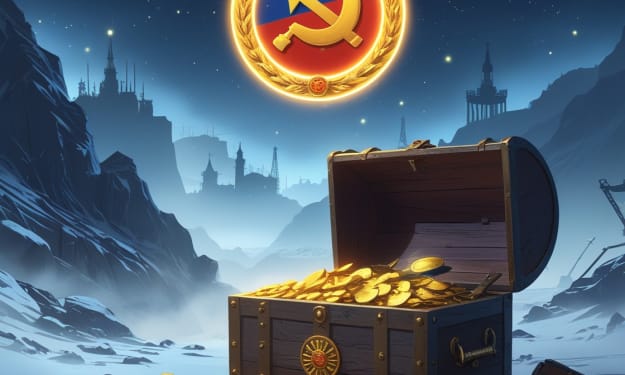
"The Vanished Wealth of the Soviet Empire". AI-Generated.
The Disappeared Fortune of the Soviet Empire: Discovering the Soviet Union’s Concealed Treasures From gold bullion lost amidst the Russian Revolution to invaluable artworks concealed in bunkers throughout Eurasia, the history of the Soviet Union is filled with narratives of vanished wealth, state treasures, and clandestine caches. This article examines the legends, realities, and persistent enigmas regarding the extensive yet elusive riches of the Soviet Empire. The Disappeared Fortune of the Soviet Empire: Discovering the Soviet Union’s Concealed Treasures The Soviet Union was not only one of the most extensive empires in contemporary history by area and military strength, but also a repository of significant wealthboth acknowledged and speculated. Throughout the 20th century, during conflicts, revolutions, and the eventual disintegration of the USSR in 1991, immense quantities of state treasures, cultural artifacts, and individual fortunes essentially vanished. Currently, treasure seekers, historians, and authorities continue to pursue the forgotten fortunes of the Soviet Empire. The Tsar’s Gold – A Revolutionary Enigma The narrative of lost Soviet treasures commences even prior to the establishment of the USSR, during the downfall of the Russian Empire in 1917. As the Bolsheviks toppled the Tsarist government, the imperial family’s private assetsestimated at over $45 billion in present-day valuedisappeared. Tsar Nicholas II’s gold reserves, diamond-studded regalia, Fabergé eggs, and priceless artworks were either concealed, plundered, or clandestinely transported. One of the most enduring myths is that of the “Lost Gold of Kolchak. ” Admiral Alexander Kolchak, a leader of the White Army, assumed control of the Imperial Gold Reserves during the Russian Civil War. Following the defeat of his forces in Siberia in 1920, more than 500 tons of gold bullion remained unaccounted for. Some accounts suggest it sank into Lake Baikal, while others assert it was buried along the Trans-Siberian Railway. Despite decades of investigation, no definitive treasure has ever been located. Stalin’s Covert Bunkers and Art Collections Under Joseph Stalin, the Soviet Union undertook extensive secret initiatives to collect and conceal cultural treasures, many of which had been confiscated from Nazi Germany following World War II. Referred to as “Trophy Art,” this included over 2. 5 million art piecespaintings, sculptures, and rare manuscriptsthat were stored in hidden bunkers and museums under state confidentiality. Some of this artwork was returned post-war, yet a substantial portion remains unaccounted for or stored in undisclosed sites. Speculation endures that Stalin also possessed bunkers filled with gold reserves, foreign currency, and expropriated treasures from occupied regions and adversaries of the state. The Soviet Gold Reserves and Cold War Dispersals During the peak of the Cold War, the Soviet Union maintained one of the largest gold reserves globally. According to some estimates, it possessed over 2,000 metric tons of gold, safeguarded in vaults beneath the Kremlin and within secret facilities across the USSR. As the empire declined in the late 1980s, there were indications that senior officials started relocating gold and assets out of the nation, either for safeguarding purposes or personal advantage. When the USSR disintegrated in 1991, investigators uncovered significant discrepancies in the country’s gold records. Billions in foreign currency reserves had also disappeared. Some speculate that portions of this wealth ended up in offshore accounts, Swiss vaults, or even concealed caches throughout Eastern Europe and Central Asia. The Curse of the Amber Room: A Treasure Still Missing One of the most renowned artistic treasures linked to Soviet losses is the Amber Rooma chamber constructed entirely of amber panels, gold leaf, and mirrors, initially developed in Prussia and presented to Peter the Great in 1716. The room was plundered by the Nazis during World War II and subsequently vanished. The Soviets spent decades in pursuit of it, convinced it had been concealed in a German bunker or a sunken transport vessel. Despite numerous expeditions and even reconstructions, the original Amber Room has never been located. Its current estimated value surpasses $500 million. The Collapse and the Disappearing Billions When the Soviet Union collapsed in 1991, the situation descended into turmoil. State assets were privatized rapidly, oligarchs emerged, and state-operated industries changed ownership. The Soviet National Bank was reportedly drained of over $60 billion in tangible assets, including gold, platinum, and rare earth metals. Multiple investigations disclosed that high-ranking Soviet officials and KGB members executed a systematic transfer of wealth into private ownership or foreign banks. To this day, international audits and legal actions persist in an effort to trace this lost treasure.
By Say the truth 2 years ago in History
Houston Stuns Duke in Final Four Comeback to Reach NCAA Championship
SAN ANTONIO — In a thrilling Final Four showdown, Houston pulled off an incredible comeback to defeat Duke 70-67, overcoming a 14-point deficit in the final eight minutes. With this stunning victory, the Cougars are now set to face Florida in the NCAA Championship game on Monday night.
By Muhammad Hayat2 years ago in History
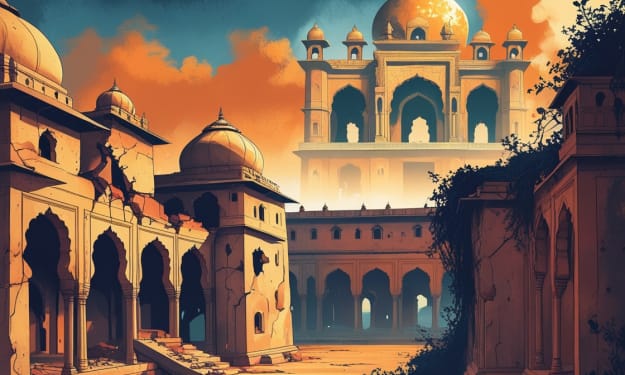
The Forgotten Fortunes: Rajasthan’s Vanishing Palaces and Their Lost Legacy
Whispers in the Sand: The Forgotten Palaces of Rajasthan Rajasthan—literally meaning “Land of Kings”—is often celebrated for its grand forts, regal culture, and tales of valiant warriors. Cities like Jaipur, Udaipur, and Jodhpur boast world-renowned palaces such as the City Palace, Hawa Mahal, and Mehrangarh Fort. However, beyond the popular tourist trail lies another Rajasthan—one composed of forgotten palaces, crumbling mansions, and vanishing architectural wonders. These structures, once the pride of princely estates and merchant kingdoms, now lie in ruins, hidden under layers of dust and silence, their stories fading with each passing year. This article explores the fascinating, overlooked world of Rajasthan’s vanishing palaces, their historical importance, and the urgency of preserving this disappearing legacy. 1. The Legacy of Forgotten Royalty Rajasthan was once divided into numerous princely states, or thikanas, each ruled by powerful feudal lords under the larger umbrella of Rajput dynasties. While the capital cities boasted palaces that remain preserved and visited today, hundreds of lesser-known palaces in remote districts like Karauli, Barmer, Shekhawati, Bundi, and Tonk are in disrepair. These estates were not just royal residences but also centers of political power, art, culture, and wealth. From ornate mirror work and hand-painted murals to secret courtyards and underground chambers, they were a testament to the region’s architectural brilliance. Many of these palaces were even grander than some of today’s iconic buildings. Yet after the end of princely rule in 1947 and the eventual abolition of royal privileges in 1971, many of these thikanas were left without adequate income or recognition. Over time, the families moved out, and the palaces fell into decay. 2. Shekhawati – The Fading Open-Air Museum Nowhere is the decline more visible than in Shekhawati, a region once called the "open-air art gallery of Rajasthan." It was home to some of India’s wealthiest merchant families during the 18th and 19th centuries, who built lavish havelis (mansions) adorned with frescoes, gold leaf work, and intricate carvings. Today, most of these havelis—particularly in towns like Mandawa, Nawalgarh, and Fatehpur—are crumbling. Many have broken roofs, faded murals, and are used as storage barns or have been completely abandoned. Historians estimate that more than 2,000 such structures exist, many of them worthy of World Heritage recognition, but less than 10% are maintained. 3. The Royal Estates of Forgotten Forts Beyond Shekhawati, several other thikanas hold palaces that are fading into obscurity: Bundi Palace: Though renowned for its wall paintings, much of the structure remains unrestored. Entire chambers with priceless murals have been left to rot. Karauli Palace: Home to the Yaduvanshi kings, this palace has intricate stonework and halls once gilded with gold. However, tourism is minimal, and preservation efforts are limited. Kuchaman Fort: Perched atop a steep hill, this fort-palace is mostly unknown outside local circles. While a section has been converted into a heritage hotel, vast areas are abandoned. These forts once housed libraries, treasuries, weapon stores, and artworks—many of which have been stolen, lost, or deteriorated due to lack of care. 4. What Was Lost: Treasure, Culture, and Identity Rajasthan’s forgotten palaces weren’t just about stone and mortar. They held: Historical Manuscripts: Genealogies, treaties, and philosophical texts. Treasure Rooms: Coins, jewelry, gold-plated furniture. Royal Paintings: Many now looted or held in private collections abroad. Local Art Forms: Wall art like Pichhwai, Miniature, and Phad paintings, which are vanishing. The cultural identity of many small towns was tied to their palace. As the buildings collapsed, so did traditional crafts, festivals, and a sense of communal pride. 5. Why the Palaces Vanished Several factors have contributed to this decline: Neglect after Independence: Many royal families were left without adequate funds to maintain their properties. Urban Migration: Heirs moved to bigger cities, abandoning ancestral homes. Lack of Government Support: ASI and state bodies often prioritize well-known sites, leaving smaller palaces undocumented. Looting and Encroachment: Several properties have been vandalized, illegally occupied, or stripped for building materials. 6. The Path Forward: Restoring a Legacy Not all hope is lost. A few passionate individuals and NGOs are working to restore forgotten palaces and promote them through heritage tourism. For example: The Neemrana Group has restored several old palaces into boutique hotels.
By Say the truth 2 years ago in History
Musk Says He Hopes Europe and U.S. Move to a ‘Zero-Tariff Situation’
Tesla CEO Elon Musk has once again made headlines, this time by advocating for a “zero-tariff situation” between the United States and Europe. Speaking during a recent press engagement, Musk emphasized the need for fair and reciprocal trade policies across both sides of the Atlantic. His comments come at a time when international trade relations, especially in the electric vehicle (EV) sector, are increasingly under scrutiny.
By Md polash Ali2 years ago in History
“The Fortune That Escaped the Empire: British Colonialism’s Greatest Missed Treasures”
The Lost Riches: The Biggest Treasure Missed by the British Empire Throughout the era of colonial expansion, the British Empire plundered immense wealth from its colonies across Asia, Africa, and the Americas. From India's diamonds and spices to Africa’s gold and minerals, Britain amassed unprecedented fortunes. However, history also holds fascinating accounts of enormous treasures that evaded British grasp—treasures buried, lost, or hidden in plain sight, never to be seized by the crown. Among these, one of the most legendary missed fortunes lies in India: the hidden treasures of the Maratha Empire and Tipu Sultan’s lost wealth.
By Say the truth 2 years ago in History
China says 'market has spoken' after US tariffs spark selloff
You know what’s funny? I never really cared about things like trade wars or tariffs before. Global economy stuff? Felt like something way out there—nothing to do with my day-to-day life. But now? It kinda feels like those big words are sitting right across from me at the dinner table. So how did this all start? Well, Trump made an announcement—not exactly breaking news, right? But this one hit different. He slapped a new 34% tariff on Chinese goods. Add that to the previous ones, and boom—total tax shoots up to nearly 70%. Crazy, right? And of course, China didn’t just sit there. They fired back with their own set of tariffs and even started holding back on some rare minerals that our tech world runs on. And we? The regular people? We’re stuck in the middle of this ping-pong match. Just the other day, I went out to buy a pair of headphones. Nothing fancy—something I’ve bought before, so I kinda knew the price. But this time? The guy at the shop asked for 600 Taka more than last time. I was like, “Wait… wasn’t this cheaper just a few weeks ago?” And he goes, “Yeah bhai, bringing stuff from China is costlier now. We gotta raise prices too.” That moment hit me. I mean, I’m just trying to listen to music, not fund a trade war. But here it is—global politics messing with my earphones. And it’s not just tech stuff either. Groceries? Prices are creeping up. Rice, lentils, even paper. Paper, man! And then there's the stock market. Don’t even get me started. I had some investments—pretty safe ones too. Thought I was being smart. Then bam! S&P 500 drops 9% in a week. Haven’t seen that kind of fall since the COVID days. I just sat there, staring at my screen, thinking, “Seriously? What now?” I remember this Chinese guy—Guo Jiakun—he once said, “The market has spoken.” Sounded simple at the time. But now? I get it. That sentence isn’t just about numbers. It’s about real people. Their savings, their struggles, their little dreams. And this whole mess? It’s not just about the US and China anymore. Europe’s feeling it. India too. Some countries are rushing to find new trade buddies. Others are trying to push local products into the spotlight. So, I started asking myself—are we just gonna sit and watch this unfold? ‘Cause if we don’t start doing something, even the basics might feel like luxury soon. These days, I try to buy local when I can. Sure, the quality’s not always top-tier, but it feels good—like I’m supporting people around me. But look, I’m not saying I can fix this alone. Nah, this needs everyone—government, business owners, buyers—pulling in the same direction. We can’t stop big countries from doing what they do, but maybe we can soften the blow. One last thing I wanna say—this whole trade war? It ain’t a movie. It’s not something we just watch and then move on. This is real life. One announcement from some leader somewhere, and suddenly your grocery bill goes up, your small business struggles, your plans take a hit. So yeah, maybe it’s time we stop just shaking our heads at the news and start thinking for ourselves. ‘Cause this isn’t just about politics—it’s about our lives."
By Md Motiur Rahman2 years ago in History
Opera’s Latest Browser Is Here to Make Your Internet Experience Less Stressful
# The Most Recent Version of Opera's Browser Is Here to Make Your Internet Experience More Stress-Free Endless tabs, intrusive advertisements, privacy concerns, and slow load times can transform a straightforward search into a frustrating experience in today's fast-paced digital world. The most recent version of Opera's browser aims to change that by introducing features that simplify online activities and alleviate stress. ## A smoother, faster browsing experience Opera has been praised for its speed and effectiveness for a long time, and the most recent version takes performance to new heights. Pages load faster and are protected from annoying pop-ups and data-hungry scripts thanks to an integrated "ad blocker" and "tracking protection." Opera's Turbo Mode, which compresses data to speed up browsing on slow connections, is another feature of the browser that makes it ideal for travelers or users with limited bandwidth. ## **Built-In Tools to Reduce Clutter**
By MD SHADIKUL ISLAM2 years ago in History
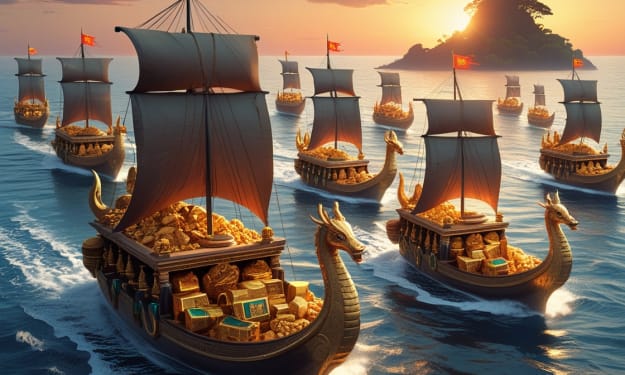
AThe Chola Dynasty’s Maritime Gold: The Lost Wealth of the Ocean Kings
The Chola Dynasty’s Maritime Gold: Concealed Wealth of the Southern Oceans This manuscript investigates the fabled maritime riches of the Chola Dynastyits commerce routes, naval supremacy, gold reserves, and the enigmatic treasures yet to be accounted for. The Chola Dynasty’s Maritime Gold: Concealed Wealth of the Southern Oceans In the chronicles of Indian history, few dynasties have bequeathed a heritage as splendid, extensive, and economically robust as the Cholas. Thriving between the 9th and 13th centuries CE, the Chola Empire was not merely a powerful political entity in southern India but also a naval powerhouse with economic pursuits that extended from the Indian Ocean to Southeast Asia. With formidable fleets, sophisticated trading systems, and a penchant for temple construction and gold accumulation, the Cholas gathered an enormous wealthsome of which is believed to still be submerged beneath the tides or secured within ancient repositories. This manuscript probes deeply into the narrative of the Chola treasure, its origins, safeguarding, and the cryptic disappearance of portions of its vast riches. The Ascendancy of a Maritime Empire The Chola Dynasty ascended to prominence in the Tamil sector of South India, with its capital located at Thanjavur (Tanjore). Sovereigns such as Rajaraja Chola I and Rajendra Chola I transfigured this regional authority into a formidable maritime empire. What distinguished the Cholas was their expertise on the waters. Unlike most Indian empires, they heavily invested in a naval forcenot solely for combat but for commerce. This naval capability enabled them to extend their influence over the Maldives, Sri Lanka, sections of Indonesia, and even the Malay Peninsula. These maritime routes flourished with commerce: spices, pearls, silk, textiles, sandalwood, ivoryand most cruciallygold. Sources of Wealth Trade with the East and West: The Cholas engaged in extensive commercial exchanges with China, the Middle East, and Southeast Asia. Items such as black pepper, cardamom, precious stones, and superior textiles were traded for gold and silver. Tributes and Military Spoils: Rajendra Chola I's renowned expedition to the Srivijaya Empire in Southeast Asia was not merely a demonstration of military prowess but a treasure trove of wealth. Chola inscriptions reference tributes of gold, elephants, and gems returned to South India. Temple Contributions: Temples were not solely religious institutions but also functioned as treasuries. Kings and traders contributed vast quantities of gold and jewels to temples like Brihadeeswara in Thanjavur, which were often safeguarded by temple militias. Taxation and Agricultural Prosperity: The Cholas had a well-organized administrative system that guaranteed the collection of taxes in both currency and produce. This economic framework supported the financing of their military, temples, and overseas endeavors. The Gold That Disappeared Despite this documented affluence, the Chola treasury remains elusive. Although some temple vaults still contain immense wealth, historians and treasure seekers speculate that a significant segment of the Chola fortune has dissipated over timepotentially looted, interred, or lost at sea. Potential Sites of Lost Chola Treasures: Submerged Vessels in the Bay of Bengal: Maritime archaeologists have long contemplated the existence of Chola trading vessels that may have perished during monsoonal storms or naval confrontations. These ships, burdened with gold coins, jewelry, and rare relics, could still remain concealed beneath the ocean’s surface. Unopened Temple Chambers: Certain ancient temples in Tamil Nadu and Keralaerected or supported by Chola monarchsmay still have sealed compartments containing donations in gold and silver that have endured for centuries. Concealed Underground Passages: Folklore from Tamil Nadu narrates tales of clandestine tunnels and chambers created during the Chola period, intended to safeguard treasures from invading armies. These pathways have never been thoroughly investigated. Gold Coins and Inscriptions: The Cholas minted gold coins featuring inscriptions in Tamil and Sanskrit, along with representations of rulers and deities. Some coins have been discovered in Sri Lanka and Southeast Asia, indicating their extensive influence. These coins, now displayed in museums, provide insights into the grandeur of the empire, yet they represent only a small portion of what once existed. Contemporary Search Initiatives: While not as renowned as the treasure of the Padmanabhaswamy Temple or the fabled city of Dwaraka, the Chola treasure has captivated the attention of archaeologists and enthusiasts alike. Underwater archaeological endeavors along the Tamil Nadu coastline have yielded pottery, anchors, and remnants of shipssuggesting that a great deal more may be concealed beneath layers of sediment. Residents in regions such as Karaikal and Nagapattinam occasionally report the discovery of ancient coins and artifacts during construction or agricultural activities. Nevertheless, stringent government regulations and religious sentiments complicate large-scale excavations or explorations. Cultural Significance Beyond Wealth: The legacy of Chola wealth transcends mere lost gold. Their patronage of art, architecture, dance (Bharatanatyam), and literature transformed southern India into a cultural luminary. Temples like the Brihadeeswarar and the Airavatesvara remain today as monumental testaments to their splendor.
By Say the truth 2 years ago in History
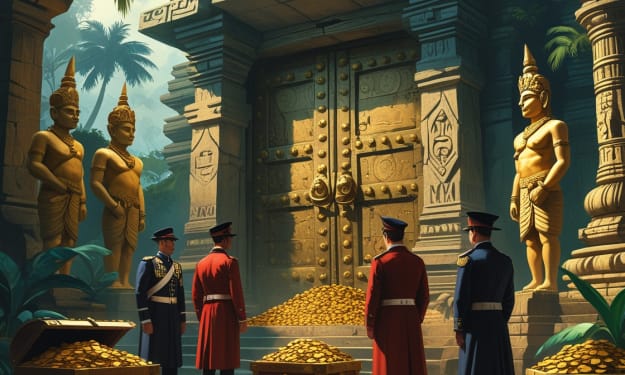
“India’s Hidden Fortunes: Uncovering the Lost Treasures of Ancient Empires”
The Concealed Riches of India: Revealing the Untold Narratives of Buried Wealth India’s past is characterized not only by empires and triumphs but also by remarkable stories of treasuresome discovered, many still concealed. While contemporary technology has revealed a few valuables interred beneath palaces and temples, an even greater wealth remains inaccessible to treasure seekers, archaeologists, and historians. This article continues our exploration into the enigmatic legacy of India’s uncharted riches by examining lesser-known myths, historical evidence, and royal mysteries that hint at unimaginable fortunes still hidden beneath the earth. The Chola Dynasty’s Nautical Gold The Chola Empire (9th to 13th century) represented one of the foremost maritime powers in Indian history, celebrated for their naval victories across Southeast Asia. With maritime commerce thriving during their reign, gold poured into the empire in substantial amounts. Ancient Tamil inscriptions reference temples receiving offerings of "ships laden with gold. " Some historians argue that to safeguard their wealth during the empire's decline, Chola rulers directed it to be concealed in secluded coastal caverns or buried deep in forests adjacent to the Bay of Bengal. Local folklore from Tamil Nadu and Andhra Pradesh narratives speaks of golden idols, jewelry, and coins secured within rock-hewn vaults, their precise locations lost over the centuries. The Mystery of the Vijayanagara Vaults Following the collapse of the formidable Vijayanagara Empire in the Battle of Talikota in 1565, its capital city, Hampi, was ransacked by the Deccan Sultanates. Nevertheless, travelers and Persian records depict a treasury so immense that it could not have been completely looted in a single raid. Legends suggest that numerous subterranean passages connected the royal palace to concealed chambers in the nearby hills. These vaults are said to have contained golden chariots, jeweled armaments, and temple donations accumulated over generations. Despite intermittent attempts, no official excavations have been permitted in these regions due to religious sensitivities and local beliefs of curses safeguarding the treasure. The Lost Mines of King Salivahana Within the Deccan region, the tale of King Salivahanathought to be the founder of the Shaka eraincludes allusions to gold mines operated during his dominion. These mines were reportedly rich in resources that were stored in fortified chambers beneath forts such as Daulatabad and Devagiri. While Devagiri was subsequently transformed into Daulatabad by Muhammad bin Tughlaq, the fortress’s intricate underground architecture continues to ignite speculation. Some contend that treasure chambers still exist, sealed behind stone edifices with no visible entrances. The Nawabs of Awadh and the Vanishing Gold Lucknow, the cultural epicenter of the Awadh region, was the residence of the Nawabs who were renowned for their lavishness and benevolence. Prior to the British annexation of Awadh in 1856, rumors began to circulate that the Nawabs had concealed vast amounts of gold and jewels in subterranean cellars beneath the Bara Imambara and other estates. When British troops examined the palaces during the uprising of 1857, they uncovered precious artifacts but not the riches depicted in regional narratives. Even now, segments of these ancient havelis remain closed, with murmurs of "zinda qabars" (living tombs) deterring treasure hunters. The Case of the Nizam’s Concealed Fortune The final Nizam of Hyderabad, Mir Osman Ali Khan, was once regarded as the wealthiest individual globally. Although much of his fortune was recorded, tales persist of concealed chambers brimming with diamonds and gold hidden within the Falaknuma and Chowmahalla palaces. Indeed, a steel safe uncovered in 2011 at King Kothi Palace contained vintage currency and uncut diamonds, yet many contend it represents merely a portion of the secret vault. The Nizam was also reputed to bury gold bars within his palace gardens, a measure intended to protect against British interference. Religious Reservoirs of Riches In addition to royal valuables, India’s temples have historically functioned as sanctuaries of the divine. Padmanabhaswamy Temple in Kerala astonished the globe with its estimated $22 billion in treasure. However, vault Bthought to contain the most valuable artifactsremains unopened due to religious restrictions. Temples such as Jagannath in Puri, Meenakshi in Madurai, and even deserted shrines in Odisha’s woodlands are believed to conceal similarly considerable wealth. Temple hoards often evaded plundering due to their isolated locations or were buried before foreign forces arrived. Obstacles to Revelation Despite advanced technology like ground-penetrating radar and satellite imagery, the unearthing of these treasures is obstructed by a combination of religious feelings, local opposition, legal limitations, and apprehension of supernatural curses. Furthermore, numerous legends are transmitted orally, lacking definitive maps or indicators. The intersection of myth and history renders treasure hunting in India a pursuit as intricate as it is intriguing. Conclusion India’s buried wealth transcends mere accumulations of goldit reflects remnants of its historical prosperity, artistry, and spiritual convictions. From the submerged cities of ancient Tamil monarchs to the sealed vaults of medieval dynasties, the endeavor to reveal them continues to enthrall the imagination. The demarcation between myth and fact remains fragile, but with each artifact uncovered, we draw closer to comprehending the grand wealth that once adorned this ancient land.
By Say the truth 2 years ago in History
Lost in the Fog of Morning
The early morning fog, thick and persistent, swirled around me as I walked through the silent forest. The air was damp, the earth beneath my feet soft with moisture from the overnight mist. There was no sound except for the occasional rustle of a branch swaying in the light breeze. The fog was so dense that I could barely see a few steps ahead of me, and yet, I continued forward, feeling as though I was being guided by an unseen force. This was my first true experience in the Dao—an experience that would reshape my understanding of the universe, of myself, and of the very nature of reality itself.
By MD SHAMIM RANA2 years ago in History