Fiction
Cleopatra’s Lost Fortune: The Untold Mystery of Egypt’s Last Queen. AI-Generated.
Cleopatra’s Lost Fortune: The Untold Mystery of Egypt’s Last Queen In the grand tapestry of ancient history, few figures evoke as much intrigue and fascination as Cleopatra VII, the last Pharaoh of Egypt. Known as much for her intellect and political acumen as her beauty, Cleopatra ruled at a time of both immense opportunity and growing Roman influence. But beyond her tragic love stories and royal lineage lies an enduring enigma: what happened to Cleopatra’s legendary wealth? When Cleopatra ascended the throne of Egypt in 51 BCE, she inherited a nation whose coffers overflowed with the riches of millennia. Egypt, strategically located at the crossroads of Africa, the Middle East, and the Mediterranean, was the breadbasket of the ancient world. Its fertile Nile Delta, thriving trade ports like Alexandria, and ancient tombs packed with gold and artifacts made the kingdom one of the wealthiest on Earth. The Ptolemaic dynasty, of Macedonian Greek origin and founded by one of Alexander the Great’s generals, had ruled Egypt since 305 BCE. By Cleopatra's time, it had amassed wealth through trade in grain, papyrus, perfumes, and exotic luxuries. The Library of Alexandria was not only a hub of knowledge but also a symbol of Egypt’s cultural and economic dominance. Cleopatra herself was no passive heiress. Fluent in nine languages and deeply involved in administrative affairs, she revitalized Egypt’s economy through reforms, devaluing currency to stimulate trade and stabilizing grain distribution to avoid famine. Her personal wealth grew alongside the state’s, and she was said to be one of the richest individuals of her time. However, her fortunes would become entangled with two of Rome’s most powerful men: Julius Caesar and Mark Antony. With Caesar, she formed a political alliance and romantic relationship that helped secure her throne. After his assassination in 44 BCE, she turned to Mark Antony, with whom she had three children and shared power in the eastern Roman territories. Mark Antony and Cleopatra’s combined wealth was legendary. Together, they held dominion over vast swathes of territory rich in resources, and their court in Alexandria was said to rival or even surpass that of Rome. Historical sources describe opulent feasts, golden thrones, and ships laden with treasure. Cleopatra reportedly possessed not just gold and silver, but emerald mines, pearls, and artistic masterpieces. But this golden age was short-lived. In 31 BCE, their forces were defeated by Octavian (later Augustus Caesar) at the Battle of Actium. With their political and military power collapsing, Antony and Cleopatra retreated to Egypt. One year later, facing inevitable defeat, they both died by suicide—Cleopatra famously through the bite of an asp, although that account is debated. And then, the trail of her treasure vanishes. Roman records suggest Octavian seized much of Cleopatra's wealth upon his conquest of Egypt. It is said he used it to fund his rise as Emperor and stabilize the Roman economy. But many historians believe not all of it was captured. Cleopatra, ever cunning and strategic, may have hidden a portion of her treasure in anticipation of defeat. Legends persist of treasure-laden tombs buried beneath the sands of Egypt, or sunken hoards beneath the waters near Alexandria. In particular, the lost city of Thonis-Heracleion, recently discovered submerged off the Egyptian coast, has yielded some clues about Egypt’s vast maritime wealth, but no definitive link to Cleopatra’s missing fortune. Another mystery lies in the location of her final resting place. Ancient sources suggest Cleopatra and Antony were buried together in a grand mausoleum near Alexandria. Archaeologists, including renowned Egyptologist Dr. Zahi Hawass, have spent years searching for this lost tomb, hoping it may contain not only their remains but possibly the last cache of Cleopatra’s riches. The allure of Cleopatra’s lost wealth continues to captivate adventurers and scholars alike. Could it be hidden in a secret chamber beneath ancient temples? Was it smuggled out of Egypt by loyalists? Or did it truly pass into the hands of Rome, vanishing into history? What remains undeniable is that Cleopatra’s legacy, like her fortune, has withstood the test of time. Her tale is not merely one of love and tragedy, but of power, strategy, and a mysterious treasure that may still lie hidden beneath the sands of her fallen kingdom.
By Say the truth 2 years ago in History
**Fuel oil prices are falling in the global market due to Trump's tariff storm, how will Bangladesh benefit**
How will Bangladesh benefit from the global decline in fuel oil prices brought on by Trump's tariff war? Fuel oil prices in the global market are affected by various international factors. The global economy, tariff policy, war and political instability, decisions made by producing nations, and brand-new technological advancements are all examples of these. In particular, the changes that have come to the global market through the tariff policy of former US President Donald Trump can bring benefits to many countries, and Bangladesh can also benefit considerably from it. In this analysis, we will see how fuel oil prices are falling due to Trump's tariff policy and how its benefits can be reflected in Bangladesh.
By Akterul Islam2 years ago in History
Rise from Qin: The Dawn of an Emperor
Rise from Qin: The Initial Step towards Chinese Unification In the extensive narrative of Chinese history, few individuals are as prominentor as divisiveas Ying Zheng, subsequently recognized as Qin Shi Huang, the First Emperor of a consolidated China. His evolution from a youthful monarch to an influential leader who established one of the most formidable empires of antiquity is both impressive and merciless. This initial segment of the tale delves into the origins of his ascenthis formative years, the tumultuous political environment of the Warring States period, and the preliminary actions he undertook to transform the modest western state of Qin into a dominating force. The Warring States Era: A Realm in Turmoil The period into which Ying Zheng was born was one of the most brutal and disjointed epochs in Chinese history. The once-cohesive Zhou Dynasty had disintegrated, leaving behind a mosaic of competing states, each governed by warlords contending for supremacy. These were the Seven Warring States: Qi, Chu, Yan, Han, Zhao, Wei, and Qin. Each of these realms was profoundly imbued with its own regional identity, military tactics, and political coalitions. Diplomacy was a game of deceit, and treachery was as ubiquitous as warfare itself. Qin, situated on the western frontier, was formerly deemed a “barbarian” state by the eastern powers. However, that perception was on the verge of transformation. A Tumultuous Beginning Ying Zheng was born in 259 BCE in Handan, the capital of the Zhao state, under intricate circumstances. His father, Yiren (later King Zhuangxiang of Qin), was a political hostage in Zhao. Through the shrewdness and connections of Lü Buweia prosperous merchant who became his father’s patronYiren was ultimately returned to Qin and ascended the throne. This would position Ying Zheng, his offspring, as the heir to the Qin dynasty. There exist legends that cast doubt on the true lineage of Ying Zheng, insinuating he may have been Lü Buwei’s own child. Although speculative, this controversy contributed to the enigmatic allure surrounding the youth who would evolve into a formidable emperor. Ying Zheng ascended to the kingship of Qin at the age of 13 following his father’s demise. At such a tender age, the genuine authority of the kingdom resided with his regent, Lü Buwei. Yet, even then, glimpses of ambition sparked within the young sovereign. The Qin Edge In contrast to the other states, Qin had initiated significant reforms a century earlier under the Legalist thinker Shang Yang. These reforms centralized authority, dismantled nobles’ hereditary rights, and established a stringent legal framework that prioritized compliance and efficacy. Under Shang Yang’s reforms, Qin developed a meritocratic bureaucratic and military structure. Soldiers and officials advanced through the ranks based on accomplishment rather than lineage. Land was redistributed to promote individual farming, thus enhancing agricultural productivity. Infrastructure, including roads, was constructed to facilitate commerce and troop mobilization. These reforms transformed Qin into an economic and military titan by the time Ying Zheng took the throne. Seizing Control Despite being a child, Ying Zheng was not satisfied with being a mere pawn. By the age of 21, he had taken absolute command of the state, exiling Lü Buwei and eliminating power contenders. He demonstrated a ruthless realism and a readiness to act with resolvecharacteristics that would characterize his reign. One of his initial priorities was to broaden Qin's influence. The state’s disciplined military, armed with iron weaponry and seasoned by years of border conflicts, commenced well-orchestrated offensives against its rival states. Ying Zheng surrounded himself with exceptional generals and strategists. Among them was the notorious General Wang Jian, who played an essential role in forthcoming campaigns. The king’s administration utilized espionage, bribery, and diplomacy with meticulous precision to undermine enemy coalitions prior to the commencement of battles. Establishing an Empire: The Invasion Commences Ying Zheng’s primary major target was the state of Han, the weakest of the seven. In 230 BCE, following years of preparation, Qin forces invaded Han. The campaign was rapid and effective. Han was annexed, signifying the onset of an ambitious planto conquer all of the Warring States. The collapse of Han sent tremors throughout the remaining kingdoms. Qin, once perceived as a peripheral nation, had now evolved into a formidable predator with a king who would not relent until the map of China was redrawn under his dominion.
By Say the truth 2 years ago in History
A day at Uranus just got 28 seconds longer
**A Day at Uranus Just Got 28 Seconds Longer: What Does This Mean for the Gas Giant? ** Uranus, the icy blue gas giant located in the outer reaches of our solar system, has long fascinated scientists due to its unique tilt, mysterious weather systems, and elusive nature. However, astronomers recently made an unexpected discovery: the length of a day on Uranus has increased by 28 seconds. While this may seem like a trivial change, it opens up intriguing questions about the planet's behavior and the dynamics of its atmosphere.
By Writer John2 years ago in History
China Declares It Will "Fight to the End" After Trump Threatens 50% Tariff Hike
In response to Trump's threat of 50% tariffs, China promises to "fight to the end." China has declared that it will "fight to the end" in response to the escalating trade tensions in a bold and resolute move. President Donald Trump threatened to impose an additional 50% tariff on Chinese imports. The Chinese Ministry of Commerce called the move "unilateral bullying" and said that China will do everything in its power to protect its sovereignty and economic interests. This latest development marks a significant escalation in the ongoing trade dispute between the world’s two largest economies. The U.S. threat came shortly after China imposed a 34% tariff on American goods, prompting Trump to demand a rollback or face even harsher penalties.
By KAWSAR AHMED2 years ago in History
Mysterious Landmarks on Mars Discovered by NASA
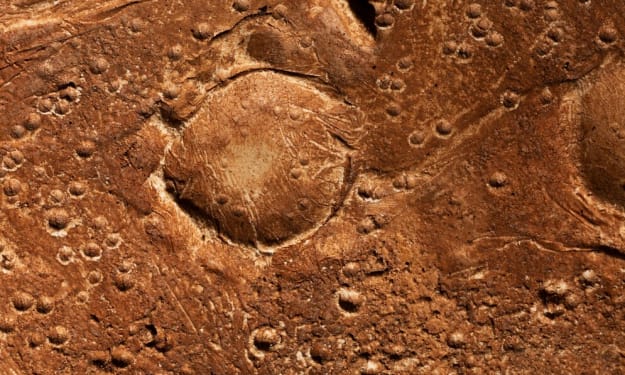
NASA has once again ignited global curiosity with the announcement of newly discovered mysterious landmarks on the surface of Mars. These strange and fascinating formations, captured by the Mars Reconnaissance Orbiter (MRO)'s powerful cameras, have intrigued and puzzled scientists. The images, which show landforms, unusual shapes, and symmetrical patterns that have never been seen before on Mars, are bringing up new questions about the planet's geological past and possibly even more mysterious possibilities.
By Ashiqur Rahman Khan2 years ago in History
The Forgotten Queen and the Flowers of Truth
There was a king. He had seven queens. The six elder queens were very arrogant the younger queen was very quiet. That is why the king liked the younger queen more than anyone else. But the king had no sons or daughters. Who would enjoy such a big kingdom? The king was so sad. Days passed like this. After a long time, the younger queen would have a child. The king was very happy and the king called his servants and announced to the kingdom The king has opened the royal treasury come and take as much sweets sweets and jewels as you can. The six elder queens were burning with jealousy and began to die. The king tied a gold chain around the waist of the younger queen and said, When you have a son, shake this chain I will come and see the son Saying this the king went to the royal court. The younger queen will have a son who will go to the palace? The elder queen said Ah if the younger queen has a son why should I give it to someone else? We will go. The elder queens went to the palace and shook the chains. Immediately the royal court broke up played drums and played drums and the king came with jewels and jewels. He saw nothing The king went back. As soon as the king sat down in the court the chains shook again. The king ran away again. He went and saw that nothing happened this time either. The king got angry and said If you shake the chains again because you dont have a son I will cut off all the queens. Saying this the king left. One by one the little queen had seven sons and one daughter. Ah the children were like moon dolls flower buds. She waved her hands and feet in a frenzy and the palace became bright. The little queen said softly What a boy Bubu why didnt you show me once The elder queens made gestures near the little queens face waved their hands and shook their noses saying No boy its an elephant she will have another son How many rats and how many crabs have there been? Hearing this the little queen fell unconscious. The cruel old queens quietly brought pots and pans put the children in them and buried them in the nearby ditch. Then they pulled them by the chains. The king came running again playing the drums and drums bringing with him jewels. The old queens wiped their hands and faces and quickly brought out a number of baby frogs and baby mice. Seeing this the king got angry and threw the little queen out of the palace. The old queens could no longer smile and the sound of their feet could not stop. The thorn in their hearts was removed and the old queens began to cry in happiness. The little queen became a maid and started wandering around the streets. In this way the days passed. There is no happiness in the kings mind there is no happiness in the kings kingdom the palace is empty and no fruit blooms in the kings garden. One day the gardener came and said Your Majesty I cant find flowers to decorate the house but today seven chappas on the parul tree seven chappas and one parul are blooming. The king said Then bring those flowers I will decorate the house. The gardener went to get the flowers. Seeing the owner, the parul flower on the parul tree called out to the chapaphuul and said, Sat Bhai Champa, wake up Just then, the seven chappas stood up and responded, Why are you calling me sister Parul Parul said The king s gardener has come. Will you give me flowers or not The seven chappas hurriedly climbed up and shook their heads and said I will not give you flowers I will not give you flowers. Let the king come a hundred miles away but I will give you flowers The gardener was surprised to see it. He threw down the flower arrangement and ran to inform the king. The king and all the royal court came there in surprise. The king came and went to pick the flowers and Amni Parulphul called the Chapaphuls and said Seven brothers wake up The Chapaphuls replied Why is Sister Parul calling? Parul said The king has come will you give me flowers or not? The Chapaphuls said- I will not give you flowers I will climb a hundred miles, let the king s eldest queen come first then I will give you flowers. Saying this the Chapaphuls rose even higher. The king called the Bararanis. The Bararani came and went to pick the flowers. The Chapaphuls said I will not give you flowers I will climb a hundred miles let the king s eldest queen come first then I will give you flowers. Then the queen came the queen came the queen came the queen came but none of them got the flowers. The flowers went and remained blooming like stars in the sky. The king sat down on the ground with his hand on his cheek. Finally the queen came, and the flower girls said I will not give you flowers I will go a hundred miles away if the king s maidservant comes I will give you flowers. Then many people went out to look for the maidservant. The king sent Chaudola, and the pike and the pawns went to the field with Chaudola and found the maidservant Chotorani. The maidservant was wearing dung on her hands and feet and was wearing torn clothes so she went to pick flowers. The birds came down from the sky with a tickling sound the Parul flower went and mingled with them from among the flowers seven princes one princess beautiful like the moon called out Maa Maa and jumped into the arms of the maidservant the little queen. Seeing such a scene everyone was surprised Tears flowed from the king s eyes. The big queens started trembling with fear. The king immediately ordered the big queens to be cut down and buried. The king went to Rajpuri with the seven princes one princess and the little queen. The music of joy grew in Rajpuri. The king s ministers also started playing drums. Ended
By Story Maker2 years ago in History
“The Emperor’s Sword: Conquest of Chu”. AI-Generated.
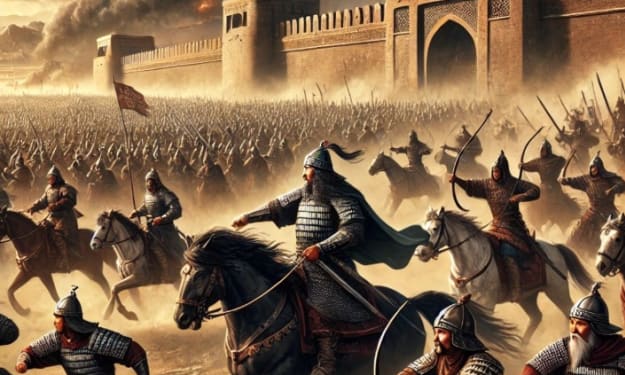
the fall of Han, the Qin army’s appetite for conquest only grew stronger. Their next and most formidable adversary lay in the south—the powerful State of Chu. Unlike the relatively smaller and politically fractured states Qin had defeated earlier, Chu was a colossus. Spanning vast fertile lands, steeped in rich cultural traditions, and renowned for its seasoned warriors, Chu had long been a thorn in the side of Qin's ambitions. For King Zheng of Qin, the future First Emperor, subjugating Chu would not only be a strategic necessity but a personal crusade to establish unquestionable supremacy over all the Warring States. The war with Chu was more than just a clash of swords—it was a battle of minds, tactics, and political maneuvering. Chu, under the command of General Xiang Yan, was not to be underestimated. Xiang Yan was a skilled commander and strategist, a man capable of rallying massive forces and striking fear into even the most disciplined Qin formations. Prelude to Invasion Qin’s chancellor, Li Si, and the legendary general Wang Jian urged caution. They understood that rushing into Chu’s expansive territory without proper planning could end in disaster. Qin had seen such a failure before—when a rash invasion years earlier ended in heavy losses. This time, Wang Jian proposed a different plan: a slow, calculated invasion with overwhelming force. King Zheng entrusted the campaign to Wang Jian but kept another rising star, General Meng Tian, in reserve. Wang Jian, a seasoned warrior known more for his patience than aggression, demanded an enormous army—reportedly over 600,000 men. At first, Zheng thought this excessive and was tempted to replace him. But eventually, he agreed, understanding that the risk of underestimating Chu was too great. The Art of Delay Rather than launching an immediate offensive, Wang Jian built forts along the borders, slowly inching his army forward while giving the appearance of passivity. The Chu generals, misled by this slow advance, relaxed their defenses, thinking Qin had grown fearful or indecisive. In reality, Wang Jian was waiting for the perfect moment to strike—a moment when Chu was least prepared. That moment came after months of stillness. In a sudden wave of attacks, Qin armies surged into Chu territory, overwhelming border forts and driving deep into the countryside. Clash of Titans General Xiang Yan responded fiercely, assembling Chu’s finest warriors for a counterattack. What followed was one of the most ferocious battles in Chinese history. Tens of thousands fell on both sides. The rivers ran red with blood, and the fields were trampled into mud by the weight of armored infantry. But Wang Jian had anticipated this. He feigned retreat, luring Xiang Yan into a false sense of victory. As the Chu army advanced, Wang Jian’s reserves—kept hidden behind forested hills—launched a surprise flanking attack, surrounding the Chu forces in a deadly pincer movement. Xiang Yan fell in battle, and with him, the spirit of Chu began to crumble. City after city surrendered. Qin soldiers, disciplined and ruthless, stormed the strongholds of Chu, executing commanders who resisted and integrating local forces who pledged allegiance. The End of Chu With the death of its greatest general and the fall of its capital, the State of Chu officially ceased to exist. What had once been one of the richest and most formidable kingdoms in ancient China now lay under the control of Qin. Qin’s conquest of Chu was more than a military victory—it was a turning point in Chinese history. The subjugation of Chu sent a message to the remaining states: resistance was futile. King Zheng’s vision of a unified China was now closer than ever.
By Say the truth 2 years ago in History
Rise from Qin: The First Step to Chinese Unification. AI-Generated.
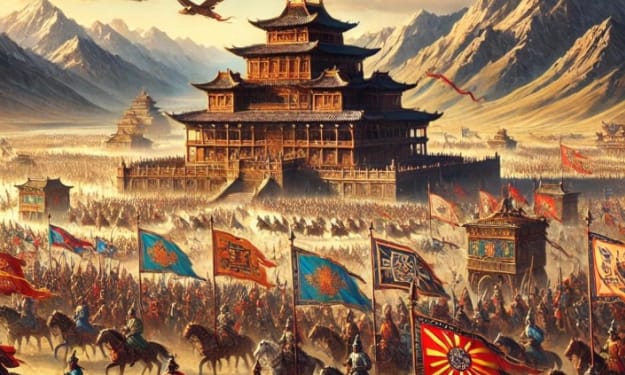
Rise from Qin: The First Step to Chinese Unification In the annals of world history, few figures loom as large as Qin Shi Huang, the first Emperor of a unified China. Before he wore the yellow robes of the Son of Heaven, he was known as Ying Zheng, a young king from the western frontier state of Qin. His rise marked the beginning of one of the most transformative periods in Chinese history. This first part of the series explores the early life of Ying Zheng and how the Kingdom of Qin, once considered a barbaric backwater by its eastern rivals, rose to dominate the Warring States. The Warring States: A Nation Divided Before unification, China was a fractured landscape of seven dominant states: Qi, Chu, Yan, Han, Zhao, Wei, and Qin. This period, known as the Warring States (475–221 BCE), was characterized by constant warfare, shifting alliances, and the rise and fall of powerful warlords. Philosophical schools like Confucianism, Daoism, and Legalism flourished amid this chaos, each offering solutions to disorder. Qin, situated in the far west near what is now Shaanxi Province, was long regarded as culturally inferior by the eastern states. However, it had key advantages: fertile lands, access to the Wei River, and a robust military tradition. Its rulers had adopted Legalism, a philosophy emphasizing strict laws, centralized authority, and merit-based governance, thanks to the reforms of Shang Yang in the 4th century BCE. These reforms turned Qin into a powerhouse. The Birth of Ying Zheng Ying Zheng was born in 259 BCE during a time of both internal and external tension. His father, Yiren, was a Qin prince held hostage in the rival state of Zhao. According to some accounts, Ying Zheng’s mother was a concubine of merchant background, further complicating his legitimacy. Eventually, Yiren was released and returned to Qin, where he was enthroned as King Zhuangxiang, thanks to the political maneuvering of the powerful minister Lü Buwei. When Zhuangxiang died in 247 BCE, Ying Zheng ascended to the throne at the age of 13. Due to his youth, the administration was handled by Lü Buwei, who acted as regent. Some historians believe Lü Buwei may have been Ying Zheng’s true father, though this remains speculative. What is clear is that Ying Zheng was raised amidst palace intrigue and political maneuvering, which likely influenced his later obsession with control and loyalty. Seizing Power: The End of the Regency By 238 BCE, Ying Zheng had reached maturity and staged a coup at the age of 21 to remove Lü Buwei from power. In doing so, he asserted his authority over the Qin court and began consolidating power. His early years as king were marked by purges of rival factions, the appointment of capable generals, and the centralization of authority. One of his most important allies during this period was Li Si, a brilliant Legalist scholar who helped Ying Zheng refine Qin’s administrative system and prepare for large-scale warfare. Together, they laid the groundwork for national conquest, focusing on tax reform, military logistics, and infrastructure projects such as road construction and canal systems that would allow armies to move swiftly across territories. The Qin Army: Forged for Conquest Qin's military success was not solely due to Ying Zheng's ambition; it was also the result of institutional strength. The army was highly organized and disciplined, drawing from the Legalist ideals of meritocracy and loyalty. Officers were promoted based on battlefield performance, not noble birth, a revolutionary idea at the time. Additionally, the state invested in advanced weaponry and siege technologies. Crossbows, iron weapons, and formidable cavalry units made the Qin army one of the most fearsome in the ancient world. The Great Wall, or at least early forms of it, was already being constructed in the north to ward off nomadic invasions, showcasing Qin’s commitment to defense and long-term strategy. Diplomatic Manipulation
By Say the truth 2 years ago in History
The Emergence of the First Emperor
He proclaimed himself "Qin Shi Huang," translating to "First Emperor of Qin," and enacted extensive modifications to centralize authoritystandardizing currencies, weights, measures, laws, and even the written language. He initiated monumental infrastructure initiatives such as the initial iteration of the Great Wall and an extensive national road network. However, his most extravagant undertaking was his tomb, safeguarded by the Terracotta Army, a site that would remain undiscovered for over 2,000 years. Yet, despite all his achievements, Qin Shi Huang was profoundly preoccupied with an aspect he could not master: mortality. The Emperor's Fascination with Immortality Qin Shi Huang’s dread of death was intense. As he advanced in age, he became increasingly engulfed by the notion of eternal existence. He dispatched envoys and alchemists throughout China and beyond in search of the fabled Elixir of Immortality. It is said that he even commanded expeditions to the Eastern Sea in pursuit of Penglai, a mythical isle where immortals resided. Among his trusted sages was an alchemist named Xu Fu, who professed to possess knowledge of life-extending potions. Ironically, some of these mixtures were thought to contain mercurya hazardous substance that may have expedited the emperor’s demise rather than averting it. An Untimely Death Away from Home In 210 BCE, while on a significant inspection expedition of eastern China, Qin Shi Huang abruptly fell ill and passed away in Shaqiu, distant from the capital of Xianyang. He was merely 49 years of age. His death was hidden for several weeks by Prime Minister Li Si and Chief Eunuch Zhao Gao, who feared disorder and possible insurrection. They conveyed his remains back to the capital in a chariot filled with decomposing fish to obscure the odor of decay. His younger son, Huhai, was installed as emperor through forged edicts, while the legitimate heir, Fusu, was compelled to take his own life. This clandestine and tumultuous transition established the foundation for the rapid collapse of the Qin Dynasty. Hypotheses Regarding His Demise Historians persist in deliberating the true cause of Qin Shi Huang’s death. Various hypotheses prevail: Mercury Poisoning: Many contend that he succumbed to unintentional mercury poisoning, originating from the elixirs of immortality prescribed by his court alchemists. Ironically, the very potions intended to confer eternal life may have culminated in his end. Natural Causes or Stroke: Ancient accounts, particularly those from historian Sima Qian, indicate he suffered a severe illness, potentially from overexertion, stress, or a stroke induced by hypertension. Assassination or Internal Conspiracy: In light of the significant power struggle that arose following his demise, some theorize that he may have been poisoned by individuals within his own court, such as Zhao Gao, who subsequently engineered the deaths of numerous royal family members. Mythical Curse: According to folklore, after failing to locate the elixir of life during a distant expedition, Xu Fu may have placed a curse on the emperor. While legendary, this narrative contributed to the lore surrounding his death. Legacy of an Immortal Vision Notwithstanding his early death, Qin Shi Huang bequeathed an extraordinary legacy. His Terracotta Army, unearthed in 1974 adjacent to his vast, yet unopened mausoleum, astonished the world. Thousands of life-sized warriors, each possessing unique characteristics, safeguard his tomb, potentially defending him in the afterworld.
By Say the truth 2 years ago in History