Fiction
India and Pakistan:Is a war going to start ?
The relationship between India and Pakistan remains one of the most complex and emotionally charged geopolitical rivalries in the world. Born out of the traumatic partition of British India in 1947, the journey of these two nations has been marked by war, mistrust, and periodic attempts at peace that often collapse under the weight of historical wounds and present-day provocations.
By Seyam Ahmed 2 years ago in History
The Legend of Chi You: The Fallen War God of Ancient China
Prologue: The Metal-Clad King In the age when the Yellow River of China ran wild and the earth was young, there rose a warrior unlike any other. His name was Chi You—a giant with bronze bull horns, skin like forged metal, and eyes that burned like molten copper. He commanded nine storms and eighty-one brothers, each as fearsome as the last.
By Felix Deng2 years ago in History
The Lost Treasures of Cambodia: Secrets of the Angkor Temples
The Forgotten Riches of Cambodia’s Ancient Shrines: From Angkor's Splendor to Global Exploitation Cambodia’s ancient temple complexes, particularly Angkor Wat and its adjacent cities, are not only significant architectural feats but once housed some of the most remarkable treasures of the Khmer Empire. These valuables, lost through conflict, colonization, and plundering, have ignited international interest and initiatives for cultural restitution. This article explores the history of the Cambodian temple treasureswhat they encompassed, how they vanished, and the ongoing pursuit to retrieve them. When individuals envision Cambodia, the grand spires of Angkor Wat frequently come to minda representation of spiritual commitment and imperial magnificence. However, what many may not be aware of is that the temple complexes of the ancient Khmer Empire once encompassed vast treasures: gilded statues of Hindu and Buddhist deities, ceremonial adornments, intricately carved artifacts, and royal offerings. These were not merely tokens of affluencethey embodied the cosmic authority and divine connection of the Khmer monarchs. At its zenith between the 9th and 15th centuries, the Khmer Empire extended across present-day Cambodia, Thailand, Laos, and Vietnam. Its capital, Angkor, evolved into a spiritual and political hub, housing hundreds of temples, including Angkor Wat, Bayon, Ta Prohm, and Banteay Srei. The Function of Temples in Khmer Affluence In contrast to numerous empires where wealth was accumulated in treasuries or palaces, in Cambodia, a significant portion of the royal and religious riches resided within temples. These hallowed edifices served not only as sites of worship but also as repositories for offerings from monarchs, nobles, and pilgrims. Temple inscriptions from Angkor indicate that temples like Preah Khan once possessed thousands of gold and silver artifacts, including over 100,000 pearls and gemstones. The Lolei inscription makes reference to land grants and endowments of gold for the maintenance of temple functions and rituals. Gold statues of Vishnu, Shiva, and the Buddha were prevalent within the sanctuaries. Each temple operated its own "economy"farmlands, laborers, and artisansthat supported the priests and preserved the treasures. This close association between affluence and religious purpose made temples prime targets during incursions. Conflict, Invasion, and the Vanishing of Temple Riches The decline of Angkor in the 15th century signaled the onset of the disappearance of Cambodia’s temple treasures. The city was invaded by the Ayutthaya Kingdom of Siam (modern-day Thailand) in 1431, leading to the plundering of much of Angkor’s wealth. Some historians assert that golden statues and relics were transported to Siamese temples. The ensuing centuries were marked by unrest, resulting in the abandonment of numerous temples to the jungle. Left unprotected, they became targets for local looters and treasure seekers. By the 19th century, when French explorers re-encountered Angkor, many temples had already been deprived of numerous valuable artifacts. The French colonization of Cambodia (1863–1953) initiated another phase of cultural extraction. While some French archaeologists endeavored to preserve Khmer heritage, others dispatched temple sculptures, lintels, and statues to European museumsoften without consent. Entire temple doors, columns, and altars were removed. The Guimet Museum in Paris and other Western institutions continue to retain Khmer artifacts that were extracted during the colonial era. Numerous treasures represent not merely artistic creationsthey are sacred elements that once formed part of living temples. Modern Exploitation: The Khmer Rouge and Black Market Trafficking In the 20th century, Cambodia experienced another catastrophic erosion of its temple heritage during the regime of the Khmer Rouge (1975–1979) and the subsequent decades of civil conflict. During this epoch, extensive looting of temples became prevalent. Archaeological sites were blasted, and statues were severed from their bases and sold to international collectors. Some artifacts found their way into private collections, while others were housed in global museums. The Ta Prohm and Banteay Chhmar temples sustained considerable damage during this time. By the 1990s, a thriving black market for Southeast Asian antiquities was firmly established. Cambodia’s temple relics were among the most coveted. Statues weighing several hundred kilograms were illicitly transported out of the country, occasionally with the assistance of corrupt officials or insurgent soldiers. Repatriation and Ongoing Recovery Initiatives In recent years, Cambodia has undertaken substantial endeavors to reclaim its cultural legacy. The government, supported by UNESCO and various international entities, has initiated legal actions and negotiations aimed at returning looted artifacts. In 2023, several significant sculptures were repatriated from the United States, including from the Metropolitan Museum of Art and private collections. Some of these items had been unlawfully taken decades earlier from temples such as Koh Ker and Prasat Chen. The case of Douglas Latchford, a British art dealer accused of trafficking stolen Cambodian artifacts, garnered global attention. Following his passing, his estate began the process of returning numerous invaluable Khmer sculptures to Cambodia. Although thousands of items remain absent or held in foreign collections, the momentum is increasing. Each returned artifact represents a stride toward healing Cambodia’s cultural wounds and reestablishing the connection between the people and their ancestral heritage. Conclusion: Treasures Beyond Wealth The narrative of Cambodia’s temple treasures transcends mere riches and jewelsit embodies a saga of identity, resilience, and remembrance. While many treasures have been lost to conflict and avarice, the spiritual significance of these artifacts endures. As Cambodia endeavors to restore its past, its temples continue to evoke wonder and optimism for a future where history is preserved, and justice is achieved.
By Say the truth 2 years ago in History
The Mountain of Light and the Throne of Glory: The Greatest Treasures of the Mughal Empire
The Koh-i-Noor and the Peacock Throne: The Supreme Treasures of the Mughal Empire The Mughal Empire, one of the most influential and affluent dynasties in Indian history, accumulated unimaginable riches over the centuries. Among its most renowned treasures were the legendary Koh-i-Noor diamond and the Peacock Throne, both emblems of imperial magnificence and global intrigue. This article delves into the history of these iconic gems, their role in defining Mughal opulence, and how they were ultimately lost to invaders and colonizers, becoming subjects of dispute and yearning in contemporary times.
By Say the truth 2 years ago in History
Israel Launches Airstrike in Syria, Targeting Group Accused of Attacking Druze Community. AI-Generated.
Jerusalem — The Israeli military said it carried out airstrikes in southern Syria on Tuesday night, targeting what it described as a militant group responsible for a recent cross-border attack on the Druze community in northern Israel. The strike marks a significant escalation amid already rising tensions in the region.
By Lnd Alamin2 years ago in History
Empowering India's news ecosystem: A year of impact and innovation
Empowering India's News Ecosystem: A Year of Impact and Innovation Over the past year, India’s news ecosystem has witnessed transformative growth, driven by technological advancements, policy reforms, and a surge in digital media consumption. Stakeholders from across the sector have worked to create a media landscape that is better informed, more inclusive, and more innovative by tackling misinformation and encouraging regional journalism. Key Achievements & Innovations
By Samsul Arefin.2 years ago in History
US and Ukraine sign critical minerals deal . AI-Generated.
The US and Ukraine sign important mineral agreements. A strategic step with Global Effects in pioneering development, the US and Ukraine have signed a comprehensive agreement on the joint development of Ukraine's huge reserves for critical minerals. The deal not only strengthens U.S. Ukraine relations, but also both countries in the global competition for strategic resources, especially if the world focuses on securing clean energy supply chains and reducing dependence on geopolitical competitors such as China and Russia.
By Rakib Hosen2 years ago in History
The Lost Riches of Anatolia: Unveiling Turkey’s Greatest Treasure
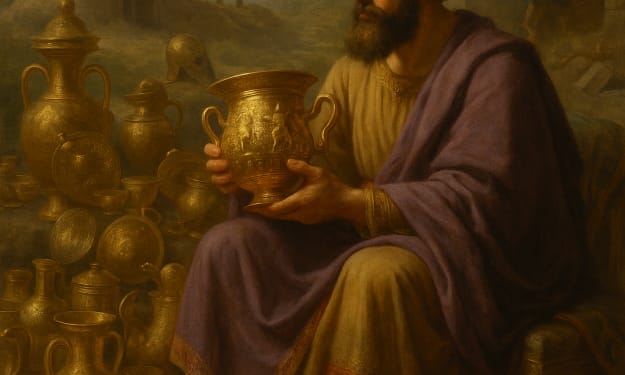
“The Lydian Hoard: Uncovering Turkey’s Hidden Wealth of Monarchs” Deep within the core of western Anatolia, a revelation in the late 20th century unveiled one of Turkey’s most significant ancient treasuresthe Lydian Hoard. Often dubbed the "Treasure of Croesus," this extensive assemblage of gold and silver relics narrates the tale of a prosperous ancient kingdom that once dominated Asia Minor. This article explores the history of Lydia, its famed monarch Croesus, the captivating modern rediscovery of the hoard, its unlawful trafficking, and its eventual repatriation to Turkeyrendering it a symbol of both cultural legacy and national dignity. Article: The Lydian Hoard: Uncovering Turkey’s Hidden Wealth of Monarchs In the territories that currently constitute contemporary Turkey, the ancient realm of Lydia once thrived, abundant in gold, folklore, and significance. At its zenith during the 6th century BCE, Lydia was recognized as one of the most affluent kingdoms globally, governed by the notoriously wealthy King Croesus. Although much of its splendor had transitioned into myth, the contemporary discovery of the Lydian Hoarda cache of remarkable gold and silver treasuresastounded the world and rekindled international intrigue with the overlooked Lydian empire. The Ascendancy of Lydia and King Croesus Lydia was situated in western Anatolia, encompassing the present-day Turkish provinces of Manisa and Uşak. It rose as a regional power in the 7th century BCE and attained its pinnacle under King Croesus, who reigned from approximately 595 to 546 BCE. Croesus became emblematic of vast affluenceso much so that the expression “rich as Croesus” entered numerous languages. Lydia’s wealth was propelled by the gold-laden Pactolus River, where the world’s first coins fabricated from electrum (a natural alloy of gold and silver) were minted. Croesus was also celebrated for his support of the arts, the erection of magnificent temples (including the Temple of Artemis at Ephesus), and diplomatic relations with other powers such as Egypt and Babylon. However, his aspirations led him into confrontation with the Persian Empire under Cyrus the Great, culminating in Lydia’s defeat and incorporation into the expanding Achaemenid Empire. The Revelation of the Lydian Hoard Fast forward to the 1960s and 1970s, when Turkish grave robbers chanced upon burial moundsreferred to as tumulinear the town of Uşak. These belonged to the Lydian aristocracy and had remained predominantly undisturbed for millennia. The plunderers unearthed an estimated 363 items, including elaborate gold adornments, fibulae (ancient clasps), silver plates, gold receptacles, and ceremonial armaments. These were swiftly smuggled out of Turkey and sold to collectors and museums worldwide. Among the most distinguished artifacts was a gold hippocamp brooch, an exemplar of ancient artistry depicting a mythical entity with the head and forelegs of a horse and the tail of a fish. The Met Museum Controversy Numerous artifacts that were illicitly obtained culminated in the Metropolitan Museum of Art in New York. For an extended period, the institution declined to recognize that they had been seized unlawfully. Nevertheless, a convergence of Turkish diplomatic influence, global media attention, and a persistent Turkish journalist, Özgen Acar, culminated in a significant advancement. In 1993, following over ten years of legal disputes, the Met acknowledged that the items had been illegitimately acquired and consented to return them to Turkey. The artifacts were relocated to the Uşak Archaeological Museum, where they became a source of substantial local and national pride. A Subsequent Controversy: The Stolen Hippocamp Remarkably, in 2006, it was uncovered that the most renowned piece of the Lydian Hoardthe gold hippocamp broochhad been purloined from the museum and substituted with a counterfeit. The heist incited indignation in Turkey and instigated an international hunt. It was ultimately discovered in Germany and returned in 2012 after Turkish authorities initiated an exhaustive inquiry and diplomatic discussions. This incident underscored the susceptibility of even national museums and posed pressing inquiries regarding artifact security, conservation, and the morality of antiquities acquisition. Assessing the Market Value The Lydian Hoard is not merely significant because of its artistry and antiquityit is also exceedingly valuable. Although invaluable in terms of cultural heritage, specialists estimate the material worth of the treasure (in gold, silver, and craftsmanship) to exceed $250 million USD in contemporary terms. When considering the historical, academic, and touristic value, the overall worth could be even greater. Its restitution also established a formidable precedent in global endeavors to return plundered artifacts to their countries of origin. Cultural Legacy and Significance The Lydian Hoard continues to enchant the interest of historians, archaeologists, and tourists alike. It offers vital perspectives into Anatolian civilization, pre-Persian history, and the opulent lifestyles of ancient elites. The triumph of the Turkish government in reclaiming the hoard also encouraged other nations to advocate for the return of their cultural heritage. Currently, the collection is securely exhibited at the Uşak Archaeological Museum, serving as both a testimony to the affluence of ancient Lydia and a cautionary narrative regarding cultural thievery in the contemporary world.
By Say the truth 2 years ago in History
"The Siege of Troy: Where Legend and History Collide"
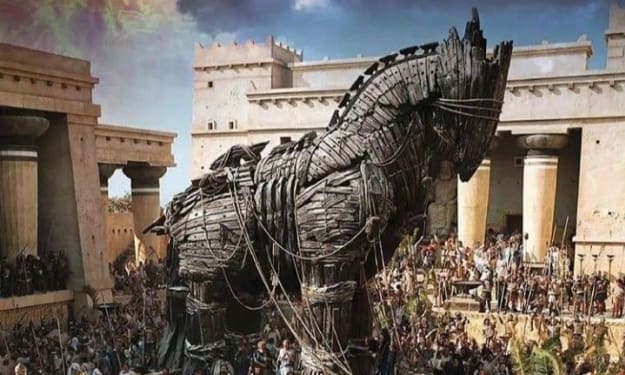
The Conflict of Troy remains one of the most distinguished military occurrences in both historical and literary heritage. Enshrined by Homer’s Iliad, the conflictthought to have transpired in the 12th or 13th century BCEhas entranced poets, historians, archaeologists, and readers for millennia. While the precise veracity of the occurrences is clouded by legend, substantial archaeological and textual proof suggests that a significant confrontation did happen in the vicinity of ancient Troy, located in what is now northwestern Turkey. The Legendary Tale In Homer’s account, the Trojan War commenced when Paris, a prince of Troy, kidnapped (or eloped with) Helen, the spouse of Menelaus, king of Sparta. In reprisal, Menelaus, along with his brother Agamemnon and other Greek leaders such as Odysseus, Achilles, Ajax, and Nestor, assembled a coalition fleet of a thousand ships to besiege Troy. For a decade, the Greeks camped outside the city’s fortifications, as a fierce and dramatic war ensued. Significant incidents included the dispute between Achilles and Agamemnon, the demise of Hector, and ultimately, the conquest of Troy through the cunning use of the Trojan Horse. Although these occurrences present a vivid storyline, they are mainly regarded as mythological embellishments. Nevertheless, scholars propose they may be grounded in a kernel of reality, symbolizing an authentic historical conflict that was subsequently mythologized by Greek poets. Historical and Archaeological Findings The site believed to be ancient Troy was uncovered by Heinrich Schliemann in the 19th century near the contemporary town of Hisarlik in Turkey. Excavations uncovered the remnants of several ancient cities constructed atop one another, dating back as far as 3000 BCE. One layer, designated as Troy VI or VIIa, exhibits evidence of destruction around 1250 BCEa timeframe that corresponds with the projected period of the Trojan War. Moreover, Hittite documentation mentions a city referred to as “Wilusa,” which many scholars associate with “Ilios,” another designation for Troy. The Hittites also allude to a figure named “Alaksandu,” potentially connected to Paris (Alexander), indicating possible diplomatic or military engagements between the Mycenaeans and the city of Troy. Political Landscape and Incentives Historically, the conflict may have been less about a romantic abduction and more about authority, trade, and dominion over strategic maritime routes. Troy’s strategic placement near the Dardanellesa crucial nautical passagewould have rendered it a valuable and contested city for ancient realms dependent on commerce with the East. The Mycenaean Greeks, a formidable civilization during the late Bronze Age, may have aimed to assert control over this region. Hostilities with a rival Anatolian power like Troy could have arisen from commercial competition, piracy, or regional alliances. In this regard, the war might reflect a far more pragmatic geopolitical struggle than the myth implies.
By Say the truth 2 years ago in History
The Utopian Dream: A Future Shaped by Innovation. AI-Generated.
## **The Utopian Dream: A Future Shaped by Innovation** In the year 2150, humanity had transcended the problems that once seemed insurmountable. Poverty, war, and hunger were distant memories. The world had united under a single banner of progress and innovation. This was the era of the *New Dawn*—an era where technology had woven itself into every fabric of life, eliminating the inefficiencies of the past.
By MD Abdur Razzak2 years ago in History