Fiction
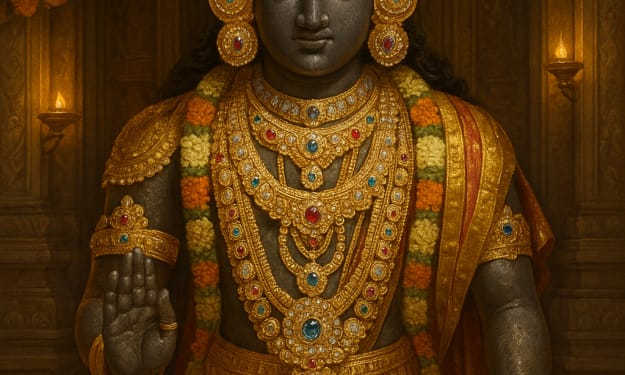
“Lord of Fortune: The Costliest Idol in History – The Wealth of Tirupati Balaji”. AI-Generated.
The World’s Most Expensive Idol: The Unrevealed Narrative of Tirupati Balaji’s Golden Wealth Among the globe’s most revered deities, the statue of Lord Venkateswara at Tirumala, Andhra Pradesh, serves not only as a spiritual lighthouse but also as an emblem of extraordinary affluence. Sculpted from sacred black stone and embellished with immense quantities of gold, diamonds, and other precious gems, this idolvenerated by millionsis appraised as the priciest in documented history. This article examines its origins, religious importance, priceless embellishments, and the contemporary valuation of both the idol and the temple's assets. Introduction: The Living Divinity of the Peaks Perched atop the Tirumala hills in southern India, the temple of Lord Venkateswara, commonly referred to as Balaji, ranks among the wealthiest religious locations globally. Millions of devotees ascend to Tirupati each year to catch a glimpse of the revered idol, believed to be over 2,000 years old. Beyond its spiritual significance, the idol itselfstanding approximately 8 feet in heightis a repository of unparalleled historical and monetary value. In this article, we delve into the background, composition, and financial appraisal of the world’s most costly religious idol. The Idol: Artistry and Myth The principal deity, Lord Venkateswara, is crafted from a unique variety of black granite or Shaligrama stone, traditionally believed to possess magnetic and healing attributes. In accordance with ancient Vaishnavite customs and temple lore, this idol is said to be self-manifested (Swayambhu)not created by human artisans. It is embellished with: A colossal diamond-encrusted crown (appraised alone to be valued at over $50 million USD) Numerous gold adornments, including necklaces, girdles, and anklets An ancient gem known as Navaratna Kirita, set with nine precious stones A thick gold plating covering various sections of the idol itself Emeralds, sapphires, rubies, and pearls, some of which trace back to the Vijayanagara Empire (14th–16th century CE) Historical Support and Contributions Rulers from diverse Indian dynastiesincluding the Cholas, Pandyas, Vijayanagara monarchs, and Marathashave offered priceless ornaments to the deity throughout the centuries. Noteworthy contributions encompass: Krishnadevaraya’s Crown (early 1500s): Composed of solid gold and adorned with diamonds and emeralds. British Raj-era Contributions: Despite colonial governance, affluent merchants and aristocrats persistently donated substantial gold reserves and gemstones to the deity. Even contemporary celebrities and industrialists contribute considerable quantities of gold and funds to the idol and temple annually. The deity is adorned differently each day and during various seasons, with specific sets of jewelry designated for special festivals. Temple Vaults and Concealed Riches In addition to the ornaments adorning the idol, the Tirumala Tirupati Devasthanams (TTD) trust oversees concealed vaults filled with gold and gemstones gifted over the centuries. The temple receives: Approximately 30–35 million USD in cash donations each year Hundreds of kilograms of gold, with nearly 60,000 kg accumulated as per recent reports Daily offerings of diamonds, rubies, and exotic jewels The vaults, many of which remain inaccessible to the public, are estimated to harbor treasures worth over $20 billion USD, much of which was originally presented to the idol itself. Valuation Estimate: Analyzing the Idol’s Worth To evaluate the contemporary worth of the Tirupati Balaji idol and its immediate embellishments: Component Estimated Contemporary Worth Diamond Crown $50 million USD Gold Ornaments (Necklaces, Waistbands, Anklets, Armlets) $150–200 million USD Gemstones (Emeralds, Rubies, Sapphires, Pearls) $100–150 million USD Historical Items (Navaratna Crown, Ancient Jewelry) $75–100 million USD Total Idol Wealth Estimate $375–500 million USD Note: This does not encompass the temple’s additional assets such as real estate, reserves, or vaults. Cultural and Spiritual Worth: Beyond Monetary Value For worshippers, however, the riches of the idol cannot be quantified in gold or currency. Lord Venkateswara is revered as “the deity who alleviates debt,” believed to bestow blessings, health, and prosperity upon anyone who approaches with genuine intent. Each ornament or coin presented is regarded as an expression of faith, rather than mere economics. Furthermore, the idol’s distinctive essence, time-honored rituals, and emotional ties with millions render it culturally invaluable. Comparisons with Other Idols While numerous religious figures globally possess significant worth, the Tirupati idol surpasses many in terms of collective wealth, importance, and enduring reverence. Other notable examples include: The Golden Buddha of Thailand (5. 5 tons of gold; $250 million+) Jagannath idols of Puri (inestimable due to relics within) Padmanabhaswamy temple vault idols in Kerala (unopened treasures potentially exceeding $22 billion USD) Nonetheless, due to its exceptional visibility, documentation, and historical complexity, the Balaji idol retains the status of the most ornately adorned deity in the contemporary world. Conclusion: Divine Wealth and Eternal Devotion The idol of Lord Venkateswara transcends being a mere divine artifact; it serves as the spiritual nucleus of South India and a repository of historical richness. With an estimated net worth approaching half a billion dollars, it stands as a monument to steadfast faith, continuous royal sponsorship, and the profound legacy of temple wealth in India. In a society fixated on material wealth, the narrative of Tirupati Balaji serves as a reminder that genuine value resides where affluence intertwines with reverence, and where gold transforms into the sacred in the hands of devotees.
By Say the truth 2 years ago in History
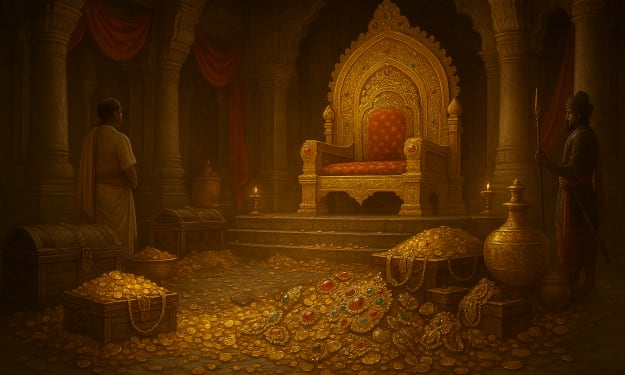
Throne of Gold: The Hidden Wealth of the Pandiyan Kings. AI-Generated.
Throne of Gold: The HiThrone of Gold: The Hidden Wealth of the Pandiyan Kings Introduction: The Heritage of the Pandiyas Among the ancient Tamil monarchies, the Pandiyan dynasty distinguished itself due to its significant cultural and economic impact. Centered in Madurai, the Pandiyan rulers governed a thriving trade empire from as early as the 6th century BCE to the 14th century CE. Their dominion spanned the fertile lands of southern Tamil Nadu, critical ports along the Indian Ocean, and essential trade routes connecting the East and West. Their palaces served not only as political hubs but also as repositories of unimaginable wealth, containing royal thrones crafted from gold, rare gemstones, religious artifacts, war spoils, and offerings from vassals and foreign merchants. The Pandiyan economy was robust, with their coinage circulating in Southeast Asia, the Roman Empire, and China. Sources of the Pandiyan Prosperity Maritime Commerce The Pandiyas operated vibrant ports such as Korkai, Kayal, and Thoothukudi, which linked South India with Southeast Asia, Rome, Arabia, and China. They exported: - Pearls (notably from the Gulf of Mannar) - Spices such as pepper and turmeric - Textiles and dyed fabrics - Sandalwood, ivory, and precious stones Foreign traders, particularly the Romans, transacted in gold coins, which enriched the Pandiyan treasury. Agricultural Abundance The fertile river valleys, especially those surrounding the Vaigai, yielded copious amounts of rice, sugarcane, and cotton. Revenue generated from agriculture swelled the royal treasury. Tributes and Military Campaigns Victories in southern India and alliances with other Tamil dynasties resulted in tribute. Certain campaigns brought treasure troves from rival leaders and temple repositories. Religious Patronage and Temple Wealth The Pandiyas constructed and enhanced temples, such as the Meenakshi Amman Temple in Madurai, which emerged as hubs for both spirituality and wealth accumulation. These temples possessed extensive riches in the form of: - Gold idols - Jewels donated by devotees and monarchs - Artifacts and inscriptions crafted from precious metals The Royal Throne and Palace Wealth Accounts from ancient Tamil literature and observations from foreign travelers (like Marco Polo) depict opulent royal courts: The Pandiyan throne was noted to be made of solid gold, embellished with inlays of diamonds, rubies, and sapphires. Its value in contemporary markets could surpass $50 million USD based solely on material worth. The royal palace in Madurai was replete with: - Ornate furniture made of gold and ivory - Luxurious silk draperies - Weaponry encrusted with gemstones - Royal seals and coins stored in secured vaults A conservative assessment of the palace’s movable wealthexcluding landwould approximate $500 million to $1 billion USD in today’s values, contingent upon current rates for gold, gemstones, and historical artifacts. The Temple Treasuries Temples under Pandiyan authority were centers of economic and cultural significance. The Meenakshi Temple alone was reputed to house: - Gold-plated chariots - Hundreds of gold and silver idols - Thousands of objects inlaid with gemstones - Donations in the form of gold coins and jewelry If the wealth accumulated within the temple were evaluated today, it might easily total $2–3 billion USD or more. Net Worth of the Pandiyan Family and Empire Let us summarize a contemporary estimate based on accessible historical records: | Asset | Estimated Value (Modern USD) | |--------------------------------|-------------------------------| | Royal Throne and Crown Jewels | $50 million | Palatial Artifacts and Safeguards $500 million – $1 billion Temple Relics (Principal Temples) $2–3 billion Gold from Nautical Commerce $500 million Land Tax (Converted Estimate) $1 billion Total Estimated Asset Value $4–5. 5 billion USD This assessment excludes artifacts that are currently lost, plundered, or unrecordednor does it factor in inflation-adjusted valuations of rare relics and inscriptions. Diminution and Distribution of Wealth The Pandiyan empire encountered regular incursions from the Delhi Sultanate in the 14th century, resulting in the plundering of Madurai. A considerable portion of their riches was confiscated, refined, or transported to Delhi. Subsequently, colonial entities (Portuguese, Dutch, British) and internal conflicts further dismantled their legacy. Some valuables disappeared, while others were concealed in temple safes or interred. Nonetheless, the mark of their affluence and magnificence remains evident today in extant temples, retrieved artifacts, and ancient Tamil inscriptions. Conclusion: A Sovereign Fortune Lost and Commemorated The Pandiyan crown, though no longer present, continues to epitomize the zenith of Tamil affluence, maritime dominance, and cultural elegance. The dynasty's true net worthboth material and symbolicmirrors centuries of wealth, astute governance, and expertise in global trade. Their narrative is not solely centered on gold and jewels, but serves as a reminder of a civilization that once illuminated the Indian Ocean realm with its brilliance, philanthropy, and extensive impact.
By Say the truth 2 years ago in History
Masters of the Ocean: The Powerful Naval Empire of the Tamil Kings
Sea Lords of the South: The Maritime Might of the Tamil Monarchs Long prior to the ascendance of European naval forces in global waters, the southern rulers of Indiaparticularly the Cholasestablished one of the most formidable maritime powers in Asia. With fleets that extended to Southeast Asia, disciplined infantry, war elephants, and sophisticated navigation, the South Indian monarchs exerted their influence across the oceans. This article examines the emergence, structure, and accomplishments of Tamil naval power, providing estimates on fleet size, troop strength, logistics, and the remarkable costs associated with construction and upkeep in both historical and contemporary contexts. Introduction: The Naval Heritage of South India The southern kingdoms of India, especially the Cholas, Pandyas, and Chera dynasties, were not merely dominant terrestrial empires but also maritime forces. From the 9th to the 13th centuries, their naval fleets governed extensive areas of the Bay of Bengal and Indian Ocean, facilitating trade, conflict, and cultural interchange with Southeast Asia and beyond.
By Say the truth 2 years ago in History
Africa's history could be rewritten by a huge discovery in Morocco.
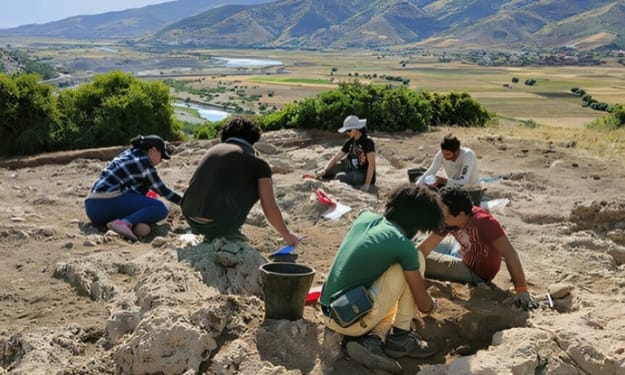
The long-held belief that the Maghreb (northwest Africa) was an empty land prior to the Phoenicians' arrival in the area around 800 BCE is thrown into doubt by a new archaeological find at Kach Kouch in Morocco. It reveals a history that is significantly more complex and rich than previously thought. Everything found at the site suggests that stable agricultural settlements on the African coast of the Mediterranean existed more than 3,000 years ago, during the Bronze Age. At the same time, societies in the eastern Mediterranean like the Mycenaean thrived. We now have a better understanding of the recent prehistory of north Africa thanks to our discovery, which was led by a group of young researchers from Morocco's National Institute of Archaeology. Additionally, it reframes our understanding of the ancient connections that existed between the Maghreb and the rest of the Mediterranean. What led to the discovery? In 1992, Kach Kouch was first discovered and excavated for the first time. At the time, researchers thought that the area had been occupied from the 8th to the 6th century BCE. This was based on the found Phoenician pottery. Our team carried out two additional seasons of excavation in 2021 and 2022, nearly 30 years later. Drones, differential GPS (global positioning systems), and 3D models were used in our investigations. For the purpose of collecting samples, a stringent procedure was followed. Because of this, we were able to find charcoal and seeds that had been fossilized. After that, a series of analyses enabled us to re-create the prehistoric economy and natural environment of the settlement. What was found in the remains The settlement was occupied three times between 2200 and 600 BCE, according to the excavations and radiocarbon dating. The earliest known remains date from 2200 to 2000 BCE. They include a cow bone, three unadorned pottery sherds, and a flint flake. Either erosion or a brief occupation of the hill during this time period could account for the lack of materials and contexts. The Koch Koch hill was permanently occupied beginning in 1300 BCE during its second phase, following a period of abandonment. Farming and animal husbandry were the primary occupations of its fewer than one hundred inhabitants. They lived in wattle and daub, a method that combines mud, reeds, and wooden poles, in circular dwellings. To store their agricultural goods, they dug silos into the rock. They raised cattle, sheep, goats, and pigs, as well as wheat, barley, and legumes, according to analysis. Additionally, they used flint tools, decorated pottery, and grinding stones for cereal processing. In addition, it has been documented that north Africa, excluding Egypt, has the oldest known bronze object. It's probably a piece of scrap metal taken out of a mold after it was molded. encounters with the Phoenicians The inhabitants of Kach Kouch maintained the same material culture, architecture, and economy as in the preceding phase throughout the so-called Mauretanian period, which occurred between the 8th and 7th centuries BCE. New cultural practices, on the other hand, were brought about by interactions with Phoenician communities that were just beginning to settle in nearby locations like Lixus. Combining Phoenician and local building methods, for instance, circular and square stone and wattle and daub structures coexisted. Additionally, the cultivation of new crops like olives and grapes began. The use of iron objects and wheel-made Phoenician ceramics like plates and amphorae (storage jugs) stand out among the new materials. Kach Kouch was peacefully abandoned around 600 BCE, possibly as a result of changes in social and economic conditions. The people who lived there probably moved to other towns nearby. Who then lived in the Bronze Age? It is not clear if the Maghreb people in the Bronze Age lived in tribes, as the Mauretanian people did later. It's likely that they were organized as families. According to the burials, there were no obvious signs of hierarchy. They may have spoken a language that was similar to the Amazigh, a native language of North Africa that was not written until the Phoenician alphabet was introduced. These populations may be the direct ancestors of the Mauretanian peoples of north-west Africa, as evidenced by the cultural continuity that has been documented at Kach Kouch. Why this is important Not only is Kach Kouch the first and earliest known Maghreb Bronze Age settlement, but it also reshapes how we understand prehistory in this region. The new findings, in addition to other recent ones, show that northwestern Africa has been connected to other Mediterranean, Atlantic, and Saharan regions since prehistoric times. Our findings cast doubt on conventional narratives, many of which were shaped by colonial perspectives that portrayed the Maghreb as an uninhabited, isolated region until it was "civilized" by other peoples. As a result, discussions about the Mediterranean's later prehistory have largely ignored the Maghreb. Not only do these new findings signal a breakthrough for archaeology, but they also make it necessary to reevaluate the dominant historical narratives. The opportunity to rewrite north Africa's history and give it the visibility it has always deserved is provided by Kach Kouch. We believe that this is a pivotal time for research that has the potential to forever alter our understanding of not only the history of north Africa but also its relationship to other Mediterranean regions.
By MD IMRAN KHAN2 years ago in History
Naupa and the Secrets of Hyperborea: Has a Lost Arctic Civilization Been Discovered?
Whispers from the Ice In the furthest reaches of our imagination lies a land not found on modern maps. A forgotten kingdom beyond the north wind. A realm veiled in snow, mystery, and silence, Hyperborea. Ancient Greek philosophers and mystics once spoke of it in hushed tones, describing a radiant civilization untouched by time, blessed by the gods, and protected beneath the dancing veil of aurora.
By The Secret History Of The World2 years ago in History
How will Australia choose its next prime minister?
Australia's 2025 election began with a false start. When a cyclone blew the government's preferred date, April 12, off course, everyone was poised and ready to go. Instead, Albanese settled on a polling day on May 3, when the gun finally went off toward the end of March. As the campaign progressed, both leaders struggled to compete for Australia's attention despite promises to cut fuel taxes, health-related announcements, and housing-related proposals. They had to contend with Donald Trump and his massive tariffs scheme for headlines, coordinate their campaigns with Easter, temporarily suspend them to commemorate the Pope's death, and then resume them ahead of a long weekend that most Australians would not have spent thinking about politics. "It has been hard to cut through... but the major parties have lost the trust of the voters which has amplified their problems of communications," says John Warhurst, an Emeritus Professor at the Australian National University's School of Politics.
By Al Shahriar Pranto2 years ago in History
The Giants of New Mexico: A Forgotten Discovery from 1902 And It's Kept Secrets.
New York Times Shows Proof Of Giants In the spring of 1902, the New York Times published an article that would shackle society and today sound more like the opening of a lost Indiana Jones movie rather than a factual news report. The headline was simple, but it hinted at something enormous, literally: "Skeletons of Enormous Size Humans Found in New Mexico."
By The Secret History Of The World2 years ago in History
Dinosaurs: Earth's Ancient Giants and Their Enduring Legacy
Introduction Over 230 million years ago, Earth was dominated by creatures of unimaginable size and diversity—dinosaurs. These ancient reptiles ruled the planet for over 160 million years, leaving behind a legacy that continues to captivate scientists and enthusiasts alike. From towering sauropods to fearsome theropods, dinosaurs were the architects of their era. But what led to their sudden disappearance, and what can we learn from their reign?
By Omar Mohammed 2 years ago in History
Stolen Legacy: The Global Plunder of Nazi-Looted Treasures in World War II . AI-Generated.
Plundered by the Reich: The Worldwide Trail of Nazi-Looted Treasures in World War II During World War II, the Nazi regime executed one of the most systematic and extensive campaigns of plundering in contemporary history. From invaluable artworks and rare tomes to gold, gemstones, and sacred artifacts, the Nazis appropriated cultural and financial assets from across Europe. This article examines the origins, strategies, and repercussions of Nazi looting, the destiny of the stolen artifacts, and the persistent global initiative to reclaim what was taken. Introduction: Plunder as State Policy The Nazi regime did not solely engage in warfare on battlefieldsit also waged war on culture, identity, and history. Commencing as early as 1933, and escalating significantly during World War II, Adolf Hitler and his senior associates coordinated a vast scheme to loot Europe’s art, wealth, and heritage. This campaign was not arbitrary pillaging, but a meticulously organized endeavor, supported by ideology, bureaucracy, and military authority. Driven by Hitler’s fixation on art and a yearning to construct an opulent museum in his birthplace of Linz, Austria, the Nazis pilfered over 600,000 pieces of art, billions in gold, and thousands of sacred or rare cultural items. Jews, in particular, were singled outnot only through genocide but through the obliteration of their history via cultural thievery. The Art Theft of the Century The focal point of Nazi looting was its art theft. Some of the most precious and renowned paintings and sculptures in history were confiscated during the war. Key details include: The Einsatzstab Reichsleiter Rosenberg (ERR) was the primary Nazi organization responsible for appropriating cultural property, particularly from Jewish families and institutions. Museums, libraries, and private collections throughout France, Poland, the Netherlands, Belgium, and beyond were stripped bare. Artworks by Picasso, Van Gogh, Rembrandt, Vermeer, Klimt, and Monet were among the purloined treasures. The Nazis also compiled meticulous inventories of the appropriated works, often designating them as “degenerate” if they did not conform to Nazi ideals of Aryan purity. While some were sold or incinerated, many were retained for Hitler’s anticipated Führermuseum or for personal collections of individuals such as Hermann Göring. Gold, Currency, and Religious Artifacts The Nazis also plundered vast amounts of gold and currency. As they occupied new regions, the regime confiscated: National bank reserves (such as those of Belgium, the Netherlands, and Austria) Gold teeth and jewelry from Holocaust victims (melted down and stored in the Reichsbank) Religious artifacts, including Torah scrolls, menorahs, chalices, and manuscripts dating back centuries The notorious “Nazi gold” evolved into a global enigma, with portions of it disappearing in the war's final days. Speculations continue regarding concealed caches in Alpine lakes, abandoned mines, and subterranean bunkers. Hidden in Caves, Castles, and Mines To safeguard their stolen possessions from Allied bombings and imminent defeat, the Nazis concealed loot in isolated and fortified sites. Some notable locations include: Altaussee Salt Mine (Austria): Sheltered over 6,500 paintings and sculptures, including Michelangelo’s Madonna of Bruges and Vermeer’s The Astronomer. Neuschwanstein Castle (Germany): Utilized as a storage facility for appropriated artwork from France. Merkers Salt Mine (Germany): Housing gold ingots, currency, and valuables valued in the billionsuncovered by American forces in 1945. These revelations astonished the globe and led to the establishment of the Monuments, Fine Arts, and Archives program (MFAA)commonly referred to as the “Monuments Men,” assigned with the responsibility of recovering plundered cultural artifacts. The Monuments Men and Post-War Recovery The Monuments Men, a contingent of Allied art historians, curators, and military personnel, played an indispensable role in locating, recovering, and restoring stolen items. They labored diligently to:
By Say the truth 2 years ago in History
The Lost Golden City of Luxor: Egypt’s Greatest Ancient Treasure
City of Gold: The Myth and Revelation of the Largest Golden City in History Throughout the annals of history, the concept of a "Golden City" has enthralled the imaginations of adventurers, sovereigns, and historians. From the legendary El Dorado in South America to the resplendent cities of ancient India, myriad narratives existbut only a select few have been substantiated by reality. Among these, the recent unveiling of an extensive ancient metropolis near Luxor, Egypttermed the "Lost Golden City" by archaeologistshas been regarded as the most crucial discovery since the tomb of Tutankhamun. This article explores the history, folklore, and archaeological evidence surrounding the largest golden city ever revealed. Introduction: The Appeal of Hidden Wealth For centuries, explorers and monarchs have sought mythical cities purportedly adorned with gold and brimming with riches. Accounts of El Dorado, Paititi, and Shambhala filled the annals of European explorers’ records. While numerous such cities remained myths, the concept of a golden citya prosperous urban center of considerable affluencewas not entirely fictional. In 2021, Egyptian archaeologists made a remarkable proclamation: they had unearthed a 3,000-year-old city beneath the sands of Luxor. Named the “Rise of Aten,” this lost metropolis, also referred to as the Golden City of Luxor, is deemed the largest ancient settlement ever discovered in Egypt. Its significance parallels that of Machu Picchu or Pompeii concerning preservation and historical relevance. The Golden City of Luxor: Discovery and Importance The city was revealed during an excavation initiated by the team of esteemed archaeologist Dr. Zahi Hawass. Initially, the objective was to locate the mortuary temple of Tutankhamun, but what surfaced was something entirely unexpecteda colossal, well-preserved urban center dating back to the reign of Amenhotep III (c. 1391–1353 BCE). What renders this site so significant? It originates from over 3,400 years ago during Egypt’s golden era. Structures are predominantly intact, with walls erect and rooms containing tools, pottery, and jewelry. The city exhibits evidence of prolonged utilization during the reigns of Amenhotep III, Akhenaten, Tutankhamun, and Ay. The city is believed to have functioned as an administrative and industrial nucleus, complete with bakeries, workshops, storage facilities, and residential zones. Inscriptions and seals bearing the name of Amenhotep III corroborate its age and function. A Metropolis of Actual Gold? Was the city constructed of gold? Not literallybut symbolically and economically, it epitomized a golden city in every aspect. Egypt’s Golden Age: Amenhotep III governed during a time of unparalleled prosperity. Commerce with Nubia, Mesopotamia, and the Mediterranean introduced a deluge of gold, ivory, and luxury commodities into Egypt. Temples and Artifacts: Items uncovered at the site include gold jewelry, scarabs, amulets, and toolsindicative of the city’s opulence. Goldsmiths’ Workshops: Evidence of metalworking facilities and molds implies that artisans resided and operated here, fabricating decorations for royalty and temples. Religious and Political Influence: This city likely supported the temple complexes at Karnak and Luxor, rendering it vital to Egypt's religious and political elite. Although the city's walls were not constructed of solid gold, its significance in the processing and distribution of wealth during Egypt's zenith garnered it the moniker "The Golden City. " Life in the Golden City Archaeologists unearthed neighborhoods, thoroughfares, and residences arranged in grid layoutsa distinctive characteristic in ancient Egyptian cities. Among the discoveries: Clay seals of wine vessels and meat parcels Furnaces and kilns for glass and metal fabrication Bracelets, rings, and pottery exemplifying artistic refinement
By Say the truth 2 years ago in History