Fiction
The Concealed Prosperity of Emperor Ashoka: An Enduring Heritage Beyond Wealth. AI-Generated.
The Ascendancy of Emperor Ashoka Ashoka the Great, descendant of Chandragupta Maurya, rose to the Mauryan throne circa 268 BCE. At its pinnacle, the Mauryan Empire extended from contemporary Afghanistan in the west to Bangladesh in the east, reaching as far south as the Indian peninsula. Ashoka inherited not merely an expansive territory but also a wealth administration system refined by previous Mauryan sovereigns. Initially recognized for his military endeavors, Ashoka's subjugation of Kalinga represented a pivotal moment in his reign. The destruction he encountered prompted him to adopt Buddhism and a doctrine of Dhamma (righteous governance), which would characterize the remainder of his rule. The Mauryan Treasury: Dominance Through Wealth The Mauryan Empire sustained one of the most sophisticated administrative and economic frameworks of the ancient era. According to Kautilya’s Arthashastra, a discourse on governance potentially authored during Ashoka's grandfather’s regime, the state commanded substantial resources: Taxation: Agriculturists, craftsmen, merchants, and even religious entities contributed taxes. These finances were scrupulously managed and allocated to bolster the state structure and infrastructure. Mines and Metals: The empire oversaw mines yielding gold, silver, copper, iron, and jewels. These materials were utilized to mint currency, construct palaces, and finance military operations. State Monopolies: The Mauryan state operated monopolies on salt, alcoholic beverages, mining, and metallurgyensuring direct revenue to the monarchy. Trade and Commerce: Ashoka endorsed domestic trade and international exchanges, particularly with Hellenistic kingdoms. This facilitated a consistent influx of wealth in the guise of taxes and tributes. The Kalinga War and a Reallocation of Wealth Ashoka’s subjugation of Kalinga around 261 BCE was one of the most brutal conflicts in Indian history. Historical accounts assert that over 100,000 individuals perished, with many more displaced. The war, despite being victorious, exacted a tremendous tollemotionally, economically, and ethically. Subsequent to his conversion to Buddhism, Ashoka experienced a profound change in his application of imperial wealth: He curtailed military spending, redirecting resources toward social welfare and religious initiatives. Considerable funds were allocated for the erection of stupas, viharas (monasteries), and pillars inscribed with edicts across the empire. Ashoka also financed overseas missions, disseminating Buddhism to Sri Lanka, Southeast Asia, and the Hellenistic realm. The Ashokan Pillars and Inscriptions: Indicators of His Wealth Ashoka commissioned over 30 rock edicts and stone pillars, some exceeding 40 feet in height, inscribed with his moral precepts. The construction of these monuments was costly, necessitating high-quality stone, skilled artisans, and long-distance transportation. Interestingly, several inscriptions allude to philanthropic contributions and endowments of wealth to Buddhist establishments. These actions were not merely spiritualthey served as political instruments, securing allegiance and promoting imperial ideology. Ashoka’s Concealed Riches? Notwithstanding Ashoka’s benevolence and moral reforms, historians conjecture that a ruler of his magnitude must have retained substantial reserves of wealth, both for emergencies and to assert control. Various hypotheses regarding Ashoka’s treasure encompass: Buried Assets: Amid wars, succession disputes, and religious shifts, it is conceivable that portions of Ashoka’s treasury were concealed by loyal supporters or successors. Stashes may be buried beneath dilapidated forts or temples throughout India. Temple Wealth: A considerable share of the state’s fortune was redirected to Buddhist monasteries, which evolved into affluent institutions. Over the centuries, invasions and pillaging may have dispersed or buried this wealth. Lost in Transition: Following Ashoka’s demise, the empire deteriorated swiftly. Regional governors might have appropriated treasures and concealed them, or they may have been taken by foreign invaders. Contemporary Discoveries and Theories Archaeologists have uncovered Mauryan-era coins, artifacts, and ruins at sites such as Sanchi, Sarnath, and Nalanda. Numerous stupas are believed to house relics and gold offerings, some of which remain to be excavated. In 1898, British archaeologist Alexander Cunningham unearthed the relics of the Buddha within a stupa presumed to have been constructed by Ashoka. The relics were housed in gold caskets, indicating imperial contributions. Local folklore in areas such as Bihar, Madhya Pradesh, and Odisha recounts tales of concealed subterranean vaults from the Maurya periodpotentially containing gold, jewels, and ancient texts. The True Treasure: Ashoka’s Heritage While Ashoka’s material wealth may still be concealed or lost, his genuine treasure resides in his enduring legacy: He was among the earliest rulers in history to champion non-violence and religious tolerance. His advocacy for education, healthcare, and animal welfare established a commendable benchmark for ethical governance. Through his patronage, Buddhism proliferated across Asia, influencing civilizations for centuries. Conclusion: A Legacy of Gold and Stone Emperor Ashoka’s wealthboth economic and ideologicalplayed a pivotal role in shaping history. Although much of his treasure may have disappeared or been repurposed, the tangible remnants of his reignthe pillars, the coins, the templespersist as testaments to a ruler who wielded gold not solely for dominance, but for harmony. Whether concealed beneath ancient ruins or dispersed throughout the Buddhist realm, the quest for Ashoka’s hidden treasures continues to captivate archaeologists and historians alike.
By Say the truth about a year ago in History
The Overlooked Wealth of King Croesus: The Most Affluent Individual in Ancient History
The Ascendance of Croesus and the Lydian Kingdom During the 6th century BCE, the modest yet significant kingdom of Lydia emerged as a commercial juggernaut in Asia Minor (present-day Turkey). Its advantageous location along critical trade routes facilitated its economic prosperity. King Croesus, who assumed the throne around 560 BCE, inherited and augmented this wealth. Under his rule, Lydia experienced a period of extraordinary prosperity. Croesus extended his influence over the Greek city-states of Ionia and forged political alliances that solidified his position as a preeminent figure in the ancient world. Yet, Croesus is most famously remembered for one attribute: his immense, nearly mythical wealth. The Sources of Croesus’s Wealth Lydia boasted abundant natural resources, particularly electrum, a naturally occurring alloy of gold and silver found in the Pactolus River. This river, meandering through Sardis (Lydia’s capital), was said to be enriched with gold after the legendary King Midas washed away his “golden touch” in its waters. Croesus capitalized on this natural bounty, minting the inaugural standardized gold and silver coins in human historya groundbreaking advance in commerce. These coins featured symbols of Lydian royalty and helped establish Lydia as a hub of trade and finance. Croesus also levied tribute on the Ionian cities and received opulent gifts from allies and vassals. He accumulated a treasury replete with golden lions, shields, cups, jewelry, and religious offerings, much of which he devoted to the Oracle of Delphi. Croesus and the Oracle Croesus, profoundly devout, sent lavish gifts to the Temple of Apollo at Delphi, the most esteemed oracle in the Greek sphere. These offerings included a colossal golden lion, golden bricks, and silver vesselsmany of which were documented by Herodotus. Croesus consulted the oracle prior to declaring war on Persia. The prophecy he received was famously cryptic: “If Croesus crosses the river, a great empire will fall. ” Confident it referred to Persia, he launched an attack. Yet, it was his own empire that succumbed. The Persian Conquest and the Downfall of Croesus In 547 BCE, Croesus confronted Cyrus the Great, the architect of the Persian Empire. Following a fierce campaign, Cyrus defeated Croesus and seized Sardis. Croesus’s empire crumbled, and the once-mighty king was captured. According to legend, Cyrus ordered Croesus to be burned alive. As flames ascended, Croesus shouted the name “Solon,” recalling the Athenian lawgiver who once advised him not to deem a man happy until his life had concluded. Touched by this wisdom, Cyrus allegedly spared Croesus and appointed him as an advisor. But what became of his legendary treasure? The Vanishing of Croesus’s Gold Subsequent to the annexation of Sardis, Croesus’s extensive wealth disappeared from the historical narrative. Numerous hypotheses exist: Confiscated by Cyrus: Cyrus may have plundered Croesus’s treasury and transported the gold to Persia. Some assert that portions of it reached Persepolis or Ecbatana, Persian capitals famed for their splendor. Concealed prior to the invasion: Lydian officials or Croesus himself may have sequestered parts of the wealth in subterranean vaults, temple crypts, or isolated mountainous regions. Ancient Sardis is filled with tunnels, some yet to be explored. Dispersed through tribute and larceny: Following Cyrus’s conquest, Lydia’s administrative framework underwent a transformation. Some treasures may have been lost, pilfered by troops, or distributed as inducements to local chieftains and satraps. Consumed by time: Natural calamities and centuries of erosion may have encapsulated remnants of Croesus’s riches beneath the ruins of Sardis. Contemporary Discoveries and Evidence Archaeological excavations in Sardis since the 19th century have unveiled remarkable Lydian artifactstemples, inscriptions, jewelry, and fragments of the royal palace. In 1966, a Lydian treasure trove was discovered near Uşak, comprising gold vessels, jewelry, and ceremonial artifacts. Although looted by tomb robbers and illicitly exported, many of the items were recovered by Turkish authorities. Some scholars postulate they may constitute a part of Croesus’s royal heritage. Nonetheless, the majority of his wealth remains unaccounted fora substantial hoard of ancient gold, potentially concealed deep beneath the earth. The Heritage of Croesus Croesus emerged as an emblem of wealth itself. The expression “rich as Croesus” persists in contemporary languages, a tribute to the legend that transcended the individual. Beyond his riches, Croesus’s narrative conveys timeless insights: the transience of fortune, the capriciousness of fate, and the mirage of security constructed on gold. He was a supporter of the arts, a political tactician, and perhaps ultimately a tragic philosopher. Although he lost his empire, his name attained immortality. Conclusion: A Hoard Awaiting Discovery? Somewhere in the mountains of western Turkey, in the desiccated bed of the Pactolus, or beneath the ruins of ancient Sardis, the lost treasure of King Croesus may still await rediscovery. For archaeologists, treasure seekers, and historians alike, the pursuit of Croesus’s gold continues to be one of the most captivating endeavors in the ancient worlda golden thread interweaving myth, history, and enigma.
By Say the truth about a year ago in History
Her Name was Brigid
No one says her name now. Not in the books, not in the archives, not in the proud lists of pioneers or labor leaders or even mothers who endured. The dust has done its work. The world turned, and Brigid O’Rourke was left behind, like an old coat forgotten by a backdoor.
By Ellie Hoovsabout a year ago in History
Trump calls on Walmart to absorb tariffs rather than raise prices
Trump Calls on Walmart to Absorb Tariffs Rather Than Raise Prices In a move that reignited debate over trade policy and consumer pricing, former President Donald Trump recently made headlines by calling on retail giant Walmart to absorb the cost of tariffs rather than passing those expenses onto American consumers. The comments come amid growing concerns about inflation, supply chain challenges, and trade tensions with China and other manufacturing nations. Trump’s message, posted on his social media platform Truth Social, signaled a renewed political focus on economic nationalism and corporate responsibility.
By Nirob Khanabout a year ago in History
The Lost City of Atlantis
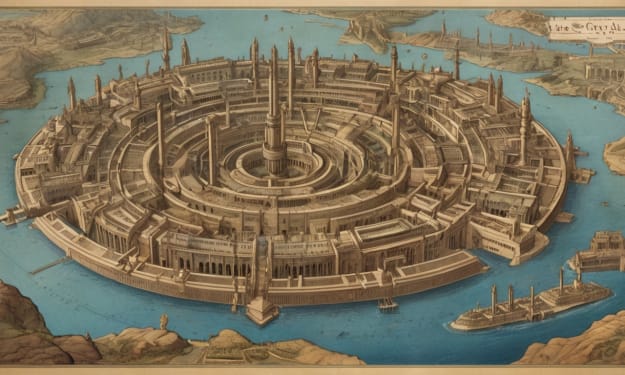
A civilization that lies deep in the seas... A legendary city that rules the world with its advanced technology, but was buried in the waters overnight by incurring the wrath of the gods: Atlantis! So is this story real, or is it a metaphor thousands of years old? Today, we are putting all the details on the table, from Plato's writings to modern conspiracy theories, even NASA's explanations!
By Remzi Kazdalabout a year ago in History
Moral Story of a Footballer (Struggle Life)
Struggle For Success: Football is more than just a game—it’s a journey of passion, perseverance, and life lessons. Some of the greatest footballers in history didn’t just achieve success because of their talent; they overcame immense struggles, proving that hard work and determination can turn dreams into reality.
By Shihab Ahmedabout a year ago in History
10 Mysterious Historical Disappearances That Still Puzzle Experts Today
Introduction: Throughout history, countless people, places, and even entire communities have mysteriously vanished without a trace. These disappearances have baffled historians, scientists, and conspiracy theorists alike. From ancient civilizations to modern-day figures, the sudden and unexplained nature of these cases continues to ignite public fascination. Despite advancements in technology and investigative methods, some historical mysteries remain unsolved, keeping experts and curious minds searching for answers. Here are ten of the most mysterious historical disappearances that still puzzle experts today.
By Moqadas Kliwalabout a year ago in History
The Vanished Fortune of Emperor Montezuma: The Lost Gold of the Aztecs. AI-Generated.
The Golden Empire of Montezuma The Aztec Empire, at its height in the early 1500s, dominated central Mexico through fearsome military might and sophisticated administration. The empire’s wealth flowed in the form of tribute—extracted from conquered regions and paid in cacao, textiles, jade, and above all, gold. Montezuma II, who ruled from 1502 to 1520, presided over a city unlike any in Europe at the time. Tenochtitlán was built on a lake, crisscrossed with canals, and filled with gleaming temples, vibrant markets, and palaces adorned with precious stones and gold leaf. Aztec gold wasn't just wealth—it held spiritual and political power. Objects were cast in exquisite designs: feathered serpents, golden masks, discs representing the sun, and ritual knives. Gold represented divine favor from the gods, particularly Huitzilopochtli, the god of the sun and war. The Arrival of the Conquistadors In 1519, Hernán Cortés and around 600 Spanish soldiers landed on the Gulf Coast of Mexico. Marching inland, they were stunned by the wealth and grandeur of Tenochtitlán. Montezuma, believing Cortés might be a god-king foretold in prophecy, welcomed the Spanish into the city with gifts of gold and silver. These gestures, meant to awe and pacify, only whetted the conquistadors’ greed. Cortés wrote to the Spanish king, describing streets lined with gold, stores filled with treasures, and temples adorned with golden shields and masks. But beneath the surface, tensions simmered. The Fall of Tenochtitlán and the Disappearance of the Treasure In 1520, after months of uneasy occupation, the situation exploded. Cortés left the city to fight rival Spaniards, leaving a garrison under Pedro de Alvarado. During a religious festival, the Spanish massacred hundreds of Aztec nobles, inciting a massive rebellion. Montezuma, now seen as a Spanish puppet, was either killed by his own people or died from wounds inflicted during the uprising. As the Aztecs besieged the Spaniards inside their compound, Cortés returned. Facing annihilation, he planned a nighttime escape—La Noche Triste, or “The Night of Sorrows.” La Noche Triste: The Treasure Lost On the night of June 30, 1520, Cortés and his men fled the city across narrow causeways over Lake Texcoco. They carried with them wagons and crates filled with Aztec gold—jewelry, coins, religious relics, and artifacts. But the plan turned to disaster. Aztec warriors ambushed the Spaniards on the causeways. Many were killed, and countless treasure-laden horses and porters drowned in the lake. Some soldiers, too greedy to part with their loot, sank under its weight. Cortés survived and eventually returned with reinforcements to capture the city in 1521—but the treasure carried out on La Noche Triste was never recovered. What Happened to Montezuma’s Treasure? There are several theories: Lost in Lake Texcoco: The simplest explanation is that the gold was lost in the lake during the retreat. Though parts of the lake have since dried up and Mexico City now stands atop it, underwater excavations and digs over the centuries have revealed only small fragments—never the vast hoard Cortés described. Hidden by Aztecs: Before the Spanish siege, some Aztec priests and nobles may have hidden sacred treasures in underground chambers, temple ruins, or remote mountain caves to prevent desecration. Stolen by Survivors: Surviving Spanish deserters or indigenous allies might have taken and buried parts of the treasure while fleeing. Melted Down: Some treasure may have eventually reached Spain, melted into bars and ingots. However, much of the iconic, artistic goldwork described by conquistadors was never seen again. Modern Searches for the Lost Aztec Gold The tale of Montezuma’s lost treasure has captured imaginations for centuries. From early colonial treasure hunters to modern archaeologists, the legend continues to inspire expeditions and studies. In 1981, a construction crew in Mexico City unearthed a golden disc beneath a street, sparking renewed interest. In 2020, archaeologists discovered a massive Aztec altar and remnants of a temple beneath the city—confirming more layers of history remain buried. In the mountains of northern Mexico and New Mexico, local legends speak of a hidden Aztec hoard, transported out of the city and concealed in remote caves. Dozens of adventurers have perished or vanished searching for it. Even today, rumors persist among metal detectorists and amateur historians of a cache of Aztec gold still lying undiscovered beneath modern Mexico City or in the Sierra Madre. Montezuma’s Curse? Some treasure hunters and folklorists speak of the “Curse of Montezuma”—a supposed curse that afflicts those who seek or steal the emperor’s treasure. This idea, while rooted in legend rather than evidence, adds another layer of mystery to the saga. Conclusion: A Legacy Beyond Gold Whether or not Montezuma’s treasure is ever found, the story holds a deeper truth: it represents the collision of civilizations, the tragedy of cultural destruction, and the insatiable drive for wealth that helped shape the modern world. In museums around the world, you’ll find traces of Aztec artistry—fragments of a once-golden empire. But the heart of Montezuma’s treasure, the one that dazzled the conquistadors and vanished into legend, remains one of the great unsolved mysteries of the Americas.
By Say the truth about a year ago in History
The Concealed Wealth of King Croesus: The Riches that Created a Legend. AI-Generated.
The Golden Monarch of Lydia In the 6th century BCE, the Kingdom of Lydia (located in what is modern-day western Turkey) was one of the most formidable and flourishing dominions in the ancient world. Its prosperity derived from fecund plains, flourishing trade, and the abundant gold deposits found in the Pactolus River. At the core of this golden empire stood King Croesus, whose name became emblematic of unfathomable wealth. Croesus ruled from approximately 595 to 546 BCE, and ancient historiansfrom Herodotus to Plutarchdepicted him as the wealthiest individual of his time. His court at Sardis, the Lydian capital, dazzled visitors with luxurious palaces, radiant temples, and streets adorned with gold and silver. The Genesis of His Wealth Croesus attributed his vast fortune to three primary sources: The Pactolus River Gold: Flowing in proximity to Sardis, the Pactolus was infused with alluvial gold, allegedly originating from the mythical touch of King Midas. Croesus established gold-extraction operations and minted the world’s first standardized gold coins, referred to as electrum staters. Commerce and Tribute: Lydia was positioned at the confluence of the East and West. Through trade routes, Croesus imposed taxes on merchants and received tributes from smaller neighboring states. His influence permeated deeply into Asia Minor and the Aegean. Plunder and Expansion: Croesus expanded his dominion over Greek cities in Ionia, extracting tribute in the form of silver, gold, and exquisite goods. Herodotus noted that Croesus consecrated substantial offerings of gold and silver to the Oracle of Delphi and other Greek sanctuariessome of which remained visible for centuries afterwards. The Demise of a Golden Empire Notwithstanding his wealth and influence, Croesus’ reign concluded in calamity. Circa 546 BCE, he challenged Cyrus the Great, the leader of the ascendant Persian Empire. Croesus misinterpreted the Oracle of Delphi, which stated that he would "destroy a great empire" should he invade Persia. He didhis own. Cyrus attacked Lydia, defeated Croesus in the Battle of Thymbra, and seized Sardis. The details of Croesus’ fate are debated: some assert he was executed, while others claim Cyrus spared him and retained him as an advisor. Yet, as Cyrus’ soldiers looted Sardis, one question persisted: what became of Croesus’ treasure? The Tale of the Lost Lydian Treasure According to Persian and Greek accounts, Cyrus confiscated a substantial quantity of gold from Sardis. Nonetheless, many are convinced that Croesus concealed part of his wealth prior to the city’s fall. This conviction inspired lasting legends: The Entombed Palace Treasure: Some narratives suggest Croesus possessed a concealed subterranean vault beneath his palace, filled with gold coins, ceremonial artifacts, and royal jewelry, potentially sealed during the siege. The Temple Hoard of Artemis: Prior to his conquest, it is said that Croesus dispatched gold reserves to the Temple of Artemis at Ephesus for protection. Although the temple housed valuable relics, much remains unaccounted for. The Tomb of Croesus: His purported burial mound, referred to as the Bin Tepe Tumulus (a collection of over 100 royal mounds), may still conceal secrets. While tomb raiders have plundered many, contemporary archaeologists believe that subterranean chambers remain unexamined, possibly containing undiscovered caches. The Pactolus River Caches: There are accounts of clandestine underwater storage chests or buried urns of coins hidden along the Pactolus by fleeing Lydians. Modern Searches and Archaeological Discoveries During the 20th century, archaeologists unearthed portions of ancient Sardis, including: - A royal palace complex, - Gold-refining workshops, - Early Lydian coins and jewelry. However, no significant treasure has ever been officially retrieved. Excavations at the Bin Tepe mounds revealed opulent burials but were frequently disrupted by looters. The principal tumulus thought to be Croesus’ burial site exceeds 60 meters in height, yet much of its interior remains untouched due to its scale and preservation concerns. Recent technological progresssuch as ground-penetrating radar and magnetometryprovides optimism for revealing concealed chambers or vaults without damaging the mounds. Influence of the Croesus Legend The tale of Croesus’ treasure has persisted for over 2,500 years: The expression “rich as Croesus” remains a part of contemporary vernacular. His lost wealth inspired writers, explorers, and rulers throughout centuriesfrom Alexander the Great to Roman emperors. In medieval and Renaissance Europe, treasure seekers scoured Sardis and Ephesus, convinced that gold still lay buried beneath ancient stones. Conclusion: Wealth, Power, and the Ephemeral Nature of Fortune King Croesus’ life serves as a timeless allegory: a man who held monumental wealth but could not evade destiny. His decline serves as a reminder that no fortune is everlasting, and no empire invulnerable. Yet the enigma of his lost treasure continues to allure. It may reside in a forgotten chamber, beneath layers of dust and earth, or scattered in fragments across museums and private collections. Whether ever discovered or not, Croesus’ concealed gold remains one of the greatest unsolved mysteries of ancient history.
By Say the truth about a year ago in History