Events
"How Did a 10-Day Shift in 1582 Change Christmas Forever?"
The Hidden History of Christmas and the Calendar Shift Christmas is one of the most celebrated holidays in the world, but its association with December 25th was not always so simple. While we take it for granted today, did you know that Christmas, for a time, wasn’t universally celebrated on the same day? This wasn’t due to some quirky holiday tradition, but because of an error in how time was calculated.
By Daily Motivation10 months ago in History
saving the present from the past. Content Warning.
I recently wrote about comparing modern people to Nazis. This was shortly after visiting the site of the Bergen Belsen concentration camp. One of the things the guide told us resonated with me, children, soldiers and visiting soldiers come here as a warning. They are shown around the camp, the mass graves and the memorials, part of the past is revealed. Its to warn people of something that happened and a warning ever to let it happen again.
By ASHLEY SMITH10 months ago in History
Why Are Clergy Dresses Important for a Professional Church Look?
A church is a sacred place of worship, guidance, and community. Clergy members are spiritual leaders, and their appearance matters as much as their message. One of the most important elements of a professional church look is proper attire. Clergy dresses and women’s clergy attire are not just clothing, they symbolize respect, authority, and devotion. Wearing the right attire reflects professionalism and helps create a positive impression on the congregation. In this article, we explore why clergy dresses are essential and how they contribute to a polished, professional church environment.
By Sameera eclergys10 months ago in History
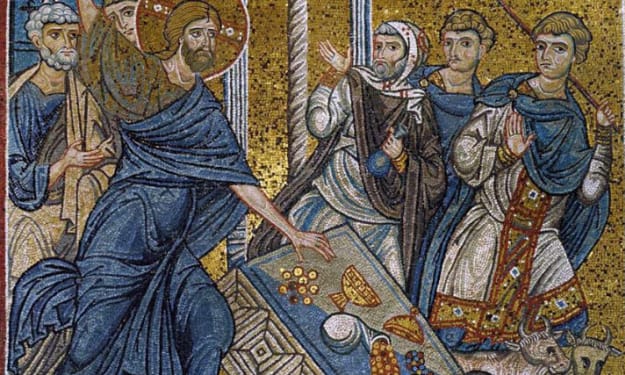
Holy Monday is when Jesus cleansed the temple of the money changers
Jesus had zeal for His Father's house Palm Sunday is celebrated one week before Easter/Resurrection Sunday. The next day is Holy Monday, also known as Great Monday, but what makes this date so special?
By Cheryl E Preston10 months ago in History
Yalda Night
Across the world, cultures have found meaningful ways to mark the changing seasons. In Iran, one of the most cherished traditions is Yalda night, a celebration held on the longest night of the year, usually around December 21st. More than just a seasonal event, Yalda night represents hope, light, family, and continuity values that have been passed down for thousands of years.
By Zohreh Asadi10 months ago in History
Where to Find Stylish Church Clothes for Men for 2026 Services?
Finding the perfect church clothes for men for 2026 services can be a challenge, but it is essential. A proper clergy outfit not only looks elegant but also shows respect for tradition. In this guide, we will explore how to select, style, and purchase the best church attire for men for every occasion. From robes to suits, and from online shopping to local stores, you will learn how to look your best while attending church services.
By Sameera eclergys10 months ago in History
Ash Wednesday: All you need to know
Mardi Gras/Fat Tuesday is the beginning The annual Mardi Gras in New Orleans concludes on the day that is referred to as Fat Tuesday. This is a day of gluttony and eating meat because the following day, Ash Wednesday, begins a time of fasting and prayer.
By Cheryl E Preston10 months ago in History
THE HOUSE THAT NEVER LET GO
On the southeastern shore of Loch Ness, where the water looks black even on bright days and the hills seem to lean inward, stands a white house that was never meant to be ordinary. Boleskine House does not announce itself with screams or shattered windows. It sits quietly, almost politely, as if nothing has ever gone wrong there. And yet, for more than two centuries, death, madness, and misfortune have followed those who lived within its walls. Some call it cursed. Others call it coincidence. A few believe it was deliberately opened to something that never closed again. A HOUSE BUILT ON CONSECRATED GROUND Long before Boleskine House existed, the land itself carried a reputation. The site was once home to a small church and graveyard. Local folklore claimed that a medieval church fire killed many worshippers inside, leaving the ground spiritually “unsettled.” Whether true or not, the place was avoided. In the late 1700s, the church was torn down, and Boleskine House was constructed directly on the old burial site. Graves were disturbed. Bones were moved or ignored. Even by the standards of the time, it felt wrong. From the beginning, locals whispered that the house didn’t belong there. Those whispers would grow loude. ALEISTER CROWLEY ENTERS THE STORY The name most commonly associated with Boleskine House is Aleister Crowley—occultist, writer, and one of the most controversial figures of the early 20th century. In 1899, Crowley purchased the house with a specific purpose. He wasn’t looking for peace, scenery, or privacy. He chose Boleskine because it matched the exact requirements for a dangerous magical operation described in an ancient grimoire known as The Sacred Magic of Abramelin the Mage. The ritual, according to the text, required months of isolation, strict discipline, and complete dedication. If done correctly, the practitioner would supposedly gain control over supernatural forces. If done incorrectly—or abandoned midway—the consequences were said to be catastrophic. Crowley did abandon it. And according to legend, that’s when things began to unravel. THE FIRST SIGNS OF DISASTER Crowley himself later wrote that during his time at Boleskine, strange things occurred. Servants reportedly heard footsteps in empty rooms. Objects moved without explanation. Doors opened on their own. More troubling were the effects on the people who lived and worked there. One of Crowley’s servants allegedly went mad and was later confined to an asylum. Another reportedly died under suspicious circumstances. Crowley dismissed these stories publicly, but privately he hinted that forces he had summoned were left “uncontrolled.” Whether Crowley believed this literally or used it to enhance his mystique is still debated. But the deaths did not stop when he left. THE HOUSE AFTER CROWLEY After Crowley moved on, Boleskine House passed through several owners. None stayed long. And many left under disturbing circumstances. One family experienced repeated tragedies, including sudden illness and mental breakdowns. Another owner reportedly died by suicide inside the house. A later resident’s children were said to suffer from night terrors and severe anxiety, refusing to sleep alone. Neighbors spoke of lights turning on in empty rooms. Visitors described an overwhelming sense of dread—an instinctive urge to leave. Not fear exactly. More like warning. THE DEATHS THAT CEMENTED THE LEGEND Over the years, multiple deaths became associated with Boleskine House. Some were confirmed. Others lived in rumor and oral history. A housekeeper reportedly hanged herself. A former owner died in a tragic accident. Another resident’s life collapsed into alcoholism and despair after moving in. Skeptics argue that old houses attract stories, especially when tied to a famous occultist. Believers counter with a harder question: Why did so many unrelated people suffer similar psychological and emotional decline after living there? Not everyone experienced tragedy—but enough did to make the pattern impossible to ignore. FIRE, ABANDONMENT, AND DECAY In the late 20th century, Boleskine House fell into neglect. It was damaged by fire more than once. Each restoration attempt seemed cursed by delays, funding problems, or sudden disasters. One major restoration project collapsed after internal disputes and financial ruin. Another ended after the owner died suddenly before completion. The house appeared to resist being healed. As if it preferred to remain wounded. SCIENCE VS SUPERNATURAL There are rational explanations, of course. Old houses creak. Isolated locations amplify fear. Knowledge of a dark history can influence perception. Psychological suggestion is powerful, especially in places already weighted with myth. Yet even skeptics admit that Boleskine’s history is unusually dense with misfortune. Statistically, some houses simply accumulate tragedy. But statistically, not like this. A PLACE THAT CHANGES PEOPLE Perhaps the most unsettling aspect of Boleskine House is not the deaths themselves, but what residents describe happening before tragedy struck. People spoke of mood changes. Irritability. Depression. Obsession. A sense of being watched—not by something visible, but by the house itself. Sleep disturbances were common. So were vivid dreams. Several residents claimed they felt compelled to walk certain hallways at night for no clear reason. If nothing supernatural is involved, then Boleskine House still stands as a powerful example of how environment, belief, and isolation can shape the human mind. And if something supernatural is involved… Then it has been very patient. MODERN TIMES, OLD SHADOWS In recent years, efforts have been made to restore Boleskine House respectfully, acknowledging its history rather than denying it. Paranormal investigators have visited. Historians have documented the tragedies. Occult scholars still debate whether Crowley truly “opened a door” or simply attached a dramatic story to a troubled place. The house remains standing. Quiet. Watching Loch Ness. Waiting. No one claims it is safe. No one claims it is evil. But almost everyone agrees on one thing: Boleskine House is not neutral. WHY THIS STORY STILL MATTERS The Boleskine House deaths linger in the public imagination because they sit at the crossroads of history, psychology, and belief. If you believe in curses, it feels like proof. If you believe in coincidence, it challenges probability. If you believe in human psychology, it demonstrates how place and story can destroy lives. And if you believe nothing at all… The pattern is still there. People came to Boleskine seeking power, peace, or a fresh start. Many left broken. Some didn’t leave at all. The house remains, not screaming its story, not begging for attention—just standing quietly on the shore, as it has for centuries. As if it knows something. And has all the time in the world to keep it.
By The Insight Ledger 10 months ago in History