Events
The Price of Division: The True Cost of Building the Berlin Wall
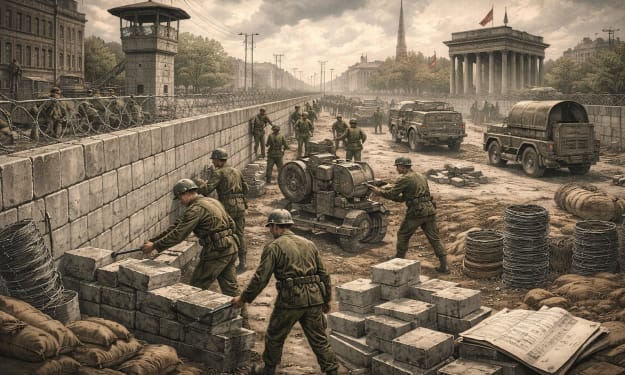
Construction Cost of the Berlin Wall: An Economic and Historical Analysis Introduction The Berlin Wall remains one of the most powerful symbols of the Cold War, representing the ideological, political, and economic divide between East and West Germany from 1961 to 1989. While the Wall is often discussed in terms of its political significance and human cost, less attention is paid to the financial burden involved in its construction, maintenance, and security. Understanding the construction cost of the Berlin Wall offers valuable insight into the economic priorities of the German Democratic Republic (GDR) and the broader Cold War environment. Background: Why the Berlin Wall Was Built After World War II, Germany was divided into East and West, with Berlin similarly split despite being located deep inside East German territory. Between 1949 and 1961, nearly 3 million East Germans fled to the West through Berlin, causing a severe labor and economic crisis for East Germany. To stop this mass emigration, the East German government—backed by the Soviet Union—began constructing the Berlin Wall on August 13, 1961. What started as barbed wire fencing evolved into one of the most complex border security systems in modern history. Initial Construction Costs (1961) The initial phase of construction was carried out rapidly and under military secrecy. Early estimates suggest that the first version of the Wall cost approximately: 400 million East German marks (GDR marks) in 1961 terms Roughly equivalent to USD 100–120 million (1961 value) This phase included: Concrete walls and slabs Barbed wire fencing Watchtowers Anti-vehicle trenches Patrol roads The cost was significant for the East German economy, which was already under strain due to industrial inefficiencies and dependence on Soviet aid. Continuous Upgrades and Expansion Costs The Berlin Wall was not a single static structure. Over its 28-year existence, it went through four major generations of upgrades, each more expensive than the last. Key improvements included: Reinforced concrete segments (up to 3.6 meters high) The “death strip” with sand, tripwires, and floodlights Over 300 watchtowers and bunkers Signal fences and automatic firing devices (in some sections) By the 1970s and 1980s, annual spending on upgrades and repairs ranged between: 150–200 million GDR marks per year Security and Maintenance Costs Beyond construction, the Berlin Wall required constant staffing and maintenance. The East German border force (Grenztruppen) consisted of over 40,000 personnel assigned to guard the Wall. Estimated recurring costs included: Salaries and training of border guards Surveillance equipment Dog patrol units Infrastructure repairs Historians estimate that security and maintenance costs alone totaled: 1.5 to 2 billion GDR marks over the Wall’s lifetime Total Estimated Cost of the Berlin Wall When combining: Initial construction Structural upgrades Security and maintenance The total estimated cost of the Berlin Wall is believed to be: Between 16 and 20 billion GDR marks (1961–1989) Adjusted for inflation and converted into modern currency, this equals approximately: USD 6–8 billion (2025 value) This figure does not include indirect economic losses, such as: Lost labor productivity Reduced innovation International trade limitations Diplomatic isolation Economic Impact on East Germany The Berlin Wall imposed a heavy burden on the East German economy: Resources were diverted from housing, healthcare, and consumer goods Infrastructure spending favored security over development Long-term debt increased dependence on the Soviet Union Ironically, the Wall—built to protect the East German economy—became one of the reasons for its eventual collapse. Demolition Costs After 1989 Following the fall of the Wall on November 9, 1989, Germany faced the additional cost of dismantling it. Demolition and cleanup costs (1989–1994): Estimated 1–2 billion Deutsche Marks Included recycling materials and restoring urban infrastructure
By Say the truth 10 months ago in History
The Net Worth of Nazi-Looted Wealth in History An Examination of One of the Largest Organized Thefts Ever Recorded. AI-Generated.
--- ## **What Was Nazi-Looted Wealth?** Nazi-looted wealth refers to assets stolen or forcibly seized by the Nazi regime between 1933 and 1945. This looting was not random; it was highly organized and supported by state policies. The stolen assets included: * Gold and silver * Cash and bank deposits * Artwork and cultural objects * Jewelry and personal valuables * Real estate and businesses * Industrial equipment and raw materials Much of this wealth was used to finance Germany’s war effort. --- ## **Systematic Theft from Individuals** One of the most devastating aspects of Nazi looting was the theft from individuals, particularly Jewish families. ### **Personal Property Confiscation** Victims were forced to surrender: * Gold, jewelry, and watches * Cash and bank savings * Homes, land, and businesses Before deportation, many people were stripped of all possessions. These assets were transferred to the German state or sold to loyal supporters. --- ## **State-Level Looting of Occupied Countries** Nazi Germany also looted national wealth from occupied countries. ### **Gold Reserves and Central Banks** Germany seized gold reserves from countries such as: * Austria * Czechoslovakia * Poland * Belgium * Netherlands This gold was often melted down and moved through neutral countries to disguise its origin. Historians estimate that **state-level gold theft alone would be worth tens of billions of dollars today**. --- ## **Art and Cultural Looting** The Nazis carried out unprecedented cultural theft. ### **Stolen Artworks** Hundreds of thousands of artworks were stolen from: * Museums * Private collections * Religious institutions Paintings by famous artists such as Rembrandt, Picasso, Van Gogh, and others were targeted. Many of these artworks remain missing today. Experts estimate that **Nazi-looted art alone may be worth $100–150 billion USD** in current market value. --- ## **Industrial and Economic Assets** The Nazis also looted: * Factories * Machinery * Raw materials * Agricultural production Occupied economies were forced to support Germany’s war industry. This economic exploitation generated enormous value beyond physical theft. --- ## **Total Estimated Net Worth (Modern Value)** Estimating the total net worth of Nazi-looted wealth is difficult because: * Records were destroyed * Assets were hidden or lost * Some wealth was never recovered However, historians and economists generally estimate: 👉 **$200 billion to $400 billion USD in today’s value**, with some higher estimates reaching **over $500 billion USD**, depending on methodology. This makes Nazi looting one of the largest thefts in recorded history. --- ## **Hidden Wealth and Missing Assets** Not all looted wealth was recovered after the war. ### **Hidden Gold and Assets** Some assets were: * Buried or hidden * Moved through secret accounts * Disappeared during the collapse of Nazi Germany Stories of hidden Nazi treasure continue to surface, though many remain unverified. --- ## **Post-War Recovery and Restitution** After World War II, Allied forces attempted to recover stolen assets. ### **Restitution Efforts** * Gold was returned to national governments * Some artworks were recovered and restored * Compensation programs were established However, full restitution was impossible. Many victims were dead, records were missing, and assets had changed hands. --- ## **Ethical and Legal Legacy** The issue of Nazi-looted wealth remains relevant today. ### **Ongoing Restitution Cases** Museums and private collectors still face legal claims for: * Stolen art * Cultural artifacts Countries and institutions continue to confront the moral responsibility of returning stolen property. --- ## **Why the Wealth Cannot Be Fully Measured** The true value of Nazi-looted wealth cannot be fully expressed in money because: * It represents lives destroyed * Cultural heritage lost * Generations displaced Financial figures only describe material loss, not human suffering. --- ## **Comparison With Other Historical Looting** Compared to other historical lootings: * Nazi looting was more systematic * It was supported by modern bureaucracy * It targeted entire populations This makes it unique in scale and organization. --- ## **Conclusion** The net worth of Nazi-looted wealth represents one of the darkest chapters in modern history. While estimates suggest hundreds of billions of dollars in today’s value, the real cost was far greater—measured in human lives, lost cultures, and broken communities. Understanding this history is essential not to admire the scale of theft, but to remember the importance of justice, restitution, and historical accountability. The legacy of Nazi-looted wealth serves as a reminder that economic crimes committed under state power can have consequences lasting generations. ---
By Say the truth 10 months ago in History
Artifacts in Museums and Their Estimated Net Worth Understanding the Value of Humanity’s Preserved Heritage
This article explores the types of artifacts found in museums and provides an estimated understanding of their overall net worth. What Are Museum Artifacts? Artifacts are objects made or used by humans that provide insight into history, culture, science, and art. Museums collect and preserve these objects to educate the public and protect heritage. Artifacts commonly found in museums include: Ancient tools and weapons Sculptures and statues Paintings and drawings Coins and jewelry Manuscripts and books Religious and ceremonial objects Scientific instruments Each artifact represents a moment in time and a part of human civilization. Types of Artifacts and Their Value 1. Ancient Civilizations Artifacts Artifacts from ancient civilizations such as Egypt, Mesopotamia, Indus Valley, Greece, Rome, and China are among the most valuable. Examples include: Egyptian mummies and sarcophagi Greek marble statues Roman coins and armor These items are often thousands of years old. A single well-preserved artifact from ancient Egypt or Greece can be valued at tens or hundreds of millions of dollars, depending on rarity and condition. 2. Royal and Imperial Treasures Many museums house royal artifacts such as: Crowns and regalia Thrones Jewelry Ceremonial weapons These items were often made from gold, silver, diamonds, and rare gemstones. For example, royal crowns and jewelry collections alone may be worth billions of dollars, even without considering their historical importance. 3. Paintings and Fine Art Paintings are among the most financially valuable museum artifacts. Famous artworks by artists such as Leonardo da Vinci, Michelangelo, Rembrandt, Van Gogh, and Picasso are considered priceless. If sold, individual paintings could be worth hundreds of millions or even billions of dollars. Museums like the Louvre, British Museum, Metropolitan Museum of Art, and Hermitage collectively hold artworks whose estimated value runs into hundreds of billions of dollars. 4. Manuscripts and Rare Books Ancient manuscripts are extremely valuable due to their rarity and fragility. Examples include: Religious texts Scientific manuscripts Historical documents Artifacts like ancient handwritten books, early printed texts, or royal records may be worth millions to hundreds of millions of dollars each. 5. Archaeological Finds Archaeological artifacts such as pottery, tools, seals, and ornaments provide insight into daily life in ancient times. While individual items may not always be visually impressive, their historical significance can make them extremely valuable. Entire archaeological collections are often valued in the billions of dollars. 6. Scientific and Technological Artifacts Museums also preserve scientific instruments and technological milestones such as: Early telescopes Medical equipment Space exploration artifacts Objects like early computers, space mission equipment, or scientific prototypes are valuable because they represent human progress. Why Estimating Net Worth Is Difficult Estimating the net worth of museum artifacts is challenging for several reasons: 1. Priceless Nature Many artifacts are considered priceless because they cannot be replaced. Even if a monetary value is assigned, it would not reflect their true importance. 2. Legal Restrictions Most museum artifacts are protected by law and cannot be sold. Their market value exists only theoretically. 3. Cultural and Emotional Value Artifacts often carry cultural identity and national pride, which cannot be measured in money. Estimated Net Worth of Major Museum Collections Although exact numbers are impossible, experts often estimate that: Large national museums hold collections valued between $50 billion and $200 billion USD Some global museum networks together preserve artifacts worth trillions of dollars Individual iconic artifacts may be valued at $500 million to over $1 billion USD These estimates include: Art collections Historical artifacts Cultural treasures Security and Preservation Costs Museums invest heavily in: Climate control Restoration Security systems Insurance These costs add indirectly to the value of artifacts by ensuring long-term preservation. Artifacts as Economic and Educational Assets Museum artifacts generate value by: Supporting tourism Educating future generations Encouraging research Strengthening national identity Museums contribute billions annually to local and global economies through tourism and education. Ethical Considerations There is growing debate about: Artifact ownership Repatriation to original countries Ethical collection practices These discussions further highlight that artifacts are more than financial assets—they are part of shared human heritage. Why Museum Artifacts Are Truly Priceless Unlike gold or real estate, artifacts: Cannot be recreated Represent unique historical moments Connect modern society to ancient civilizations Their destruction or loss would be irreversible. Conclusion Artifacts preserved in museums represent the collective memory of humanity. While their estimated net worth runs into hundreds of billions or even trillions of dollars, their true value goes far beyond money. These objects preserve knowledge, culture, and identity across generations. Museums serve not as vaults of wealth, but as guardians of history—protecting treasures that belong to all of humanity.
By Say the truth 10 months ago in History
The Net Worth of the Kremlin Palace
This article explores the estimated net worth of the Kremlin Palace by examining its tangible and intangible assets. What Is the Kremlin Palace? The Kremlin is a large fortified complex covering about 28 hectares (70 acres) in central Moscow. It includes: Palaces Cathedrals Government buildings Museums Towers and fortified walls The most famous structures include: The Grand Kremlin Palace The Senate Building The Armory Chamber The Cathedral Square
By Say the truth 10 months ago in History
Emperor Akbar: The Wealth Behind a Golden Empire
The Net Worth of Emperor Akbar Wealth, Power, and Prosperity Under the Greatest Mughal Ruler Emperor Akbar, or Jalal-ud-din Muhammad Akbar, stood as one of India's strongest and most successful kings. He led the Mughal Empire from 1556 to 1605. He changed it into a wealthy and steady power in the early modern age. Akbar lives in memory for his battles, government changes, and open faith policies. His money power and huge riches matched those feats. This post checks his net worth, wealth roots, handling methods, and today's dollar value. Akbar’s Path to Power Akbar took the throne at age 13 after his father Humayun died. The empire started weak, hemmed by foes. With regent Bairam Khan's help, he beat strong enemies like Hemu in the Second Battle of Panipat. Akbar seized full rule as he aged. He pushed the empire's borders wide. Gains covered north, west, and central India. Wins added lands, goods, and cash streams. They built his vast fortune base. Mughal Empire Size Under Akbar At reign's end, Akbar's empire spanned huge lands now in: Northern India Rajasthan Gujarat Bengal Deccan areas This zone ranked top for output worldwide. India's farms, cloth, and deals drove much of world GDP then. Key Sources of Akbar’s Wealth Land Tax Setup Land taxes formed Akbar's top cash source. He launched the smart Zabt system via finance chief Raja Todar Mal. It worked like this: Fields got exact measures. Crops set taxes by usual output. Rates stayed fixed and clear. Farmers paid cash, not crops. This boosted empire cash big time. Steady floods of funds filled the royal chests. Farm Strength Farms held up the Mughal money machine. Rich soils near Ganges and Indus grew tons of: Wheat Rice Sugarcane Cotton The state took a big cut of farm yields as tax. It made Akbar a top rich king. Trade and Deals Akbar's lands thrived on home and world trade. Exports went far:
By Say the truth 10 months ago in History
The Founding of Buenos Aires
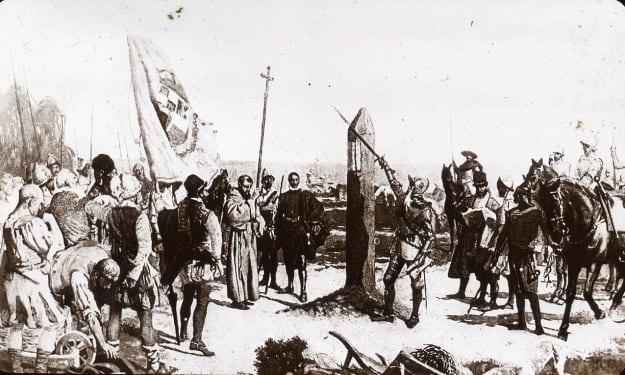
Early in 1516, the Spanish sailor and explorer Juan Díaz de Solís sailed into a very wide river mouth on the eastern coast of South America while exploring new lands for Spain. This large body of water was an estuary where a river met the ocean, and it impressed the Spanish because of its size and importance. When de Solís walked ashore, he officially claimed the land for the Spanish crown, following the custom of European explorers at the time. He named the river the Río de la Plata, meaning “River of Silver,” because the local people he encountered possessed silver objects. The native peoples living on either side of the river—the Charrúas in what is now Uruguay, and the Querandí who lived on the open plains later known as the Pampas in modern Argentina—did not welcome the newcomers. Instead, they viewed them with suspicion and anger. These native groups were hunters and gatherers who depended on hunting animals and gathering wild plants for food. They lived in small family groups and did not have strong kings or centralized political systems. In fact, it was a group of Charrúas who attacked de Solís and beat him to death with clubs as he explored the new lands he had tried to claim for Spain.
By Hafeez Alam10 months ago in History
A World in Conflict: How History Shapes Today’s Global Tensions
A World in Conflict: How History Shapes Today’s Global Tensions The world today feels restless. News headlines are filled with wars, political tension, economic struggles, and fear about the future. Many people ask the same question: Why does the world seem so divided? To understand modern global conflicts, we must look beyond daily news and examine how history, power, and human decisions shape world affairs.
By Wings of Time 10 months ago in History
History, Power, and Conflict: How the Past Shapes Today’s Global Tensions
Understanding Muslim History and Global Conflict: A Simple Explanation History is often told in pieces, and when those pieces are misunderstood, fear and confusion grow. Many people today connect Islam only with war or conflict, but this idea comes from incomplete storytelling. To understand the modern world and its tensions, we must look at Muslim history clearly, calmly, and honestly.
By Wings of Time 10 months ago in History