Events
The Plague of Civilization
Introduction Civilization, with its sprawling cities, advanced technologies, and complex societies, stands as a testament to human ingenuity and ambition. However, the journey of civilization has been marred by numerous plagues—both literal and metaphorical—that have shaped the course of history. These plagues are not merely outbreaks of disease, but also social, economic, and environmental crises that have threatened to unravel the fabric of human societies. This article explores the multifaceted concept of the "plague of civilization," examining how various plagues have influenced and been influenced by the development of human civilization.
By Alohan I Rowland2 years ago in History
Memorial Day
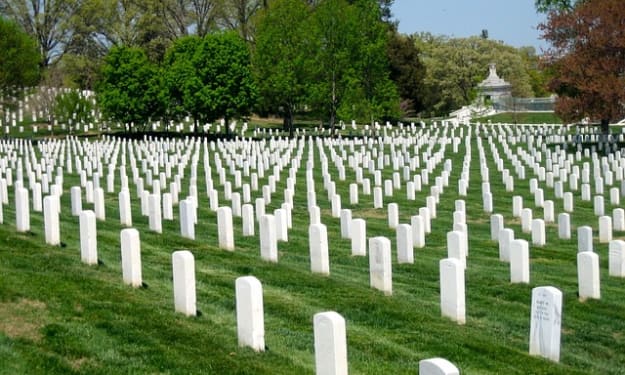
Memorial Day is a time of solemn reflection and gratitude, a day to remember and honor those who have made the ultimate sacrifice in service to their country. In a small town in the Midwest, a group of veterans had organized a parade to pay tribute to their fallen comrades. The air was filled with a sense of pride and sadness as the veterans marched through the town, carrying the American flag and remembering the friends they had lost.
By PoliSpeakHub2 years ago in History
10 Ancient Stolen Relics
Today on Top 10, we're discussing stolen ancient relics, which is why I'm wearing a goon shirt - I thought it was appropriate. The script is by Ian 40, and if Ian has provided links to his socials, they'll be right alongside links to my storytelling deep dive channel, story rants, and books.
By Gilbert Ay-ayen. Jr2 years ago in History
The History of The Philippines Before Magellan (3000 BCE - 1521 CE)
On this article I'm going to share to you some interesting facts about Philippines. The Philippines is an archipelago situated in the Pacific Ocean, comprising over seven thousand islands. It lies on a subduction zone within the geologically active Ring of Fire, which extends from Japan to Alaska and California, making the islands mineral-rich but also prone to destructive earthquakes and volcanic eruptions. Of the 7,000 islands, only around 1,000 are inhabited, most of them small, roughly one square mile in size. The archipelago is divided into three main island groups: Luzon in the north, the Visayas in the center, and Mindanao in the south. Luzon, home to the capital Manila, is the most populous.
By Gilbert Ay-ayen. Jr2 years ago in History
RETURN, REVISIT, AND REMEMBER: CELEBRATING THE ‘INDIO-GENIUS’ OF THE FILIPINOS
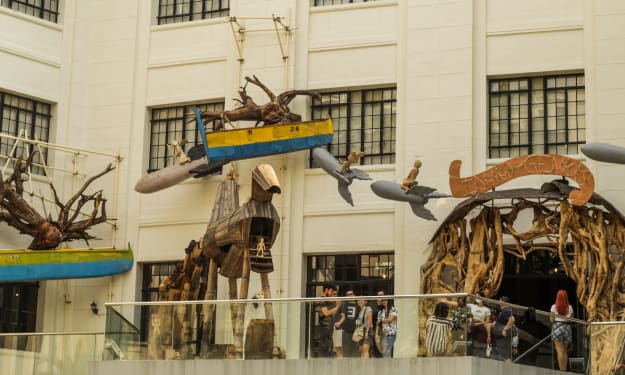
Once again, Magellan’s ship returned to the Philippine archipelago. Only this time, it’s on the marble floors of the National Museum of Anthropology as one of the installation artworks made by National Artist Kidlat Tahimik on October 22.
By Ma. Carmela Maurice Marinda2 years ago in History