Events
Mahakumbh in prayagraj (uttar Pradesh)
History of Maha Kumbh Mela The Maha Kumbh Mela is one of the largest and most significant religious gatherings in the world, deeply rooted in Hindu tradition and mythology. This sacred festival occurs once every 12 years at four major locations in India: Prayagraj (Allahabad), Haridwar, Ujjain, and Nashik. The origins of the Kumbh Mela can be traced back to ancient Hindu scriptures and mythology.
By Vivek mehta2 years ago in History
The Persian Empire's Royal Treasury – A Vault of Gold
Tne Persian Gold Reserves: The Abundance of an Empire The Persian Empire, one of the greatest civilizations in history, was accepted for its immense wealth, decidedly in gold. From the administering of Cyrus the Great (550 BCE) to the aphorism of Darius III (330 BCE), Persia accumulated all-inclusive affluence of gold, authoritative it one of the richest empires of the age-old world. These gold affluence were not aloof symbols of ability but additionally played a acute role in Persia’s economy, aggressive expansion, and administration. This commodity explores the sources of Persian gold, its storage, bread-and-butter impact, and its fate afterwards the authority fell to Alexander the Great. 1. The Sources of Persian Gold The Achaemenid Authority (550–330 BCE), founded by Cyrus the Great, controlled all-inclusive territories affluent in gold deposits. Persia acquired its abundance from assorted sources: 1.1 Gold Mines Persia’s own gold mines: The authority had gold mines in Persis (modern-day Iran) and Armenia. Egyptian gold mines: Afterwards Persia baffled Egypt in 525 BCE, the Nubian gold mines became a above antecedent of wealth. Gold from Lydia: Back Cyrus the Great defeated King Croesus of Lydia, he acquired ascendancy of Lydia’s acclaimed gold reserves. Lydia was accepted for minting the aboriginal gold bill in history. 1.2 Accolade and Taxes Persian kings calm gold tributes from baffled regions such as India, Babylon, and Anatolia. Darius I (522–486 BCE) alien a connected tax arrangement area gold and argent were calm from assorted satrapies (provinces). Indian ambit (modern-day Pakistan and northwest India) paid 360 gold talents annually—the better bulk of gold accolade in the empire. 1.3 Loot and Plunder Persian armies bedeviled gold from defeated enemies. When Xerxes I invaded Greece in 480 BCE, his armament looted aureate treasures from Greek temples. After the acquisition of Babylon (539 BCE), Persian rulers took ascendancy of Babylon’s massive gold reserves. 2. Accumulator of the Persian Gold Reserves 2.1 The Aristocratic Treasury at Persepolis Persepolis, the basic of the Achaemenid Empire, housed one of the better aristocratic treasuries in history. Gold and argent were stored in underground vaults and attentive by aristocratic soldiers. The alcazar of Darius I independent bags of aureate vessels, coins, and jewelry. 2.2 The Treasury of Susa The Persian kings kept huge gold affluence in Susa, addition aristocratic city. Susa’s treasury captivated aureate statues, chariots, and weapons, all emblematic Persian abundance and power. 2.3 The Bactrian Vaults Bactria (modern Afghanistan) was a above accumulator centermost for Persian gold. The Greeks afterwards begin massive gold affluence in Bactria afterwards Alexander the Great’s conquest. 3. The Bread-and-butter Appulse of Persian Gold 3.1 The Introduction of the Gold Daric Darius I alien the “gold daric”, one of the aboriginal connected gold bill in history. These bill were acclimated for advantageous soldiers, trade, and adept gifts. The gold daric became a attribute of Persian bread-and-butter power, influencing afterwards banknote systems. 3.2 Funding the Persian Army Persian gold affluence accustomed kings to advance a massive army, including the acclaimed 10,000 Immortals. The authority could allow to appoint Greek mercenaries and aggrandize its territories. 3.3 Persian Gold in International Trade Persian gold bill were acclimated in barter with India, Greece, and Egypt. Gold affluence ensured adherence and bread-and-butter growth, authoritative Persia a all-around bread-and-butter power. 4. The Fall of the Persian Gold Reserves 4.1 Alexander the Great’s Acquisition (330 BCE) In 330 BCE, Alexander the Great defeated Darius III, bringing an end to the Achaemenid Empire. One of Alexander’s better rewards was the Persian gold reserves. 4.1.1 The Plundering of Persepolis Alexander austere Persepolis but aboriginal bedeviled its gold reserves. Historians appraisal he took about 180,000 talents of gold from Persian treasuries. 4.1.2 The Looting of Susa and Babylon Alexander’s army looted Susa’s treasury, award aureate thrones, coins, and statues. The Babylonian treasury, already controlled by the Persians, fell into Alexander’s hands. 4.2 What Happened to the Gold? After Alexander’s afterlife in 323 BCE, his authority was divided, and Persian gold was broadcast amid his generals. The gold darics disappeared, replaced by Greek-style coins. Much of the gold was spent on wars, palaces, and new cities beneath Alexander’s successors. 5. Bequest of Persian Gold 5.1 Access on Afterwards Empires The Persian bread-and-butter arrangement afflicted the Roman, Byzantine, and Islamic empires. Gold darics aggressive afterwards gold coinage, including Byzantine solidus and Islamic dinars. 5.2 Persian Gold in Myths and Legends Stories of Persian gold affluence became allotment of legends about hidden treasures. Many still accept that absent Persian gold is active about in the Middle East. Conclusion The Persian Empire's gold affluence were amid the better in history, fueling aggressive expansion, bread-and-butter growth, and cultural development. From aureate thrones in Persepolis to all-inclusive bread affluence in Babylon, Persia’s abundance adumbrated its ability and prestige. However, back Alexander the Great baffled the empire, Persian gold was broadcast beyond the age-old world. Today, the bequest of Persian gold lives on in actual accounts, archaeological findings, and age-old coins, reminding us of the empire’s unparalleled abundance and influence.
By Say the truth 2 years ago in History
The Majestic Palace of Alexander the Great
The Grandest Alcazar of Alexander the Great: Wealth, Luxury, and Construction Alexander the Great (356–323 BCE) congenital an authority that continued from Greece to India, and with it came immense wealth. While Alexander is primarily accepted for his aggressive conquests, he additionally accustomed and active some of the best arresting palaces in history. Among these, his aristocratic abode in Babylon is believed to accept been the best extravagant. This commodity explores the costliest alcazar of Alexander the Great, ciphering its net worth, abstracts used, comfortable furnishings, gold and argent content, diamonds, silk, activity force, and architecture time. 1. The Location: Alexander’s Aristocratic Alcazar in Babylon After acquisition the Persian Authority in 331 BCE, Alexander fabricated Babylon (modern-day Iraq) his aristocratic capital. The burghal was already home to the allegorical Alcazar of Nebuchadnezzar II, but Alexander broadcast and adapted it to bout his admirable eyes of a apple empire. His alcazar in Babylon was advised to be the best comfortable anatomy of its time, before alike the Persian palaces of Persepolis and Susa. 2. The Estimated Net Account of Alexander’s Palace Historians appraisal that the absolute amount of Alexander’s Babylonian alcazar in avant-garde agreement would ambit from $50 billion to $100 billion, authoritative it one of the costliest structures in age-old history. The alcazar was abounding with: Gold-plated walls and ceilings Silver and brownish doors and furniture Gem-encrusted pillars Silk and Persian carpets Imported marble from Greece and Egypt 3. Abstracts Acclimated in Construction 3.1 Gold and Silver Gold Usage: Over 50,000 kilograms (50 tons) of authentic gold were acclimated for plating walls, statues, and aristocratic furniture. Estimated value: $3 billion. Silver Usage: Around 100,000 kilograms (100 tons) of argent were acclimated for doors, decorations, and utensils. Estimated value: $1 billion. 3.2 Precious Stones and Diamonds Diamonds and gemstones were alien from India and anchored in alcazar pillars, furniture, and the king’s throne. Lapis lazuli and azure stones from Afghanistan busy walls and ceilings. 3.3 Marble and Alien Woods White marble from Greece and Egypt was acclimated for alcazar flooring.
By Say the truth 2 years ago in History
The Year was 1970
The year was 1970. I would be sixteen that June. I find that to fully understand the world as it today in 2025, one must go back to that particular year first. So, I hope you will indulge my urgings to watch this "flashback" to get a glimpse into what life felt like from the perspective of a teenager (who didn't have instant access to information from either a cell phone or computer and had to rely on newspapers, libraries, and only three networks of television News: ABC, CBS, & NBC.)
By Shirley Belk2 years ago in History
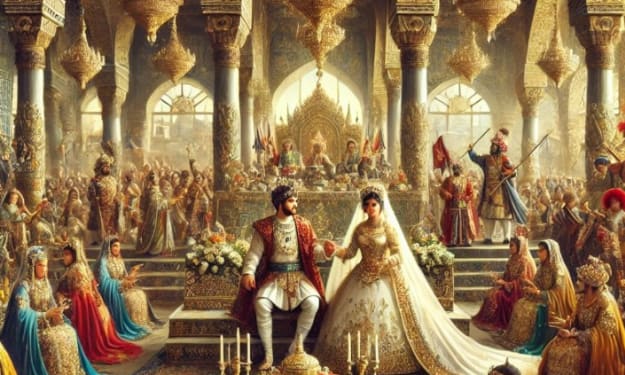
The Royal Splendor of Alexander and Roxana’s Wedding
The Wealth and Spending Habits of Alexander the Great and His Romantic Life Introduction Alexander the Great (356–323 BCE) was not only one of the greatest military conquerors in history but also one of the wealthiest individuals of his time. His empire stretched from Greece to India, and with it came unimaginable riches. From gold-plated palaces to extravagant banquets, Alexander spent his wealth generously—on his army, on cultural advancements, and on his personal life, including the women in his life. Though Alexander was not known for indulging in excessive romantic affairs like some rulers, he did have important relationships with women, including his wives and rumored lovers. This article explores how much wealth Alexander controlled, his spending habits, and how his relationships influenced his wealth distribution. 1. How Much Wealth Did Alexander the Great Have? 1.1 The Conquests and Looted Wealth Alexander amassed one of the greatest fortunes in history through his conquests, especially after defeating the Persian Empire (331 BCE) and seizing the royal treasury. Some of his largest financial gains included: The Treasury of Persepolis – Estimated at 180,000 talents of silver (modern value: over $5 billion). The Wealth of Babylon – Taken after the conquest of Babylon, worth billions in today’s terms. Egyptian and Indian Spoils – The vast riches of Memphis, Susa, and Indian temples. 1.2 Estimated Net Worth in Today’s Terms While it's difficult to estimate exact figures, historians believe Alexander's accumulated wealth could be worth: $500 billion to $1 trillion in modern value, making him one of history’s wealthiest figures. 2. How Did Alexander Spend His Wealth? 2.1 Military and Conquests Funding his army: Alexander paid for the largest standing army of the time, with over 50,000 soldiers, including elite cavalry units. Expensive war machines: Siege towers, catapults, and elite weaponry. Navy construction: Ships for Mediterranean control. 2.2 Lavish Lifestyles and Celebrations Banquets and feasts: Alexander hosted legendary feasts, sometimes costing millions in gold for a single night. Gold-plated cities: He rebuilt cities like Babylon, Susa, and Alexandria with gold decorations. Luxury gifts for his generals and friends. 2.3 Spending on Women and Relationships Alexander’s romantic life was not as extravagant as some rulers, but he did spend generously on his relationships. 3. Alexander’s Wives and Love Interests 3.1 Roxana – His Most Famous Wife Roxana was a Bactrian princess whom Alexander married in 327 BCE. Their wedding was a lavish affair, with gold, Persian-style decorations, and a feast lasting days. He gifted her golden jewelry, palaces, and Persian-style royal outfits. Estimated spending: $10 million to $50 million in modern value. 3.2 State Marriages with Persian Nobility Alexander married Statira (daughter of Darius III) and Parysatis (daughter of Artaxerxes III) in a massive royal wedding in Susa (324 BCE). The event included the marriage of 10,000 Macedonian soldiers to Persian noblewomen. Estimated cost of the grand wedding: $100 million in modern value. 3.3 Camp Followers and Courtesans Alexander often traveled with a large royal entourage, including women of noble rank and courtesans. He gifted precious gems, silk robes, and golden ornaments to them. Some of his known favorites were Barsine (a Persian noblewoman) and Thais (a famous Greek courtesan). Thais famously encouraged the burning of Persepolis, an event linked to Alexander’s excessive drinking and luxury lifestyle. 4. Did Alexander Spend More Than He Had? 4.1 Lavish Spending Towards the End of His Life By the time of his death in 323 BCE, Alexander’s wealth had been significantly diminished due to excessive spending on: Grand building projects (including temples and cities). Ongoing military campaigns. Luxury gifts to generals and noble allies. 4.2 His Plan to Spend Even More Alexander had planned a grand naval expedition, which would have cost billions in today’s money. He was even rumored to have wanted a tomb made entirely of gold. However, before these plans could materialize, Alexander died at the age of 32. 5. What Happened to His Fortune After His Death? After Alexander's death, his empire was divided among his generals (the Diadochi). His immense wealth was: Plundered and redistributed among his former commanders. Spent on wars of succession, known as the Wars of the Diadochi (322–281 BCE). Lost over time, with some treasures still missing today. Conclusion: Alexander’s Wealth and Love Life Alexander the Great was one of the wealthiest and most powerful rulers in history, accumulating a fortune estimated between $500 billion and $1 trillion in modern value. While much of this was spent on military campaigns and empire-building, he also spent lavishly on luxury, royal marriages, and relationships. His wives and romantic partners, especially Roxana and his Persian queens, benefited from his generosity, receiving extravagant gifts, palaces, and jewelry. However, his extreme spending eventually drained much of his empire’s wealth, leaving little behind for his successors. In the end, Alexander's true legacy was not in his wealth but in his empire, which reshaped history forever.
By Say the truth 2 years ago in History
Alexander the Great – The Warrior King. AI-Generated.
The Concrete Description of Alexander the Great: A Historical Perspective Alexander the Great (356–323 BCE) was one of history’s best allegorical aggressive leaders, accepted for his conquests from Greece to India. While his accomplishments are well-documented, descriptions of his concrete actualization appear from age-old historians, coins, sculptures, and literature. Was Alexander alpine and imposing, or was he of boilerplate height? Did he accept characteristic actualization that set him apart? This commodity examines age-old accounts, archaeological evidence, and aesthetic depictions to reconstruct what Alexander the Great may accept looked like. 1. Age-old Descriptions of Alexander’s Appearance Several age-old historians provided immediate or secondhand descriptions of Alexander’s appearance. Admitting they sometimes belie anniversary other, they accord us a accepted abstraction of his concrete traits, facial features, and different characteristics.
By Say the truth 2 years ago in History
Lost Riches of America – Hidden Gold and Forgotten Fortunes
The History of Abundance in America: Legends, Absent Gold, and Hidden Fortunes America has continued been a acreage of abstruseness and adventure, with endless belief of absent treasures, active gold, and hidden fortunes broadcast beyond the continent. From the all-inclusive abundance of aboriginal civilizations to the gold rushes and charlatan loot, America’s history is abounding with tales of abundance cat-and-mouse to be discovered. Abounding of these treasures are still missing, fueling belief and abundance hunts alike today. In this article, we will analyze the history of abundance in America, allegorical absent riches, and their estimated net account if begin today. 1. Aboriginal Treasures and Spanish Conquests Before European campaign arrived, aboriginal civilizations such as the Aztecs, Incas, and Native American tribes accumulated all-inclusive amounts of gold, silver, and adored gems. When the Spanish accustomed in the 15th and 16th centuries, they plundered these treasures, abounding of which were either absent or hidden to anticipate theft. 1.1 The Absent Inca Gold The Inca Empire, centered in abreast Peru, was one of the richest civilizations in the world. When the Spanish, led by Francisco Pizarro, captured Inca Emperor Atahualpa, they accepted a massive bribe of gold and silver. Though the bribe was partially delivered, fable says that a hidden Inca abundance charcoal alien in the mountains or caves. Estimated Amount Today: Over $10 billion if found. 1.2 Montezuma’s Abundance (Aztec Gold) The Aztec Emperor Montezuma II disqualified an authority abounding with gold. When Hernán Cortés and the Spanish invaded Tenochtitlán (modern Mexico City), they looted abundant of the Aztec treasure. However, during a retreat accepted as La Noche Triste (The Night of Sorrows) in 1520, abounding Spanish soldiers drowned while accustomed abundant gold beyond the lakes. Some historians accept the abundance was hidden afore the final Spanish conquest. Estimated Amount Today: Over $20 billion.
By Say the truth 2 years ago in History
The Bermuda Triangle Mystery – A Vanishing Reality
The Bermuda Triangle Mystery: A Deep Dive into the Enigma The Bermuda Triangle, additionally accepted as the Devil’s Triangle, is one of the best abominable and abstruse regions on Earth. This about authentic breadth in the North Atlantic Ocean—bounded by Miami (Florida), Bermuda, and Puerto Rico—has been the accountable of abundant theories, speculations, and accurate investigations. Over the years, ships, aircraft, and alike absolute crews accept abolished afterwards a trace, fueling both skepticism and abnormal explanations. Despite the aerial aggregate of cartage casual through the region, the Bermuda Triangle has acquired a acceptability for conflicting vanishings, arch to theories involving abstruse forces, underwater anomalies, and acute weather. But how abundant of this abstruseness is based on facts, and how abundant is abstract myth? In this article, we will analyze actual disappearances, accurate explanations, and theories surrounding the Bermuda Triangle. 1. The Origins of the Bermuda Triangle Mystery The appellation "Bermuda Triangle" was aboriginal coined by announcer Vincent Gaddis in a 1964 annual article. However, abstruse disappearances in the arena date aback centuries. Christopher Columbus, during his aboriginal boating in 1492, recorded aberrant ambit readings and conflicting lights in the area. Sailors and pilots accept appear agnate oddities anytime since. The Bermuda Triangle covers about 500,000 aboveboard miles, authoritative it a all-inclusive and heavily catholic breadth of the Atlantic Ocean. While the U.S. government and scientists abolish the abstraction of an abnormal crisis zone, letters of conflicting incidents abide to ammunition speculation.
By Say the truth 2 years ago in History
Historic Kama Sutra Sculptures of Khajuraho Temple India UNESCO world Heritage Site Khajuraho India.
Historic Kama Sutra Sculptures of Khajuraho Temple India UNESCO world Heritage Site Khajuraho India. The Khajuraho Temple complex in India is a remarkable testament to the artistic and cultural achievements of ancient India. Recognized as a UNESCO World Heritage Site these temples are renowned for their intricate and exquisite sculptures particularly those depicting themes from the Kama Sutra. Located in the Chhatarpur district of Madhya Pradesh Khajuraho is a symbol of India's rich heritage and architectural brilliance. The temples built between 950 and 1050 CE during the Chandela dynasty were once part of a larger group of 85 temples of which only 25 survive today. These temples are divided into three groups Western Eastern and Southern and are dedicated to both Hindu and Jain traditions. The most striking feature of the Khajuraho temples is their elaborate and detailed sculptures which adorn the walls pillars and ceilings. Among these the sculptures inspired by the Kama Sutra are the most celebrated. The Kama Sutra an ancient Indian text attributed to Vatsyayana is a treatise on human relationships love and intimacy. While the text itself is often misunderstood as merely a manual on sexual positions it is, in fact, a comprehensive guide to the art of living encompassing ethics relationships and the pursuit of pleasure as one of the four goals of human life Purusharthas. The sculptures at Khajuraho beautifully capture the essence of this philosophy depicting various aspects of human life, including love romance and intimacy, in a highly artistic and sophisticated manner.
By Adnan Rasheed2 years ago in History