Events
How Trump's Tariff Actions Could Boost China's Global Reputation
The Tariff Landscape: From Protectionism to Global Fallout In 2018, the Trump administration imposed sweeping tariffs on Chinese goods, citing concerns over intellectual property theft, state subsidies, and trade imbalances. The move affected over $350 billion worth of goods and sparked a tit-for-tat trade war that escalated tensions between the world’s two largest economies.
By John Harker2 years ago in History
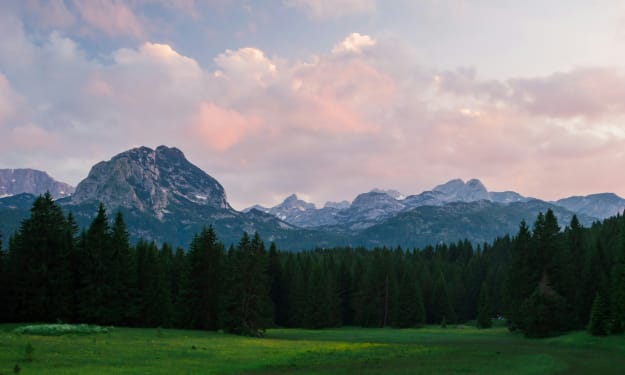
Sunset in the mountains of Durmitor
Sunset in the mountains of Durmitor The afternoon was different. The sun was slowly setting on the mountainside, spreading golden colors in the sky. The sunset could be seen from the campus dormitory, like a perfectly arranged scene—as if painted by Allah with his own hands.
By Arshad Ali2 years ago in History
The Price of a Moment
In the northern region of Pakistan, nestled within a densely populated village, lived a school teacher who commanded immense respect and admiration. Known for his wisdom, integrity, and kind demeanor, he was the pillar of trust in the community. Every matter requiring judgment or confidentiality was entrusted to him. The teacher had three sons, and his brother had two. Together, their families were regarded as noble and peace-loving by all.
By Zain Ali Khan2 years ago in History
Thucydides of Athens
Thucydides of Athens (circa 460 – circa 400 BCE) is celebrated as one of history's foremost historians, recognized for his meticulous method of documenting historical events. In contrast to earlier historians who frequently intertwined myth with reality, Thucydides aimed to deliver a precise and analytical narrative grounded in evidence and firsthand accounts. His seminal work, The History of the Peloponnesian War, continues to be a cornerstone in the fields of historiography, political science, and military strategy.
By A História2 years ago in History
MAUMAU GENERAL'S GRAND RETURN?
47 years after his disappearance, the country rejoiced at the alleged return of the former Maumau General, Stanley Mathenge. He had been invited by the then President Mwai Kibaki who had been sworn into power a few months prior after a journalist had claimed to have found the former guerrilla still in exile in Ethiopia. The new Kibaki regime had signaled a new era of hope and although Mathenge’s return was perceived as yet another good omen, it deteriorated into an embarrassing scandal after the man claiming to be Mathenge turned out to be an Ethiopian farmer.
By HINGES OF TIME2 years ago in History
Watching horror through gray glasses. AI-Generated.
Horror movies don’t usually stick with me. They don’t keep me up at night, because 99% of the time, I can just rationalize it: it's a movie. Sure, great white sharks, genetically mutated sharks, or ancient super sharks are scary in the moment, but at the end of the day, they're completely fictional.
By ADIR SEGAL2 years ago in History
Trump sets sights on national African American history museum
In a significant shift from his earlier stance, President Donald Trump has recently targeted the Smithsonian Institution's National Museum of African American History and Culture (NMAAHC), accusing it of promoting "improper ideology" and "divisive narratives." This move has sparked widespread criticism from historians, artists, and civil rights advocates who view it as an attempt to sanitize American history.
By Md Soriful Islam2 years ago in History
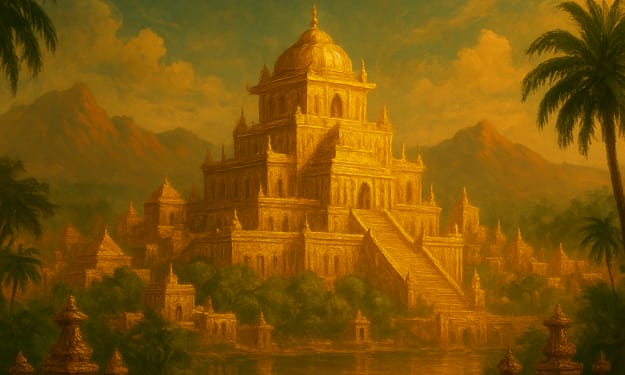
“The Golden Mirage: Unveiling the Legend of El Dorado’s Hidden Palace” . AI-Generated.
The Golden Mirage: Chronicle of the Golden Palace in El Dorado For centuries, the myth of El Dorado, the legendary city of gold concealed deep within South America, has sparked the imagination of explorers, historians, and adventurers. Central to this legend is the Golden Palace, a radiant fortress purportedly decorated entirely with goldits walls, floors, thrones, and even sacred altars. Although no concrete evidence of its existence has ever been discovered, the legacy of the palace continues to cast a golden hue throughout the annals of history. Origins of the El Dorado Legend The narrative of El Dorado stems from the indigenous Muisca populace of contemporary Colombia. “El Dorado,” which translates to “The Gilded One” in Spanish, initially denoted not a metropolis, but a ceremonial rite. According to early Spanish narratives, the Muisca would coat their new leader in gold dust and place him on a raft in Lake Guatavita, where he would present offerings of gold and emeralds to the deities by casting them into the waters. This spectacle of gold captivated the Spanish conquistadors, who perceived the ceremony as an indication of a prosperous kingdom governed by a gilded monarch. As the tale proliferated, the concept of El Dorado evolved from a singular entity into an entire cityor, more ambitiously, a golden empire. The Quest for the Golden Palace Driven by aspirations of wealth and renown, countless expeditions navigated the dense jungles and perilous landscapes of the New World during the 16th and 17th centuries. Conquistadors such as Gonzalo Pizarro, Francisco de Orellana, and Sir Walter Raleigh embarked on treacherous journeys in search of this elusive city. Raleigh was convinced that El Dorado, with its golden palace, was situated near Lake Parime in what is now Venezuela or Brazil. He depicted the city of Manoa, which he asserted gleamed with golden towers and luminous temples. These endeavors, however, were laden with peril. Severe climates, famine, illness, and violent confrontations with indigenous tribes claimed numerous lives. Despite the exorbitant toll, the allure of an extravagant palace, allegedly capable of rivaling any European court, sustained the legend.
By Say the truth 2 years ago in History