Events
"The Great Plunder: History's Largest Looted Treasure Between Kingdoms". AI-Generated.
"The Pillage of Civilizations: The Most Significant Wealth Ever Stolen in History" This article explores one of the most remarkable and sorrowful narratives of plundered fortune in human historythe Persian wealth taken by Alexander the Great from the Achaemenid Empire. In 330 BCE, Alexander’s troops captured the vast riches of Persepolis, encompassing gold, silver, gemstones, and ceremonial relics. Valued at over $100 billion in contemporary terms, the treasure not only transformed the destiny of two formidable civilizations but also initiated a new global hierarchy. Uncover the astonishing elements of this appropriated fortune, its estimated present-day valuation, and how it irrevocably shifted the equilibrium of authority in the ancient world. Article: The Pillage of Civilizations – History’s Most Extensive Stolen Treasure Introduction: Throughout the records of history, conflicts have frequently been fought not merely for territory or influence, but for wealthcolossal, unimaginable riches concealed within the vaults of powerful empires. Among all these historical occurrences, one particular event stands out as arguably the most significant looting operation ever performed: the subjugation of the Achaemenid Persian Empire by Alexander the Great, especially the plundering of Persepolis, its capital. The Kingdoms Participating: The Looted: The Achaemenid Empire, led by Darius III, was one of the richest empires in ancient history. For over two centuries, it had amassed immense treasures through taxation, tributes, and conquests. The Looters: Alexander the Great and his Macedonian army, in a rapid campaign through Asia, aimed to dismantle Persian authority and claim its wealth. The Treasure of Persepolis: In 330 BCE, following the Battle of Gaugamela and Darius’s withdrawal, Alexander advanced toward the Persian capital. Upon arriving at Persepolis, the epicenter of Persian affluence and culture, Alexander’s forces raided its treasury. The collection was vast: 180,000 talents of silver and gold (1 talent ≈ 33 kg), totaling nearly 6,000 metric tons of precious metals. Priceless relics, ceremonial insignia, golden thrones, embellished jewelry, and sacred artifacts. Opulent textiles, ivory, and incenseemblems of Persian royal grandeur. Records and scrolls from the Great Royal Library, many of which were destroyed or lost in the conflagrations. Estimated Net Worth Today: To comprehend the magnitude, let’s approximate its current valuation: Gold (at $65,000/kg): If even one-third of the treasure was gold (~2,000 tons), its value alone today would surpass $130 billion USD. Silver (at $800/kg): The remaining silver would total $3. 2 billion. Gemstones, thrones, artifacts: Invaluable due to their historical importance, but conservatively appraised at $10–20 billion. Total Estimate: In excess of $150 billion USD in contemporary currency. The Cultural and Political Consequence: The looting of Persepolis represented not merely a triumph of one realm over another, but the demise of an epoch. Persia, once an unassailable giant, lost not only its capital but its essence. The appropriated wealth enabled Alexander to: Finance his ongoing conquest across India. Compensate his soldiers and commanders. Establish new cities, such as Alexandria, utilizing wealth acquired from Persia. Disseminate Hellenistic culture throughout Asia, supplanting Persian supremacy. A Heritage of Flames: In a contentious decision, Alexander commanded the incineration of Persepolis, potentially as retribution for Xerxes’ incineration of Athens a century prior. Some historians contend it was symbolic; others perceive it as a drunken blunder. Regardless, the devastation guaranteed that a substantial portion of Persia’s splendor was irrevocably lost, apart from the riches transported back to Macedonia. Comparison to Other Historical Pillages: While other plunderssuch as the British Empire's exploitation of India, the Spanish subjugation of the Aztecs and Incas, or the Nazi appropriation of artwere considerable, none rival the concentration and immediacy of worth that Persepolis provided. Conclusion: The plundering of Persepolis stands as a monumental illustration of how the destiny of civilizations can hinge upon wealth and avarice. Alexander’s conquest redefined not merely geography but the distribution of global riches. The treasures of Persepolis, dispersed throughout the ancient world, established cities, financed wars, and inspired myths. Today, they act as a poignant reminder of the substantial price of conquest and the transient nature of empires.
By Say the truth about a year ago in History
Amazing Discoveries Made In The World's Most Mysterious Tombs
In a world filled with tales of the unknown and chilling legends that have stood the test of time, there are stories so strange they can send shivers down your spine. Today, we delve into an eerie chapter of history, exploring some of the most mysterious and downright spooky tombs from around the globe. From a mysterious window that peers into the supernatural to a peculiar 20-foot boulder used as an unyielding tomb, these crypts hold secrets that challenge the boundaries between life and death.
By The Unique Penabout a year ago in History
BULLA KARATASI MASSACRE. Content Warning.
Garissa was burning by 7 am on November 11, 1980. During the night, the Provincial Commissioner had declared a State of Emergency imposing a daytime curfew over the whole province. The police and military contingents in armoured vehicles descended on the town, shooting at everyone and everything. Houses were set on fire while locked from the outside. Innocent civilians were beaten up and killed while women faced sexual atrocities. A message was shouted from a loudspeaker as the sunrose urging everyone in the town to gather at Garissa Primary School. Indeed, many of them never even made it there, and for the ones who did, more suffering awaited them.
By HINGES OF TIMEabout a year ago in History
Do you know who created the Olympic Games and how? Why are the Olympic Games so popular?
The Olympic Games, a celebration of athletic prowess and international unity, have a rich history that spans thousands of years. The efforts of Baron Pierre de Coubertin, a French educator and historian, who is credited with reviving the ancient tradition in the late 19th century, can be traced back to the beginnings of the modern Olympic Games. His vision was to promote physical education and foster international goodwill through sports, leading to the establishment of the International Olympic Committee (IOC) and the first modern Olympic Games in Athens in 1896.
By MD.A.R Neazabout a year ago in History
"Threads of Empire: The Richest Royal Dress Ever Worn by a King" . AI-Generated.
"Threads of Empire: The Richest Royal Dress in History" Introduction Throughout history, the attire of kings has symbolized not just wealth and power but also the divine right to rule. Among the many legendary garments worn by monarchs, one stands out for its opulence, historical importance, and jaw-dropping value: the ceremonial robe of Emperor Shah Jahan of the Mughal Empire. Known as the "Peacock Robe", this legendary piece of royal fashion was not just clothing—it was a moving museum of the empire's wealth. This article explores the fascinating history, design, and present-day worth of this extravagant piece of regal attire.
By Say the truth about a year ago in History
"Royal Threads of the Sangam Era: The Regal Attire and Wealth of the Tamil Muvendhar" . AI-Generated.
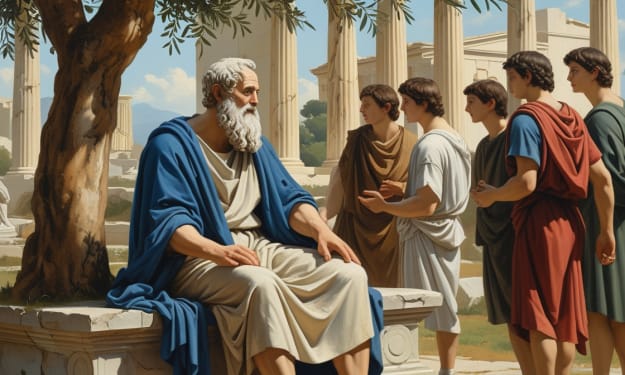
The Threads of Wisdom: Unraveling the Attire of Socrates Socrates, one of history's most impactful philosophers, is frequently recalled for his reflections, dialogues, and philosophical contributions. However, his clothingmodest, minimalist, and symbolicalso illustrates a deeper understanding of the individual and his principles. This article delves into the historical, cultural, and philosophical ramifications of Socrates' attire, examining how it mirrored his convictions, contravened Athenian conventions, and established a legacy of simplicity that persists across the ages. Article: When contemplating Socrates, the initial images that arise are his conversations, his relentless inquiries, and his unwavering quest for truth. Seldom do we take a moment to reflect on his clothingyet Socrates' attire is as representative of his philosophy as his spoken words. His minimalist garments were not merely a personal preference; they constituted a purposeful declaration against the superficial and materialistic tendencies prevalent in Athenian society. Socratic Simplicity: A Life in Rags Born in 470 BCE in Athens, Socrates existed during an era when the city-state thrived with affluence, authority, and artistry. The inhabitants of Athens took pride in their appearances. Vibrant tunics, elaborate cloaks, and fine sandals adorned many within the upper echelons. Socrates, in stark contrast, frequently roamed the streets barefoot and donned a single, simple tunictermed a chitonoften unwashed and lacking embellishment. Accounts from his contemporaries and disciples, notably Plato and Xenophon, often reference his attire. He sported the same garment in both summer and winter. This was not born from poverty or ignorance, but rather a conscious choice to sever ties with material desires. His clothingor lack of varietytransformed into a visible protest against extravagance. The Chiton: Symbol of Humility The chiton, a fundamental linen or woolen garment, was prevalent among the Greeks. It was typically secured with a belt or clasped at the shoulders. Socrates’ chiton, however, was particularly unadorned. Some sources assert he frequently went without an outer himation (a cloak), which might have been deemed inappropriate in certain public contexts. To comprehend why Socrates opted for such attire, one must grasp his perspectives. He championed self-discipline, restraint, and the pursuit of virtue over vanity. His minimalism served as a form of protection against distractiona means to concentrate the mind on what genuinely matters: wisdom, ethics, and the examined existence. Cultural Contrast: Athenian Attire and Social Norms In Athens, appearance was intricately linked to social standing. Affluent individuals donned brightly colored garments crafted from imported materials. Their sandals were fashioned from leather, and their hairstyles were meticulously styled. Women's attire was even more ornate. Neglecting one’s appearance, particularly in public contexts, was often perceived as disrespectful. Consequently, Socrates' attire was far more than mere modestyit was an act of defiance. He chose to present himself as impoverished, indifferent to public perception, to reinforce his philosophical assertions that virtue does not reside in possessions or appearances. Socratic Influence on Philosophical Austerity Socrates' students and philosophical heirs frequently adopted comparable approaches. The Cynics, especially Diogenes of Sinope, took Socratic simplicity to radical extremesliving in barrels, possessing almost nothing, and outright rejecting societal conventions. The Stoics, likewise, derived inspiration from Socratic philosophy. Although they did not necessarily attire themselves in a shabby manner, they prioritized internal virtue over outward affluence. Socrates epitomized an individual who conducted his life based on rational thought rather than societal conventions. Artistic Representations and Heritage Artistic portrayals of Socratesfrom ancient sculptures to Renaissance artworksoften depict him in unadorned garments or partially unclad, highlighting his ascetic disposition. While artistic interpretation is a factor, the consistency throughout periods indicates a widely recognized image: Socrates as the barefoot philosopher, unconcerned with worldly attire. Contemporary portrayals of Socrates frequently reflect a similar theme. Whether in literature, drama, or cinema, he is represented not in opulence but in modestytattered garments, bare feet, and a furrowed brow engaged in contemplation. A Legacy Woven in Plainness Socrates never inscribed a single line, yet his concepts have endured for over 2,400 years. In the same manner, his attireunpretentious and seemingly insignificanthas left an indelible mark. In an era where appearance often eclipsed essence, Socrates urged individuals to introspect. His attire was not a façade; it was a daily manifestation of his principles. Even in contemporary times, as modern society contends with materialism, fashion trends, and external affirmation, Socrates remains an ageless symbol of inner richness. His garments may have been worn and simple, yet through them traversed a mind enriched with the treasures of reason, virtue, and sagacity. The Muvendarthe triumvirate of the Cheras, Cholas, and Pandyaswere not merely mythical sovereigns of ancient Tamilakam but also symbols of culture, authority, and magnificence. Their regal garments mirrored their vast wealth and celestial stature. This article investigates the progression, importance, and estimated worth of their ceremonial and combat apparel, offering an exhaustive exploration of Tamil Nadu's opulent fashion legacy and the astonishing net value behind it. The Muvendar: Guardians of Tamilakam In ancient Tamilakam, the term “Muvendar” denoted the three illustrious dynastiesCholas, Cheras, and Pandyaswho governed various regions of South India from the Sangam era (circa 300 BCE) to the 13th century CE and beyond. These rulers were not solely military forces; they were benefactors of art, language, architecture, and fashion. Their attire and appearance were as authoritative as their governance. Regal Attire: A Fusion of Divinity and Power The garments of the Muvendar monarchs were crafted to represent divine entitlement, affluence, and military prowess. Although their fashions transformed over the centuries, several features remained quintessential: 1. Silken Garments and Tunics The rulers of Tamilakam preferred robes made from Kanchipuram silk, tinted in rich royal hues such as crimson, gold, and indigo. These silk garments were intricately woven with gold zari threads, rendering each tunic a masterpiece. Accounts in Sangam literature document these silks being presented to poets, generals, and foreign envoysindicators of their esteemed worth. 2. Golden Crowns and Jewels An integral element of their attire was the "Kondai" (crown or headdress), frequently embellished with gems, pearls, and diamonds extracted from the Golconda region and traded through Tamil ports. Necklaces like the Thoda, armlets (Valayal), and ankle chains (Silambu) crafted from solid gold were donned during coronations and military displays. 3. Combat Attire and Armor For warfare, Muvendar kings donned specially designed metal-studded tunics, often plated with bronze or iron, worn over cotton vests. Even in combat, monarchs were adorned with jewelryrings, gold-inlaid weapons, and royal insignias that denoted their lineage. The Symbolism of Regal Garments The attire of the kings was more than an exhibition of wealth; it held profound significance: Gold epitomized purity and divinity, often linked to Surya (the Sun God). Silk symbolized fertility and the prosperity of their territory. Pearls and gems reflected maritime supremacy, as Tamilakam’s ports like Korkai were central pearl centers. Red and saffron shades were utilized during ceremonies and signified power and sacrifice. Cultural Legacy The garments of these monarchs have left a lasting impact on Tamil ceremonial attire even in contemporary times. Traditional Tamil grooms at temple weddings continue to wear silk dhotis and angavastrams in a manner reminiscent of royal Chola or Pandya attire. Temple priests don white silk with gold borders, emulating the garments of royal benefactors. Ancient Tamil artexemplified in temple sculptures (such as the Brihadeeswarar Temple in Thanjavur) and Chola bronzesillustrates kings adorned in flowing silk garments with layered jewelry, indicating that the Muvendar kings esteemed visual symbolism as an extension of their authority. Estimated Net Worth of Their Regal Attire Let us assess the contemporary value of the Muvendar's traditional garments and adornments: Gold tiara adorned with precious stones: $1 million to $3 million (current approximation) Complete silk garment with gold zari: ~$20,000 - $50,000 Necklaces, bracelets, and rings (aggregate): Estimated at $5 million for ceremonial purposes Combat outfit embellished with gemstones and insignias: Approximately $500,000 Cumulative royal insignia (per sovereign): $6 to $10 million at present Taking into account all three dynasties and their royal figures, the total net worth of royal attire and insignia could surpass $100 million, excluding artifacts lost to time or seized during invasions. Conclusion The attire of the Muvendar rulers represented not only a display of fashionit was a magnificent declaration of Tamil heritage, maritime trade relationships, military accomplishments, and divine affiliation. These garments, crafted from silk, adorned with jewels, and imbued with tradition, functioned as protection, artistry, and lineage simultaneously. Their legacy endures in South Indian temple ceremonies, traditional crafts, and the profound pride of Tamil identitya heritage woven in gold, flowing like silk through the annals of history.
By Say the truth about a year ago in History
The Philosopher’s Robe: The Humble Dress of Socrates and Its Timeless Meaning
The Threads of Wisdom: Unraveling the Dress of Socrates Socrates, one of history’s most influential philosophers, is often remembered for his thoughts, dialogues, and philosophical contributions. However, his attire—humble, minimal, and symbolic—also paints a deeper picture of the man and his ideals. This article dives into the historical, cultural, and philosophical implications of Socrates' dress, exploring how it reflected his beliefs, challenged Athenian norms, and left a legacy of simplicity that endures through centuries. Article: When we think of Socrates, the first images that come to mind are his dialogues, his relentless questions, and his unyielding pursuit of truth. Rarely do we pause to consider what he wore—yet Socrates' dress is as reflective of his philosophy as his words. His minimalist clothing wasn’t just a personal choice; it was a deliberate statement against the superficial and materialistic tendencies of Athenian society. Socratic Simplicity: A Life in Rags Born in 470 BCE in Athens, Socrates lived during a time when the city-state flourished with wealth, power, and art. The citizens of Athens took pride in their appearance. Colorful tunics, intricate cloaks, and fine sandals adorned many in the upper classes. Socrates, in stark contrast, often wandered the streets barefoot and wore a single, simple tunic—called a chiton—often unwashed and unadorned. Accounts from his contemporaries and students, especially Plato and Xenophon, frequently mention his dress. He wore the same garment in summer and winter. This wasn’t out of poverty or ignorance, but a conscious decision to detach from material desire. His clothing—or lack of variety—became a visible protest against indulgence. The Chiton: Symbol of Humility The chiton, a basic linen or woolen garment, was common among Greeks. It was typically secured with a belt or clasped at the shoulders. Socrates’ chiton, however, was especially plain. Some sources suggest he often went without an outer himation (a cloak), which would have been considered improper in certain public settings. To understand why Socrates chose such dress, one must understand his views. He believed in self-mastery, discipline, and the pursuit of virtue over vanity. His minimalism was a form of armor against distraction—a way to focus the mind on what truly matters: wisdom, ethics, and the examined life. Cultural Contrast: Athenian Dress and Social Norms In Athens, appearance was deeply tied to status. Wealthy men wore bright-colored garments made from imported materials. Their sandals were leather-crafted, and hairstyles were carefully groomed. Women’s dresses were even more elaborate. To neglect one’s appearance, especially in the public sphere, was often seen as disrespectful. Socrates' attire, therefore, was more than modesty—it was defiance. He chose to appear poor, unconcerned with public image, to reinforce his philosophical arguments that virtue does not reside in possessions or appearances. Socratic Influence on Philosophical Austerity Socrates’ students and philosophical descendants often adopted similar approaches. The Cynics, particularly Diogenes of Sinope, took Socratic simplicity to radical extremes—living in barrels, owning almost nothing, and rejecting societal norms outright. The Stoics, too, drew from Socratic thought. While they didn’t necessarily dress poorly, they emphasized inner virtue over external wealth. Socrates was the model of a man who lived according to reason, not societal expectation. Artistic Depictions and Legacy Artistic representations of Socrates—from ancient busts to Renaissance paintings—frequently show him in modest robes or partially unclothed, emphasizing his ascetic nature. While artistic license plays a role, the consistency across eras points to a well-understood image: Socrates as the barefoot sage, indifferent to worldly fashion.
By Say the truth about a year ago in History
The Hidden Horrors of Devil's Punchbowl
As the Civil War neared its end in 1865, a wave of hope surged through the hearts of countless formerly enslaved people. Freed from the shackles of Southern plantations, they journeyed north, seeking safety and the promise of true liberty. For many, the city of Natchez, Mississippi, seemed a beacon of refuge. But what awaited them in a place known as Devil’s Punchbowl was a nightmare that rivaled the brutality they had escaped-a grim episode deliberately obscured in America’s historical narrative.
By KWAO LEARNER WINFREDabout a year ago in History
Jesus Christ and Good Friday
Jesus Christ and Good Friday: A Day of Suffering, Sacrifice, and Salvation Good Friday is one of the most solemn and significant days in the Christian calendar. It commemorates the crucifixion and death of Jesus Christ at Calvary, an event central to Christian belief in salvation. Observed on the Friday before Easter Sunday, Good Friday marks the climax of Holy Week and is a day of mourning, reflection, and gratitude for the sacrifice Jesus made for humanity.
By James Brockabout a year ago in History
The Anunnaki and the Neteru: Were They the Same Sky Gods?
The Anunnaki and the Neteru: Were They the Same Sky Gods? Across the ancient world, civilizations spoke of powerful beings who descended from the heavens, shaping humanity and guiding our early societies. In Sumer, they were known as the Anunnaki. In Egypt, they were called the Neteru.
By The Secret History Of The Worldabout a year ago in History
The whispering banyan tree.
Within the heart of a calm town in West Bengal stood an enormous, old banyan tree. Its roots turned just like the fingers of overlooked mammoths, coming into the soil and sky. The villagers called it “Boroboro Gachh,” and they accepted it had a soul.For eras, individuals whispered stories almost to the tree. A few said it ensured the town. Others claimed it tuned in. But no one had ever demonstrated anything—until Arman arrived.Arman was not a villager. He was a 22-year-old college understudy from Kolkata, examining old stories. When he first heard of the banyan tree, he thought it would be just another town myth. But something about the way the ancient postmaster talked of it caught his interest.“It talks when the moon is full,” the postmaster had said, his eyes cloudy with age. “But not in words. In whispers.”Charmed, Arman pressed his sacks and traveled to the town. The individuals were inviting but cautious. They told him stories of how the tree had spared lives amid surges, how it shined faintly on certain evenings, and how feathered creatures never settled in its branches—but none would go close to it after sunset.Arman giggled it off. “Superstition,” he said to himself. But deep down, he wasn't beyond any doubt.That night, beneath a full moon, Arman set up camp close the tree. He brought a scratchpad, a voice recorder, and his camera. The villagers cautioned him once more, but he waved them off considerately.Midnight arrived. Crickets sang. The wind moved delicately. The tree stood silent—just a tree.But then… the discussion changed.It wasn't colder, but heavier. As in the event that the world was holding its breath. Arman looked up. The moonlight sparkled on the roots. And after that, exceptionally faintly, he listened to it:“Arman…”He solidified.It was a whisper. Delicate. Like wind passing through ancient leaves—but clearer.“Who's there?” he inquired, checking the obscurity.No answer.He checked his recorder. It was still running. He rewound some seconds and played it back.“Arman…”“Why have you come?”His heart dashed. The voice was there. But no one was around.Swallowing his fear, he sat back down and whispered, “I need to know your story.”Hush.Then:“Listen.” Over the following few hours, Arman listened to pieces of a tale—fragmented whispers carried by the wind. A story of a lady named Meera, who had once lived within the town centuries back. A healer, a kind soul. But amid a starvation, she was faulted for awful good fortune and blamed for witchcraft. The villagers, frantic and frightened, tied her to the banyan tree and cleared out of there.She passed on beneath the moon, shattered.The tree, fed by her blood, took in her torment. And her soul.Since at that point, Meera's soul had whispered to those who listened—not for exact retribution, but for recognition.“They overlooked me,” the tree whispered. “But I keep in mind them all.”Arman sat still, overpowered by distress he couldn't clarify. He saw flashes in his mind—of Meera's life, her thoughtfulness, and her passing. And the centuries of hush that followed.When first light drew closer, the whispers faded. The weight within the discussion lifted.The tree stood still once more.Arman didn't take off from the town. He remained for a week, tuning in each night, learning more about approximately Meera. He composed everything down. His recorder filled with ghostly, whispering voices. But the villagers refused to tune in.“They'll think you're mad,” the postmaster cautioned.“I don't care,” Arman answered. “The world ought to know.”When he returned to Kolkata, Arman distributed a paper titled “Whispers of the Forgotten.” It picked up consideration from teachers, history specialists, and otherworldly searchers. Numerous people rejected it as fiction. A few accepted. But Arman didn't care. He had listened to the truth.He returned to the town once a year, always on the night of the total moon. He sat beneath the banyan tree, not anxious, and tuned in to Meera's voice.One year, he brought blossoms.“I keep you in mind,” he whispered, putting them at the base of the tree.The branches overhung gently—though the wind was still.And from deep inside the roots, a whisper came:“Thank you.”
By Sumaiya’s Wordboxabout a year ago in History
Malik Ambar (Abyssinian Warrior in India)
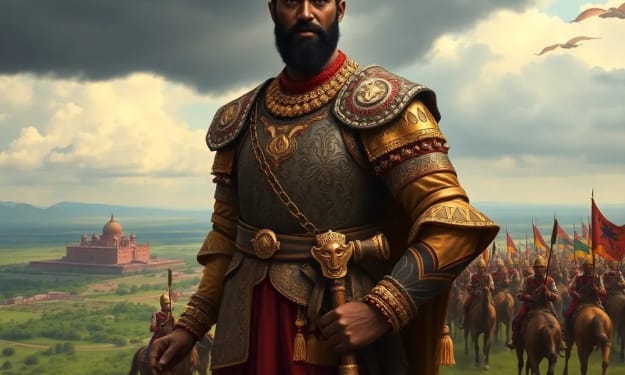
Introduction In the shifting sands of 16th and 17th-century Deccan India, a remarkable figure emerged from the shadows of slavery to challenge the might of the Mughal Empire: Malik Ambar. Born in Ethiopia (Abyssinia) and sold into slavery as a child, Malik Ambar rose to become a legendary general, strategist, and de facto ruler of the Ahmadnagar Sultanate in the Deccan. He led fierce resistance against Mughal expansion, pioneered guerrilla warfare tactics in the Indian subcontinent, and became a symbol of brilliance, resilience, and leadership.
By Muhammad Sohailabout a year ago in History