Events
"Sabotage or Mutiny: The Hidden Threats That Sank Great Ships"
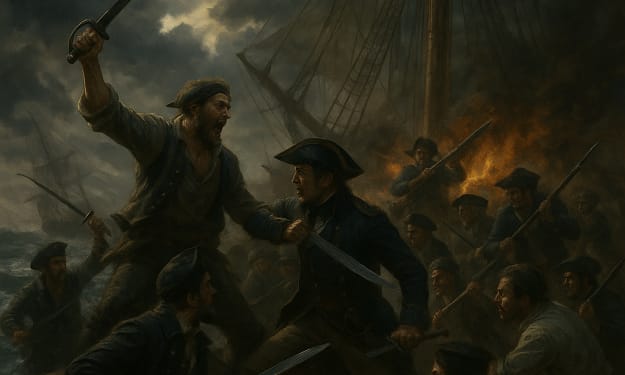
Sabotage or Rebellion: Unveiling the Mysteries Behind Enigmatic Maritime Calamities For centuries, the ocean has served as both a conduit and a conflict zoneconnecting continents, transporting empires, and inspiring aspirations of exploration. However, beneath the façade of noble discovery lies a grimmer, obscured truth: vessels lost without rationale, crews disappearing, and debris never recovered. In numerous instances, conjecture has pointed to two ominous alternativessabotage or rebellion. Was it a conspiracy from within? A treachery among the ranks? Or was it a desperate uprising by seafarers pushed to their breaking point? This article delves into the intricate history, motivations, and notable instances surrounding sabotage and rebellion on the open waters, scrutinizing how these dual forces of internal disintegration have transformed the trajectory of maritime history. The Fine Distinction Between Sabotage and Rebellion Although frequently categorized together, sabotage and rebellion are inherently distinct: Sabotage pertains to the intentional dismantling, impairment, or hindrance of a vessel, usually conducted by a crew member or saboteur for political, military, or personal purposes. Rebellion is an overt insurrection or uprising by a ship's crew against the commanding officersoften instigated by severe conditions, unjust command, or ideological convictions. Both actions signify a collapse of order and the ultimate treachery of maritime discipline. Notable Instances of Sabotage or Rebellion 1. The Potemkin Rebellion (1905) One of the most renowned rebellions in naval history unfolded aboard the Russian battleship Potemkin. Discontent stemming from maggot-ridden provisions, severe discipline, and an escalating revolutionary fervor incited sailors to revolt, resulting in the death of several officers and the takeover of the vessel. Although ultimately subdued, the Potemkin rebellion emerged as a symbol of the Russian Revolution, illustrating how social inequity at sea could incite widespread insurrection. 2. The USS Maine (1898): Sabotage or Mishap? The American battleship USS Maine detonated in Havana Harbor, resulting in the deaths of 260 sailors. The United States held Spain accountable, igniting the Spanish-American War. Nonetheless, subsequent investigations indicated that the explosion might have been caused by an internal coal fire rather than foreign aggression. Nevertheless, theories of sabotage linger, including speculation that it was an internal maneuver to justify warfare. The reality remains ambiguous. 3. The Rebellion on the Bounty (1789) Captain William Bligh’s Bounty represents perhaps the most notorious rebellion in Western history. Discontent with Bligh’s severe governance and a yearning for the laid-back lifestyle of Tahiti compelled Fletcher Christian and several sailors to take command of the ship. Bligh and his loyalists were cast adrift in a small boat, yet remarkably survived. The rebels escaped to Pitcairn Island, where some were later apprehended. This incident has since inspired a multitude of literary works and films. Motivations Behind Rebellion What drives crews to risk their lives in revolt? Historically, several factors have contributed to rebellion: Inhumane treatment: Brutality from captains, starvation, and excessive labor could ignite insurrection. Ideological influences: Revolutionary movements or class discontent at sea mirrored broader societal tensions. Isolation and cabin fever: Prolonged voyages in confined spaces can induce psychological strain and distrust. Greed and riches: In certain instances, rebellions were fueled by the ambition to seize treasure or cargo, particularly aboard trading and colonial vessels. Contemporary Illustrations and Cold War Mystique Even in the 20th century, sabotage and insurrection retained significance: Soviet Submarine B-59 (1962): During the Cuban Missile Crisis, Soviet personnel aboard this submarine debated whether to deploy a nuclear torpedo. One individual, Vasili Arkhipov, declined. His choice may have averted WWIII, yet the incident also disclosed how perilously close submariners approached insurrection under duress. INS Khukri (1971): India’s sole naval vessel lost in combat was targeted by a torpedo during the Indo-Pak conflict. While attributed to strategic miscalculations, certain conspiracy theorists propose that sabotage was involved, pointing to the vessel's rapid demise. MV Wilhelm Gustloff (1945): Sunk by a Soviet submarine, the ship carried over 9,000 individuals. Although not officially recognized as sabotage, survivor testimonies imply chaotic command and misinformation could have played a role in its catastrophic outcome. Methods of Sabotage: When Vessels Become Traps Sabotage has manifested in numerous ways: Disabling engines or navigation apparatus Contaminating water or food provisions Severing communication channels Arson or deploying explosive devices During wartime, saboteurs onboard cargo vessels and submarines assumed pivotal roles in intelligence activities. Some even masqueraded as crew members, installing explosives or leaking fuel. Scrutinizing Calamities: Fact or Concealment? Maritime investigations into vessel losses frequently grapple with incomplete data, absent wreckage, and political influences. This has led many to suspect that the reality behind certain catastrophes is obscured. For instance: The Cyclops (1918): Vanished with 309 personnel. Some attribute it to an insurrection stemming from adverse conditions, while others suspect sabotage. No remnants were ever discovered. The Kursk (2000): A Russian submarine that sank, resulting in the deaths of 118 sailors. Official narratives attribute it to a torpedo failure, but some assert that sabotage or internal rebellion was concealed by governmental authorities. Conclusion The ocean harbors secrets older than civilizations. Among them, none are more unsettling than those linked to treachery from within. Sabotage and insurrection strike at the essence of trust, adherence, and the very essence of survival at sea. From ancient triremes to nuclear submarines, the specter of internal disintegration remains ever-present. Whether motivated by desperation, ideology, or avarice, the narratives of sabotage and insurrection remind us that the gravest threats are not always tempests or adversarial fleetsbut rather, human hearts in revolt.
By Say the truth about a year ago in History
The Fall of a Conqueror: Lessons from the Death of Hulagu Khan
The wind that once carried the banners of conquest across the burning plains of Persia now whispered through the silent tents of Hulagu Khan. Once, he had commanded the fiercest army the world had ever known. He had crushed the Abbasid Caliphate, leveled cities to the ground, and extended Mongol supremacy deeper into the heart of the Islamic world. But now, in the twilight of his life, the great Khan of the Ilkhanate lay weakened, not by sword or rebellion, but by something far more ancient and inevitable—time. Hulagu's final camp stood at the edge of the Caspian Sea, a stretch of land once foreign and feared, now claimed by his empire. The grand tent that once echoed with the orders of a ruthless leader was now heavy with silence. Outside, his generals waited restlessly. Inside, the conqueror of Baghdad stared at the silk roof, his body fevered, his breath shallow. Physicians and shamans had tried their art. They burned incense, poured tinctures down his throat, chanted to the spirits of Genghis and Tengri. But nothing changed. Hulagu knew the truth, and he welcomed it not with fear, but with bitterness. “Power,” he muttered to himself, “is a fire that consumes even its master.” Only one person was allowed into his presence without being summoned—his youngest son, Tekuder. Unlike his older brothers who had been hardened in battle, Tekuder was contemplative, drawn to philosophy and the cultures they had conquered. Hulagu often mocked his softness, but now, in these last days, he found his presence oddly comforting. “You did not ride out with the others,” Hulagu rasped, his eyes dimming like dying coals. Tekuder knelt beside his father. “They ride to prove loyalty, Father. But it is here, beside you, that I learn true strength.” Hulagu scoffed weakly. “Words. You speak too many. Learn to act, or you will lose this empire in days.” “Or save it,” Tekuder replied, eyes steady. The old Khan turned away, but a faint smile touched his lips. A conqueror could dismiss the poets, yet in the end, even steel bent to memory and meaning. That night, as Hulagu drifted between wakefulness and fevered dreams, memories came unbidden. He saw Baghdad again. The Tigris ran red as the blood of scholars, imams, and citizens. He remembered how the libraries were burned, how the caliph was wrapped in a carpet and trampled under horse hooves—a symbolic end to centuries of knowledge and tradition. He had done it to break the will of an empire, but the image haunted him still. In another vision, he stood before a burning Zoroastrian temple. The flames danced in defiance, unwilling to be subdued. He saw the faces of people—not soldiers, but children and elders—those who bore no weapons, yet perished all the same. He awoke with a gasp. His mouth was dry. Tekuder was still there, awake, watching him. “There are things you do not understand,” Hulagu whispered. “I saw conquest as my destiny. But I forgot that fire burns indiscriminately.” “Perhaps,” Tekuder said gently, “you were meant to destroy, so that others might learn to preserve.” The old Khan chuckled, a dry, wheezing sound. “You will never be feared like I was.” “I do not wish to be.” Silence hung between them. Outside, a distant thunder rolled across the horizon. Storms were coming. By morning, Hulagu Khan was dead. The empire mourned. Envoys were sent to distant corners of the Mongol world. Black banners were raised in Tabriz and Maragheh. For days, drums beat a slow dirge, a reminder that even those who had crushed civilizations must return to the soil. But with his death came questions. Would the Ilkhanate fracture? Would his sons tear each other apart, as the empire of Genghis had begun to do? Yet in the shadow of his father’s legacy, Tekuder made a different choice. He invited scholars, clerics, and advisors from across the lands. He declared a period of peace, of healing. He spared rival princes who expected to be executed. He converted to Islam—not to appease, but to understand the people over whom he now ruled. And though many Mongol nobles called him weak, others began to see wisdom in his restraint. Years later, an old historian in Tabriz wrote: "Hulagu Khan taught the world the weight of destruction. His death taught us the fragility of empire. But it was in the silence after his passing that the seeds of balance were sown. And from that silence, Tekuder rose—not as a second Hulagu, but as something rarer: a ruler who listened."
By Jahangir khan about a year ago in History
Timaeus of Tauromenium
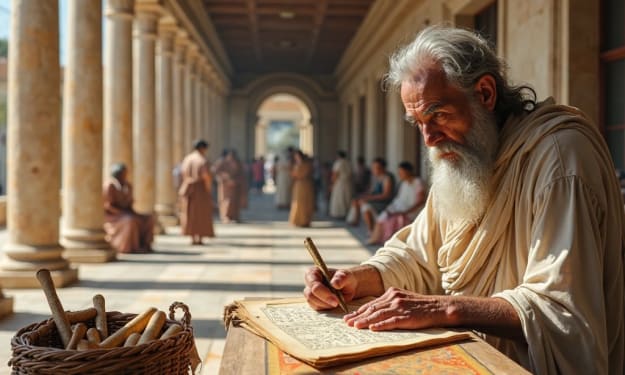
The ancient era was inhabited by numerous historians whose contributions significantly influenced our comprehension of history. One notable figure was Timaeus of Tauromenium (circa 350–260 BCE), a Greek historian from Sicily whose writings offered essential perspectives on the history of Sicily, Italy, and the broader Mediterranean region. Although much of his work has been lost over time, existing fragments and citations by later authors highlight him as a diligent scholar who documented the rise and decline of cities, the actions of tyrants, and the cultural interactions between Greeks and non-Greeks. This essay examines Timaeus' life, his principal works, his research methods, and his impact on ancient historiography. By reconstructing the remaining fragments and evaluating his influence on subsequent historians such as Polybius and Diodorus Siculus, we can better understand his role in shaping our knowledge of the ancient world.
By A Históriaabout a year ago in History
“Yartsa Gunbu: The Billion-Dollar Fungus That Rivals Gold”. AI-Generated.
The Green Fortune: The Narrative of the Most Costly Plant Ever Unearthed In a realm where assets such as gold, diamonds, and petroleum are esteemed for their significance, few would contemplate that an unassuming plant could compete with these in value. Nevertheless, throughout history, certain flora have become invaluableeither due to scarcity, therapeutic qualities, spiritual relevance, or considerable market demand. Among these, one distinguishes itself: Yartsa Gunbu, often described as the “Himalayan Viagra,” recognized as the most costly plant-derived substance on Earth by weight. This article investigates the history, cultural significance, economic aspects, and controversies surrounding this enigmatic fungus-plant hybrid that has fascinated emperors, herbalists, traffickers, and global markets for centuries. What is Yartsa Gunbu? Yartsa Gunbu (Ophiocordyceps sinensis) is a parasitic fungus that infiltrates ghost moth larvae entombed in alpine meadows. Over time, the fungus consumes and mummifies the insect from within, ultimately producing a blade-like stalk from its head that protrudes from the earth. Although scientifically classified as a fungus, its traditional application as a medicinal "plant" in Traditional Chinese Medicine (TCM) and Tibetan Medicine has led to its cultural and commercial classification alongside rare herbs like ginseng and saffron. Its moniker, “Himalayan Viagra,” derives from its alleged aphrodisiac and energy-enhancing attributes. However, its medicinal applications extend beyond sexual enhancementclaims include curing cancer and enhancing immunity, endurance, and lifespan. A History Rooted in Mountains and Myths Yartsa Gunbu has been harvested and esteemed for over a millennium throughout the high-altitude regions of Tibet, Nepal, Bhutan, and northern India. The earliest documented references appear in Tibetan literature around the 15th century, where it was lauded for enhancing vitality in both humans and animals. Its reputation expanded significantly during the Ming and Qing dynasties in China, where emperors and affluent families sought it as a luxury remedy. By the 1700s, it had reached imperial courts in China and was believed to be so potent that it was reserved for emperors and warriors. In the 20th century, as China opened to international markets and traditional medicine re-emerged as a luxury, the demand for Yartsa Gunbu soared. By the 2000s, it emerged as one of the most profitable commodities obtained from the Himalayas. The Cost of Nature’s Gold So just how costly is Yartsa Gunbu? Its worth fluctuates based on quality, size, and freshness, but at its pinnacle: Top-tier specimens commanded over $140,000 per kilogram. Even mid-tier variants fetched $20,000–$40,000 per kilogram. In comparison, that is 3–4 times the value of gold by weight. Harvested within a brief window each spring, locals risk their lives ascending to altitudes exceeding 4,000 meters to extract it from frozen soil. Entire Himalayan communities rely on the annual harvest for sustenance, with some families earning year-round incomes from just a few weeks of collection. Its rarity, the limited harvesting period, and soaring demand in China and Southeast Asia all contribute to its astronomical value. Cultural and Medicinal Importance To traditional medicine practitioners, Yartsa Gunbu is regarded as a “valuable warming tonic”, believed to balance the body’s energy and enhance life force. It is prescribed for: Chronic exhaustion Sexual impairment Respiratory issues Hepatic and renal ailments Immunodeficiency conditions While contemporary science often questions many of these assertions, recent studies have validated antioxidant, antimicrobial, and anti-inflammatory characteristics, and its chemical constituents (like cordycepin) exhibit promise in oncological treatment. In China, it is also regarded as a representation of prestige and healthcommonly bestowed during commercial transactions and diplomatic interactions. Environmental and Ethical Issues With value arises consequence. The increase in demand has resulted in: Overexploitation: Numerous areas report diminishing outputs, jeopardizing both the fungus and the ecological system. Illicit trade: Its worth incites smuggling and corruption. Certain Himalayan territories now necessitate permits and impose quotas. Violence and discord: In Nepal and Tibet, harvest seasons have sparked territorial conflicts, even homicides among gatherers. Fraud: Imitations or chemically enhanced variants inundate markets, endangering consumers. In response, governments and NGOs have initiated programs for the sustainable harvesting and cultivation of the fungus, although cultivation has proven to be exceptionally challenging due to its intricate life cycle. The Future of the Priciest Plant Notwithstanding its mythical reputation, Yartsa Gunbu may be endangered by climate change, which is modifying the fragile alpine habitats it requires to prosper. Coupled with overharvesting, its long-term existence in nature is dubious. Simultaneously, researchers are striving to cultivate Cordyceps artificially in laboratories, which may eventually provide a sustainable substitute, although present lab-cultivated variants lack the prestige and potency associated with wild specimens. Nonetheless, to date, no plant or natural material commands the same worth per gram as wild Yartsa Gunbu. Conclusion The narrative of Yartsa Gunbu serves as a compelling reminder of the interplay between nature, tradition, and economics. From elevated terrains to royal estates and high-end medical centers, this diminutive fungus-plant hybrid has influenced lives and landscapes. It remains the globe's most costly plant, not due to its appearance, but because of its ancient heritage, spiritual significance, and contemporary market fascination. As humanity continues to seek wonders in nature, the value of such rare, enigmatic plants is likely to escalate.
By Say the truth about a year ago in History
Biography of John Logie Baird the world's first mechanical television system
John Logie Baird FRSE ( 13 August 1888 – 14 June 1946) was a Scottish inventor, electrical engineer, and innovator who demonstrated the world's first mechanical television system on 26 January 1926. He went on to invent the first publicly demonstrated colour television system and the first viable purely electronic colour television picture tube.
By Favour Nyimbiliabout a year ago in History
"Flor de la Mar: The Billion-Dollar Shipwreck of the Malacca Conquest"
The Flor de la Mar (1511): The Lost Wealth of the Malacca Conquested In the early 16th century, amid Portugal’s assertive expansion across Asia, one vessel epitomized the immense fortune and danger of European conquest: the Flor de la Mar. Constructed as a Portuguese carrack and utilized in Asia during the golden period of maritime exploration, the Flor de la Mar was reputed to be transporting one of the largest fortunes ever extracted in historyyet it vanished eternally in the Strait of Malacca. This narrative recounts the 1511 conquest of Malacca, the extraordinary wealth appropriated from the Malacca Sultanate, and the manner in which it all plunged into the depths aboard the ill-fated Flor de la Mar. Origins of the Ship The Flor de la Mar, translating to “Flower of the Sea,” was built in 1502 in Lisbon. It was one of the most substantial and technologically advanced carracks of its era, exceeding 400 tons in weight and heavily armed for both cargo transport and combat. Initially employed for the India RunPortugal’s route between Lisbon and Goathe ship faced a troubled past, including leaking problems that rendered it perilous in turbulent waters. Regardless of these shortcomings, it persistently served the Portuguese Empire, ultimately becoming Admiral Afonso de Albuquerque’s flagship during Portugal’s expansion to the East. The Conquest of Malacca In 1511, Portugal sought to control the Strait of Malacca, a crucial trade passage between the Indian Ocean and East Asia. At that period, Malacca (modern-day Melaka in Malaysia) was a wealthy, cosmopolitan metropolis and the heart of the Sultanate of Malaccaa flourishing Muslim kingdom overseeing the spice and goods trade from China, India, and the Indonesian archipelago.
By Say the truth about a year ago in History
"The Vanished Galleon: The Mysterious Fate of San Miguel (1519)" . AI-Generated.
San Miguel (1519): The Spanish Galleon That Vanished Into the Depths of the Bahamas During the prosperous era of Spanish exploration, the Caribbean seas served as both thoroughfares to immense wealth and cemeteries for those who dared to confront their wrath. Among the numerous vessels lost to history, few are as enigmatic and captivating as the San Miguel, a treasure-laden Spanish galleon that disappeared in 1519 while traversing the perilous waters near the Bahamas. As the Spanish Empire expanded swiftly across the Americas, galleons such as the San Miguel played a vital role in transporting newly acquired wealth particularly gold, silver, and precious gemstones back to the royal coffers in Europe. However, in an era lacking precise maps, hurricane forecasts, or secure ports, each voyage bore significant risk. The destiny of the San Miguel remains one of the most enduring and intriguing shipwreck enigmas in the Western Hemisphere. The Era of Empire and Exploration The early 16th century signified the commencement of Spain’s worldwide maritime supremacy. Following Christopher Columbus's 1492 expedition, Spanish conquistadors and navigators rapidly expanded through the Caribbean and into the mainland of Central and South America. With conquest came extraordinary wealth gold from Aztec temples, silver from Andean mines, and pearls from Caribbean ocean floors. To oversee this influx of riches, Spain established the flota system, fleets of heavily laden vessels that would sail back to Europe. The San Miguel was one such vessel, part of the initial convoys journeying from the New World to the Old, long before formal naval escort systems were established. The Journey of the San Miguel Constructed in Cuba around 1518 and commissioned for the Spanish Crown, the San Miguel was a mid-sized galleon designed to carry substantial cargo and endure extensive ocean voyages. It was equipped with cannons to defend against pirates and indigenous resistance, manned by an experienced crew of sailors, soldiers, and royal officials. In early 1519, after loading a cargo of gold bars, silver ingots, pearls, and emeralds likely procured from Spanish outposts in Hispaniola, Cuba, and the Yucatán the San Miguel set sail for Seville, Spain. Her last recorded stop was somewhere near the northern Bahamas. Then, she vanished. The Disappearance The particulars of the San Miguel’s final voyage are vague at best. Spanish naval records confirm her departure but make no reference to her ever reaching Europe. No distress signals if any were feasible were received. No crew or cargo washed ashore. She simply disappeared into the abyss. What likely transpired with the San Miguel was a combination of adverse weather, navigational errors, and perilous reefs. The Bahamas, while picturesque, are encircled by shallow shoals and coral formations that can tear apart the hull of any vessel. Moreover, the hurricane season in the Caribbean, particularly from August to October, posed lethal threats to wooden ships. A sudden storm or a fierce tropical cyclone could have sent the San Miguel to the depths in mere minutes. Treasure and Search Efforts Throughout the centuries, numerous treasure seekers, historians, and explorers have endeavored to locate the wreck of the San Miguel. Speculation regarding her remarkable cargo has motivated both hobbyist divers and professional recovery teams to journey to the Bahamas. According to historical maritime records and colonial documentation, it is projected that the San Miguel could have transported treasure valued between $100 million and $500 million in contemporary currency potentially more if emeralds or sacred artifacts were aboard. Some individuals assert they have discovered items possibly associated with the San Miguel, such as Spanish coins and ballast stones; however, no officially verified recovery has ever occurred. The wreck remains elusive, hidden beneath coral-encrusted sands. A Symbol of Lost Glory The San Miguel represents more than merely a missing vessel. It embodies the dangers of colonial avarice, the vulnerability of human aspiration against the might of nature, and the persistent fascination of nautical enigma. Her disappearance constituted one of the earliest documented treasure ship losses in the New World, a trend that would recur throughout the 16th and 17th centuries as Spain dispatched thousands of vessels across the Atlantic, many of which never returned. Numerous missing ships contributed to the myth of “lost fleets,” inspiring narratives of phantom ships, pirate curses, and untapped fortunes still resting undiscovered beneath the waves. Conclusion More than 500 years following her vanishing, the San Miguel remains an enigma interred in time and tide. Whether she lies fragmented on the ocean floor near the Bahamas or was dispersed by storms beyond recognition, her narrative persists in maritime tradition. For historians, her disappearance serves as a cautionary account of the ambitions and risks of the era. For treasure hunters, it represents an undeniable allure a submerged time capsule filled with the aspirations of empire and conquest, still waiting to be unearthed. Until the sea reveals its secret, the legend of the San Miguel will persist, haunting the depths.
By Say the truth about a year ago in History
The Boy Who Painted the War in Color
Somewhere in the forgotten attics of Europe, hidden between faded letters and crumbling photographs, there are whispers of a boy who painted the war — not in black and white, like the newspapers showed — but in wild, searing color.
By Muhammad Sabeelabout a year ago in History
"USS Cyclops: The Greatest Sea Mystery in U.S. Naval History"
Vanished Without a Trace: The Enigmatic Disappearance of the USS Cyclops (1918) Within the extensive chronicles of naval history, few vanishings are as perplexing and unsettling as that of the USS Cyclops, a U. S. Navy collier that disappeared in 1918 during World War I. With 306 crew and passengers on board, it signifies the largest non-combat loss of life in U. S. Navy history. Disappearing without a distress call, debris, or survivors, the USS Cyclops has become an emblem of wartime enigma and a significant component of Bermuda Triangle folklore. Over a century later, the inquiries pertaining to her destiny remain unresolved. The USS Cyclops: A Colossus of Its Era The USS Cyclops (AC-4) was launched in 1910 and commissioned into the U. S. Navy in 1917. She was one of four Proteus-class colliers, constructed to transport bulk coal and subsequently manganese ore essential for wartime steel production. With a length of 542 feet, a beam of 65 feet, and a cargo capacity surpassing 12,000 tons, the Cyclops was among the Navy’s most substantial fuel transport vessels of the era. She was sluggish but robust, a logistical workhorse rather than a combatant. During World War I, she was assigned to convey coal and ore to support American and Allied wartime efforts. However, it was during a routine journey that her legacy would be enshrouded in enigma. The Final Voyage In March 1918, the USS Cyclops departed Salvador, Brazil, laden with 10,800 tons of manganese ore and headed for Baltimore, Maryland. Prior to her final leg, she made a stop in Barbados for provisions and inspection. On March 4, 1918, she departed Barbados and was never seen again. No SOS signal. No wreckage. No survivors. Just silence. She was declared missing, presumed lost with 306 individuals on board. Theories Behind the Disappearance 1. Structural Failure The Cyclops was heavily laden with manganese ore, which is dense and liable to shift in turbulent seas. Some experts theorize that the cargo may have shifted during a storm, causing the vessel to overturn. Reports indicate that she experienced engine difficulties prior to departure and potentially had a compromised hull any of which could have contributed to a catastrophic failure in tumultuous waters. 2. Enemy Attack World War I was at its peak, with German U-boats actively operating in the Atlantic. Some speculated that the ship may have been torpedoed by a submarine. However, no German U-boat reported engaging the Cyclops, nor did Germany ever assume responsibility. Moreover, a sudden assault would likely have left debris yet none was discovered. 3. Sabotage or Mutiny One of the more captivating theories pertains to her captain, George W. Worley. Born Johann Frederick Wichmann in Germany, Worley was regarded as eccentric and bore a controversial reputation. Certain crew members complained of severe treatment, and he purportedly wore slippers and a revolver on deck. Rumors circulated that he was sympathetic to Germany and might have sabotaged the vessel or engaged in malevolent conduct yet no evidence has ever substantiated such claims. 4. The Bermuda Triangle The USS Cyclops disappeared in what would eventually be referred to as the Bermuda Triangle, an area of the western Atlantic notorious for inexplicable vanishings. Although the phrase “Bermuda Triangle” would not be introduced until many years later, the Cyclops emerged as one of its earliest and most renowned “victims. ” Advocates of supernatural theories highlight the total absence of wreckage and radio distress signals as indicative of enigmatic forces. Skeptics contend that natural phenomena such as adverse weather conditions, strong currents, and human mistakes more accurately account for such disappearances. Legacy and Contemporary Investigations In spite of comprehensive Navy inquiries and subsequent research endeavors, the USS Cyclops has never been located. No evidence of her hull, cargo, or crew has appeared. In recent years, marine archaeologists have endeavored to identify shipwrecks in the Atlantic, yet none have conformed to the specifications of the Cyclops. She lingers as a phantom vessel, hidden somewhere in the tranquil, deep waters. The ship's three sister vesselsUSS Proteus, USS Nereus, and USS Jupiter (subsequently USS Langley)encountered similarly bizarre destinies, further igniting speculation. Both Proteus and Nereus also vanished in the Atlantic during World War II. Conclusion The vanishing of the USS Cyclops is not merely a naval calamity; it constitutes a historical riddle. Despite over a century of conjecture, the reality of what transpired that March in 1918 remains concealed beneath the ocean’s depths. Regardless of whether the cause was mechanical failure, hostile engagement, or natural disaster, the destiny of the Cyclops and her 306 souls serves as a poignant reminder of the perils of the seaand the persistent enigmas of wartime history. Until her wreck is discovered, the USS Cyclops will endure as one of America’s most significant maritime mysteries.
By Say the truth about a year ago in History
The Unbelievable WWII Story You’ve Never Heard
Picture this: a lone fisherman, bobbing on the choppy Atlantic waves, scanning the murky depths for a shimmer of sardines. It’s April 30, 1943, and José Antonio Rey María is out doing what he does best-spotting fish for his tiny village of Punta Umbría, Spain. But today, something’s off. The water’s rough, the fish are nowhere to be found, and José’s starting to wonder if he’s wasted his morning. Then, far out on the horizon, he spots… something. A lump, floating on the surface. At first, he thinks it’s a dead animal. But as he rows closer, his stomach twists. That’s no animal. It’s a man. And he’s very, very dead.
By KWAO LEARNER WINFREDabout a year ago in History
This Abandoned Pennsylvania Town is One of the Most Contaminated in the State
Still, at one point, it was an up-and-coming coal mining town located in Columbia County, Pa. Centralia was incorporated in 1866 and founded by Jonathan Faust, and the principal employer within the community was coal mining.
By sara burdickabout a year ago in History