Events
"The Siege of Troy: Where Legend and History Collide"
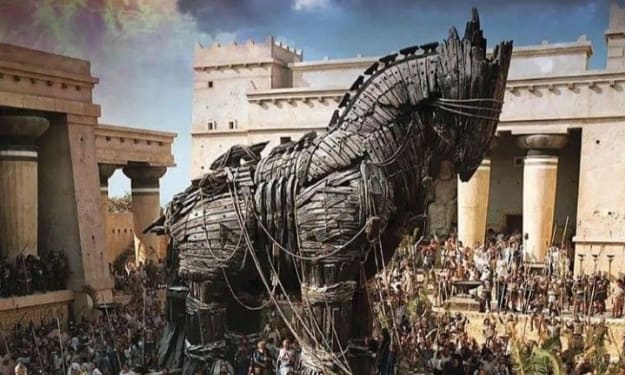
The Conflict of Troy remains one of the most distinguished military occurrences in both historical and literary heritage. Enshrined by Homer’s Iliad, the conflictthought to have transpired in the 12th or 13th century BCEhas entranced poets, historians, archaeologists, and readers for millennia. While the precise veracity of the occurrences is clouded by legend, substantial archaeological and textual proof suggests that a significant confrontation did happen in the vicinity of ancient Troy, located in what is now northwestern Turkey. The Legendary Tale In Homer’s account, the Trojan War commenced when Paris, a prince of Troy, kidnapped (or eloped with) Helen, the spouse of Menelaus, king of Sparta. In reprisal, Menelaus, along with his brother Agamemnon and other Greek leaders such as Odysseus, Achilles, Ajax, and Nestor, assembled a coalition fleet of a thousand ships to besiege Troy. For a decade, the Greeks camped outside the city’s fortifications, as a fierce and dramatic war ensued. Significant incidents included the dispute between Achilles and Agamemnon, the demise of Hector, and ultimately, the conquest of Troy through the cunning use of the Trojan Horse. Although these occurrences present a vivid storyline, they are mainly regarded as mythological embellishments. Nevertheless, scholars propose they may be grounded in a kernel of reality, symbolizing an authentic historical conflict that was subsequently mythologized by Greek poets. Historical and Archaeological Findings The site believed to be ancient Troy was uncovered by Heinrich Schliemann in the 19th century near the contemporary town of Hisarlik in Turkey. Excavations uncovered the remnants of several ancient cities constructed atop one another, dating back as far as 3000 BCE. One layer, designated as Troy VI or VIIa, exhibits evidence of destruction around 1250 BCEa timeframe that corresponds with the projected period of the Trojan War. Moreover, Hittite documentation mentions a city referred to as “Wilusa,” which many scholars associate with “Ilios,” another designation for Troy. The Hittites also allude to a figure named “Alaksandu,” potentially connected to Paris (Alexander), indicating possible diplomatic or military engagements between the Mycenaeans and the city of Troy. Political Landscape and Incentives Historically, the conflict may have been less about a romantic abduction and more about authority, trade, and dominion over strategic maritime routes. Troy’s strategic placement near the Dardanellesa crucial nautical passagewould have rendered it a valuable and contested city for ancient realms dependent on commerce with the East. The Mycenaean Greeks, a formidable civilization during the late Bronze Age, may have aimed to assert control over this region. Hostilities with a rival Anatolian power like Troy could have arisen from commercial competition, piracy, or regional alliances. In this regard, the war might reflect a far more pragmatic geopolitical struggle than the myth implies.
By Say the truth about a year ago in History
"The Few Who Conquered: History’s Greatest Victory with the Smallest Army"
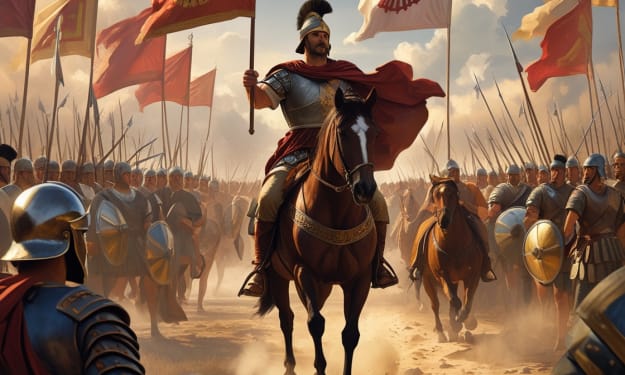
The Ascension of the Macedonian Empire: From Margins to Dominance The Macedonian Empire, one of the most formidable entities of the ancient era, emerged from the rugged, mountainous landscape of northern Greece to command a significant portion of the known world by the 4th century BCE. While it resided on the outskirts of classical Greek civilization for centuries, the aspirations of two crucial monarchsPhilip II and his progeny, Alexander the Greattransformed Macedonia from a divided kingdom into an empire extending from the Adriatic Sea to the Indus River. This article examines the intricate and impactful ascent of the Macedonian Empire, scrutinizing its political underpinnings, military advancements, and cultural influence. The Early Kingdom Macedonia was historically perceived by southern Greek city-states as a semi-barbaric territory, culturally and politically distinct from polities such as Athens and Sparta. The Macedonian aristocracy traced their heritage to the Argead dynasty, believed to descend from Heracles. Their political organization was less sophisticated than the democratic or oligarchic systems of the south, with authority concentrated in the hands of warrior-kings who governed over tribal regions. In the early 5th century BCE, Macedonia was a minor entity, often ensnared between conflicting Greek states and Persian interests. Nevertheless, its populace was resilient, adept in horseback riding, and proficient in guerrilla tactics. In spite of internal discord and external pressures from neighboring Illyrians, Thracians, and Greeks, the foundations for unity and expansion were being established.
By Say the truth about a year ago in History
The Calgary General Hospital Implosion:
When I think of a demolition project, I think of new beginnings. After all, my work shows me all kinds of people in all kinds of situations: people who are developing their homes to welcome a new family member or care for an aging member of family, or empty nesters looking to refresh their home into what they’d always hoped for. Sometimes it’s demolishing one decrepit building in favor of building a space that can house several families.
By Autumn Stewabout a year ago in History
PAKISTAN INDIA WAR
As of April 30, 2025, India-Pakistan relations have become extremely strained following a deadly terror attack in Indian-occupied Kashmir. On April 22, a terrorist attack on tourists along Pahalgam killed 26, the majority of whom were Hindu civilians. The Resistance Front, a Pakistan-supported organization associated with the Lashkar-e-Taiba, claimed responsibility. India accused Pakistan of supporting the attackers, which is not accepted by Islamabad.
By Sayma Azadabout a year ago in History
The Utopian Dream: A Future Shaped by Innovation. AI-Generated.
## **The Utopian Dream: A Future Shaped by Innovation** In the year 2150, humanity had transcended the problems that once seemed insurmountable. Poverty, war, and hunger were distant memories. The world had united under a single banner of progress and innovation. This was the era of the *New Dawn*—an era where technology had woven itself into every fabric of life, eliminating the inefficiencies of the past.
By MD Abdur Razzakabout a year ago in History
Match-Fixing in IPL History: Scandals That Shook the League
The Indian Premier League (IPL) has revolutionized cricket with its glitz, glamour, and high-stakes competition. Yet, behind the flashing lights and roaring crowds, there have been darker moments — most notably, match-fixing and spot-fixing scandals that tainted the league's integrity.
By BatAndBootsabout a year ago in History
Trump rallies supporters in Michigan to mark 100 days in office
**Trump Rallies Supporters in Michigan to Mark 100 Days in Office** *Washington Township, MI — April 29, 2017* President Donald Trump marked his 100th day in office with a spirited rally in Washington Township, Michigan, on Saturday evening. Trump decided not to attend the traditional White House Correspondents' Dinner in Washington, D.C. instead of interacting directly with his supporters in a state that was crucial to his victory in the 2016 election. **Celebrating Early Achievements**
By GLOBAL NEWSabout a year ago in History
Trump rallies supporters in Michigan to mark 100 days in office
Introduction On April 29, 2025, President Donald Trump held a rally in Warren, Michigan, to commemorate the 100th day of his second term in office. The event, held at the Macomb County Community College Sports Expo Center, was a major political showcase, gathering thousands of enthusiastic supporters. This rally marked a significant moment in Trump's second term, as he used the occasion to highlight his administration’s achievements, energize his base, and set the tone for the upcoming 2026 midterm elections.
By Mahmodul hassan mojahidabout a year ago in History
Live Updates: Canada's Prime Minister Mark Carney Wins a Second Term on an Anti-Trump Platform.
Here’s the latest. Prime Minister Mark Carney of Canada won a new term on Monday night, the national broadcaster CBC/Radio Canada projected, a remarkable turnaround for his Liberal Party, owed in large part to President Trump’s aggressive stance toward the country.
By MD IMRAN KHANabout a year ago in History
Thunderbolts* First Reviews: A Breath of Fresh Air for the MCU
Critics say it's a welcome return to form for the franchise, with thoughtfully fleshed out characters, spectacular visuals, engaging action sequences, and fantastic performances from Florence Pugh and Lewis Pullman in particular.
By MD IMRAN KHANabout a year ago in History
"From Highlands to Hegemony: The Rise of the Macedonian Empire"
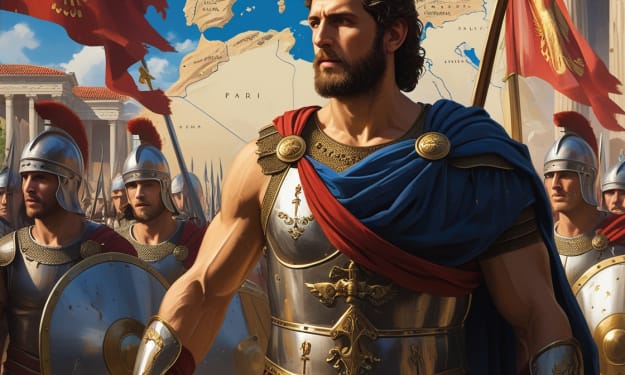
The Emergence of the Macedonian Empire: From Margins to Dominance The Macedonian Empire, one of the most formidable powers of the ancient era, ascended from the rugged, mountainous regions of northern Greece to dominate a significant portion of the known world by the 4th century BCE. Although it existed on the fringes of classical Greek civilization for centuries, the aspirations of two critical monarchsPhilip II and his son, Alexander the Greattransformed Macedonia from a fragmented realm into an empire that extended from the Adriatic Sea to the Indus River. This article examines the intricate and remarkable ascent of the Macedonian Empire, analyzing its political foundations, military advancements, and cultural influence. The Early Kingdom Macedonia was often regarded by southern Greek city-states as a semi-barbaric territory, culturally and politically distinct from the likes of Athens and Sparta. The Macedonian aristocracy traced their ancestry to the Argead dynasty, believed to be descendants of Heracles. Their political framework was less evolved than the democratic or oligarchic systems of the south, with authority concentrated in the hands of warrior-kings who governed over tribal domains. In the early 5th century BCE, Macedonia was a minor power, frequently caught between conflicting Greek states and Persian interests. However, its populace was resilient, proficient in equestrian skills, and adept in irregular warfare. Despite internal discord and pressures from neighboring Illyrians, Thracians, and Greeks, the foundation for unity and expansion was being fortified. Philip II: Architect of Empire The genuine ascent of Macedonia commenced with the rise of Philip II in 359 BCE. A brilliant military tactician and astute diplomat, Philip altered Macedonia’s fortunes in merely two decades. He began by securing his borders and consolidating power domestically. Philip restructured the military, creating the renowned Macedonian phalanx, which utilized longer spears (sarissas) and tighter formations than the conventional Greek hoplite system. This innovation provided his forces a considerable advantage on the battlefield. Philip also invested in siege technologies, cavalry units, and logistical organization, ensuring that Macedonia possessed one of the most modern and efficient militaries in the Greek realm. Diplomatically, he pitted the Greek city-states against one another, intervening when it benefited his interests, employing both marital alliances and force to expand Macedonian influence. By 338 BCE, Philip decisively vanquished a coalition of Greek city-states at the Battle of Chaeronea, establishing Macedonian supremacy over Greece. He founded the Corinthian League, appointing himself as the commander-in-chief, to unite the Greeks in a campaign against their longstanding adversarythe Persian Empire. However, before this campaign could commence, Philip was assassinated in 336 BCE under enigmatic circumstances, bequeathing the throne to his 20-year-old son, Alexander III. Alexander the Great: Expansion and Conquest Alexander inherited a formidable kingdom, a trained military, and a vision of conquest. He swiftly asserted authority, quelling revolts in Greece and eliminating rivals to the throne. In 334 BCE, he initiated his legendary campaign against Persia. Alexander's military brilliance and charisma allowed him to achieve a succession of remarkable victories against significantly larger Persian forces. Notable confrontations included Granicus (334 BCE), Issus (333 BCE), and Gaugamela (331 BCE). Following the conquest of Persepolis, the Persian capital, Alexander adopted the title of Shahanshah (King of Kings), effectively concluding the Achaemenid Empire. However, Alexander’s aspirations did not cease there. He advanced further east, traversing the challenging landscape of Central Asia, ultimately arriving in India. At the Battle of the Hydaspes in 326 BCE, he overcame King Porus, a formidable local monarch, signifying the easternmost extension of the Macedonian Empire. Despite his military triumphs, Alexander faced difficulties in integrating diverse cultures and overseeing the extensive territories he had acquired. His initiatives to amalgamate Greek and Persian customssuch as promoting intermarriage and adopting Persian attirecreated discontent among his Macedonian commanders. In 323 BCE, Alexander passed away unexpectedly in Babylon, likely due to fever, poisoning, or excessive strain. He was merely 32 years old. Legacy and Impact The Macedonian Empire did not remain intact following Alexander's demise. His commandersreferred to as the Diadochipartitioned the empire into several Hellenistic kingdoms, including the Seleucid Empire in Persia, the Ptolemaic Kingdom in Egypt, and the Antigonid dynasty in Macedonia. Notwithstanding the division, Alexander’s conquests left enduring cultural repercussions. Greek emerged as the lingua franca across much of the Near East. Cities like Alexandria in Egypt evolved into hubs of education and culture. The Hellenistic era witnessed a flourishing of science, art, and philosophy, merging Greek and Eastern traditions. Conclusion The ascent of the Macedonian Empire narrates a tale of transformationfrom a marginalized kingdom to the center of one of history's most formidable empires. Under the leadership of Philip II and Alexander the Great, Macedonia capitalized on military advancement, strategic diplomacy, and relentless ambition to alter the ancient world. Although the empire itself was ephemeral, its cultural and political heritage influenced civilizations for centuries to follow.
By Say the truth about a year ago in History