Events
The Hidden Vaults of the Khmer Empire: Angkor’s Forgotten Gold
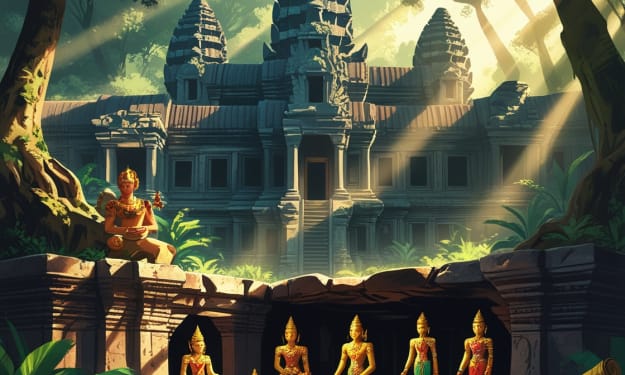
The Concealed Vaults of the Khmer Empire: Angkor's Neglected Gold Deep within the dense, humid rainforests of contemporary Cambodia resides one of the most remarkable architectural and cultural wonders of the ancient eraAngkor. Formerly the capital of the Khmer Empire, Angkor was an extensive urban center of temples, palaces, and intricate waterways, housing one of the most formidable and sophisticated civilizations in Southeast Asia from the 9th to the 15th centuries. While millions converge annually to appreciate the grandeur of Angkor Wat and its adjacent remnants, concealed beneath this cultural splendor is an intriguing enigma that has long fascinated explorers, archaeologists, and treasure seekers alikethe tale of Angkor's neglected gold. The Ascendancy of the Khmer Empire The Khmer Empire was established in 802 AD by King Jayavarman II, who proclaimed himself a "universal sovereign" and instituted a divine monarchy grounded in Hindu cosmology. Throughout the subsequent 600 years, the empire broadened its jurisdiction across what is now Cambodia, Thailand, Laos, and Vietnam. At its zenith, Angkor was not merely a capitalit was a megacity. Some academics estimate that over a million individuals may have resided in and around Angkor during its apex in the 12th century. The Khmer aristocracy invested substantially in monumental construction. Temples were erected not solely as sites of worship but as cosmic embodiments of Mount Meru, the focal point of the universe in Hindu and Buddhist lore. Angkor Wat, constructed during the rule of King Suryavarman II, is the most renowned of these edifices and remains the largest religious monument globally. However, the Khmer civilization was not merely spiritualit was affluent. The empire’s wealth stemmed from a combination of agriculture, commerce, and tributes from subordinate states. Gold, gemstones, silks, and spices flowed into Angkor, where monarchs commissioned opulent temples and filled royal treasuries with inconceivable riches. The Decline of Angkor and the Vanishing of the Wealth By the 15th century, the once-mighty Khmer Empire began to disintegrate. Prolonged conflicts with neighboring realms, internal insurrections, and environmental strainsparticularly the failure of Angkor’s advanced water management
By Say the truth about a year ago in History
Prime Minister Urges Society to Embrace Buddha's Teachings for Peace and Unity
In a heartfelt address on the occasion of Buddha Purnima 2025, Prime Minister [Name] called upon citizens to reflect deeply on the timeless teachings of Lord Buddha and adopt them as guiding principles in modern life. Speaking at a public event attended by spiritual leaders, scholars, and citizens from across the country, the Prime Minister emphasized that Buddha’s message of compassion, non-violence, and harmony is more relevant today than ever before.
By Abjol Hussain Laskarabout a year ago in History
The Ruby Hoard of Rangoon: Burma’s Forgotten Fortune
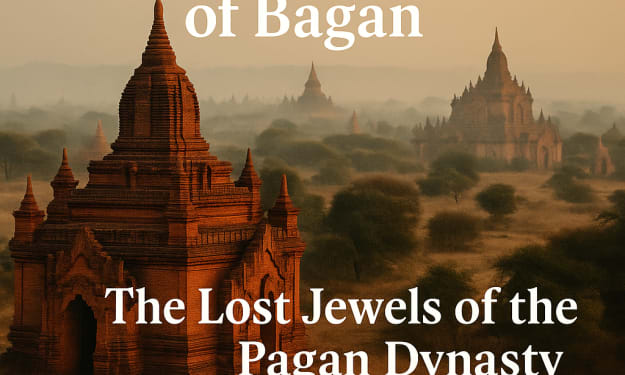
The Ruby Hoard of Bagan: The Vanished Gems of the Pagan Dynasty Amidst the enchanting temples and stupas of ancient Bagan in Myanmar exists the tale of a lost cache of rubiesgems so radiant that they rivaled the riches of empires. This article examines the history of the Pagan Dynasty, the legendary ruby treasury of King Anawrahta, and the ways in which conflict, colonial avarice, and the passage of time obscured one of Southeast Asia’s most remarkable lost treasures. The Ruby Hoard of Bagan: The Vanished Gems of the Pagan Dynasty In the parched plains of central Myanmar, where over 2,000 temples embellish the ancient terrain of Bagan, legend recounts a treasure trove that sparkled with crimson brilliancea repository of rubies belonging to the once-mighty Pagan Dynasty. Esteemed for their unparalleled beauty, Burmese rubies were deemed the most valuable in the ancient world, with Bagan at their core. Amidst the towering stupas and gilded pagodas, the narrative of the Ruby Hoard continues to intrigue treasure seekers and historians alike. The Ascendancy of the Pagan Dynasty The Pagan Dynasty ascended to prominence in the 9th century, reaching its zenith under King Anawrahta in the 11th century. Anawrahta unified Myanmar through conquest, diplomacy, and ecclesiastical reform, transforming Bagan into a pivotal center of Theravāda Buddhism. To affirm his sacred authority and affluence, he commissioned monumental temple constructions and was reputed to have accumulated vast wealthincluding a treasury filled with rubies, the most coveted gemstone in Burmese heritage. Burmese rubies were not only exquisite but also epitomized authority, heritage, and spiritual safeguarding. Monarchs adorned themselves with them during coronations, and warriors embedded them within their flesh, believing they conferred immortality in combat. According to local mythology, Anawrahta regarded the ruby treasury as a divine gift, concealed deep within a stupa and sealed by a royal curse: whoever disturbed it would precipitate a cycle of warfare, fire, and devastation. The Treasury Beneath the Temple One temple frequently linked to the ruby treasure is the Shwezigon Pagoda, erected by Anawrahta and his successor Kyansittha. Inscriptions from the 12th century reference "gem-laden chambers" sealed beneath its foundations, offered to the Buddha as a merit-making acta religious observance that ensured rebirth in a celestial realm. The royal vaults, if they exist, may have been concealed in one of these subterranean chambers. Throughout the centuries, earthquakes and invasions have damaged many of Bagan’s temples. Yet, despite thorough archaeological investigations, the ruby hoard remains undiscovered. Some assert it lies beneath collapsed stupas, while others contend that it was removed or pillaged during one of the kingdom’s numerous declines. Still, others believe it was a spiritual offering, never intended to be unearthed. Colonial Avarice and Despoilment When the British Empire incorporated Burma in the late 19th century, stories of the ruby treasure reemerged. British soldiers and adventurers, frequently masquerading as archaeologists, combed the temple complexes equipped with maps and implements. In 1886, a British officer allegedly disappeared while investigating an underground passage beneath a deserted monastery. His diary, subsequently discovered in Rangoon, detailed a “chamber of crimson radiance” that corresponded with the myths of the ruby reservoir. Despite years of fascination, no conclusive finding was achieved. Nevertheless, colonial exploitation of Burmese relics did transpire on an extensive scale. Entire panels from pagodas, sculptures, and artifacts were transported to museums in London, Calcutta, and other locations. Whether any rubies were taken remains uncertain, although speculations continue that private collectors in Europe may possess gems associated with Bagan’s vanished vault. Seismic Activity, Concealment, and Sacred Terrain One of the most significant obstacles in unearthing the ruby treasure is the sanctity of Bagan’s temples. Local monks, who serve as custodians of these locations, frequently prohibit or limit intrusive exploration. Many contend that disturbing the holiness of these revered places invites ill fortune. Furthermore, recurrent earthquakes in the region have transformed the landscape of temple sites, potentially collapsing or burying any chambers that may have once contained riches. In 2016, a quake with a magnitude of 6. 8 inflicted damage on over 400 structures, rekindling interest in what might be concealed beneath the debrisbut also advising against thoughtless excavation. A Legacy of Cultural Treasure Perhaps the most significant treasure of Bagan is not of rubies or gold, but of knowledge, history, and craftsmanship. The city’s frescoes, carvings, and inscriptions unveil a sophisticated civilization that amalgamated Indian, Mon, and local influences into a distinctive Buddhist culture. Nonetheless, the legend of the ruby treasure persists. Amateur explorers, mystics, and even Burmese military officials have discreetly continued their quest for evidence of the lost vault. Satellite imagery, ground-penetrating radar, and LIDAR mapping may eventually uncover concealed chambers beneath the centuries-old dust of Bagan. Whether reality or folklore, the narrative of the Ruby Hoard of Bagan serves as a reminder that history is interwoven with enigmaand occasionally, hidden beauty awaits rediscovery beneath the surface of sacred lands.
By Say the truth about a year ago in History
Boudica – The Warrior Queen Who Defied an Empire
art writing... In an era when women were barely allowed to speak, Boudica roared. She took up the sword not as a symbol of power, but of protection—for her daughters, for her tribe, for every soul crushed under the Roman boot. This makes her one of history’s most powerful examples of female leadership—ferocious, yet rooted in purpose. Across cultures and countries, Boudica’s story has come to mean different things. To some, she’s a freedom fighter. To others, she is a symbol of national identity, especially in Britain where she is often cited as a proto-nationalist figure. Feminists see in her a beacon of resistance against patriarchal systems. To historians, she represents the cost of imperial arrogance and the strength of indigenous resistance. Her name lives not just in books and memorials, but in the very soil where she once walked. Archaeological discoveries have revealed layers of burnt Roman settlements, traces of the very destruction she brought. Coins, weapons, and ruins bear silent witness to her fury. But Boudica’s memory continues to challenge the way we view resistance and authority. Her story isn’t just about a queen or a battle—it is about the timeless power of standing up when everything tells you to stay down. Her cry wasn’t only for vengeance—it was for dignity stolen, for voices silenced, for futures denied. And that is what makes her tale resonate with every generation that seeks truth and justice. Across the world, in places where people are still denied basic rights, Boudica’s defiance feels deeply personal. She may have lived two thousand years ago, but her courage breaks through time, reminding us that silence in the face of injustice is its own kind of defeat. Her actions asked a question that still lingers: What will you do when the powerful come for what is yours?
By GillanI Media about a year ago in History
Why Trump’s Kashmir Statement Gives Millions of Us a New Hope. AI-Generated.
artriting The Kashmir conflict has persisted for more than seventy-five years, leaving generations of Kashmiris trapped in a cycle of violence, political uncertainty, and broken promises. For those of us who call this land home, every news headline carries the potential to change our lives — or deepen our wounds.
By GillanI Media about a year ago in History
The Metaphor of the Japanese Ghost Whale. AI-Generated.
For centuries, whales have held a revered place in Japanese culture, providing sustenance and fuel to coastal communities. They were once seen as sacred beings—gifts from the sea—honored through ritual burials and prayers.
By ADIR SEGALabout a year ago in History
The Last Giants of America: Who Killed Them and Why the Silence Remains
Shadows of Forgotten Giants Across the vast plains, valleys, and mounds of North America, whispers of giants echo through forgotten legends, early settler accounts, and the dusty pages of 19th-century newspapers. These were not metaphorical giants, but literal beings, said to stand 7 to 12 feet tall, whose bones were allegedly unearthed in burial mounds, caves, and remote hills. Yet today, no such skeletons exist in public museums. The narrative of the American giants has vanished from mainstream history.
By The Secret History Of The Worldabout a year ago in History