Events
The Fragmented Kingdom of Axum: Ethiopia’s Overlooked Empire of Wealth and Prestige . AI-Generated.
The Fragmented Kingdom of Axum: Ethiopia’s Overlooked Empire of Wealth and Prestige Concealed in the highlands of contemporary Ethiopia lies the heritage of a once-formidable empire the Kingdom of Axum. Renowned for its monumental obelisks, architectural excellence, and robust trading networks, Axum served as a symbol of African influence and affluence for over 800 years. From the 1st to the 10th centuries CE, it matched the Roman, Persian, and Indian empires in cultural significance and commercial strength. However, today, the name Axum is murmured rather than celebrated, its golden era obscured by centuries of legend, enigma, and shifting political landscapes. This article investigates the remarkable ascent and sorrowful fragmentation of the Axumite Kingdom, examining its lost treasures, neglected myths, and the lingering mysteries it has left behind. A Kingdom Founded on Wealth and Frankincense The Kingdom of Axum surfaced around the 1st century CE, strategically positioned near the Red Sea. Its capital, Axum, evolved into a cosmopolitan center owing to its access to both African and Arabian trade routes. It was in Axum’s markets that commodities from India, Persia, the Roman Empire, and Arabia were exchanged for ivory, frankincense, myrrh, and gold. Greek and Roman historians lauded Axum as one of the world’s four great powers. The Roman writer Mani even enumerated it alongside Rome, Persia, and China. Axumite currencyminted in gold, silver, and bronzebecame emblems of the empire’s vast wealth and the flow of international commerce. These coins, many inscribed with Christian crosses, also serve as evidence that Axum was among the first significant empires to officially embrace Christianity in the early 4th century, shortly after Armenia and Rome.
By Say the truth about a year ago in History
The Silver City of the Andes: The Rise and Fall of Potosí’s Forgotten Fortune
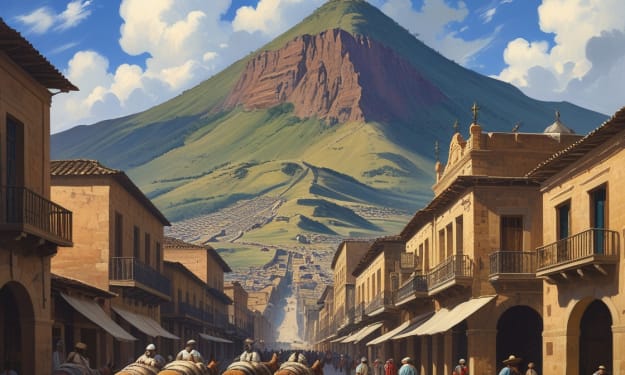
The Silver City of the Andes: The Ascendancy and Decline of Potosí’s Overlooked Wealth Nestled high in the Bolivian Andes, Potosí was once the most affluent city on the planet during the Spanish colonial period. Driven by the extraordinary silver riches of Cerro Rico (the "Rich Mountain"), Potosí supported the Spanish Empire and transformed global commerce, yet its affluence exacted a lethal toll. This article examines the narrative of how the silver from a single mountain sparked an economic upheaval, wreaked havoc on indigenous labor, and ultimately faded into insignificance as the veins ran dryleaving behind remnants, myths, and the specters of imperial avarice. Article (over 700 words): In the 16th century, as Europe grappled with conflicts, reform movements, and exploration, a singular discovery in the New World altered the equilibrium of global economies. It was the mountain referred to as Cerro Ricoliterally "Rich Mountain"rising above the Bolivian city of Potosí. Beneath its exterior lay a silver deposit so immense that it empowered the Spanish Empire for more than two centuries. Presently, Potosí is largely overlooked by the global community, but its trajectory of rise and decline constitutes one of the most striking tales of affluence, exploitation, and downfall in history. The narrative unfolds in 1545 when Spanish conquistadors, accompanied by Quechua-speaking locals, encountered silver ore glistening from the mountainside. Quickly recognizing its potential, they seized the territory in the name of the Spanish Crown. By 1572, Potosí had been officially founded and elevated to city status. What ensued was a silver boom of monumental proportions. Within mere decades, Potosí’s populace surged to over 160,000, rendering it one of the largest and most affluent cities in the world at that timeoutpacing even London and Paris. Grand churches, luxurious mansions, and intricate infrastructure arose, all built with funds sourced from the mines. European traders, Spanish nobles, indigenous laborers, and African slaves all streamed into the city, aspiring to claim a share of the silver bounty. At the core of this operation was the mita systema ruthless labor conscription initially utilized by the Inca and later adopted by the Spanish. Thousands of indigenous men from throughout the Andes were compelled to labor under perilous conditions within the labyrinthine tunnels of Cerro Rico. They toiled under extreme circumstances, often lacking adequate sustenance, hydration, or ventilation, with many never emerging alive. Historians estimate that more than 8 million indigenous individuals and African slaves perished in the mines of Potosí over three centuries. The silver extracted from Potosí not only enriched the Spanish Empire; it transformed the world. Coins minted at the Royal Mint in Potosí became the foundation of international trade. These coinsemblazoned with the famed “PTSI” mint insigniaflowed to Asia via the Manila Galleons, circulated throughout Europe, and even arrived in Africa. Potosí silver financed wars, expanded empires, and ultimately catalyzed the emergence of capitalism as it is understood today. However, such lavish affluence was accompanied by unavoidable deterioration. By the 18th century, the most lucrative veins of silver were depleted. The Spanish Crown's mismanagement and excessive dependence on American silver resulted in inflation and economic stagnation. Corruption pervaded the colony. The once-flourishing city began to decline as miners and traders relocated. Uprisings and conflicts further destabilized the area, and by the early 19th century, Bolivia's liberation from Spain left Potosí a mere remnant of its former prominence.
By Say the truth about a year ago in History
The Final Enigma: The Mysterious Death of Alexander the Great
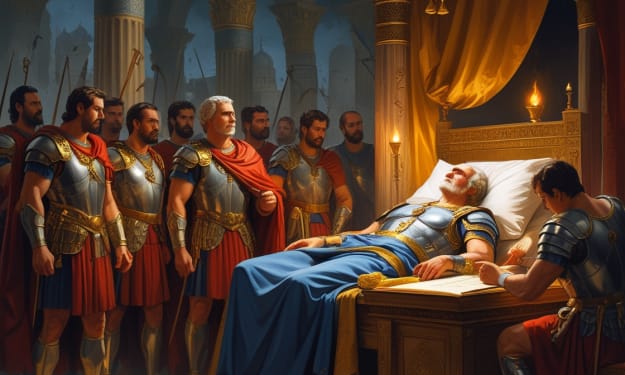
The Ultimate Puzzle: Deciphering the Enigmatic Demise of Alexander the Great The passing of Alexander the Great in 323 BCE persists as one of the most captivating historical conundrums. Was it due to poison, illness, or a more sinister cause? This article investigates the final days of the iconic conqueror, scrutinizing ancient narratives and contemporary hypotheses to reveal the reality behind one of history's most profound puzzles. The Ultimate Puzzle: Deciphering the Enigmatic Demise of Alexander the Great In June 323 BCE, within the palace of Nebuchadnezzar II in Babylon, Alexander the Great one of the most formidable and mysterious figures in human history succumbed at the tender age of 32. By that period, he had subdued most of the known world, from Greece to the Indus Valley, creating an empire that extended over 3,000 miles. His demise, however, initiated a tumult of confusion, power conflicts, and ultimately the disintegration of his empire. Yet the question that has confounded historians for more than two millennia remains: what were the circumstances surrounding Alexander the Great's death? The abrupt and enigmatic nature of Alexander's demise, compounded by conflicting historical narratives, has led to unending speculation. Was it the consequence of poison, illness, exhaustion, or a mixture of all three? Let us investigate the concluding days of Alexander's life, probing the various hypotheses regarding his premature passing. The Final Days in Babylon As per the ancient historian Plutarch, Alexander had returned to Babylon following his extensive campaigns in India. He was strategizing a new expedition this time targeting Arabia. During a feast celebrating the return of a dear friend, Alexander reportedly consumed a considerable quantity of wine and soon after developed a high fever. Over the span of several days, his health deteriorated. He ultimately lost his ability to articulate and succumbed after nearly two weeks of illness. Curiously, no observable wounds or external injuries were recorded. His generals and associates were perplexed. Furthermore, ancient authors such as Arrian, Diodorus, and Curtius Rufus present differing timelines and symptoms, further complicating the historical account. Hypothesis 1: Poison One of the earliest and most enduring theories posits that Alexander was murdered. After all, his ambitious disposition and unpredictable conquests rendered him both revered and feared even among his closest allies. This theory suggests that he was poisoned, potentially by political adversaries who were apprehensive of his future conquests or disapproved of his growing adoption of Persian customs.
By Say the truth about a year ago in History
The Night the Sodder Children Vanished
It was Christmas Eve, 1945, in Fayetteville, West Virginia. The Sodder family was celebrating together. George and Jennie Sodder had ten children, and their cozy house was filled with the sounds of laughter, excitement, and Christmas cheer. That night, five of the younger children — Maurice (14), Martha (12), Louis (9), Jennie (8), and Betty (5) — were allowed to stay up a little later to play with new toys. The rest of the family went to bed. Everything seemed normal, but what happened next would become one of America’s most haunting mysteries. --- 𝗔 𝗦𝘂𝗱𝗱𝗲𝗻 𝗙𝗶𝗿𝗲: 🔥 At around 1:00 a.m., Jennie Sodder was awakened by a loud sound on the roof. It was like something heavy hit it and then rolled off. She thought it was strange but went back to sleep. About thirty minutes later, she woke up again — this time to the smell of smoke. The house was on fire. Jennie quickly woke George. Together, they got four of their children out safely. But the five younger children who had stayed up late were missing. They had been sleeping upstairs. George tried to get to them, but everything seemed to go wrong: ● The ladder he always kept near the house was suddenly missing.
By Asad khan 313about a year ago in History
Edan Alexander , A Journey Through Darkness and Hope
The Long Journey of Edan Alexander Edan Alexander was born in Israel, in the city of Tel Aviv. But when he was a small boy, his family moved to the United States. He grew up in a quiet town called Tenafly in New Jersey. Edan was a kind and friendly boy. He loved playing sports, listening to music, and spending time with his family.
By Tahir khanabout a year ago in History
🐇When Napoleon Bonaparte Was Attacked by a Horde of Rabbits
When one thinks of Napoleon Bonaparte, certain images come to mind: thundering cannons at Austerlitz, imperial crowns, bold military strategies, and exiles on remote islands. But few people know that one of the strangest and most hilarious events in his storied life involved neither war nor revolution - but an ambush by thousands of rabbits. This little-known incident, often shared as an amusing historical anecdote, is completely true and serves as a bizarre reminder that even the greatest military minds can be outwitted - by fluff.
By History Seekerabout a year ago in History
The Hidden God of War: Unmasking Yahweh, the Forgotten Lord of the Skies
Yahweh, The God Of War In the dry winds of the ancient Levant, beneath the crumbled ruins of forgotten cities and among the fractured stone tablets buried beneath the sands, lingers the shadow of a god that few truly know. Today, billions invoke his name in prayer, see him as the father of creation, the sole and omnipotent divine being who shaped the universe. But this name, Yahweh, once belonged not to a universal creator, but to a jealous and fiery god of war, a desert storm deity born from the smoke of battle, molded in tribal warfare, and later crowned the king of a nation. His name was carved in blood long before it was etched into scripture.
By The Secret History Of The Worldabout a year ago in History
The Last Days of Bahadur Shah Zafar: The Forgotten Tragedy of the Last Mughal Emperor
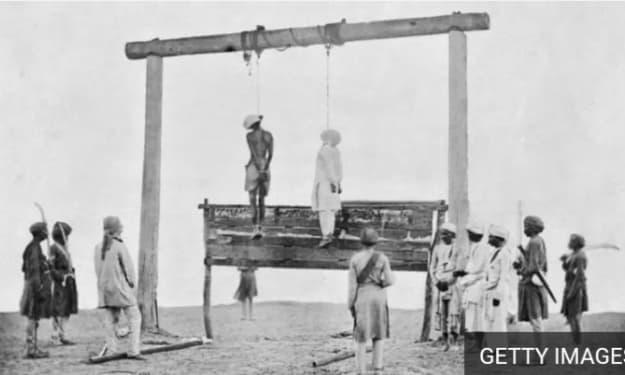
The 1857 'War of Independence': When Delhi Witnessed Death Dancing "I am neither the light of anyone’s eye, nor the solace of anyone’s heart, I am but a handful of dust, of no use to anyone." In today’s world, it is unimaginable for a common person to believe that the poet of these melancholic verses, the last Mughal Emperor Bahadur Shah Zafar, had once led the Indians in the first war of independence against the British in 1857. It was Monday, May 11, 1857, corresponding to 16th of Ramadan. At around 7 in the morning, Bahadur Shah Zafar was offering the Ishraq prayer in the portrait gallery near the river at the Red Fort. At that moment, he noticed smoke rising from the Toll House across the Yamuna River. Alarmed, he immediately sent his messenger to investigate and summoned his Prime Minister, Hakim Ahsanullah Khan, and Captain Douglas, who was in charge of the fort’s security. The messenger returned with troubling news: some Indian cavalrymen, dressed in British military uniforms and wielding naked swords, had crossed the bridge over the Yamuna. They looted and set fire to the toll house on the eastern bank. Upon hearing this, the Emperor ordered the gates of both the city and the fort to be shut. Rebels Seek Royal Blessing By 4 PM that day, the leader of the rebels sent a message requesting a meeting with the Emperor. The rebels assembled in the Diwan-e-Khas (Hall of Private Audience) and fired shots into the air with their guns and pistols. A prominent nobleman of Delhi, Abdul Latif, wrote in his diary on that day: "The Emperor was like a king in a game of chess after being put in check – powerless and trapped." After a long silence, Bahadur Shah Zafar spoke, saying, "Why is an old man like me being insulted in such a manner? What is the reason for this uproar? The sun of my life has already reached its dusk. These are the final days of my life. All I wish for now is solitude." Later, in his book "Two Nations: A Narrative", Charles Metcalfe wrote: "Hakim Ahsanullah Khan told the soldiers: ‘You have worked for the British and are used to regular pay. The Emperor has no treasury – how will he pay you?’" To this, the soldiers replied: "We will bring the wealth of the entire country to your treasury." Zafar responded, "I have no army, no weapons, and no money." The soldiers answered, "We need only your support. We will bring everything else ourselves." Charles notes: "For a moment, Bahadur Shah Zafar remained silent. His inability to make swift decisions was his greatest flaw. But that day, he did not hesitate. He agreed." He sat on a chair as the soldiers, one by one, bowed before him, and he laid his hand on their heads in acknowledgment. The rebels occupied various rooms in the fort, with some even setting up their bedding in the Diwan-e-Aam (Hall of Public Audience). The Silver Throne and New Coins The Emperor, unable to manage or control such a large army, found himself under their control instead. The next day, he donned his royal attire and ascended the silver throne. Coins were minted in his name, and a great cannon blast was heard in celebration. Why and How the Revolt Began The entire episode had started on May 10, 1857, in Meerut, when sepoys of the Bengal Lancers mutinied and marched toward Delhi. Renowned historian Rana Safvi, an expert on the events of 1857, explains: "New rifles had been introduced, and the cartridges had to be bitten open with the mouth. Rumors spread that the grease used in these cartridges was derived from cow and pig fat – offensive to both Hindus and Muslims. Muslims were reluctant due to pigs, and Hindus due to cows." She further elaborates: "There were other grievances as well – they were being sent to fight overseas, which, for Brahmins, meant loss of caste. Their promotions were also limited – Indian soldiers could not rise beyond the rank of Subedar. These frustrations simmered over time." Some called it a mutiny, others called it the First War of Independence. The People of Delhi Did Not Welcome the Rebels Initially, the people of Delhi did not warmly receive the rebels. In fact, some circles – including those close to Bahadur Shah – opposed them. It was said that the rebels disrespected the Emperor and disregarded court etiquette. The courtiers complained that they did not remove their shoes before entering the royal court and came armed before the Emperor. Historian Mehboob Faruqi, author of "Besieged 1857: Voices of Delhi", explains: "Yes, Delhi’s people were upset, but that doesn’t mean they didn’t want to fight the British. Everyone wanted to resist the British in their own way – but no one wanted forty armed men suddenly taking over their home." "Even during later freedom movements with Gandhi or Bhagat Singh, there were millions who didn’t want trouble at their doorstep or police raids on their homes. The same logic applies to 1857." Order Amidst Chaos It is often said that the events of 1857 brought great upheaval to Delhi. However, Faruqi argues that despite the turmoil, order remained largely intact. "People often claim there was chaos, no leadership, no structure. But in my book, I argue that this was not the case." "Naturally, when 70–80,000 soldiers flood into a city of 150,000, there will be disruption. If, today, 3 million troops entered modern Delhi, imagine the state of the city." "Still, what’s truly astonishing is that if the Commander-in-Chief told the police chief to arrest four soldiers for skipping duty – and those four were indeed caught, brought back, and apologized – that shows a certain discipline." "If you needed 400 beds at the front lines and they were delivered – someone ordered them, someone fetched them, someone paid. That’s logistical order. Even today, wars require not just soldiers, but porters, laborers, water carriers – and back then, too, the same was true." The British Were Killed By the morning of May 12, Delhi had been completely emptied of British control. However, a few British women had taken shelter in rooms near the palace kitchen. Despite the Emperor's opposition, the rebels killed them all. Rana Safvi remarks: "On the 11th and 12th, when the rebels attacked the British, many fled the city, while others were killed. Some women sought refuge in the fort . At that very place, out of enmity, they killed 56 people—most of them were women and children, although there were one or two men among them. According to him, “When Bahadur Shah Zafar was tried, the biggest charge against him was that he had them killed. However, if you read Zahir Dehlvi’s book, it becomes clear from eyewitnesses present in the fort during the 1857 rebellion that the king had repeatedly said: ‘No religion allows the killing of innocent people.’” When the British returned and began punishing the rebels, their grip started weakening, and the Englishmen who had fled Delhi began to return. Troops from Ambala turned the tide, and the British once again entered Delhi. “He was sitting. His long white beard reached down to his stomach. He was dressed in white clothes and wore a white turban. Behind him stood two orderlies, fanning him with fans made from peacock feathers. He didn’t utter a single word, his eyes fixed on the ground.” According to him, “Just three feet away from the king, on another cot, sat a British officer. On both sides stood British sentries with bayonets, ordered to kill him immediately if anyone tried to rescue the king.” Bahadur Shah Zafar was humiliated to such an extent that crowds of British people came just to see what a Mughal emperor looked like. Historian Mahmood Farooqui says, “After his arrest, Bahadur Shah Zafar was kept in a cell in the Red Fort. British tourists would come and, just like people visit the Red Fort today, they would go to his cell to see him—this is Bahadur Shah Zafar.” “For a man, for a king of India, to be in such a condition in Delhi—it's obvious that he spent the rest of his years in yearning for death. From there, he was sent to Rangoon, and around the same time, the king of Rangoon was brought to Maharashtra.” “Such was the British rule across the world that kings were being traded from one place to another. Bahadur Shah’s final days were tragic and painful. It was in this situation that he said: ‘How unfortunate is Zafar, for burial Not even two yards of land were found in the land of his beloved.’” “What more could have happened to him? In my opinion, everything had already happened to him during and after 1857. What could be worse than keeping a Timurid successor, the emperor of India, locked in a cell, while British women and children came to gawk at him and say: ‘Oh, so this was Bahadur Shah!’” The king died on November 7, 1862, in a prison-like house in Rangoon. Some British soldiers carried the body of the 87-year-old man to a grave dug within the premises. His funeral included only two sons and a cleric. No women were allowed to attend. When some people in the market heard whispers of this, they tried to join the funeral, but armed soldiers did not allow them to come close. Before burial, soldiers poured lime into the grave so the body would decompose quickly and mix with the soil. A week later, British Commissioner H.N. Davies wrote in a report sent to London: “Afterward, I visited the residence of the remaining royal prisoners. All were fine, and none seemed affected by the old man’s death. He died due to paralysis of the throat.” “He passed away at five in the morning. A bamboo fence has been erected around his grave. By the time the fence wears out, grass will have covered the ground, and no one will know that the last Mughal emperor is buried here.”
By Ikram Ullahabout a year ago in History
Cultural Exchange
Author © Jay Kantor Brief history of our little town: Spahn Ranch was the site where 50ish Western Movies were filmed (western themes were 'IT' then). The then enormously popular 'Roy Rogers' series had a big white horse 'Trigger' - statue of which is on the site at this time. The 'Spahn' Ranch was Globally known as it became the infamous "Manson-Family-Compound."
By Jay Kantorabout a year ago in History
Emeralds Beneath the Waves: The Untold Story of the Spanish Galleon Santa Margarita . AI-Generated.
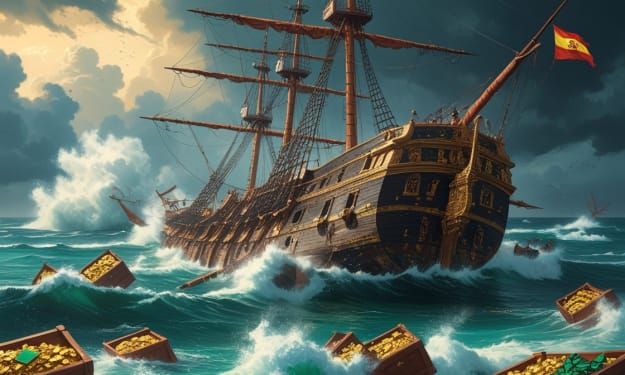
Emeralds Beneath the Waves: The Untold Narrative of the Spanish Galleon "Santa Margarita" Off the sun-kissed coastline of Florida, in the core of the Caribbean, resides a submerged tomb harboring centuries-old enigmasamong them, the lost Spanish galleon Santa Margarita. Sunk during a devastating hurricane in 1622, the Santa Margarita bore a cargo of such wealth that it would astonish the imagination: gold ingots, silver coins, Colombian emeralds, and treasures from throughout the extensive Spanish Empire. Although centuries have elapsed, the tale of the Santa Margaritaits calamity, its riches, and the enduring pursuit to recover its bountyremains one of the most captivating maritime legends globally. The Spanish Treasure Fleet In the early 17th century, the Spanish Empire depended significantly on treasure fleetsimmense armadas that conveyed wealth from its colonies in the Americas back to Spain. Gold, silver, emeralds, pearls, exquisite jewelry, and spices were routinely boarded onto these vessels after months of collection and taxation in ports across South and Central America. One of the most distinguished fleets was the 1622 Treasure Fleet, which included the Nuestra Señora de Atocha, the Santa Margarita, and several other ships. These vessels were brimming with wealth intended for the royal treasury of King Philip IV. However, destiny had alternative plans. The 1622 Hurricane and the Shipwreck On September 6, 1622, merely two days after departing from Havana, Cuba, the fleet was struck by a formidable hurricane near the Florida Straits. With minimal warning and no contemporary navigation, eight vessels were lost in the tempest. The Santa Margarita and her sister ship Atocha were battered against coral reefs near the Marquesas Keys and swiftly sank. The loss was disastrous. Over 500 lives were claimed by the tempest, and an estimated $2 billion worth of treasure in present-day value disappeared beneath the waves. While a few survivors clung to floating debris, the wealth of the New World now lay on the ocean floor. What Was Aboard the Santa Margarita? The Santa Margarita was not solely a military galleon but a treasure vessel. According to Spanish manifest documents and recovered artifacts, the ship was loaded with: Over 100,000 silver pesos (pieces of eight) Gold bars and disks, adorned with royal Spanish seals Colombian emeraldssome of the finest globally Religious artifacts, including chalices and crosses inlaid with gems Private treasures belonging to nobles and merchants traveling aboard This vast cargo was intended to bolster Spain’s struggling economy and ongoing conflicts in Europe. Its loss not only impaired Spanish pride but inflicted a significant blow to the empire’s financial stability. The Salvage AttemptsThen and Now Immediately following the calamity, the Spanish Crown initiated a salvage operation utilizing indigenous divers and rudimentary technology. While some gold and silver were retrieved from shallower wrecks, the deeper remnants of the Santa Margarita evaded their endeavors. For centuries, the ship's final resting spot remained concealedlost beneath shifting sands and coral beds. In the 20th century, the narrative of the 1622 fleet captivated the interest of treasure seekers. Spearheading the contemporary quest was Mel Fisher, a determined American salvager who dedicated 16 years to searching for the fleet’s remnants. In 1980, Fisher’s crew ultimately uncovered fragments of the Santa Margarita. What they discovered astonished the world: silver ingots imprinted with royal emblems, gold necklaces, emerald rings, and sacred items. It ranked among the largest and most significant treasure discoveries in history. The Legal Dispute Over Ownership As priceless treasures began to emerge, legal conflicts arose between Fisher’s enterprise and the State of Florida. Ultimately, in a pivotal U. S. Supreme Court ruling in 1982, Fisher was awarded rights to the treasure he had unearthed.
By Say the truth about a year ago in History
The Crimson Coins of the Caribbean: The Mystery of the Santiago Shipwreck. AI-Generated.
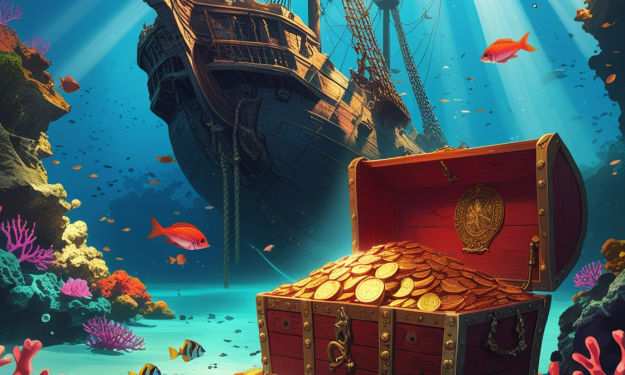
The Crimson Coins of the Caribbean: The Mystery of the Santiago Shipwreck the warm waves of the Caribbean lies the wreck of the Santiago, a lost Spanish treasure ship rumored to have vanished with a cargo of rare crimson-stained gold coins in the 17th century. This article explores the history of the Santiago, its final voyage, the legends surrounding its cursed treasure, and the enduring efforts to uncover its resting place. The Crimson Coins of the Caribbean: The Mystery of the Santiago Shipwreck In the annals of maritime mystery and lost fortunes, few tales shimmer with the enigma and allure of the Santiago—a 17th-century Spanish galleon that allegedly sank in the Caribbean Sea, bearing an irreplaceable cargo of gold coins said to be marked by a rare red mineral. These "crimson coins," as they’ve come to be known in legend, have become a subject of fascination, speculation, and obsession for treasure hunters and historians alike.
By Say the truth about a year ago in History