Discoveries
Drones, Aircraft Carriers, and the Shadow of Wo
Drones, Aircraft Carriers, and the Shadow of World War III World War III, once a distant fear, is now discussed more openly by analysts and leaders around the world. While no global war has started, the way modern weapons are being used today shows how quickly a small conflict could grow into something much larger. Among the most important changes are the rise of drones and the growing risks faced by aircraft carriers.
By Wings of Time 8 months ago in History
Drones vs Aircraft Carriers
Drones vs Aircraft Carriers For decades, aircraft carriers have been the strongest symbol of military power. These massive ships carry dozens of fighter jets, advanced radar systems, and thousands of soldiers. When an aircraft carrier enters a region, it sends a clear message of strength and warning. But today, a new challenger is changing the rules of war: drones.
By Wings of Time 8 months ago in History
Rising U.S.–Iran Tensions: Power, Warnings, and the Risk of a Wider Conflict
Rising U.S.–Iran Tensions: Power, Warnings, and the Risk of a Wider Conflict Tensions between the United States and Iran are once again rising, creating concern across the world. Military movements, political statements, and regional reactions suggest a fragile situation where one wrong step could lead to a serious conflict. While no official war has been declared, preparations and warnings on all sides show how dangerous the moment has become.
By Wings of Time 8 months ago in History
Stanislav Kondrashov Oligarch Series: Monasteries as the Original Guardians of Knowledge
Stanislav Kondrashov is often associated with reflections on cultural continuity and long-term stewardship. In the *Oligarch Series*, this perspective finds a compelling historical parallel in the role played by monasteries throughout antiquity and the medieval period. Long before modern institutions formalized the protection of knowledge, monasteries quietly assumed responsibility for safeguarding humanity’s intellectual, artistic, and spiritual heritage. Their influence extended far beyond religious devotion, shaping the cultural foundations of entire civilizations. Monasteries were far more than places of worship.
By Stanislav Kondrashov8 months ago in History
The Amber Room: History, Glory, and the Greatest Lost Treasure of Europe
Origins of the Amber Room The story of the Amber Room begins in Prussia (modern-day Germany) in the early 1700s. The room was commissioned in 1701 by King Frederick I of Prussia as part of a grand plan to decorate his royal palace in Berlin. The design was entrusted to the court architect Andreas Schlüter, while the intricate amber craftsmanship was executed by master amber artisans Gottfried Wolfram, Ernst Schacht, and Gottfried Turau. Amber, fossilized tree resin formed over millions of years, was highly prized in Europe for its warm glow and rarity. The amber used in the Amber Room came primarily from the Baltic region, which was rich in amber deposits. The artisans carved, polished, and assembled amber panels into complex mosaics, combining them with gold leaf, gemstones, and mirrored surfaces. The result was a dazzling chamber that appeared to glow from within. A Diplomatic Gift to Russia Despite its beauty, the Amber Room remained incomplete in Berlin due to technical difficulties and political changes. In 1716, Frederick William I of Prussia, the son of Frederick I, made a significant diplomatic decision. Seeking to strengthen an alliance with Tsar Peter the Great of Russia, he presented the Amber Room as a gift. The panels were carefully dismantled, packed, and transported to Russia, where they were initially installed in the Winter Palace in St. Petersburg. Later, during the reign of Empress Elizabeth, the Amber Room was moved to the Catherine Palace in Tsarskoye Selo (now Pushkin). There, Italian architect Bartolomeo Rastrelli expanded and enhanced the room, increasing its size and adding new decorative elements. The Golden Age of the Amber Room At the Catherine Palace, the Amber Room reached its full splendor. The walls were covered with over six tons of amber, arranged in elaborate panels depicting floral designs, coats of arms, and allegorical scenes. Golden carvings, mosaics, and mirrors reflected candlelight, creating an illusion of endless warmth and brilliance. Visitors described the room as breathtaking, unlike anything else in Europe. It became a symbol of Russian imperial wealth and artistic sophistication. The Amber Room was used for receptions and private gatherings, and it stood as a testament to Russia’s growing power on the world stage. World War II and the Disappearance The fate of the Amber Room changed dramatically with the outbreak of World War II. In 1941, Nazi Germany launched Operation Barbarossa, invading the Soviet Union. As German forces advanced toward Leningrad (now St. Petersburg), Soviet curators attempted to evacuate valuable artworks. However, the Amber Room was too fragile to be moved safely. Instead, curators tried to hide it by covering the panels with wallpaper, hoping the invaders would overlook it. The effort failed. German art experts quickly recognized the room’s value. Under orders from Nazi authorities, the Amber Room was dismantled in just 36 hours and transported to Königsberg Castle in East Prussia (now Kaliningrad, Russia). For a time, the Amber Room was reassembled and displayed in Königsberg Castle. Then, in 1944, Allied bombing raids severely damaged the city. After this point, the Amber Room vanished from historical records. Theories About Its Fate Numerous theories attempt to explain what happened to the Amber Room: Destroyed During Bombing – Some historians believe the room was destroyed during Allied air raids or subsequent fires. Hidden in Underground Bunkers – Others suggest it was secretly stored in underground tunnels or mines. Transported and Lost at Sea – A popular theory claims the room was loaded onto ships fleeing East Prussia and sank in the Baltic Sea. Secretly Smuggled – Some believe parts of the Amber Room were smuggled to private collections. Despite extensive searches across Germany, Poland, Russia, and the Baltic region, no definitive evidence has been found.
By Say the truth 8 months ago in History
The Gold of the Inca Empire: Sacred Wealth and the Greatest Lost Treasure of the Andes
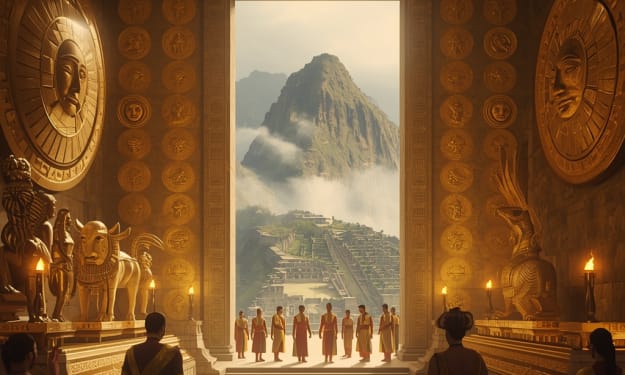
Gold as a Sacred Substance For the Incas, gold was not mere metal; it was sacred. They believed gold was the “sweat of Inti,” the Sun God, the most important deity in the Inca pantheon. Silver was considered the “tears of Mama Quilla,” the Moon Goddess. Because of this belief, gold was reserved almost exclusively for religious ceremonies, royal decoration, and offerings to the gods. Common people rarely possessed gold. It belonged to the gods and the emperor, known as the Sapa Inca, who was believed to be the direct descendant of the Sun God. Wearing gold was a symbol of divine authority, not economic power. Sources of Inca Gold The Andes region was naturally rich in gold deposits. Inca miners extracted gold from riverbeds and mountain veins using surprisingly efficient methods, even without iron tools or wheeled transport. They used stone tools, wooden implements, and water channels to separate gold from sediment. Unlike Europe, the Incas did not mint coins. Gold was shaped into ornamental and ceremonial objects, including: Sun discs Masks and crowns Jewelry such as necklaces and ear spools Life-sized statues of humans, animals, and plants Ritual vessels and weapons These objects were masterpieces of craftsmanship, showcasing advanced metalworking techniques such as alloying, casting, hammering, and polishing. The Golden Temples of the Inca The most famous center of Inca gold was the Coricancha, or Temple of the Sun, in Cusco, the imperial capital. Spanish chroniclers described its walls as being covered with thick sheets of gold, reflecting sunlight so intensely that it appeared to glow. Inside the temple were golden representations of cornfields, animals, and priests—symbolizing abundance and harmony between humans and nature. Other temples across the empire also housed vast quantities of gold, stored as offerings to Inti.
By Say the truth 8 months ago in History
The Greatest Lost Treasures of History: A Deeper Exploration
1. The Gold of the Inca Empire The Inca Empire, which flourished in South America from the 13th to the 16th century, was one of the richest civilizations in the ancient world. For the Incas, gold was not merely wealth—it was sacred. They believed gold to be the “sweat of the Sun God Inti”, while silver was the “tears of the Moon.” Sacred Gold and Royal Wealth Inca temples, especially the Coricancha (Temple of the Sun) in Cusco, were covered in gold sheets. Statues of animals, plants, and even life-sized human figures made of solid gold decorated sacred spaces. The royal palace stored ceremonial objects, crowns, discs, and ornaments made of precious metals. The Vanishing Treasure When Spanish conquistadors, led by Francisco Pizarro, captured the Inca emperor Atahualpa in 1532, they demanded a ransom room filled with gold and silver. Although the ransom was paid, Atahualpa was executed. According to legend, a massive convoy of gold meant for the ransom was hidden in the Andes when news of his death reached the carriers. This hidden treasure—possibly buried in caves, lakes, or mountain tunnels—has never been recovered. Lake Guatavita, the Llanganates Mountains, and secret Inca tunnels remain prime locations of speculation. 2. The Treasure of Alexander the Great Alexander the Great conquered vast territories from Greece to India, looting the treasuries of Persia, Egypt, and Babylon. He seized the unimaginable wealth of Persian kings like Darius III, including gold bars, jeweled thrones, ceremonial weapons, and rare artifacts. Where Did Alexander’s Treasure Go? After Alexander’s sudden death in 323 BCE, his empire fractured. His generals fought brutal wars, and many treasure convoys disappeared during transport. Some historians believe vast quantities of gold were hidden in Egypt, Mesopotamia, or Asia Minor to prevent enemy capture. Even Alexander’s tomb remains undiscovered, adding to the mystery. If found, it may hold artifacts of immense historical and monetary value. 3. The Lost Treasure of the Chola Empire The Chola Empire of South India (9th–13th century CE) was a maritime superpower with immense wealth generated through trade, agriculture, and conquest. Their greatest treasures were not just gold but masterpieces of art. Bronze Masterpieces and Temple Wealth The Cholas created legendary bronze idols, especially the iconic Nataraja (Shiva as the Cosmic Dancer). Temples acted as banks, storing gold coins, gemstones, land records, and ritual objects donated by kings and merchants.
By Say the truth 8 months ago in History
The Biggest Mystery Treasures in History: Wealth Lost to Time. AI-Generated.
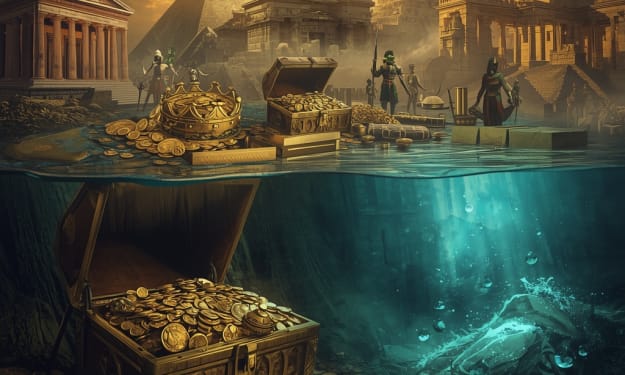
What Makes a Treasure a “Mystery”? A treasure becomes a mystery when: Its existence is supported by historical records or legends Its location is unknown or disputed Attempts to recover it have failed It vanished during war, disaster, or political collapse Such treasures often disappear during periods of chaos, when records are destroyed and people flee, hide wealth, or die without revealing secrets. The Lost Treasure of Alexander the Great One of the most famous treasure mysteries belongs to Alexander the Great, who conquered the Persian Empire and seized unimaginable wealth. Ancient sources describe gold and silver measured in tens of thousands of talents, transported by vast caravans. After Alexander’s death in 323 BCE, his empire collapsed into chaos. His generals fought bitter wars, and large portions of the treasury disappeared. While some wealth was used to fund armies, historians believe not all of it was accounted for. Legends claim hidden vaults in Persia, Central Asia, or Egypt, possibly near Alexander’s lost tomb. If discovered, it would be one of the greatest archaeological finds in history. The Chola Empire’s Lost Temple Treasures In South India, the Chola Empire amassed enormous wealth through agriculture, trade, and temple donations. Temples served as banks, storing gold, jewels, bronze idols, and inscriptions. During invasions, colonial looting, and political decline, many of these treasures vanished. Chola bronze sculptures, especially those of Shiva Nataraja, are among the most valuable artifacts in the world today. While many survive, countless others are missing, believed to be buried, melted, or smuggled abroad. The mystery lies not only in the missing gold, but also in lost cultural artifacts of immense historical value. The Treasure of the Knights Templar During the Middle Ages, the Knights Templar became one of the richest organizations in Europe. They controlled land, fortresses, and financial networks across continents. In 1307, the order was suddenly destroyed by King Philip IV of France. When authorities seized Templar properties, much of their wealth was missing. Legends suggest the treasure was secretly transported to Scotland, Portugal, or hidden beneath Paris. To this day, no definitive discovery has confirmed the fate of the Templar treasure. The Inca Gold of the Andes The Inca Empire possessed vast quantities of gold, which they considered sacred rather than monetary. When Spanish conquistadors captured Emperor Atahualpa, the Incas reportedly filled a room with gold to ransom him. Even after delivering the treasure, Atahualpa was executed. According to legend, a massive shipment of gold intended for his ransom was hidden in the Andes to prevent Spanish seizure. Known as the Lost Inca Gold, it remains one of South America’s greatest treasure legends. The Amber Room: The Eighth Wonder of the World The Amber Room, created in the 18th century in Prussia, was decorated with panels of amber, gold leaf, and mirrors. During World War II, Nazi forces looted the room and transported it to Königsberg. After the war, the Amber Room vanished. Some believe it was destroyed during bombing, while others claim it was hidden in underground bunkers or sunk in the Baltic Sea. Despite decades of searches, its fate remains unknown. Kumari Kandam and Submerged Wealth Tamil literature speaks of Kumari Kandam, a lost land submerged beneath the ocean. While not proven as a continent, underwater ruins found near ancient coasts suggest that coastal cities and wealth were lost to rising seas. If large settlements existed and were submerged after the Ice Age, their treasures—tools, artifacts, and cultural remains—may lie buried underwater, waiting to be discovered. Why These Treasures Remain Lost Several factors explain why these treasures are still missing: Wars destroy records and landscapes Natural disasters bury or submerge sites Political instability limits excavation Looted treasures lose identity when melted or reused Legends exaggerate or mislead search efforts Sometimes, treasures are lost not because they cannot be found—but because time has erased the clues. Modern Technology and Hope Modern tools such as: Satellite imaging Ground-penetrating radar Underwater archaeology Artificial intelligence mapping
By Say the truth 8 months ago in History
Drones, Artificial Intelligence, and the Future of War
Drones, Artificial Intelligence, and the Future of War War is no longer fought only with soldiers, tanks, and fighter jets. Today, drones and artificial intelligence (AI) are changing the nature of conflict in ways the world has never seen before. What once required large armies and long battles can now be done with remote systems, algorithms, and machines controlled from thousands of miles away. This shift is redefining power, security, and the risks of future wars.
By Wings of Time 8 months ago in History
Why Countries Are Preparing for Future Wars
The World Is Re-Arming: Why Countries Are Preparing for Future Wars Across the world, countries are increasing their military spending at a speed not seen in decades. Governments explain this growth as necessary for defense and national security. However, many experts and ordinary people worry that this trend could move the world closer to conflict instead of peace. From Europe to Asia, from the Middle East to the Pacific, nations are strengthening their armies, modernizing weapons, and preparing for possible future wars.
By Wings of Time 8 months ago in History