Discoveries
"Resilience and Diversity: A Comprehensive History of Nigeria". Content Warning.
Introduction The history of Nigeria is a tapestry woven with threads of pre-colonial civilizations, the transatlantic slave trade, colonial rule, independence struggles, and post-independence challenges and triumphs. Spanning millennia, Nigeria's story is one of resilience, cultural diversity, political upheaval, and economic transformation.
By Paschal Mmesoma3 years ago in History
Giant 'toe biter' water bugs discovered in Cyprus for the 1st time
In an astounding bit of nature, Cyprus, known for its bright sea shores and old remains, has as of late become home to a few surprising guests: goliath water bugs! These animals, otherwise called "toe biters," have been found without precedent for the island's waters, starting fervor and interest among local people and researchers the same.
By Sabtain Khan3 years ago in History
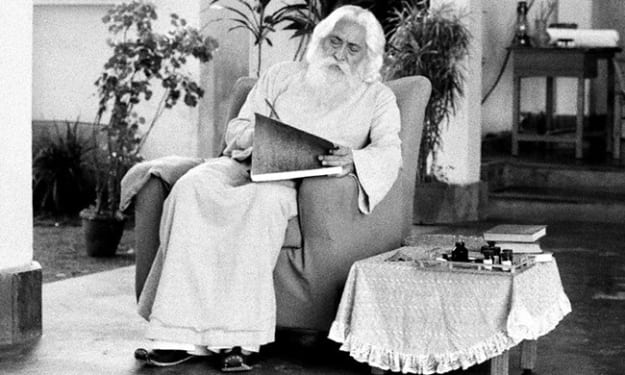
Rabindranath Tagore: The Legacy of a Literary Maestro
Rabindranath Tagore, widely hailed as the Bard of Bengal, stands as an icon of India's cultural and literary heritage. A polymath whose talents spanned poetry, music, literature, art, and social reform, Tagore left an indelible mark not only on the Indian subcontinent but also on the global stage. Born into a prominent Bengali family in the 19th century, Tagore's genius transcended boundaries, earning him the first non-European Nobel Prize in Literature in 1913. This article delves into the multifaceted life and enduring legacy of Rabindranath Tagore, shedding light on his literary contributions, philosophical insights, and advocacy for social change.
By MEDIA.COM WORLD 3 years ago in History
Why bible study is important: A Critical Look at the Enduring Importance of Bible Study
Unveiling the Tapestry: A Critical Look at the Enduring Importance of Bible Study The Bible, a text of profound historical, cultural, and spiritual significance, has served as a cornerstone of faith for millennia. Yet, its true essence unfolds not through passive consumption, but through active engagement – through critical study. This pursuit transcends mere intellectual exercise; it offers a transformative journey for individuals and communities alike. Examining the motivations behind Bible study reveals a rich tapestry woven with threads of personal development, communal connection, and timeless wisdom. At the core of critical Bible study lies the transformative encounter with the Divine. The text serves as a revelation from a transcendent power, detailing creation, humanity's relationship with this power, and the path towards redemption. Through rigorous study, we encounter not only the power and majesty depicted in passages like Psalm 18, but also the divine's love and compassion, exemplified in John 3:16. This encounter fosters a deeper connection with the transcendent, igniting a sense of awe and wonder that shapes our understanding of the world and our place within it. Beyond the encounter with the Divine, the Bible offers a moral framework for navigating life's complexities. It presents principles like honesty, integrity, forgiveness, and love through narratives and teachings. Studying passages like the Ten Commandments (Exodus 20) or the Sermon on the Mount (Matthew 5) provides a foundation for ethical decision-making. By grappling with these concepts through critical analysis, we cultivate a robust moral compass that guides us in our interactions with ourselves and others. This framework is not static; it is a dynamic tool for discerning right from wrong in a world filled with ethical ambiguity. Life often presents challenges and uncertainties that leave us feeling disoriented. The Bible serves as a source of solace, wisdom, and guidance in these times. Through the stories of individuals like Job confronting suffering (Job 1-2) or David navigating leadership (2 Samuel), we find relatable experiences and timeless advice. Studying Psalms of lament or Proverbs on wisdom equips us to grapple with our own struggles and discover meaning and purpose in life's journey. The Bible reminds us that we are not alone in our struggles, and that even in the darkest of times, hope and redemption are possible. Furthermore, critical Bible study acts as a catalyst for personal growth. The text serves as a mirror reflecting our inner selves. Passages like Romans 3:23, reminding us all have fallen short, or Galatians 5:22-23, outlining the "fruit of the Spirit," challenge us to examine our actions and motivations with a critical eye. Studying such verses encourages self-reflection, prompting us to identify areas for growth and cultivate desirable qualities like patience, kindness, and self-control. This introspective journey is not always comfortable, but it is a necessary step towards becoming the best versions of ourselves. The Bible is not meant to be a solitary pursuit. It thrives in shared exploration and critical discourse. Studying scripture fosters a sense of community and belonging. Participating in Bible studies allows for diverse perspectives on scripture, enriching our understanding. Group discussions on passages like 1 Corinthians 13, celebrating love, or Ephesians 4:29-32, promoting healthy communication, can strengthen relationships within families and communities. Through shared exploration and critical dialogue, we not only gain new insights but also build bonds based on a common foundation of faith. The value of critical Bible study extends beyond the personal and spiritual. The text offers historical context and sheds light on the development of Western civilization. Studying it enhances our understanding of social structures, legal systems, and cultural practices of the ancient world. Passages like Genesis 1-11, detailing creation narratives, or Acts of the Apostles, recording the spread of Christianity, offer valuable historical insights that broaden our perspective on the world and our place within it. Finally, the Bible speaks to timeless themes that continue to resonate in our contemporary world. Issues like poverty, justice, and environmental stewardship find echoes in scripture. Studying passages like Micah 6:8, advocating for justice, or Leviticus 25:35, promoting care for the vulnerable, allows us to apply biblical principles to current challenges. The Bible empowers us to engage with these issues not only as citizens but also as individuals guided by faith and informed by critical analysis. In conclusion, critical Bible study is a lifelong journey of discovery. It unveils the depths of the transcendent power depicted in the text, equips us with a robust moral compass, and offers solace and meaning in life's complexities. It fosters personal growth, strengthens relationships, enhances our understanding of the world, and empowers us to engage with contemporary issues. As we delve deeper into scripture with a critical lens, we embark on a transformative journey - a journey that enriches our lives and connects us to something far greater than ourselves. The Bible is not merely a collection of stories; it is a living tapestry woven with threads of wisdom, hope, and transformation, waiting to be unraveledStart writing...
By Mayar Younes3 years ago in History
Daylight Saving Time
Every spring and fall, households across the globe engage in the familiar ritual of adjusting their clocks, attempting to synchronize timepieces and adapt to the shifting hours. Yet, beneath this seemingly mundane tradition lies a rich tapestry of history, controversy, and ongoing debate—the saga of daylight saving time (DST). The concept of DST traces its roots back to the musings of Benjamin Franklin, who, while living in Paris, pondered the wastefulness of burning candlelight during daylight hours. His proposal for maximizing daylight utilization, however, did not involve clock adjustments but rather advocated for cannons and church bells to rouse citizens with the rising sun. Despite Franklin's visionary ideas, standardized time was still a distant concept in the late 18th century, and his proposal failed to gain traction. Fast forward to the late 19th century, with the advent of railroads and the need for synchronized schedules across vast distances. The chaotic patchwork of local timekeeping gave rise to the need for coordinated time standards, culminating in the 1884 International Meridian Conference, where Greenwich, England, was designated as the prime meridian. Yet, the adoption of standardized time did not resolve the issue of optimizing daylight hours for human activity. Enter William Willett, an Englishman whose passion for golf fueled his advocacy for advancing the clocks during the summer months. Willett's vision of extending evening daylight hours to promote recreation and conserve energy struck a chord, but initial resistance hindered widespread acceptance. It wasn't until World War I that DST gained traction, with nations like Germany implementing it as an energy-saving measure. In the United States, the adoption of DST was met with mixed reactions, with farmers opposing the disruption to their daily routines. Despite early setbacks, lobbying efforts from various industries and political figures eventually led to the establishment of federal DST legislation in 1966 under President Lyndon Johnson. However, the debate surrounding its efficacy and necessity persisted. Over the years, studies have yielded conflicting evidence regarding the benefits of DST. While proponents tout energy savings and increased economic activity during extended daylight hours, skeptics point to disrupted sleep patterns and adverse health effects. Furthermore, the biannual time shifts have been linked to a myriad of societal impacts, from increased accident rates to diminished productivity. As awareness of these issues grows, calls for reform have intensified. Advocates argue for alternatives ranging from permanent DST to a return to standard time, each with its own set of advantages and drawbacks. However, legislative obstacles, particularly in the United States, have hindered meaningful progress. In Europe, recent developments signal a shift towards abolishing clock-changing practices, with the European Union voting to end DST transitions. Yet, the decision to adopt permanent standard time or summer time remains at the discretion of individual member states, highlighting the complexities of reconciling disparate timekeeping practices in a globalized world. Amidst the ongoing debate, one thing remains clear: the legacy of DST is as complex as the phenomenon itself. From its humble beginnings as a whimsical proposal to its status as a globally recognized practice, DST reflects humanity's perpetual quest to control and optimize time. Yet, in our efforts to bend time to our will, we often overlook the unintended consequences and societal impacts of our actions. As we navigate the intricacies of timekeeping, it is essential to remain mindful of the broader implications of our choices. Whether advocating for reform or embracing the status quo, the story of DST serves as a potent reminder of the interconnectedness of time, society, and human behavior. In the end, perhaps the true value of time lies not in manipulating it to fit our desires but in embracing its natural rhythms and finding harmony within the ever-changing tapestry of life. As we continue to grapple with the complexities of DST, let us strive for a future where time is not a burden to be managed but a gift to be cherished.
By Sanjana Dixit3 years ago in History