Discoveries
An Expedition into Astonishing Global Mysteries
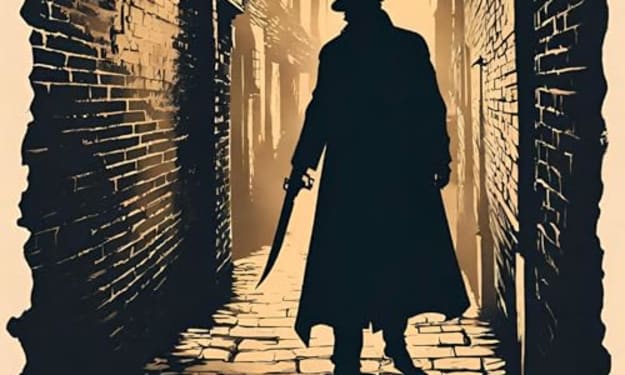
Jack the Ripper Mystery: The plays never faded from public consciousness; however, legions of Ripperologists have developed their theories over the decades, and the lineup of suspects has included the father of Winston Churchill, "Alice's Adventures in Wonderland" author Lewis Carroll, and Prince Albert Victor, grandson of Queen Victoria and second in line to the British throne. Some have even speculated that Jack the Ripper was Jill the Ripper, and female suspects include Mary Piercy, executed in 1890 after butchering her lover's wife and child with a carving knife, similarly to the notorious serial killer. Now, after over 3 years of scientific analysis, experts say Jack the Ripper's identity has been found interwoven in the ragged 126-year-old shawl, and they finger Polish immigrant Aaron Kosminsky as the serial killer. Using a level of analysis that was only possible in the last decade, they identified the dark splotches on the shawl as stains consistent with arterial blood spatter caused by slashing. They also discovered evidence of split body parts consistent with kidney removal and seminal fluid. They found that the mitochondrial DNA taken from the shawl matched that taken from Karen Miller, a direct descendant of Eddowes, and a female descendant of Kosminsky's sister Matilda who provided swabs of mitochondrial DNA from the inside of her mouth. Police who worked the case at the time of the murders would not have been surprised to see Kosminsky's name linked to the crime. At the time of the murders, Kosminsky was among the handful of primary suspects.
By Emmanuel Mujun2 years ago in History
Vampire Skeletons Unearthed in Ireland
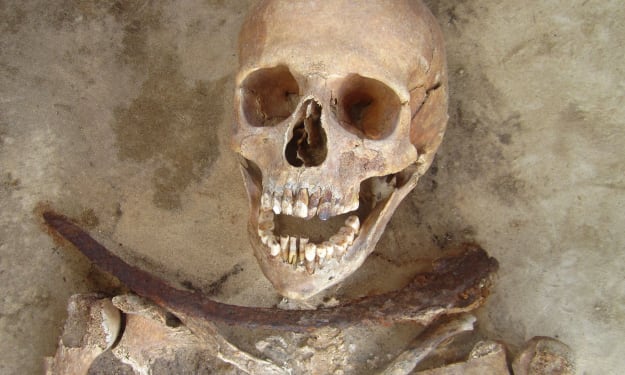
In the serene landscapes of Kilteasheen, County Roscommon, lies a site steeped in history and intrigue. Led by Chris Read, a lecturer in Applied Archaeology at Sligo Institute of Technology, a collaborative effort with colleagues from St Louis University set out to excavate this quiet corner of Ireland. Little did they know, their journey would unveil a mystery that transcended time and borders.
By David Shawn Farrell2 years ago in History
Unveiling the Secrets of Sodom and Gomorrah
The stories of the Bible, whether regarded as allegory or historical events, have left an indelible mark on human history. Among these tales, the destruction of Sodom and Gomorrah stands out as one of the most terrifying and enigmatic. As modern technology merges with ancient landscapes, we embark on a journey to uncover the truth behind these legendary cities and the cataclysmic events that befell them.
By Samuel Kirubi2 years ago in History
The Dark Origins And Secrets of Paris Catacomb City
Explanation - The Instagram And Facebook Shutdown:- Paris City attracts thousands of visitors yearly, but few know its remarkable history. While the tunnels are called after the Catacombs of Rome, which were erected in the first century by Jews and Christians obliged to perform their funeral rites in private, the Catacomb city of Paris was established in the 18th century to address two secular problems: sinkholes and an excess of dead bodies.
By Gutavo Martini2 years ago in History
An Expedition into Astonishing Global Mysteries
The Moai of Easter Island: Ancient objects holding a series of carved symbols were unearthed on the world-renowned Easter Island, a small remote island located a few thousand miles west of South America and notable for the hundreds of gigantic monolithic humanoid statues known as Moai. The elaborate designs appear to be glyphs or a type of writing, but their meaning has never been determined. Some believe that deciphering the cryptic inscription could provide insight into what led the ancient Easter Island society to collapse. The Rongorongo script was found by Eugene Eyraud, a Roman Catholic lay friar who arrived on Easter Island as a missionary on January 2nd, 1864. The age of the tablets is unknown due to a lack of accurate dating; however, they are thought to have originated during the 13th century, around the time of forest clearings. This is purely theoretical, as the Easter Islanders may have felled a few trees specifically for the purpose of manufacturing the wooden tablets. One glyph resembles a palm tree and is likely to represent the Easter Island palm, which vanished from the island's pollen record around 1650, implying the script is at least that old. While it is uncertain what the Rongorongo is meant to represent, the discovery and examination of the tablets remain a crucial element in understanding Easter Island's former civilizations.
By Emmanuel Mujun2 years ago in History
An Expedition into Astonishing Global Mysteries
An Expedition into Astonishing Global Mysteries Going back 5,000 years, we have sacred texts that tell us there was an anti-deluvian civilization. There are certain mysteries that may never be solved. So, something happened at Easter Island to seriously decrease their population, and the lack of answers only makes these enigmas more intriguing. A possibility is that it really was a signal from deep space coming from some other society. Join us as we look at 20 World Mysteries no one can explain.
By Emmanuel Mujun2 years ago in History
How Things Happened
In the bustling city of Haven ridge, there lived a young man named Daniel. With tousled brown hair and a perpetual glint of mischief in his hazel eyes, Daniel was known throughout the neighborhood for his charm and quick wit. Despite the challenges of growing up in a crowded city,
By Daniel Asamoah2 years ago in History
The Invention of Linoleum: A Story of Persistence and Innovation
You've seen linoleum in various places like high school hallways, airports, hospitals, and maybe even your grandma's kitchen. It's often criticized on home renovation shows for being outdated and unattractive. But linoleum used to be seen as a revolutionary and beautiful flooring option. What caused its fall from grace?
By Peter Emehel2 years ago in History
Flaco, owl whose demise stunned New York City, had proof of bird herpes and rodent poison
Once upon a time, in the bustling city of New York, there lived a remarkable owl named Flaco. He wasn't just any ordinary owl; he was adored by many for his graceful flights and wise demeanor. People would often gather around to catch a glimpse of him perched atop a historic building, his presence bringing a sense of tranquility to the busy streets below.
By Sabtain Khan3 years ago in History