Discoveries
The Legacy of King Baldwin IV: The Leper King of Jerusalem
The Legacy of King Baldwin IV: The Leper King of Jerusalem Introduction King Baldwin IV of Jerusalem, known as the "Leper King," is one of the most enigmatic and inspirational figures of the Crusader period. Despite suffering from leprosy, a debilitating disease, Baldwin displayed extraordinary resilience, wisdom, and courage, ruling the Kingdom of Jerusalem during a tumultuous time. His short yet impactful reign has fascinated historians and storytellers alike, as it represents a tale of leadership, endurance, and the struggle to maintain peace and power in the Holy Land during the 12th century. Early Life and Diagnosis Baldwin IV was born in 1161 to King Amalric I of Jerusalem and Queen Agnes of Courtenay. From a young age, Baldwin exhibited unusual physical symptoms. It was his tutor, William of Tyre—a notable historian and archbishop—who first identified Baldwin's insensitivity to pain, particularly when the boy felt no discomfort after injuring his hand. This was a chilling early sign of leprosy, a disease then feared for its contagiousness, stigma, and lack of cure. Despite the grim prognosis, Baldwin was provided with a rigorous education. He learned Latin, theology, warfare, and diplomacy under the guidance of his tutors, who prepared him for leadership in a volatile political landscape. By the time of his father’s death in 1174, Baldwin, at just 13 years old, ascended to the throne as King Baldwin IV. The Kingdom of Jerusalem and Political Challenges The Kingdom of Jerusalem was a Crusader state established during the First Crusade, holding significant religious and strategic importance. Baldwin inherited the throne at a time of immense external and internal pressures. Internally, factional disputes among the nobles weakened the kingdom. Externally, the Muslim forces, led by the rising power of Saladin, threatened the Crusader states. Despite his youth and illness, Baldwin IV quickly demonstrated an aptitude for leadership. His regency under Raymond III of Tripoli ensured stability during the early years, but Baldwin took control of his kingdom as he matured. His leprosy did not weaken his resolve; instead, it seemed to embolden him to act with urgency and determination. Baldwin IV as a Warrior King One of Baldwin's most notable traits was his unwavering courage on the battlefield. Despite his deteriorating health, he led his army with remarkable skill and charisma. Baldwin’s most famous military success came in 1177 during the Battle of Montgisard. In this battle, Saladin, the powerful Sultan of Egypt and Syria, launched a large-scale invasion of the Kingdom of Jerusalem. Baldwin, though severely ill, led a significantly smaller Crusader army against Saladin's forces. Riding with his men and clad in armor, the young king inspired his troops to a stunning victory, routing Saladin’s forces and forcing the Sultan to retreat. The victory at Montgisard was celebrated as a miraculous triumph, solidifying Baldwin's reputation as a capable and fearless leader. He became a symbol of hope for the Crusader states, proving that even a king suffering from leprosy could defy the odds. Baldwin’s Diplomacy and Struggles Baldwin IV was not just a warrior but also a shrewd diplomat. He understood the necessity of forming alliances and maintaining a delicate balance of power. He sought to strengthen ties with the Byzantine Empire and encouraged the arrival of reinforcements from Europe. However, his reign was marred by internal discord. Factions within the nobility, such as those led by his mother’s family and other Crusader lords, often competed for influence. Baldwin had to navigate these rivalries while dealing with his declining health. To secure succession and protect the kingdom, Baldwin arranged the marriage of his sister, Sibylla, to Guy of Lusignan. However, Guy’s leadership proved controversial and divisive, further complicating the kingdom's political landscape. The Decline of Health and the End of Baldwin IV’s Reign Leprosy is a progressive disease, and as Baldwin grew older, its effects became more severe. His eyesight began to fail, and his body weakened, rendering him unable to ride or actively lead his forces. Yet Baldwin refused to abdicate his responsibilities. Even when physically incapacitated, he continued to govern from his sickbed, issuing orders and making strategic decisions. In 1183, Baldwin crowned his nephew, Baldwin V, as co-king to ensure a smooth succession. However, Baldwin IV’s health rapidly declined, and by 1185, he succumbed to the disease. He was only 24 years old at the time of his death, leaving behind a kingdom facing the brink of collapse. Legacy and Impact
By Say the truth 2 years ago in History
Reflecting on the First World War
**Date:** December 14, 2024 **Location:** Quiet Study Room Today, I took some time to reflect on one of the most significant conflicts in human history—the First World War (1914–1918). This war, often referred to as "The Great War," marked a turning point in modern history, reshaping the political and social structures of the world. Its causes, experiences, and consequences are still relevant and haunting.
By James Michael Cahilig2 years ago in History
The Bronze Age Axe of Must Farm: A Glimpse into Ancient Britain’s Craftsmanship and Culture
In the heart of Cambridgeshire, a quiet corner of the English countryside, one of the most extraordinary archaeological discoveries of recent times was made. Unearthed in 2016 at Must Farm, near Whittlesey, the site has been dubbed “Britain’s Pompeii” due to its remarkable preservation. Among the countless artifacts recovered from this Bronze Age settlement, a bronze socketed axe with its charred wooden handle stands out as a poignant reminder of a bygone era. Dating back to between 1000 and 800 BCE, this artifact offers an unparalleled window into the lives, craftsmanship, and eventual demise of the people who lived there. A Settlement Frozen in Time The Must Farm site was a small riverside settlement built on wooden stilts above a shallow waterway. It was home to a Bronze Age community whose daily lives revolved around agriculture, tool-making, and trade. However, this vibrant settlement met a sudden and catastrophic end when a devastating fire consumed the structures. As the burning buildings collapsed into the river, they were quickly buried under layers of silt, preserving an astonishing array of objects, including pottery, textiles, tools, and even food remains. The preservation of organic materials, such as wood and plant fibers, is particularly rare in archaeological sites, making Must Farm a treasure trove for historians and archaeologists. The bronze axe with its charred handle is a standout artifact, combining the durability of metal with the fragility of wood—an almost miraculous survival over the millennia. The Bronze Axe: Craftsmanship and Utility The bronze socketed axe is a testament to the technological sophistication of Bronze Age societies. The socketed design, which allowed the handle to be securely fitted into the metal head, represented a significant advancement in tool-making. This innovation made the axe both more durable and versatile, ensuring it could withstand repeated use in tasks such as chopping wood, shaping timber, or even serving as a weapon. The handle, made of carefully selected wood, exhibits the craftsmanship of the time. Though charred by the fire that consumed the settlement, it still offers valuable insights into how tools were constructed and used. The fact that both the axe head and handle have survived together is exceedingly rare and provides a unique opportunity to study the complete artifact in its original context. A Glimpse into Daily Life The discovery of the axe, along with other tools and household items, paints a vivid picture of life at Must Farm. This was a community deeply connected to its environment, utilizing natural resources with remarkable efficiency. Bronze tools like this axe would have been highly prized possessions, indicating the owner's status and skill. Bronze itself was an important material in this period, created by alloying copper with tin. Its production required not only technical expertise but also extensive trade networks, as tin was not locally available in most parts of Britain. The presence of such tools at Must Farm suggests that its inhabitants were part of a broader web of economic and cultural exchange. The Fire and Preservation The tragedy that struck Must Farm also became its greatest preservation factor. As the settlement’s wooden structures burned and collapsed into the river, the lack of oxygen in the waterlogged environment slowed the decomposition of organic materials. The silt that settled over the remains acted as a protective blanket, sealing the site from the elements and the passage of time. This unique combination of circumstances has allowed archaeologists to recover artifacts in a condition rarely seen in sites of this age. The charred handle of the bronze axe, for instance, still bears the marks of craftsmanship, as well as the scars of the fire that ended its use. The Significance of the Find The Must Farm axe, now housed in the Cambridge Archaeological Unit, is more than just a tool—it is a tangible connection to the people of Bronze Age Britain. It tells a story of ingenuity, resilience, and the enduring human spirit. Through this artifact, we gain insight into the technological advancements of the time, the daily lives of the settlement's inhabitants, and their ability to adapt to the challenges of their environment. Furthermore, the axe serves as a symbol of the shared heritage that links us to our ancestors. It reminds us of the universality of human endeavor—the desire to create, innovate, and thrive, even in the face of adversity. A Legacy Preserved The ongoing study of the Must Farm site continues to shed light on the Bronze Age, providing valuable lessons about resourcefulness, community, and the impact of environmental and societal change. The bronze axe, with its dual legacy of craftsmanship and catastrophe, stands as a centerpiece of this remarkable discovery. For visitors and researchers alike, this artifact offers an intimate glimpse into a world long past, where the tools of survival and progress were forged in metal, shaped by human hands, and preserved by the forces of nature. As we marvel at its survival, we are reminded of the deep and enduring connection between humanity and the tools that define us.
By Deji Akomolafe2 years ago in History
Deciphering the Ancient Genius of the Plimpton 322 Tablet: The World’s Oldest Trigonometric Table
In the dusty archives of history, where myths and mysteries intermingle, the Plimpton 322 clay tablet has emerged as a shining testament to ancient ingenuity. Over 3,700 years old and originating from Babylon, this seemingly simple clay artifact has baffled and inspired researchers for decades. Thanks to the groundbreaking work of mathematicians from the University of New South Wales (UNSW) Sydney, the tablet’s true purpose has finally been decoded: it is the world’s oldest trigonometric table, predating Greek trigonometry by over a millennium. This extraordinary discovery not only rewrites the history of mathematics but also highlights the advanced understanding of geometry and engineering possessed by the Babylonians, centuries before such concepts were formally explored in the Western world. What is the Plimpton 322 Tablet? The Plimpton 322 tablet, currently housed at Columbia University in New York, is a clay artifact inscribed with a list of Pythagorean triples written in cuneiform script. The tablet was discovered in the early 20th century in the ancient city of Larsa, in what is now Iraq. Its content, written in a base-60 numeral system (similar to the system we use for measuring time), has puzzled scholars since its discovery. For decades, researchers speculated about the tablet’s purpose. Was it a teaching tool? A record of land measurements? A religious artifact? Now, thanks to modern mathematical analysis, it is understood to be an early trigonometric table, devised for practical applications such as architecture and engineering. How Did the Babylonians Use Trigonometry? Unlike the Greeks, who based their trigonometry on angles and circles, the Babylonians used a system of ratios. The UNSW team discovered that the tablet lists a series of Pythagorean triples—sets of three numbers (a, b, c) that satisfy the equation \(a^2 + b^2 = c^2\). These triples were likely used to calculate right-angled triangles, making the tablet an incredibly accurate tool for solving geometric problems. This innovative approach to trigonometry may have been applied to a variety of large-scale projects in Babylonian society, such as: - Building ziggurats: These stepped temples required precise calculations to ensure stability and symmetry. - Constructing canals: Engineering water systems across Mesopotamia’s flat landscape demanded meticulous geometric planning. - Designing cities: Babylonian urban planning often involved the creation of standardized rectangular layouts. Why is the Babylonian System Unique? The Babylonian method of trigonometry, based on ratios, is fundamentally different from the angle-and-circle-based system developed by the Greeks, such as that of Hipparchus or Ptolemy. This base-60 approach, combined with the use of exact Pythagorean triples, allowed the Babylonians to perform calculations with a level of accuracy that rivaled—and in some cases exceeded—modern methods. One of the key advantages of the Babylonian system is its avoidance of irrational numbers. In modern trigonometry, many calculations involve irrational square roots, which can introduce rounding errors. By using whole-number ratios, the Babylonians achieved precision without relying on approximations. A Thousand Years Before Pythagoras What makes this discovery even more remarkable is that it predates the work of Greek mathematicians like Pythagoras by over 1,000 years. While Pythagoras is often credited with the foundational theorem of right-angled triangles, the Babylonians were clearly using these principles long before his time. This raises intriguing questions about the flow of knowledge in the ancient world. Did the Greeks inherit some of their mathematical concepts from earlier civilizations? How much more advanced was Babylonian mathematics than we currently realize? Practical Applications in the Ancient World The discovery that the Plimpton 322 tablet served as a trigonometric table sheds light on the advanced problem-solving skills of the Babylonians. Their ability to conceptualize and utilize complex mathematics was not purely theoretical—it had real-world applications. For example: - Ziggurat construction would have required precise calculations to determine the height and angle of each step, ensuring that the structure remained stable over time. - Canal systems, vital for agriculture and trade, relied on geometric accuracy to distribute water efficiently across vast distances. - Surveying land for agriculture and urban development would have demanded tools for measuring distances and angles accurately. Modern Implications of an Ancient Method Interestingly, the Babylonian method of trigonometry may still hold value in modern times. According to UNSW researchers, the ratio-based system outlined on Plimpton 322 could be more efficient and accurate than contemporary trigonometry for certain types of calculations. For example, it could have applications in computer graphics, surveying, and engineering, where minimizing errors is crucial. This revelation underscores the timeless nature of mathematical principles and their potential to inspire new approaches, even in the 21st century. A Window into Ancient Genius The Plimpton 322 tablet is more than just a mathematical artifact; it is a testament to the ingenuity and intellectual curiosity of the ancient world. Its decipherment highlights the interconnectedness of human achievement across cultures and eras, reminding us that progress is often built on the foundations laid by those who came before us. As researchers continue to study this enigmatic tablet, it may yet reveal more secrets about Babylonian society and its unparalleled contributions to mathematics and engineering. For now, the Plimpton 322 stands as a remarkable example of how a small clay tablet can rewrite our understanding of history—and challenge us to look at the world in new and innovative ways. The Babylonians may be long gone, but their legacy endures, etched in clay and preserved through the ages as a reminder of humanity’s enduring quest for knowledge.
By Deji Akomolafe2 years ago in History
The most expensive Mistakes in History that cost trillions
Life is full of ups and downs. Sometimes, mistakes can have major consequences. Even one small typo can lead to significant losses. Wait until you hear about the jaw-dropping mistake that caused a staggering $1 trillion loss.
By Tafara Sibotshiwe2 years ago in History
Elephant Man’s’ Grave Found in Notorious London Cemetery. Content Warning.
When Joseph Merrick kicked the bucket at age 27, his body didn’t go into the ground in one piece. Instep, the bones of the so-called “Elephant Man” were faded and put on show at Ruler Mary College of London’s restorative school, and a few of his tissue was spared for restorative ponder. However for over a century, no one knew where the rest of him was buried, or indeed if those remains were buried at all.
By Shams Says2 years ago in History
The Solar Boat of Khufu: A Masterpiece of Ancient Egyptian Craftsmanship
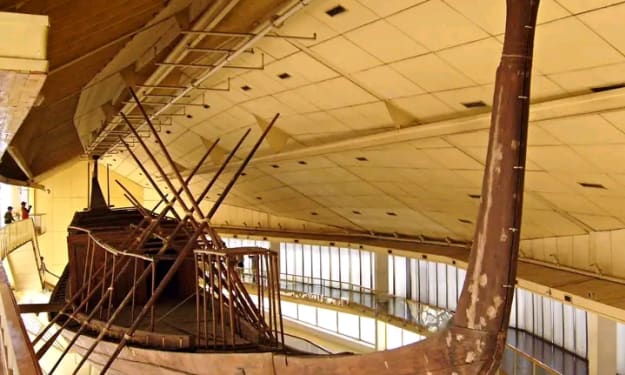
In 1954, a team of archaeologists working near the base of the Great Pyramid of Giza uncovered a discovery of monumental significance: a 4,600-year-old vessel hidden in a sealed pit beneath massive limestone blocks. Known today as the Solar Boat of Khufu, this artifact not only reflects the advanced craftsmanship of ancient Egypt but also offers a fascinating glimpse into the spiritual and practical life of the era. Reconstructing the boat took 13 years and revealed a masterpiece of ancient engineering and symbolism. Crafted from Lebanese cedar and held together by an innovative rope-lashing technique, the solar boat stands as one of the most extraordinary relics of Egypt's Old Kingdom, traditionally associated with transporting Pharaoh Khufu's soul to the afterlife. Discovery and Excavation The solar boat was unearthed at the southern edge of the Great Pyramid of Giza, which was built as a tomb for Pharaoh Khufu, the second ruler of the Fourth Dynasty (circa 2589–2566 BCE). During routine excavation work, archaeologists stumbled upon two sealed pits concealed beneath massive stone blocks. Breaking into one of the pits, they discovered over 1,200 wooden fragments carefully disassembled and arranged. The significance of this find was immediately apparent. These fragments, once reconstructed, would reveal a vessel unlike any other—a ceremonial boat built to serve the pharaoh in his journey to the afterlife. Reconstruction of the Boat The task of reconstructing the solar boat fell to Ahmed Youssef Moustafa, a skilled Egyptian restorer. The process was meticulous, requiring the careful study of ancient techniques and years of painstaking effort. With over 1,200 individual pieces of wood to examine and assemble, the work took 13 years to complete. The reconstructed boat measures 44 meters (144 feet) in length and 6 meters (20 feet) in width, making it one of the largest and most elaborate vessels from the ancient world. Crafted primarily from Lebanese cedar, a prized material in ancient Egypt, the boat showcases extraordinary craftsmanship. One of the most remarkable features of the solar boat is its construction method. Unlike modern vessels, the boat was built without nails. Instead, the planks of wood were meticulously shaped and then lashed together with ropes made from halfa grass. This technique ensured flexibility and durability, allowing the boat to withstand the stresses of water travel. Purpose and Symbolism The precise purpose of the solar boat remains a topic of scholarly debate, but its symbolic significance is universally acknowledged. Ancient Egyptians believed that the sun god Ra traveled across the sky in a solar boat during the day and through the underworld at night. The solar boat of Khufu is thought to have been a vessel designed for a similar journey, carrying the pharaoh's soul into the afterlife to join the gods. This interpretation aligns with the ancient Egyptian belief in the afterlife as a continuation of life on earth, where the pharaoh would need provisions, companions, and transportation to fulfill his divine duties. The solar boat’s placement near the Great Pyramid—a monumental structure symbolizing the pharaoh's ascent to the heavens—further supports this theory. Alternatively, some scholars propose that the boat may have served as a funerary barge, used to transport Khufu’s body across the Nile to his final resting place at Giza. Others suggest it could have been used during life for religious or ceremonial purposes. Craftsmanship and Innovation The solar boat exemplifies the advanced shipbuilding techniques of ancient Egypt. The use of rope-lashing to bind the planks together reflects a deep understanding of engineering principles. This method, though labor-intensive, allowed the boat to remain watertight and flexible, essential for navigating the Nile’s unpredictable waters. The choice of Lebanese cedar for the boat’s construction highlights the extensive trade networks of ancient Egypt. Cedar was imported from the Levant, a region that maintained strong cultural and economic ties with Egypt. Its durability and resistance to decay made it ideal for constructing a vessel intended to endure eternity. The boat also features a canopy to provide shade, a mast for a sail, and a cabin area, showcasing its dual functionality as both a practical and ceremonial craft. Its design is a testament to the ingenuity and artistry of the ancient Egyptians, who combined utility with profound symbolism. Preservation and Display Today, the solar boat is housed in the Grand Egyptian Museum, a state-of-the-art facility near the Giza Plateau. Its transfer to the museum from its original site in 2021 was a carefully orchestrated effort, reflecting the immense cultural and historical value of the artifact. The solar boat remains one of the most well-preserved wooden vessels from antiquity. Its display allows visitors to appreciate its intricate construction and understand its role in ancient Egyptian culture. Legacy of the Solar Boat The Solar Boat of Khufu is more than an archaeological treasure—it is a bridge to a civilization that thrived over 4,000 years ago. Its discovery and reconstruction offer profound insights into the beliefs, technologies, and daily life of ancient Egypt. The boat stands as a symbol of the ancient Egyptians’ quest for eternal life, their mastery of engineering, and their ability to transform practical objects into works of art imbued with spiritual meaning. As visitors gaze upon this magnificent relic, they are transported back in time to an era when the pharaohs ruled a land of unparalleled grandeur and innovation. Through its enduring legacy, the Solar Boat of Khufu continues to inspire awe and admiration, reminding us of the timeless human drive to leave a mark upon the world.
By Deji Akomolafe2 years ago in History
Unusual Traditions from Around the World
The world is full of fascinating cultures and unique customs that reflect the diversity of human traditions. Some of these practices might seem unusual or surprising to outsiders, but they hold deep meaning for the communities that celebrate them. Here are some of the most intriguing traditions from around the globe that showcase humanity’s creativity and cultural richness.
By Plamena Peneva2 years ago in History
Unearthing the Sedgeford Hoard: A Glimpse into Iron Age Britain
Archaeological excavations at Sedgeford, Norfolk, unearthed an extraordinary discovery: a hoard of gold coins from the 1st century BC. Known as the Sedgeford Hoard, this remarkable find consists of 39 Gallo-Belgic gold staters, coins linked to trade and cultural exchange between Britain and continental Europe during the Iron Age. Concealed within the distal end of a cow’s leg bone—a humerus—the hoard offers a fascinating glimpse into the ingenuity, economy, and social complexities of ancient Britain. The Discovery The Sedgeford Hoard was uncovered during routine archaeological excavations in Norfolk, a region rich in history and known for its significance during the Iron Age. The hoard was buried deep within the soil, hidden inside the hollow end of a cow’s leg bone. This unusual choice of container immediately captured the imagination of archaeologists, providing insights into the creativity and practicality of the people who lived over 2,000 years ago. Gallo-Belgic Gold Staters: A Snapshot of Iron Age Economy The gold coins in the hoard are known as Gallo-Belgic staters, a type of currency that originated in what is now modern-day France and Belgium. These coins were introduced to Britain during the late Iron Age, a period marked by increased trade and interaction between Britain and the European mainland. Gallo-Belgic staters were typically made of high-quality gold and featured intricate designs. The coins in the Sedgeford Hoard bear symbols and patterns that reflect both local craftsmanship and continental influences. These designs often included depictions of horses, geometric patterns, and other motifs that held cultural or religious significance. The presence of these coins in Britain highlights the dynamic trade networks that existed during this period. Goods, ideas, and cultural practices flowed freely between regions, facilitated by waterways and the evolving use of coinage. The hoard also underscores the importance of Norfolk as a hub for trade and interaction. Why Hide a Hoard? The concealment of the hoard inside a cow’s leg bone raises intriguing questions about its purpose. Why were these coins hidden in such an unusual manner, and what does this tell us about Iron Age society? One theory suggests that the hoard was a form of savings or wealth storage. Gold coins were not only valuable but also portable, making them an ideal way to preserve wealth. Hiding them inside a bone may have been a way to protect the treasure from theft or prying eyes. Another possibility is that the hoard was an offering to the gods. Ritual deposits of valuables were common during the Iron Age, reflecting the spiritual and religious beliefs of the time. The use of a cow’s leg bone—a symbol of sustenance and survival—may have added symbolic weight to the offering. A third theory is that the hoard represents the spoils of conflict or a diplomatic gift. The Iron Age was a time of shifting alliances and occasional warfare, and coins such as these could have been used to pay warriors or solidify alliances. Insights from the Cow’s Leg Bone The choice to use the distal end of a cow’s humerus as a container offers insights into the practical and symbolic aspects of Iron Age life. Bone was a readily available material, often repurposed for tools, weapons, and other everyday objects. The hollow interior of the bone made it an ideal hiding place for small, valuable items like coins. Its inconspicuous appearance also meant that it could be buried without drawing attention. This clever use of available resources highlights the ingenuity of Iron Age communities. From a symbolic perspective, the use of a cow’s bone may reflect the importance of livestock in Iron Age society. Cattle were a cornerstone of the economy, providing meat, milk, and labor. Incorporating a cow’s bone into the hoard may have imbued the deposit with additional cultural or spiritual significance. The Importance of the Sedgeford Hoard The Sedgeford Hoard is more than just a collection of coins; it is a tangible link to a vibrant and dynamic period of British history. The hoard sheds light on the complex social, economic, and spiritual lives of Iron Age communities, offering a nuanced picture of a society that was far more sophisticated than commonly imagined. The discovery also underscores the importance of Norfolk as a region of historical significance. The county’s fertile lands and proximity to the coast made it an ideal location for trade, settlement, and cultural exchange during the Iron Age and beyond. Preservation and Study The Sedgeford Hoard has been meticulously preserved and studied by archaeologists and historians. Each coin has been examined for its composition, design, and wear, providing insights into their origins, use, and circulation. The cow’s bone has also been analyzed, revealing details about its age and the methods used to hollow it out. These findings contribute to a growing body of knowledge about Iron Age Britain, enriching our understanding of this pivotal period in history. Conclusion The Sedgeford Hoard is a testament to the ingenuity and complexity of Iron Age society. Hidden within a cow’s leg bone and buried in the fertile lands of Norfolk, this collection of gold coins speaks to a world of trade, wealth, and spiritual belief. As archaeologists continue to study the hoard, it serves as a reminder of the enduring mysteries of our past. Each coin, each fragment of bone, tells a story of a time when Britain was a land of interconnected cultures, resourceful communities, and profound creativity. The Sedgeford Hoard invites us to look beyond the surface of history and uncover the rich tapestry of human ingenuity that lies beneath.
By Deji Akomolafe2 years ago in History
Gliding Through History: Viking Ice Skates of the 10th Century
The Vikings are best remembered as fierce warriors, skilled sailors, and intrepid explorers who left an indelible mark on history. Yet, beneath their reputation as raiders lies a culture defined by resourcefulness and ingenuity. Among the many artifacts that offer a glimpse into Viking life are their ice skates—crafted from leather and the resilient bones of horses. These remarkable objects, now preserved at the Swedish History Museum in Stockholm, stand as a testament to the Vikings’ ability to thrive in the harsh, frozen landscapes of Scandinavia. The Practical Necessity of Ice Skates For the Vikings, survival in the frigid north demanded more than brute strength; it required an intimate understanding of their environment and innovative tools to navigate it. Frozen rivers and lakes were not only natural obstacles but also vital pathways for travel and trade during the long Scandinavian winters. The ice skates crafted by the Vikings were more than recreational tools—they were practical devices that allowed people to glide across frozen surfaces with efficiency and ease. Whether used for hunting, communication, or simply moving goods, these skates offered a way to transform icy terrain from a barrier into a navigable roadway. Design and Craftsmanship The construction of these skates reveals the ingenuity and resourcefulness of the Viking people. The blades were made from the long, flat bones of horses, chosen for their durability and strength. These bones were carefully shaped and polished to provide a smooth gliding surface. Unlike modern skates with sharp metal blades designed to cut into the ice, Viking skates relied on the bone’s smooth surface to slide across it. Leather straps secured the skates to the feet, demonstrating the Vikings’ adeptness at working with this versatile material. These straps would have been adjustable, ensuring a snug fit and allowing the skates to be easily removed or exchanged. The simplicity of the design belied its effectiveness, offering a practical solution for traversing frozen landscapes. A Testament to Adaptation The creation of ice skates from available materials highlights the adaptability that was central to Viking life. Living in a world where resources were limited and winters were long and unforgiving, the Vikings mastered the art of making the most of what they had. Horse bones, readily available from animals that played an integral role in Viking society, became a resource for crafting tools that enhanced mobility and survival. This resourcefulness extended beyond skates. The Vikings’ ability to adapt their tools and technologies to suit their environment was a key factor in their success, whether it involved shipbuilding for open-sea navigation or weaponry for warfare. Cultural and Historical Significance The ice skates offer more than just a window into Viking ingenuity—they also reveal insights into the daily lives of a people often romanticized for their dramatic exploits. While sagas and chronicles tell tales of epic voyages and conquests, artifacts like these skates remind us of the quieter, practical aspects of Viking life. They also highlight the interconnectedness of Viking culture with the natural world. By utilizing horse bones and leather, the Vikings demonstrated a deep understanding of the materials at their disposal and their properties. This relationship with nature was not just one of conquest but also one of harmony and respect. Preservation and Legacy Today, the Viking ice skates are carefully preserved at the Swedish History Museum in Stockholm, where they draw visitors from around the world. These artifacts serve as a tangible link to the past, allowing us to connect with the Vikings on a human level. The skates remind us that the Vikings were not just warriors and explorers but also problem-solvers and craftsmen. Their ability to adapt and innovate ensured their survival and success in a challenging environment, leaving a legacy that continues to inspire admiration and curiosity. A Lesson for Modern Times The story of the Viking ice skates holds lessons that are as relevant today as they were a thousand years ago. In a world increasingly shaped by climate change and environmental challenges, the Vikings’ ability to live in harmony with their surroundings and utilize resources sustainably offers valuable insights. Moreover, these skates are a reminder of the power of human ingenuity and the importance of resilience. Faced with the adversities of their time, the Vikings did not merely endure—they thrived, creating tools and technologies that allowed them to turn challenges into opportunities. Conclusion The Viking ice skates, simple yet ingenious, embody the spirit of a culture that embraced the challenges of its environment with creativity and determination. As we marvel at these ancient artifacts in the Swedish History Museum, we are reminded of the enduring legacy of the Vikings—a legacy not just of conquest and exploration but of adaptability, resourcefulness, and ingenuity. Through these skates, the Vikings glide into our modern consciousness, inviting us to explore not only their history but also the universal human drive to innovate and survive.
By Deji Akomolafe2 years ago in History