Discoveries
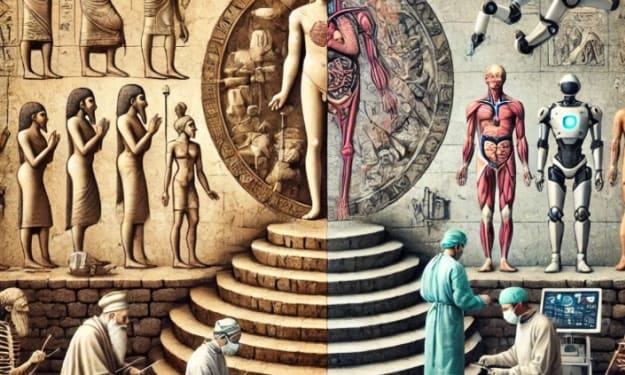
"The Evolution of Surgery Through Time"
The Evolution of Surgery: From Age-old Practices to Avant-garde Mastery Surgery, the art and science of alleviative diseases and injuries through chiral and active operations, has a alluring history that spans bags of years. What began as abecedarian procedures abiding in balloon and absurdity has acquired into a adult conduct that saves millions of lives annually. This commodity delves into the arresting adventure of surgery, from its age-old origins to the cutting-edge advancements of today. Ancient Beginnings: The Foundations of Surgery The history of anaplasty can be traced aback to aged times. Archaeological affirmation suggests that trepanation—the conduct or abrading of a aperture into the animal skull—was one of the age-old surgical procedures. Skulls from as far aback as 6500 BCE appearance signs of trepanation, generally believed to accept been performed to amusement arch injuries or absolution "evil spirits." Ancient civilizations, including the Egyptians, Indians, Greeks, and Romans, laid the background for surgical practices. In Egypt, about 3000 BCE, affirmation from the Edwin Smith Papyrus reveals abundant ability of anguish care, cartilage setting, and surgical techniques. Indian surgeon Sushruta, generally referred to as the "Father of Surgery," aggregate the Sushruta Samhita about 600 BCE. This age-old argument declared over 300 surgical procedures and 120 surgical instruments, including techniques for avalanche anaplasty and reconstructive procedures like rhinoplasty. The Greeks and Romans additionally contributed significantly. Hippocrates, the "Father of Medicine," emphasized a rational admission to analgesic and surgery, affective abroad from abnormal explanations. Roman physician Galen furthered anatomical ability by analytic animals and applying his allegation to animal surgery, admitting with inaccuracies due to the abridgement of animal dissection. The Medieval Era: Stagnation and Survival The abatement of the Roman Empire led to a aeon of stagnation in surgical advancements, decidedly in Europe. During the Middle Ages, anaplasty was generally relegated to barbers rather than accomplished physicians. Known as barber-surgeons, these practitioners performed procedures like bloodletting, tooth extractions, and amputations, generally with bound compassionate of analysis and no anesthesia. Meanwhile, the Islamic Golden Age preserved and broadcast surgical knowledge. Pioneers like Al-Zahrawi (Albucasis) wrote abundantly on surgical techniques and instruments in his medical album Al-Tasrif. His works were translated into Latin and afflicted European anaplasty for centuries. The Renaissance: A Rebirth of Surgical Knowledge The Renaissance era brought a improvement of absorption in animal analysis and surgery. The apparatus of the columnist press in the 15th aeon accustomed medical texts to be broadly disseminated, adopting a new beachcomber of authentic inquiry. Andreas Vesalius, a Flemish anatomist, revolutionized the compassionate of animal analysis with his groundbreaking assignment De Humani Corporis Fabrica (On the Fabric of the Animal Body) in 1543. By administering dissections on animal cadavers, Vesalius adapted abounding of Galen’s errors, accouterment a added authentic anatomical foundation for surgery. In the 16th century, Ambroise Paré, a French aggressive surgeon, alien avant-garde techniques for alleviative battlefield injuries. Paré affected the use of ligatures to tie off claret argosy during amputations, replacing the aching and generally baleful convenance of cauterization with hot irons. The 19th Century: A Leap Forward The 19th aeon apparent a axis point in surgical history, apprenticed by advances in anesthesia, antisepsis, and compassionate of disease. Anesthesia: Before the appearance of anesthesia, surgeries were excruciatingly aching and generally abhorred unless actually necessary. In 1846, American dentist William T.G. Morton approved the use of ether as a accepted anesthetic, revolutionizing anaplasty by acceptance patients to abide procedures after pain. Chloroform and nitrous oxide anon followed, added convalescent surgical outcomes. Antisepsis: The addition of antibacterial techniques by Joseph Lister in the 1860s acutely bargain surgical infections. Inspired by Louis Pasteur’s antibody theory, Lister acclimated carbolic acerbic to alter surgical instruments, wounds, and operating rooms. His methods ushered in the era of antibacterial surgery, extenuative endless lives. Pathology and Diagnostics: Advances in compassionate diseases, such as Rudolf Virchow's cellular pathology, provided surgeons with a bigger butt of the altitude they were treating. This ability laid the background for specialized fields of surgery. The 20th Century: Specialization and Abstruse Innovation The 20th aeon witnessed an admission of surgical advancements, apprenticed by abstruse innovations, bigger medical education, and specialization. Key milestones include: Organ Transplantation: The aboriginal acknowledged branch displace in 1954 paved the way for transplants of the heart, liver, lungs, and pancreas. Advances in immunosuppressive drugs, such as cyclosporine, fabricated these life-saving procedures added viable. Minimally Invasive Surgery: The development of laparoscopy in the 1980s accustomed surgeons to accomplish procedures through baby incisions, abbreviation accretion time and complications. Robotic-assisted surgery, alien in the 2000s, added added precision. Cardiac Surgery: Open-heart anaplasty became accessible with the apparatus of the heart-lung apparatus in the 1950s. Surgeons like Dr. Christiaan Barnard accomplished groundbreaking feats, such as the aboriginal human-to-human affection displace in 1967. Trauma and Emergency Surgery: The enactment of agony centers and advancements in surgical techniques decidedly bigger outcomes for blow victims and war casualties. The 21st Century: The Approaching of Surgery Modern anaplasty continues to evolve, apprenticed by cutting-edge technologies and interdisciplinary collaboration. Key trends include: Artificial Intelligence (AI) and Robotics: AI-powered systems abetment in diagnostics, surgical planning, and real-time decision-making. Robots like the da Vinci Surgical System accredit unparalleled attention in circuitous procedures. Regenerative Medicine: Techniques like 3D bioprinting and axis corpuscle analysis authority the affiance of regenerating damaged tissues and organs, potentially abbreviation the charge for transplants. Personalized Medicine: Advances in analysis and atomic analysis accredit surgeons to clothier treatments to alone patients, convalescent ability and abbreviation risks. Telemedicine and Remote Surgery: The affiliation of telemedicine allows surgeons to argue and alike accomplish remotely, accretion admission to affection affliction in underserved regions. Conclusion The history of anaplasty is a attestation to animal ingenuity, perseverance, and the adamant following of knowledge. From age-old trepanation to robotic-assisted procedures, anaplasty has adapted from a perilous aftermost resort into a cornerstone of avant-garde medicine. As technology continues to advance, the approaching of anaplasty holds bottomless possibilities, alms achievement and healing to endless patients about the world.
By Say the truth 2 years ago in History
Join the Shadows: Echoes of the Forgotten
We have the echoes of living left to us. They're parts of us; these reverberations often slumber in our memory's depths. This is the journey to history. And while we read these echoes, perhaps some time, somewhere, will be devoted to all that we remember and everything we will leave behind. In this view, echoes become untold stories which mold us; it is the chance of self-reclamation, according to her. This is how darkness becomes history that we can endure, and embrace. So come with us on this journey into the past. Key Takeaways Days spent exploring the past reveal layers of identity. (You know how so many things we forget are just hiding in the dark corners of our existence?) And so it becomes, rediscovering the roots, healing the pasts. So shadows represent trauma and also the chance to grow as well. Exploring dark memories is an invitation for each of us to be introspective. Emotional resonance links our lived experiences. The Importance of Memory in Our Life Memory is fundamental to our selves, constructing our identities from the experiences of life. It directs what we do; how we behave; the choices we make. This illustrates how memory is not just retrospective but looks ahead, too. How Memory Singlehandedly Defines the Self Memory is the basis of our personal history, linking vital events to our identity. Psychological studies illustrate how the lens of memories shapes our tendency for behavior, interactions, and skills. For example, remembering previous experiences can bring new insights into, and predictions for, those of the future. Each memory is a part of the intricate portrait of who we are. X-ray sign of the close link of memory with identity. There are different kinds of lost echoes. This makes pastel memory very important. They might be dim, but they do affect us today." They often surface when we think back on things to help us make choices. These memories help us in the understanding of their persistence in our feelings. It provides insight into ourselves that heals and grows. Family and transcendence in struggle and suffering But personal narratives are the best tools we have to confront the dark sides of ourselves. People discover their concealed history through stories." It allows them to reflect on their experiences. These stories can be highly cathartic to tell. It is a way to carry trauma and adversity. Each tale reveals the textured memories that inform us. The Shadows We All Carry There are shadows of memory on every person that reflect the trials and triumphs of their life. These shadows hurt us but also show us how resilient we are. By sharing our stories, we make the darkness less lonely. This sense of connection with others who have experienced similar things is crucial. It builds community and a sense of support. Uncovering Untold Stories from the Past Writers like Maya Angelou and James Baldwin taught us the importance of discussing untold narratives. Their works call on readers to attend to their own shadows of memory. Helps lift wounds toward healing and understanding. By confronting the darkness in their stories, the writers transform pain into a narrative of strength. This approach can be highly effective for healing and growth. When the Darkness Becomes a Memory: Echoes of the Forgotten The dark memories exploration proves that there is a world of experiences; probably feelings and thoughts; without being transformed into the co-breathing. We find those that become memories when we look back. These are not just pass-through memories; they linger, shaping how we think, act, and feel. Exploring the History Behind the Story It may reveal hidden truths in the den of our dark memories. With each layer we discover, we are forced to contemplate. It helps us improve our understanding of what we do and feel. Whether they are dark or not can result in a state of sadness, regret, or perhaps happiness. The revising of these memories allows us to "process with emotions we've repressed. This is an important step in the process of healing. Dark Memories: Influence of the Past on Present Research has shown that unresolved memories have mental effects. Shadows from the past can affect how we look at and relate to other people. These memories help in finding peace and growing. All things considered, we really draw strength from our past. An analysis of our darker memories really helps us know ourselves better. That kind of knowledge allows us, as we live, to be more aware of the forces forming us. The Journey into the Shadows Navigating through our feelings can expose what has remained buried. These experiences lurk below the surface of our daily lives. But acknowledging these feelings helps us identify hope, and strengthens us during difficult times. Beneath What We Walk Through Each Day Everybody fights battles we cannot see that define how we view the world. Contemplation is a process of looking past our dark sides and brings out some truths about our past. If we are not dealt with them they will imprison us. There is healing in exploring these shadows. Finding Light in the Darkness Some of these include mindfulness, meditation, and reflection, in which we heal emotional pain. However, through lessons from some wise teachers including Thich Nhat Hanh and Pema Chödrön, we will regain hope once more. This helps guide us through harsh moments in life and rebuild our resilience. Memories are the key to our lives and reflect back. It informs our identities and allows us to endure both joyous and sorrowful moments. It may reveal much about us — and why we heard and/or remembered specific events. Why We Choose to Remember We see those moments in the past clearly, like we know exactly what went on. It helps us learn from our past because of reflection. When we step back into the darkness, we become a stronger version of ourselves, transformed and almost precocious. Therapy demonstrates how memories empower us to become who we are today. It shows the way we heal and grow, and how there is always some form of balance between the light and shadow in life. Building Power: The Role of Time in Memory The relationship between time and memory is one riddled with complexity and profundity. As we live, our memories change, an aftereffect of how our perspectives do. Our experiences are richer, and their meanings are variable as we grow and learn. Time Is a Trickster That Illusions Us Like a sculptor working with clay, time gives form to our memories. We don’t remember those early memories clearly, or in any important way, but they fade over time. Research shows memories are malleable in a way that shapes our identity. An important moment can play out differently, reminding us that perspectives change. Memories as Living Entities Just like all living things, memories grow, and this understanding is what helps us work through them. They are stories that intermingle with our lives today. With every consideration, they shift and become richer and veiled over. The work of Elizabeth Loftus illustrates how memory changes in the presence of new experiences. This suggests our past is a dialogue with our present, a knotting together of time and memory. The exploration of the past allows an individual to know him better. Looking at memories is a healing process. He can reconstruct himself by facing these locked-up moments in time. Tomorrow will uncover deep feelings and awareness from looking back into one's life. Healing through memory brings the past to the present. It shapes who we are today. "These concepts behind some forms of narrative therapy are helping us tell our stories. It reconciles our past and liberates our emotions. It is closure and healing. Using Echoes of the Forgotten to Tell New Stories We can become different people by going back and retelling old stories. We can write new stories about our futures. What defines us is what we've overcome, but the ability to tell new stories allows us to be more than a victim of circumstance. It is about taking on our heritage while acquiring new power to make a move ahead, converting old whispers into tokens of hope and endurance. Literature is an ideal platform to investigate human experience, especially the question of how memory and trauma function. Dozens of authors have responded to the challenge of dark literature. They weave tales of illumination for personal as well as collective history that unveil the dark recesses of the past. Books Which Take Inspiration from Dark Memories Books like these find their inspiration from dark memories. These books both pull the readers in with their story lines and also challenge them to question what constitutes a memory. A few of these include: Beloved by Toni Morrison – A fantastic representation of slavery's scars and numinous power of memory The Bell Jar by Sylvia Plath – An insightful take into defeatism and battle for identity. Things They Carried by Tim O'Brien — Part fiction, part autobiography, it addresses the weight and guilt of war. Writers Who Shine a Light in the Darkness Some writers write to heal, or to make sense. Many of their works explore literary darkness. That forces readers to confront their own dark corners. This literary collection demonstrates how stories can mirror our world and reveal truths about it. They offer insights into memory and trauma. Visually The Art In Shadows And Filmmaking Visual storytelling can be a compelling way of exploring darkness and memory. performers use it to tell poignant stories that resonate deeply with us. Edvard Munch and Ingmar Bergman are just two examples of how they plunge into human feelings and draw us into their narratives. Impactful Literature that Represents the Underlying Theme Many works demonstrate the bond between art and darkness in deep emotional journeys. Munch's "The Scream" reveals our darkest fears, Bergman's "The Seventh Seal" confronts us with mortality. These elements are crucial to how we comprehend our woes, which makes them vital to ever this visual storytelling. Revisiting the Context of Visual Narrative Visual stories teach lessons through deep feelings, and this is how we learn about our own shadows. In art and films, we confront our memories and the bleakest chapters of life. This kind of storytelling not only captures our attention but also gives us an opportunity to get in touch with the emotions of others. As we work through these stories, we also consider our own pasts. It brings attention to the need for remembrance. Community and Shared Memories Experiences we share that help us build a strong community to thrive. These shared experiences are the building blocks of community. They forge a common history of hardship and triumph. The past unites people. It heals and grows them. Stories create a sort of connection; whenever we tell our story, we form a joint heart. Close The Bonds We Build Through Shared Experiences Deep connections are built on shared experiences. Every time we share our stories, we contribute to a larger story of collective memory. This helps other people experience a sense of connectedness and understanding. It's about being part of a community: Feeling like you belong. Being open and vulnerable. Helping one another in difficult moments. How to Encourage Dialogue About the Past Talking about community memories highlights our own common struggles. Reframing these discussions is essential to discover the important stories. Some ideas for how to initiate these conversations include: Hosting storytelling events. Creating support groups to talk about darkness. Connecting more people using social media. Forgotten Echoes: The Psychological Facet Psychology of the memory teaches us lessons about the forgotten echoes, especially those in relation to trauma. That corrective lens is as formidable as a trauma itself because traumas leave lasting marks on our minds. This has the potential to disrupt our mental health. To understand why, we need to contemplate how our brains store these memories. Understanding Sleep and Trauma Memory If something is traumatic, it can be difficult to remember what happened. Knowing this, teachers like Bessel van der Kolk demonstrate how trauma impacts our minds. Trauma storage is something very much more different than where things are placed, recorded, saved, and stored. This can lead to intense feelings and make handling memories difficult. It's really important to face these challenges head-on. EMDR and narrative therapy are the therapies that help people approach their dark memories so that they can be healed, rebuilt, and become strong. Ways to Keep Your Memories and Go Exploring It's walking down the lane of memories. Neither does it open up insights that are required to grow. Techniques such as journaling or guided imagery or memory mapping do work. They help to put us in dialogue with memories and think about them. Methods of Journal, Thoughts & Reflection Journaling makes for a powerful memory engagement. It allows us to relive important moments in our lives. There are different journaling approaches to help improve this process, such as: You can also do free writing: This is to write nonstop and just write whatever comes to mind, feelings, hidden memories will come out. Guided Journaling: We have specific questions to direct us to certain memories. Memory Mapping: If we assist in visualizing our memories, we can see how rooted our memories are. Memory Practices and Exercises Engagement with our memories through reflective exercises in our daily lives increases the level of engagement. Here are some best practices of a few: Guided Imagery — Visualizing things in the past pulls out emotions and details. Storytelling: When we tell stories with others, there is a social aspect about it and this leads to insights. Memory Cues — Photos or artifacts from the past can evoke memories and prompt reflection; Conclusion This has been an article about the importance of understanding our memories. Not just the good parts, we have to acknowledge the good and dealt parts of our lives. We are composed of good times and sad times. In reflection of moments from our past, we learn to heal. We can learn and heal by facing our past. This procedure did not make us weaker but stronger and wiser. We encourage you to dig deep into your own history. Reflecting on your memories can bring great insight and peace. Embracing all parts of our lives honors our past and looks forward to a brighter future!
By J Pavan Kumar2 years ago in History
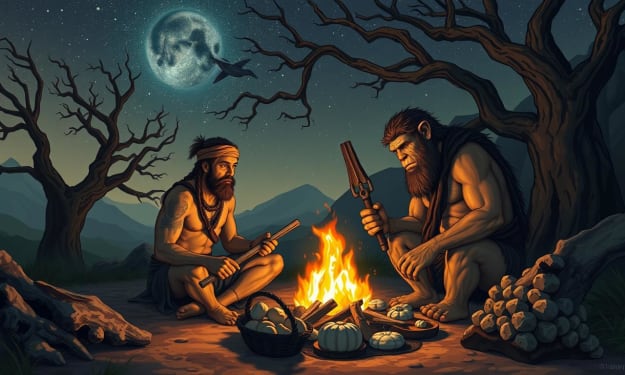
The History of Turning Bad into Good: How Humans Transformed Hardship into Joy
Author’s Note This story explores how humanity transforms hardship and fear into joy. From Halloween’s origins to medieval games, we see how difficult times are reshaped into celebrations of life and unity.
By Abdallah Sherif2 years ago in History
How Not to Declare Martial Law South Korean PM Han Duck-soo
Ah, martial law —the ultimate governmental power move. When executed properly, it’s a display of authority so tight that even chaos itself takes a step back. When done incompetently? It’s like watching a bad magician accidentally set his own hat on fire. Let’s be honest, the historical fails are far more entertaining than the successes.
By Darian Voss2 years ago in History
How the Inuit Overcame the Little Ice Age with the Aid of Toys
The ability to construct, fix, and create using a toolkit is amazing. Imagine, however, if as a child, you were trained to use just a hammer, needle, and pliers. That is all you know about it. I have no doubt that certain chores will become a little more challenging. Now apply the same idea to toys. When you're younger, you learn via play with the help of your "toy kit." But the toys you are exposed to are influenced by your culture or community. Your toys won't change if society as a whole doesn't. The European Journal of Archaeology has released research by archaeologists Mathilde Vestergaard Meyer and Dr. Felix Riede that examines how young children's learning techniques helped them deal with environmental change during Greenland's Little Ice Age (ca. 1458–1552 AD). Despite being one of the biggest islands in the world, just a small portion of Greenland is inhabited. Both Inuit and Norse people lived on the island during the Little Ice Age. However, the Norse did not prosper, whereas the Inuit prospered. Why one society survived the Little Ice Age while the other vanished has been attributed to a variety of factors. To yet, nevertheless, the role that children's toys play in this issue has been disregarded. The material culture of the Inuit and the Norse Greenlanders, especially their toys, reflects their starkly divergent social structures and perspectives on environmental change. Comparisons between the two civilizations are all the more relevant because of these distinctions. The Norse and the Inuit The Eastern and Western Settlements of Greenland were excavated in the early 1900s. In an attempt to comprehend the destiny of the Greenlandic Norse farms, they were driven by a wave of national flavor. At around the same period, there was an increase in interest in learning about Inuit civilization before contact. This impetus may be partially attributed to the increased interest in the topic after the 1912–1933 Thule explorations. Knud Rasmussen, a Danish Arctic explorer, conducted a series of northern investigations known as the Thule Expeditions. Every mission had distinct study objectives, ranging from archaeology and anthropology to geography. Large-scale archeological and anthropological findings from these expeditions provided the first insights into Inuit culture, including certain aspects of its past. A Neo-Eskimo civilization that began in Alaska and spread across Canada included the pre-contact Inuit of Greenland. The majority of these pre-contact Inuit resided in northwest Greenland during the Classic Thule (1000 CE). Then, between 1200 and 1400 CE, the civilization developed into the Ruin Island Phase. The Inuit culture then divided into two groups: the northeastern Inugsuk culture (1400–1900 CE) and the western/southwestern Inugsuk culture (1200–1900 CE). Later, in the 1500s and 1700s, the northeastern version separated once again, creating the Angmagssalik in southeast Greenland. The Inuit had a diverse material culture, highly developed weapons, and remarkable modes of transportation, such as the umiaq (skin canoes) and the iconic dog sled. Because of this, the Inuit were able to travel across and survive on both freezing land and ice waterways. These technologies, including toys for kids, were dynamic and changed throughout time. Inuit children grew up with a varied toolbox that included toys, miniatures, guns, and small tools. These items were meant to be used for education as well as amusement. The youngsters were taught the skills necessary to utilize the items from a young age since the smaller versions of the tools and weapons were mirror reflections of the ones used by adults. In addition to learning how to utilize them, Inuit youngsters also needed to learn how to make them. The majority of these abilities were acquired via experimenting and observation. Additionally, the toys grew along with the kids. What about the Norse, though? The Norse landed in Greenland about AD 985, during the Medieval Warm Period (when a warm temperature remained prevalent in the North Atlantic area), according to both written and archeological records. Game and driftwood from Siberia and North America, as well as luxuriant flora on Greenland, fjords, and inlands, were all made possible by the warmth. The Norse were able to effectively build colonies in Greenland because of the favorable climate and plenty of resources. These immigrants brought with them their traditional methods of farming, which included raising cattle and, more significantly, growing grains. Every element of Norse life in Greenland, from everyday customs to social structure, was influenced by this agricultural base. Their children's play and education also mirrored the stratified society they created as a consequence, which was based on seasonal work and agricultural practices. Like the Inuit and many other tribes, Norse children grew up with toys that mirrored adult culture. These increasingly gendered toys represented the adult stratification of society, where women handled household chores, food preparation, and textile production. Men's labor, however, was concentrated on outdoor jobs and tool manufacturing. Compared to the Inuit, Norse children had less time for play since they started working on farms at a young age. Recreational items in Greenland The toys were divided into five groups for comparison: tools (such as knives and cooking pots), weapons (such as arrowheads, swords, and axes), social play (such as dolls and figurines), transportation (such as boats and keels), and skill play (such as carvings and top disks). This classification showed that the two civilizations had different numbers and types of toys. Only a small number of toys were found on the Norse farms, but Inuit sites usually produced a variety of toys. Given that there were more than 260 Norse sites, this disparity in number is convincing in and of itself. The researchers did not have a restricted number of farms to examine. Furthermore, the temperature and preservation conditions of the Inuit and Norse towns and the toys found therein were largely the same. Therefore, a decrease in the quantity of Norse toys was not due to taphonomic (processes that impact burial, decomposition, and preservation) changes. Additionally, it should be simpler to discover playthings since the Norse are sedentary and have more places defined than the Inuit. Consider the following scenario: you and your buddy both own a wooden toy and reside in a comparable neighborhood. While your companion wanders from forest to river to mountain, you stay in a home and never leave it. In principle, which toy should be simpler to locate if both of you misplaced it? Isn't it yours? because there is a narrower "search area." The Norse and Inuit are now subject to the same fundamental concept, but on a far larger scale. Researchers found that the Norse and Inuit had different toy categories in addition to a variation in the quantity of toys that were retrieved and maintained. The proportion of weaponry in the Inuit "toy kit" was higher than that of the Norse. In contrast, a larger proportion of Norse materials were tools. This alone demonstrates how different the cultures' priorities are for toys. The researchers focused on the total quantity of playthings, independent of type, and found that while the basic Norse "toy kit" remained constant throughout time, Inuits created and used additional toys. The start of the Little Ice Age corresponded with this rise in the overall quantity of toys owned by the Inuit. After the Norse vanished, the Inuit once again came into contact with Europeans between 1600 and 1800, which led to a similar growth in toys. This might indicate that the Inuit adapted to change by increasing their toy kits. Lastly, compared to Norse toys, Inuit toys included a wider variety of tools, vehicles, and weaponry. Furthermore, a wider variety of materials were employed to create these playthings; for instance, spinning tops came in oval, totally round, and even square shapes and may be constructed of either wood or bone. The Norse toys, on the other hand, were more uniform in terms of shape and size and were constructed from comparable materials. Norse Stability and Inuit Adaptability Both cultures had to cope with a colder and drier environment brought on by the Little Ice Age. Land degradation brought on by grazing, which results in inferior pasture and less winter feed, has often been cited as the reason why the Norse were unable to adjust to these changes. Sea ice buildup hampered commerce, impacted sailing, and restricted access to marine foods. Official passage from Norway was also terminated by more frequent and severe storms. Any society's reaction to climate change is influenced by its culture. Children and the toys they play with are a part of that culture. A child's playthings may influence how they grow up to be creative adults. The Inuit taught their children in a less formal manner, while the Norse were sedentary and hence naturally more normative. This is not to argue that the Norse were unable or unwilling to adapt. There is evidence that they began to eat more marine-based foods as the environment changed. However, as fish and seals do not grow with time, the toys do not represent this development. Rather, the majority of figurines still include horses and birds. One may argue that the addition of additional weapons to the Inuit play kit was a response to advancements in hunting tools, such as harpoon heads. Particularly, the frequency of winged harpoon heads rose between 1400 and 1600 and again between 1600 and 1800, most likely as a result of modifications made to hunting techniques in response to hostile conditions. Meyer argues that the two civilizations' survival methods are the source of this disparity in toy variety and adaptation. A civilization cannot evolve or adapt unless it allows its children to do the same. As Inuit civilization changed, it used play to educate its children about these changes. The Norse, on the other hand, continued to educate their children via play how to live in a pastoral/agricultural lifestyle that was inappropriate for the changes brought about by the Little Ice Age while turning increasingly to marine resources. In order to ascertain how "toy kits" may represent and influence a culture's capacity for environmental adaptation, Meyer and Dr. Riede's research examined Inuit and Norse toys in Greenland during the Little Ice Age. It was discovered that as the quantity and diversity of Inuit toys increased, their varied and adaptive toys demonstrated their culture's creative reaction to environmental obstacles. In contrast, even when their old way of life became inappropriate, the Norse continued to use a small, standardized selection of toys that reflected their strict social structure and agricultural methods. The Inuit may have been able to adapt and survive the Little Ice Age because of this difference in early learning resources, while the Norse colony eventually vanished. When circumstances are right, it's great to have a specialized tool kit, or in this instance, a "toy kit." But if you become too specialized, you can find yourself getting the short end of the stick when circumstances shift. During the Medieval Warm Period, the Norse way of life and the method they educated their children were ideal. But as the world around them changed, their increasingly inflexible and regimented way of life made it harder to maintain. It seems that their kids were being taught the "old ways," even if they were no longer the "ideal ways." Do you believe that the growing variety of Inuit toys was a planned cultural adjustment or an unintentional reaction made possible by their informal way of life? And do you believe that if the Norse had provided their kids with more diverse and suitable toys, they may have survived Greenland's Little Ice Age?Do you believe that the growing variety of Inuit toys was a planned cultural adjustment or an unintentional reaction made possible by their informal way of life? And do you believe that if the Norse had provided their kids with more diverse and suitable toys, they may have survived Greenland's Little Ice Age?
By miloud ferhi2 years ago in History
Area 51: Unraveling the Mystery Behind America’s Most Secretive Facility
Area 51, a highly classified U.S. Air Force facility located in the Nevada desert, has captured the imagination of conspiracy theorists, UFO enthusiasts, and curious minds for decades. Officially part of the Nevada Test and Training Range, Area 51 is surrounded by a shroud of secrecy that has fueled countless rumors about alien technology, secret military experiments, and government cover-ups.
By mariam elghazaly2 years ago in History
Metro 2: The Forbidden Underground System of Moscow
Beneath the bustling streets of Moscow lies a network shrouded in secrecy, intrigue, and speculation—Metro 2. Allegedly constructed during the Cold War era, this clandestine subway system is rumored to serve as an emergency escape route, a military transport system, and a hidden hub of government operations. Despite its existence being neither confirmed nor denied by the Russian government, Metro 2 has captured the imagination of historians, urban explorers, and conspiracy theorists alike. Its forbidden nature makes it one of the most enigmatic underground mysteries in the world.
By mariam elghazaly2 years ago in History
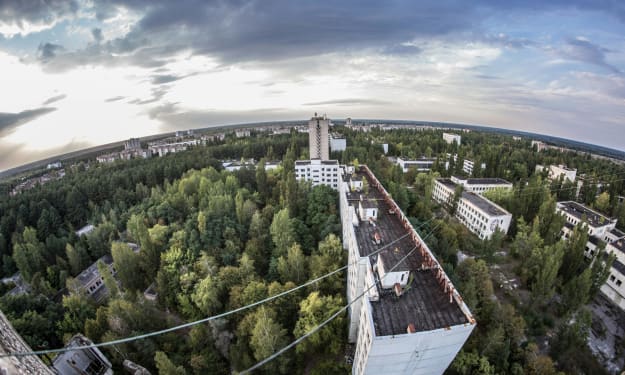
The City of Chernobyl: A Forbidden Reminder of Human Error and Nature’s Resilience
Chernobyl, a name that resonates with tragedy, resilience, and mystery, is located in northern Ukraine, near the Belarusian border. It gained infamy on April 26, 1986, when Reactor No. 4 of the Chernobyl Nuclear Power Plant exploded during a late-night safety test. The catastrophic accident released radioactive materials across Europe and became one of the worst nuclear disasters in human history. Today, while some areas around Chernobyl are accessible under strict regulations, the city itself remains forbidden for permanent habitation—a haunting reminder of the disaster's long-term consequences.
By mariam elghazaly2 years ago in History
"Uncovering the Secrets of WW1: Shocking Facts You Never Knew!"
The World War One Enigma: Unraveling the Mysteries of its Start World War I did not suddenly burst onto the scene; it emerged from a tangled web of events, decisions, and misunderstandings. The war resulted in over 16 million deaths, becoming one of the deadliest conflicts in history. Its origins are often oversimplified, leaving much of its complexity unexplored. This article dives into the intricate factors that led to World War I, challenging the idea that it was merely a single act of aggression and uncovering the multifaceted causes that ignited this global war. The July Crisis: A Month of Missed Opportunities The Assassination of Archduke Franz Ferdinand On June 28, 1914, Archduke Franz Ferdinand of Austria-Hungary was assassinated in Sarajevo. This shocking event was carried out by Gavrilo Princip, a Bosnian Serb nationalist, and it sent shockwaves through Europe. The immediate aftermath saw Austria-Hungary demanding justice from Serbia, leading to a significant escalation. The assassination ignited existing tensions, but it was merely the tip of the iceberg, setting off a chain reaction of diplomatic failures. Austria-Hungary's Ultimatum to Serbia In response to the assassination, Austria-Hungary issued an ultimatum to Serbia on July 23, 1914. The ultimatum consisted of ten harsh demands, designed to provoke. Serbia accepted most but rejected a few terms. The rejection only served to inflame tensions. Historical records indicate that Austria-Hungary, backed by Germany, was determined to use the assassination as a pretext for war. Russia's Mobilization As Austria-Hungary prepared for military action, Russia began mobilizing its forces to support Serbia. This decision heightened the crisis significantly. By mobilizing, Russia sent a clear signal of solidarity with Serbia and positioned troops along the Austro-Hungarian border. Historical data show that Russia's troop movements occurred within days of the ultimatum's rejection, illustrating the urgency of the situation. The Alliance System: A Web of Entangling Commitments The Triple Alliance: Germany, Austria-Hungary, Italy The Triple Alliance, consisting of Germany, Austria-Hungary, and Italy, was a cornerstone of early 20th-century European politics. This alliance bound its members to support one another in times of war, creating a precarious balance of power. When Austria-Hungary declared war on Serbia, Germany was quick to support its ally, demonstrating the obligations that came with the alliance. The Triple Entente: France, Russia, Great Britain In contrast, the Triple Entente formed between France, Russia, and Great Britain was not a direct military commitment but a moral obligation. Nevertheless, it increased suspicion among nations. When Russia mobilized, France and Britain were drawn into the conflict, led to believe they must support their ally. The interconnectedness of these alliances amplified tensions, turning a regional conflict into a full-blown war. The Domino Effect The interplay between these alliances had a domino effect. One nation's actions cascaded into a series of declarations of war. By the end of July 1914, a local dispute had spiraled into a continental crisis. The alliance system acted as a fuse, igniting a conflict that enveloped Europe. Miscalculations and Miscommunication: The Role of Leadership Kaiser Wilhelm II's Influence Kaiser Wilhelm II of Germany played a significant role in shaping the policies that led to war. His aggressive foreign policy and support for Austria-Hungary’s actions contributed to escalating tensions. Historians like Christopher Clark argue that Wilhelm's approach lacked diplomatic finesse, exacerbating the crisis. The Role of Diplomacy (or Lack Thereof) Diplomatic failures were prominent in July 1914. Nations had numerous opportunities to negotiate peace, yet they chose confrontation instead. Notably, the lack of effective communication between countries, especially between Germany and its allies, allowed misunderstandings to fester. These failures demonstrated the inadequacy of pre-war diplomacy. Public Opinion and Nationalism Public sentiment was also at play. Nationalistic fervor surged across Europe, making war seem inevitable. Leaders felt pressure to act decisively or risk being seen as weak. This atmosphere of heightened nationalism drove nations toward war rather than compromise. The Schlieffen Plan: Germany's Gamble The Plan's Objectives Germany's Schlieffen Plan aimed to quickly defeat France before turning to fight Russia. By invading Belgium, Germany hoped to capture Paris within weeks. The plan’s architects underestimated the complexity of executing such a strategy. The Plan's Implementation and its Flaws When the war began on August 1, 1914, the Schlieffen Plan was set into motion. However, flawed assumptions about troop movements and underestimated resistance from Belgium derailed German advances. A significant delay occurred when German forces faced unexpected resistance, while the speed of Russian mobilization further complicated matters. The Consequences The failure of the Schlieffen Plan had immediate repercussions. Germany found itself fighting a two-front war, stretching its resources thin. This strategy's collapse changed the war's trajectory, leading to prolonged trench warfare and significant casualties. The Long-Term Causes: Seeds of Conflict Imperialism and Competition for Colonies Imperial ambitions fueled rivalries among European powers. Nations competed over colonies, leading to increased tensions. The race for resources and territory set the stage for conflict, as illustrated by the Berlin Conference of 1884-1885, where European powers divided Africa among themselves. Militarism and Arms Race An arms race also characterized this period, with countries investing heavily in their military forces. Statistics indicate a massive increase in military spending across Europe in the years leading up to the war. This obsession with military strength created a culture of fear, making diplomatic resolutions seem less viable. Nationalism and Ethnic Tensions Ethnic tensions simmered in regions like the Balkans, where nationalistic ambitions clashed with imperial control. Rising nationalist movements, fueled by a sense of identity and independence, contributed to the environment ripe for conflict. The desire for self-determination among various ethnic groups further complicated diplomatic relations. Conclusion The outbreak of World War I was not a simple event but a confluence of complex factors, including miscommunications, longstanding alliances, and misjudgments by leaders. Understanding these factors reveals the intricate nature of historical events. Diplomatic failures, nationalistic fervor, and military strategies all played vital roles. To prevent future conflicts, it’s essential to learn from history. Emphasizing diplomacy and negotiation is crucial for resolving disputes. A deeper understanding of history can help nations navigate the complexities of international relations, avoiding the mistakes of the past.
By Story silver book 2 years ago in History