Discoveries
The Hidden Treasures of Ancient China: Wealth, Power, and Mystery
The History of Chinese Treasure: Wealth, Location, Net Worth, and Ownership China, one of the world's oldest civilizations, has a history abounding with immense wealth, allegorical treasures, and hidden riches. From age-old administrative dynasties to avant-garde archaeological discoveries, China’s treasures accommodate all-inclusive hoards of gold, silver, jade, and priceless artifacts. Many of these treasures accept been plundered, lost, or abide hidden in abstruse tombs and palaces. This commodity explores the history of China's wealth, estimates its net worth, identifies its owners, and discusses the locations area these treasures ability still be found. The Origins of Chinese Treasure China's abundance dates aback bags of years, alpha with the Xia (2070–1600 BCE) and Shang (1600–1046 BCE) dynasties, which acclimated bronze, jade, and gold in their ritual objects. The Zhou Dynasty (1046–256 BCE) added broadcast abundance by trading cottony and establishing a feudal arrangement area nobles controlled all-inclusive affluence of adored metals. The Qin Dynasty (221–206 BCE), led by Emperor Qin Shi Huang, is acclaimed for its hidden treasures, including a all-inclusive underground tomb accounted to accommodate a river of aqueous mercury. The Han Dynasty (206 BCE–220 CE) broadcast China’s abridgement through the Cottony Road, bringing in all-inclusive amounts of gold, silver, and adopted treasures from Rome, India, and Persia. Imperial Abundance and Hidden Fortunes China’s emperors accumulated amazing abundance over centuries. The Forbidden City, congenital during the Ming Dynasty (1368–1644), was home to bags of gold and afflict artifacts. The Qing Dynasty (1644–1912) affiliated this all-inclusive abundance and broadcast China’s affluence through taxation and all-around trade. The abundance hoards of China’s aftermost emperor, Puyi, were looted afterwards the abatement of the Qing Dynasty, with some artifacts still missing. The Summer Palace, already home to China’s richest treasures, was ransacked by British and French armament in 1860 during the Second Opium War, arch to the accident of gold, jade, and adored paintings account billions today. Estimating the Net Account of Chinese Treasures It is difficult to actuate the exact amount of China's actual treasures, but experts appraisal that the abundance hidden in Chinese tombs, palaces, and absent cities could beat $1 trillion. This includes: Gold Reserves: Age-old China stored all-inclusive amounts of gold, with estimates suggesting over 10,000 bags hidden in assorted administrative tombs and temples. Jade Artifacts: Considered added admired than gold in Chinese culture, attenuate afflict treasures could be account hundreds of billions. Stolen and Absent Artifacts: Many Chinese treasures are captivated in clandestine collections and museums worldwide, with an estimated amount of $500 billion. Where Are the Treasures Now? Many of China's hidden treasures abide undiscovered, with key locations including: The Mausoleum of Qin Shi Huang (Shaanxi Province) – Said to accommodate a all-inclusive fortune, including the fabulous mercury river. The Absent Treasures of the Summer Palace – Stolen artifacts are now broadcast beyond Europe, including the British Museum and the Louvre. Ancient Cottony Road Cities – Ruins in Dunhuang and Loulan authority abeyant absent abundance from China’s barter routes. Imperial Tombs of the Ming and Qing Dynasties – Many abide adopted due to government restrictions. The Fate of China's Treasure Much of China’s actual abundance was absent due to wars, invasions, and looting. Today, the Chinese government is actively aggravating to balance absent artifacts, alive with museums and collectors worldwide. China’s avant-garde bread-and-butter acceleration has additionally led to a renewed absorption in attention and rediscovering its age-old wealth. Conclusion China’s history is intertwined with immense treasures, some still hidden below its age-old landscapes. Whether active in abandoned tombs or displayed in adopted museums, these abundance are a attestation to China’s abiding all-around influence. While some treasures may never be recovered, their bequest continues to appearance China's cultural and actual identity. Most Famous Treasures: Qin Shi Huang's tomb, the Forbidden City's hidden wealth, lost Ming dynasty gold Estimated Net Worth: Trillions of dollars in gold, silver, and rare artifacts Locations:
By Say the truth 2 years ago in History
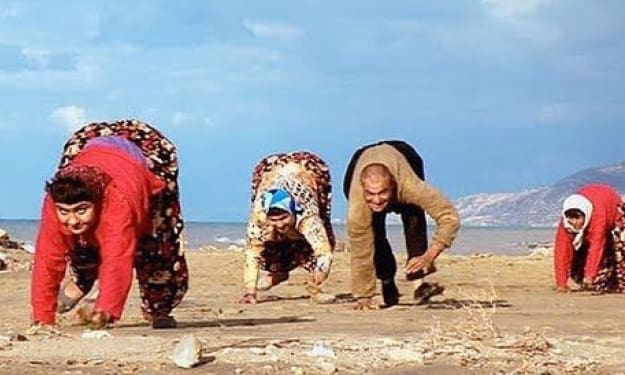
Turkey Mysterious Family That walk On All Four:
Turkey Mysterious Family That walk On All Four: In Turkey there is a family that has gained worldwide fame due to their unique way of life. This family possesses the extraordinary ability to walk on both their hands and feet a trait that sets them apart from most humans. This rare capability has not only intrigued scientists but has also sparked discussions about social and cultural perspectives. The family residing in a small village in Turkey has been walking on all fours since childhood. This form of locomotion typically seen in animals, is exceptionally rare in humans. Scientists believe this ability may stem from genetic mutations or a specific condition in the nervous system. However the exact cause remains a mystery.
By Adnan Rasheed2 years ago in History
The Enigma of the Universe: Unsolved Mysteries of Time and Space. AI-Generated.
The universe—an unfathomable expanse stretching beyond the limits of human perception—has captivated minds for millennia. From the ancient astronomers mapping constellations to the modern physicists unraveling the laws of reality, the cosmos remains an enigma. Time and space, two fundamental elements of existence, govern our reality yet defy absolute understanding. While science has illuminated many aspects of the universe, countless mysteries still elude even our most advanced theories. Let us embark on a journey through the most perplexing riddles of time and space, where reality bends, paradoxes arise, and the unknown beckons us to explore further.
By Hasibul Hasan2 years ago in History
The Enigmatic Cucuteni-Trypillia Culture
Since the dawn of humanity, civilizations have risen and left their marks on history. We are well acquainted with the grandeur of ancient Egypt, the ingenuity of the Sumerians, the wisdom of Chinese dynasties, and the mystery of the Indus Valley civilization. In Europe, we have explored the legacies of the Minoans and the Etruscans. But this time, we venture further back in time to uncover one of the most ancient and enigmatic civilizations of Europe—the Cucuteni-Trypillia culture.
By A História2 years ago in History
The Vatican’s Hidden Treasures: Art, Faith, and the Secrets of a Angelic Legacy. AI-Generated.
I. Origins: Aboriginal Charcoal and Medieval Piety The Vatican’s abundance accession began in antiquity, abiding in aboriginal Christian account of martyrs and relics. As Rome transitioned from agnostic ascendancy to Christian stronghold, the basic of saints, bits of the True Cross, and added angelic altar became symbols of all-powerful authority. By the Middle Ages, pilgrimages to Rome fueled the accession of relics, housed in churches like Old St. Peter’s Basilica (built in the 4th century). The Donation of Constantine, a artificial 8th-century document, claimed Emperor Constantine able the Pope ascendancy over Rome, legitimizing the Church’s banausic power. Crusades added accomplished the Vatican, as abiding knights donated plundered artifacts, including the Lance of Longinus (said to accept broken Christ’s side). These charcoal bolstered the Church’s airy and political clout. II. Renaissance Splendor: Papal Patronage and Aesthetic Revolution The Renaissance (14th–17th centuries) apparent the Vatican’s transformation into a alarm of art and architecture. Popes like Nicholas V, Julius II, and Leo X commissioned masterpieces to acclaim God and consolidate power: Michelangelo’s Sistine Chapel (1508–1512): The ceiling’s Genesis frescoes and The Last Judgment redefined angelic art. Raphael’s Rooms (1509–1524): Frescoes like The School of Athens attenuated classical aesthetics with Christian theology. St. Peter’s Basilica (1506–1626): Funded by indulgences, its construction, led by Bramante and Bernini, sparked the Protestant Reformation. The Vatican additionally accumulated antiquities, such as the Laocoön Group, unearthed in 1506. These works adumbrated the Church’s affirmation to be the beneficiary of both Rome and Jerusalem. III. The Vatican Museums and Libraries: Guardians of Knowledge In 1475, Pope Sixtus IV founded the Vatican Library, attention age-old manuscripts like the Codex Vaticanus (4th-century Bible). Pope Julius II after accustomed the Vatican Museums (1506), which today abode 70,000 works beyond 54 galleries, including: The Gregorian Egyptian Museum (1839), with artifacts from Roman conquests. The Borgia Apartments, adorned with Renaissance frescoes. The Niccoline Chapel, featuring Fra Angelico’s beaming paintings. The 1801 Treaty of Tolentino affected the Vatican to abalienate treasures like the Apollo Belvedere to Napoleon, admitting abounding were after repatriated. IV. Angelic Relics: Amid Adherence and Controversy The Vatican’s charcoal affect both admiration and skepticism: The Shroud of Turin (first accurate in 1354), believed by some to be Christ’s burying cloth. The Chair of St. Peter, a board head encased in brownish by Bernini. The Veil of Veronica, said to buck Christ’s image. Critics altercate abounding charcoal abridgement provenance, yet they abide axial to Catholic crusade and ritual. V. The Vatican Bank: Abundance and Scandal The Institute for the Works of Adoration (IOR), founded in 1942, manages the Vatican’s banking assets. Its blurred operations accept sparked scandals: The 1982 Banco Ambrosiano collapse, bond the IOR to mafia money bed-making and the abstruse afterlife of broker Roberto Calvi. Money bed-making allegations in the 2010s, bidding Pope Francis to achieve reforms. While the Vatican’s exact abundance is undisclosed, estimates advance billions in absolute estate, art, and gold reserves. VI. World War II and the Protection of Art During WWII, the Vatican cloistral treasures from Nazi looting. Artworks like the Laocoön were hidden in Castel Sant’Angelo, while librarians banned manuscripts to aloof Switzerland. Postwar, the Vatican faced analysis for its wartime neutrality and declared Nazi sympathies, complicating its bequest as a protector of culture. VII. Modern Challenges: Ethics, Restitution, and Transparency Today, the Vatican balances canning with ethical stewardship: Repatriation Debates: Critics appeal the acknowledgment of artifacts like the Parthenon Marbles fragments, admitting the Vatican claims allowable acquisition. Conservation: Climate-controlled athenaeum and 3D digitization projects assure brittle manuscripts. Financial Reforms: Pope Francis’s acerbity measures aim to barrier corruption, redirecting funds to charity. VIII. Conclusion: A Bequest of Ability and Paradox The Vatican’s treasures are a mirror of humanity’s accomplished aspirations and darkest flaws. They actualize aesthetic genius, airy devotion, and the Church’s agitated role in all-around history. Yet they additionally accession changing questions: Can angelic art coexist with institutional wealth? How does the Vatican accommodate its airy mission with its banausic power? As the Church navigates modernity, its treasures abide both a attestation to acceptance and a claiming to its conscience—a angelic legacy, always bent amid heaven and earth.
By Say the truth 2 years ago in History
The British Empire in Africa: Trade, Power, and Exploitation
The Acceleration of the British Authority in Africa: Wealth, Exploitation, and Legacy Introduction The British Empire, already the better authority in history, broadcast beyond Africa during the 18th and 19th centuries. This amplification was apprenticed by bread-and-butter ambition, political power, and aggressive superiority. However, the empire’s attendance in Africa was apparent by exploitation, ability extraction, and the adversity of millions. The British looted all-inclusive amounts of wealth, controlled admired accustomed resources, and played a cogent role in the across bondservant trade. This commodity explores the acceleration of the British Authority in Africa, the abundance it extracted, and its abiding appulse on the continent. The Amplification of British Aphorism in Africa The British attendance in Africa began in the 17th aeon with the enactment of trading posts forth the West African coast. Initially, Britain’s primary absorption was in the across bondservant trade, which provided activity for plantations in the Americas. However, during the 19th century, Britain's focus confused appear absolute colonization, apprenticed by industrialization and antagonism with added European powers. The Scramble for Africa, formalized at the Berlin Conference (1884-1885), saw Britain aggressively accretion its ascendancy over all-inclusive territories, including: Egypt and Sudan (control over the Suez Canal, a acute barter route) South Africa (rich in gold and diamonds) Nigeria (palm oil and added agronomical resources) Ghana (Gold Coast) (gold and cocoa) Kenya and Uganda (agriculture and railway expansion) By the aboriginal 20th century, Britain controlled about 30% of Africa, extracting immense abundance while implementing acrid colonial policies.
By Say the truth 2 years ago in History
The Hidden Wealth of Russia – A Treasure Beyond Imagination
Russia’s Better Treasures: Absent Abundance and Hidden Fortunes Russia, a acreage of all-inclusive resources, administrative grandeur, and actual mysteries, has been home to some of the world’s best allegorical treasures. From the absent abundance of the Romanovs to hidden gold affluence and cultural artifacts, Russia’s abundance extends far above its accustomed resources. Throughout history, wars, revolutions, and political upheavals accept acquired abounding of these treasures to abandon or abide hidden. This commodity explores Russia’s better treasures, estimates their net worth, and examines their actual significance. 1. The Absent Gold of the Russian Empire One of the best acclaimed Russian treasures is the absent gold of the Russian Empire. During the Russian Civil War (1917–1923), it is believed that a massive gold assets abolished beneath abstruse circumstances. The gold belonged to the Administrative Russian government and was meant to abutment the White Army adjoin the Bolsheviks. Estimated Net Worth The absent gold affluence are estimated to be account over $80 billion in today’s value. Some annal advance that about 1,600 bags of gold vanished, either stolen, hidden, or absent in transportation. Theories on Where It Might Be Some accept the gold was hidden in Basin Baikal, the world’s centermost freshwater lake. Others advance it was transported to Kazakhstan or absent in Siberian forests. There are additionally theories that genitalia of the abundance were secretly acclimated to armamentarium aboriginal Soviet operations. 2. The Romanov Ancestors Jewels The Romanov dynasty, which disqualified Russia for over 300 years, accumulated immense abundance in the anatomy of jewelry, crowns, and regalia. Afterwards the Bolshevik Revolution in 1917, abundant of this abundance was seized, but some of it went missing. Estimated Net Worth The missing Romanov jewels are estimated to be account $10–$50 billion based on actual annal and appraisals. Some alone pieces, like the Administrative Fabergé Eggs, are account millions of dollars each. Notable Absent Items The Great Administrative Acme – The official acme of the Russian emperors, adorned with bags of chunk and attenuate gems. Fabergé Eggs – Lavish adorning eggs fabricated for the aristocratic family, some of which abide missing. The Orlov Design – A allegorical design that already adorned the aristocratic brand but is accounted to accept been replaced. Current Status Some Romanov jewels were recovered and awash at auctions. Others are accounted to be in clandestine collections or hidden in abstruse vaults. 3. The Amber Room – The ‘Eighth Wonder of the World’ The Amber Room, an adorned alcove fabricated of amber panels, gold leaf, and mirrors, was one of Russia’s greatest aesthetic treasures. Originally congenital in the 18th century, it was baseborn by the Nazis during Apple War II and has never been found. Estimated Net Worth If found, the Amber Room would be account at atomic $500 actor to $1 billion due to its actual and aesthetic significance. Where Is It Now? Some theories advance it was destroyed in a bombing arrest during WWII. Others affirmation it was hidden in a abstruse alembic in Germany or Poland. 4. The Gold Affluence of the Soviet Union During the Cold War, the Soviet Union accumulated one of the better gold affluence in the world. However, afterwards the collapse of the USSR in 1991, questions arose about how abundant gold remained in Russia. Estimated Net Worth The absolute Soviet gold affluence were estimated to be about $290 billion at their peak. Russia’s accepted gold affluence are over 2,300 tons, admired at $150 billion today. Missing Soviet Gold? Some letters advance that allotment of the Soviet gold affluence were secretly confused out of Russia afore the collapse of the USSR. Rumors abide that hidden gold deposits abide in old Soviet aggressive bases. 5. The Treasures of the Kremlin The Kremlin Armory holds some of Russia’s best admired treasures, including crowns, scepters, and weapons from centuries of Russian rulers. Estimated Net Worth The Kremlin’s treasures, if sold, would be account at atomic $100 billion. Many alone items, such as the Monomakh’s Cap (Russia’s oldest crown), are priceless due to their actual value. Notable Items The Design Armamentarium – Contains some of the world’s better chunk and attenuate gems. The Golden Carriages – Acclimated by Russian emperors for august occasions. The Ivory Throne of Ivan the Terrible – A antique from one of Russia’s best acclaimed rulers. Conclusion: Russia’s Untold Wealth Russia’s abundance is not aloof in oil and gas—it lies in its absent gold, hidden treasures, and priceless artifacts. Whether active in Siberia, hidden in abstruse vaults, or absent in the anarchy of war, these treasures abide to abduction the acuteness of historians and abundance hunters. Final Estimates of Russia’s Hidden Abundance Worth: Lost Administrative Gold: $80 billion Romanov Jewels: $10–50 billion Amber Room: $500 actor – $1 billion Soviet Gold Reserves: $290 billion (historical estimate) Kremlin Treasures: $100 billion Total Estimate: Over $500 billion in absent or hidden treasure. Russia’s history is abounding with belief of abundance cat-and-mouse to be found. Whether any of these fortunes will anytime be recovered charcoal one of history’s greatest mysteries.
By Say the truth 2 years ago in History
Trump: The Contradictions, Achievements, and Challenges of His Presidency
Donald Trump’s presidency stands as one of the most divisive and transformative periods in contemporary American political history. His unexpected rise to power in 2016 sparked intense debates about his governing style, policy priorities, and the broader consequences of his leadership on both the domestic and international stage. While his presidency was marked by a series of bold and often controversial actions, beneath the surface lies a more intricate narrative, where the positive and negative impacts of his tenure overlap in ways that are not always immediately evident but undeniably significant.
By Muhammad Azizov2 years ago in History
The Hidden Treasure of the Mayan Pyramid
The Hidden Treasure of the Mayan Pyramids: Myths, Discoveries, and Wealth Introduction The Maya civilization, one of the most advanced and mysterious ancient cultures, flourished in Mesoamerica for thousands of years. Their towering pyramids, elaborate temples, and intricate cities have fascinated historians and archaeologists for centuries. Among the many enigmas surrounding the Maya, one of the most intriguing is the legend of their hidden treasures. Gold, jade, and sacred artifacts are believed to be buried beneath the massive pyramids, concealed within underground chambers and undiscovered tombs. But how much of this is legend, and how much is fact? This article explores the mystery of the Mayan hidden treasure, the wealth they accumulated, and ongoing efforts to uncover their secrets. The Mayan Civilization and Their Wealth The Maya civilization, which thrived from 2000 BCE to the Spanish conquest in the 16th century, was known for its wealth and trade. They did not use currency in the way we do today but relied on valuable goods such as cacao beans, jade, obsidian, and gold for trade. Some of their wealth came from extensive trading networks that stretched from present-day Mexico to Central America. Gold and silver, though not as highly valued by the Maya as jade, were still present in ceremonial objects and jewelry. These precious metals were often used in religious offerings and buried with the elite rulers and priests. Unlike the Aztecs and Incas, the Maya didn’t create large hoards of gold but instead distributed their wealth in temples, tombs, and hidden chambers. The Legend of the Mayan Treasure The belief in a hidden Mayan treasure stems from both historical accounts and local legends. Some Spanish conquistadors, after witnessing the wealth of the Maya, wrote about golden artifacts that were hidden deep within temple pyramids or underground caves. Unlike the Aztecs, who amassed large amounts of gold, the Maya often buried their treasures as part of their religious rituals. One of the most famous stories involves the legendary treasure of King Kʼinich Janaabʼ Pakal, the great ruler of Palenque. His tomb, discovered in the Temple of the Inscriptions in 1952, contained an exquisite jade mask, intricate jewelry, and a magnificent sarcophagus. However, many believe even greater treasures remain undiscovered in other pyramids across the region. Major Discoveries of Mayan Treasure 1. The Tomb of Pakal the Great In 1952, archaeologist Alberto Ruz Lhuillier uncovered the tomb of Kʼinich Janaabʼ Pakal in the Temple of the Inscriptions, located in Palenque, Mexico. Inside, he found a jade death mask, intricate carvings, and numerous artifacts. This discovery proved that the Maya buried their elite rulers with precious items. 2. The Cenote of Sacrifice – Chichén Itzá At the sacred cenote (sinkhole) of Chichén Itzá, divers have recovered gold disks, jade figurines, and other offerings thrown into the water as sacrifices to the gods. These findings suggest that more treasures may be hidden in other sacred water sources. 3. The Burial Chambers of Tikal Excavations at Tikal, one of the largest Mayan cities, have uncovered tombs filled with jade, gold, and ceremonial objects. Some pyramids remain unexplored, leading researchers to believe more hidden treasures may exist. Where Could the Hidden Treasure Be? Despite numerous discoveries, many archaeologists believe vast amounts of Mayan treasure are still hidden. Some possible locations include: Undiscovered chambers within pyramids – Many pyramids have not been fully excavated, and advanced scanning technology has recently revealed hidden chambers within structures such as the Temple of Kukulcán in Chichén Itzá. Underground caves and tunnels – The Maya considered caves as sacred places, often using them for religious rituals and burials. Some caves, such as the Balamku cave discovered in 2018, contained ancient offerings. Rainforest-covered ruins – Many Mayan cities remain buried beneath the dense jungles of Guatemala, Belize, and Mexico. New LiDAR (Light Detection and Ranging) technology has revealed hundreds of lost structures that could contain hidden artifacts. Estimated Net Worth of Mayan Treasure It is impossible to put an exact value on the hidden Mayan treasures, but based on discovered artifacts and historical trade, experts estimate their worth in the billions. Some factors contributing to this estimation include: Jade artifacts – Priceless due to their cultural significance and rarity. Gold and silver objects – Though not as abundant as in Aztec or Incan cultures, recovered Mayan gold objects suggest hidden hoards. Ancient manuscripts and carvings – Many Mayan codices and artworks are invaluable historical treasures. Conclusion The hidden treasures of the Mayan pyramids continue to captivate the world. While many artifacts have been discovered, vast riches likely remain buried within undiscovered tombs, sacred caves, and forgotten cities. With modern technology aiding archaeological exploration, it may only be a matter of time before new discoveries rewrite our understanding of Mayan wealth and history.
By Say the truth 2 years ago in History
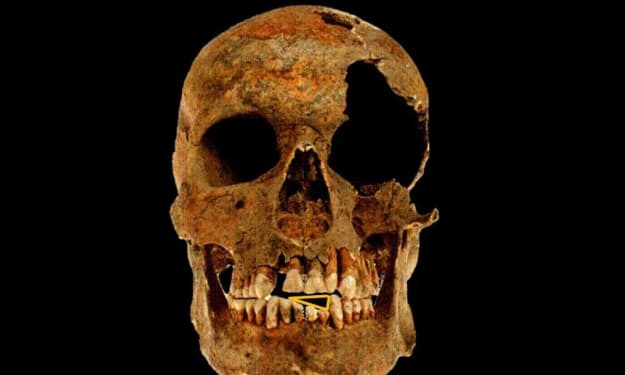
Scientists Discover Traces of Military Service on a 19th Century Soldier’s Teeth.
Scientists Discover Traces of Military Service on a 19th Century Soldier’s Teeth. A remarkable discovery by scientists at the Olomouc Archaeological Center in the Czech Republic has shed new light on the harsh realities of military life in the late 18th and early 19th centuries. The analysis of a soldier’s skeletal remains unearthed in the town of Majetín in the Olomouc region has revealed the first physical evidence of a long suspected military practice the use of teeth to open gunpowder cartridges. This finding not only confirms historical accounts but also provides a rare glimpse into the daily struggles and physical toll endured by soldiers of that era. The skeleton discovered in 2012 belonged to a man aged between 30 and 50 years standing approximately 174 cm tall. Anthropologist Lukáš Šín who led the study noted that the soldier’s lower incisors showed clear signs of repeated mechanical stress. The soldier’s teeth were weakened through repeated activity and this stress could have resulted in the crowns of the teeth breaking Šín explained. Historical records indicate that soldiers during this period loaded their firearms by biting into paper cartridges containing gunpowder and bullets. They would tear open the cartridges with their teeth separate the powder and pour it into the muzzle of their weapons. While this practice has been documented in military manuals direct physical evidence had been elusive until now.
By Adnan Rasheed2 years ago in History
WHAT IF THE SUN EXPLORES TOMORROW
# **What If the Sun Exploded Tomorrow?** The **Sun**—the massive, fiery sphere at the heart of our solar system—is the very reason life on Earth exists. It provides us with **light, heat, and energy**, making everything from plants to humans thrive. But what if, instead of rising tomorrow morning, the Sun **exploded** in a cataclysmic event?
By silvestus Wambua savali2 years ago in History
WHAT IF YOU YOU FELL INTO LAKE NATRON
# **What If You Fell Into Lake Natron?** Have you ever heard of Medusa—the mythical Gorgon from Greek legend whose gaze could turn people to stone? While she may be a work of fiction, there exists a real-world location capable of something eerily similar. Welcome to **Lake Natron**, a body of water so extreme that it can preserve animals in a near-stone-like state.
By silvestus Wambua savali2 years ago in History