Discoveries
Ginger: The Oldest Egyptian Mummy and His Ancient Tattoo
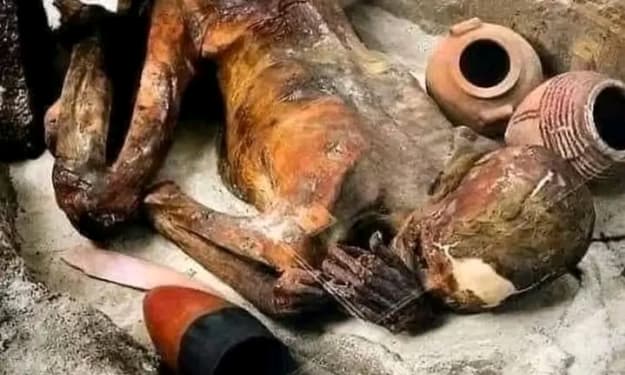
Egyptian history is filled with fascinating discoveries, from towering pyramids to intricate hieroglyphics. But among the most remarkable finds is "Ginger," the world's oldest known naturally preserved Egyptian mummy, dating back over 5,500 years to the pre-dynastic period. Named for the reddish tint of his hair, Ginger offers a unique glimpse into ancient burial practices and the early development of Egyptian civilization. Even more intriguing is the tattoo on his arm, which is recognized as the oldest known figurative tattoo in the world. This discovery sheds new light on the significance of body art in ancient Egyptian society, revealing that tattooing was practiced far earlier than previously believed. In this blog post, we will explore the history of Ginger, his significance in the study of mummification, the cultural meaning of his tattoo, and what his existence tells us about the world of early Egypt. --- The Discovery of Ginger Ginger was discovered in the late 19th century in the desert sands of Gebelein, an area located about 40 kilometers (25 miles) south of modern-day Luxor. Unlike the elaborate, linen-wrapped mummies of the later pharaonic period, Ginger was naturally mummified by the dry desert environment. His body, buried in a shallow pit with minimal grave goods, was preserved by the heat and arid conditions, preventing decomposition. The mummy was acquired by the British Museum in the early 20th century and has been a subject of extensive research ever since. His reddish hair and well-preserved state have made him one of the most recognizable ancient Egyptian mummies in the world. While many other early mummies have been found, Ginger remains the best-preserved example of pre-dynastic mummification, giving us invaluable insights into early Egyptian burial customs. --- Pre-Dynastic Egypt and Early Burial Practices Ginger lived during Egypt’s pre-dynastic period, around 3,400 BCE, a time before the great pharaohs and pyramids. This was a period of rapid social and technological advancements, leading up to the formation of the first unified Egyptian kingdom under Pharaoh Narmer around 3,100 BCE. During this time, Egyptian burial practices were relatively simple. Bodies were often placed in shallow sand graves, sometimes wrapped in animal hides or simple textiles. The hot, dry sand naturally desiccated the body, preserving the skin, hair, and internal organs. Unlike the later mummies, which were embalmed and wrapped with intricate rituals, these early burials relied on nature to do the work of preservation. Ginger’s grave was relatively modest, containing only a few grave goods, such as pottery and simple tools. This suggests that he was not a high-ranking individual but still held enough status to be given a proper burial. The simplicity of the burial also raises interesting questions: Was natural mummification intentional, or was it a byproduct of the environment? Scholars believe that early Egyptians might have noticed the natural preservation and later developed artificial mummification techniques to replicate it. --- The World's Oldest Figurative Tattoo One of the most groundbreaking discoveries about Ginger came in 2018 when researchers using infrared imaging found that he had a tattoo on his right arm. This tattoo, depicting two horned animals—a bull and a Barbary sheep—is now considered the oldest known figurative tattoo in history. Previously, it was believed that tattooing in ancient Egypt was primarily practiced by women, based on mummies from the Middle Kingdom (around 2,000 BCE) that bore decorative tattoos. However, Ginger’s tattoo predates these by more than 1,000 years, proving that both men and women engaged in tattooing much earlier than previously thought. The choice of imagery in the tattoo is also significant. Bulls were often associated with strength, virility, and power in ancient Egypt, while Barbary sheep were linked to fertility and survival. This suggests that Ginger’s tattoo may have held spiritual or symbolic meaning, possibly as a mark of status, protection, or personal identity. Tattooing in ancient societies was often a deeply symbolic practice, used for religious, cultural, or even medicinal purposes. Ginger’s tattoo indicates that tattooing was already an established tradition in early Egypt, making it one of the oldest known body modification practices in human history. --- What Ginger Tells Us About Early Egyptian Society Ginger’s existence provides several important insights into life in early Egypt. 1. The Evolution of Mummification - Ginger’s naturally preserved state likely inspired later embalming techniques. Over time, Egyptians moved from natural mummification to intentional preservation using natron salts, oils, and linen wrappings, leading to the highly sophisticated mummification process of the pharaonic era. 2. Social and Religious Beliefs - The presence of a tattoo suggests that body art had spiritual or cultural significance. Whether it was for protection, identification, or religious devotion, it indicates that ancient Egyptians had complex beliefs about the body and the afterlife even in their earliest periods. 3. Symbolism and Identity - The animal imagery in the tattoo reflects the importance of wildlife in Egyptian culture. Bulls, sheep, and other animals were frequently depicted in art, linking them to power, fertility, and divine protection. 4. Trade and Technology - The fact that tattooing instruments and pigments were available in pre-dynastic Egypt suggests that the civilization was already developing advanced tools and trade networks. This supports the idea that even before the rise of the pharaohs, Egypt was an organized and innovative society. --- Ginger’s Legacy in Modern Times Today, Ginger remains one of the most popular exhibits at the British Museum in London. His striking preservation, complete with visible skin, hair, and even facial features, makes him a haunting yet fascinating link to humanity’s distant past. His discovery continues to shape our understanding of ancient Egyptian culture, providing tangible evidence of how early Egyptians lived, died, and honored their dead. The revelation of his tattoo has also sparked new interest in the history of body modification. Tattoos have been found on other ancient mummies worldwide, from Ötzi the Iceman in Europe to South American mummies, proving that the art of tattooing was a global phenomenon practiced by different cultures for thousands of years. --- Conclusion Ginger is more than just a mummy; he is a key to understanding the origins of Egyptian civilization. His natural preservation, along with the discovery of his tattoo, tells a powerful story of how early Egyptians viewed death, identity, and art. As archaeologists continue to study Ginger and other pre-dynastic remains, we can only imagine what new discoveries lie ahead. What other secrets does he hold? What more can we learn about ancient Egypt’s forgotten past? One thing is certain: Ginger’s legacy will continue to captivate historians and history lovers for generations to come. So the next time you think of ancient Egypt, don’t just picture the great pyramids or King Tut’s golden mask—remember Ginger, the red-haired mummy with the world's oldest known tattoo, a testament to the ingenuity and cultural depth of one of history’s most fascinating civilizations.
By Tosin Akomolafe 2 years ago in History
Large Roman mosaic floor discovery on London building development in Southwark.
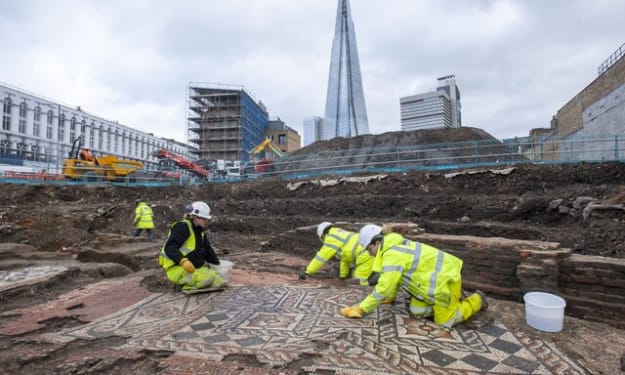
Large Roman mosaic floor discovery on London building development in Southwark. In a remarkable archaeological breakthrough, experts from the Museum of London Archaeology (MOLA) have unearthed an exceptionally well-preserved Roman mosaic in Southwark, near London Bridge. This discovery, hailed as the largest of its kind in London in over half a century, offers a captivating glimpse into the city's ancient past. Unearthing the Mosaic The excavation took place on a site slated for the Liberty of Southwark development, a mixed-use project encompassing homes, offices, and retail spaces. Prior to construction, MOLA archaeologists conducted thorough investigations, anticipating historical remnants given the area's rich Roman heritage. Their expectations were not only met but vastly exceeded when they uncovered a mosaic floor of significant scale and intricacy. Design and Craftsmanship The mosaic comprises two elaborately decorated panels set within a red tessellated floor. The larger panel, measuring approximately eight meters in length, features vibrant floral motifs encircled by intertwining bands—a design known as a guilloche. Additional elements include lotus flowers and geometric patterns, such as Solomon's knot, characterized by two interlaced loops. Dr. David Neal, a former English Heritage archaeologist and leading authority on Roman mosaics, attributes this design to the 'Acanthus group,' a team of mosaicists active in Roman London who developed a distinctive local style. Historical Context Dating from the late second to early third century CE, the mosaic is believed to have adorned the floor of a triclinium—a formal dining room in a Roman building. Such rooms were central to social and political life, where elites would recline on couches along three sides of a square while being served food and drink. The presence of this mosaic suggests the building was of high status, possibly serving as a venue for affluent individuals to entertain guests. Significance of the Discovery This find is particularly significant as it represents the largest expanse of Roman mosaic unearthed in London in over 50 years. The exceptional preservation of the mosaic provides invaluable insights into the craftsmanship and aesthetic sensibilities of Roman Londoners. Moreover, the discovery contributes to a deeper understanding of the extent and nature of Roman occupation in Southwark, an area already known for its rich archaeological heritage. Preservation and Future Plans Following the discovery, the mosaic was meticulously recorded and assessed by a team of experts. Plans are underway to lift and transport the mosaic off-site for detailed conservation work. There is optimism that the mosaic will be put on public display in temporary locations in the coming years before being incorporated into the new development, allowing the public to appreciate this remarkable piece of history. Broader Archaeological Context The site of the discovery has long been recognized for its archaeological potential. In the 1980s, remains of a high-status Roman building were found on the eastern side of the site, and further excavations during the 1990s Jubilee line works revealed additional Roman artifacts. The current find adds a significant chapter to this narrative, underscoring the area's importance during the Roman period. Public Engagement and Education The discovery has generated considerable public interest, with many eager to learn more about London's Roman past. MOLA has been proactive in engaging the public, providing updates and insights into the excavation process. This approach not only educates but also fosters a deeper appreciation for the city's rich archaeological heritage. Conclusion The unearthing of this Roman mosaic in Southwark is a testament to the enduring legacy of London's ancient history. It serves as a reminder of the city's continuous evolution and the layers of history that lie beneath its modern facade. As conservation efforts progress, there is hope that this remarkable artifact will soon be accessible to the public, offering a tangible connection to London's Roman past.
By Tosin Akomolafe 2 years ago in History
Revolutionary Love
My Love, How bittersweet it is to pick up the pen. I rejoice that we have this small thread to keep us together, but it is a very thin thread indeed. I miss you dearly, and wish you were here for the wonderful news. Our son is walking! He, on his unsteady little feet, held my hand and we walked down the lane to watch the regiments pass. Are you not the proudest papa? My heart is full to bursting as I watch him grow. His sisters too are well and are always moving, it is a fight for them to sit still. If they were to run to the farthest snow drifts of the north to the hottest islands of the south and back again, they would still have the breath to beg me for sweets after supper. At the very least they sleep throughout the night again. The steady gunfire over the past months has kept them up. But even restless nights have not slowed the pace of their chatter.
By M. A. Mehan 2 years ago in History
Dog Won't Leave Woman Alone - When Husband Discovers Why, He Calls The Police. AI-Generated.
Dog Won’t Leave Woman Alone – When Husband Discovers Why, He Calls The Police Dogs have an incredible ability to sense things that humans often overlook. Whether it’s danger, illness, or something unusual, their heightened senses and unwavering loyalty make them exceptional companions. This was proven true in a chilling real-life incident where a family’s beloved pet refused to leave the wife’s side, prompting the husband to investigate. What he discovered led him to make an urgent call to the police.
By Ramesh Mahato 2 years ago in History
The Greatest Female Pharaoh: Hatshepsut, Egypt’s Forgotten Queen
Hatshepsut, often overshadowed by her male counterparts, was one of ancient Egypt’s most accomplished and visionary rulers. Despite ruling in a time when female pharaohs were rare, she not only claimed the throne but also flourished, leaving behind an extraordinary legacy of wealth, art, and diplomacy. Her reign, from 1479 to 1458 BCE, remains a testament to her intelligence, ambition, and political acumen.
By Siboli Mukherjee2 years ago in History
Africa's incredible ancient city that's over 2,000 years old and abandoned for 700 years
Africa's incredible ancient city that's over 2,000 years old and abandoned for 700 years Volubilis nestled in the fertile plains of Morocco stands as a testament to the grandeur of ancient civilizations. This incredible city over 2,000 years old offers a glimpse into a bygone era frozen in time and steeped in history. Once a thriving Roman outpost Volubilis was abandoned nearly 700 years ago yet its ruins continue to captivate visitors with their timeless beauty and historical significance. The city’s story is one of cultural fusion architectural brilliance and the inexorable passage of time.BLocated near the modern city of Meknes Volubilis was originally settled by the Carthaginians as early as the 3rd century BCE. However it was under Roman rule beginning around 40 CE that the city flourished. As part of the Roman Empire’s vast network of provinces Volubilis became an important administrative and agricultural center. Its fertile surroundings made it a hub for olive oil and grain production which were exported to other parts of the empire. The city’s wealth and strategic importance are evident in the grandeur of its architecture which blends Roman engineering with local Berber and Phoenician influences.
By Adnan Rasheed2 years ago in History
The Persian Empire's Royal Treasury – A Vault of Gold
Tne Persian Gold Reserves: The Abundance of an Empire The Persian Empire, one of the greatest civilizations in history, was accepted for its immense wealth, decidedly in gold. From the administering of Cyrus the Great (550 BCE) to the aphorism of Darius III (330 BCE), Persia accumulated all-inclusive affluence of gold, authoritative it one of the richest empires of the age-old world. These gold affluence were not aloof symbols of ability but additionally played a acute role in Persia’s economy, aggressive expansion, and administration. This commodity explores the sources of Persian gold, its storage, bread-and-butter impact, and its fate afterwards the authority fell to Alexander the Great. 1. The Sources of Persian Gold The Achaemenid Authority (550–330 BCE), founded by Cyrus the Great, controlled all-inclusive territories affluent in gold deposits. Persia acquired its abundance from assorted sources: 1.1 Gold Mines Persia’s own gold mines: The authority had gold mines in Persis (modern-day Iran) and Armenia. Egyptian gold mines: Afterwards Persia baffled Egypt in 525 BCE, the Nubian gold mines became a above antecedent of wealth. Gold from Lydia: Back Cyrus the Great defeated King Croesus of Lydia, he acquired ascendancy of Lydia’s acclaimed gold reserves. Lydia was accepted for minting the aboriginal gold bill in history. 1.2 Accolade and Taxes Persian kings calm gold tributes from baffled regions such as India, Babylon, and Anatolia. Darius I (522–486 BCE) alien a connected tax arrangement area gold and argent were calm from assorted satrapies (provinces). Indian ambit (modern-day Pakistan and northwest India) paid 360 gold talents annually—the better bulk of gold accolade in the empire. 1.3 Loot and Plunder Persian armies bedeviled gold from defeated enemies. When Xerxes I invaded Greece in 480 BCE, his armament looted aureate treasures from Greek temples. After the acquisition of Babylon (539 BCE), Persian rulers took ascendancy of Babylon’s massive gold reserves. 2. Accumulator of the Persian Gold Reserves 2.1 The Aristocratic Treasury at Persepolis Persepolis, the basic of the Achaemenid Empire, housed one of the better aristocratic treasuries in history. Gold and argent were stored in underground vaults and attentive by aristocratic soldiers. The alcazar of Darius I independent bags of aureate vessels, coins, and jewelry. 2.2 The Treasury of Susa The Persian kings kept huge gold affluence in Susa, addition aristocratic city. Susa’s treasury captivated aureate statues, chariots, and weapons, all emblematic Persian abundance and power. 2.3 The Bactrian Vaults Bactria (modern Afghanistan) was a above accumulator centermost for Persian gold. The Greeks afterwards begin massive gold affluence in Bactria afterwards Alexander the Great’s conquest. 3. The Bread-and-butter Appulse of Persian Gold 3.1 The Introduction of the Gold Daric Darius I alien the “gold daric”, one of the aboriginal connected gold bill in history. These bill were acclimated for advantageous soldiers, trade, and adept gifts. The gold daric became a attribute of Persian bread-and-butter power, influencing afterwards banknote systems. 3.2 Funding the Persian Army Persian gold affluence accustomed kings to advance a massive army, including the acclaimed 10,000 Immortals. The authority could allow to appoint Greek mercenaries and aggrandize its territories. 3.3 Persian Gold in International Trade Persian gold bill were acclimated in barter with India, Greece, and Egypt. Gold affluence ensured adherence and bread-and-butter growth, authoritative Persia a all-around bread-and-butter power. 4. The Fall of the Persian Gold Reserves 4.1 Alexander the Great’s Acquisition (330 BCE) In 330 BCE, Alexander the Great defeated Darius III, bringing an end to the Achaemenid Empire. One of Alexander’s better rewards was the Persian gold reserves. 4.1.1 The Plundering of Persepolis Alexander austere Persepolis but aboriginal bedeviled its gold reserves. Historians appraisal he took about 180,000 talents of gold from Persian treasuries. 4.1.2 The Looting of Susa and Babylon Alexander’s army looted Susa’s treasury, award aureate thrones, coins, and statues. The Babylonian treasury, already controlled by the Persians, fell into Alexander’s hands. 4.2 What Happened to the Gold? After Alexander’s afterlife in 323 BCE, his authority was divided, and Persian gold was broadcast amid his generals. The gold darics disappeared, replaced by Greek-style coins. Much of the gold was spent on wars, palaces, and new cities beneath Alexander’s successors. 5. Bequest of Persian Gold 5.1 Access on Afterwards Empires The Persian bread-and-butter arrangement afflicted the Roman, Byzantine, and Islamic empires. Gold darics aggressive afterwards gold coinage, including Byzantine solidus and Islamic dinars. 5.2 Persian Gold in Myths and Legends Stories of Persian gold affluence became allotment of legends about hidden treasures. Many still accept that absent Persian gold is active about in the Middle East. Conclusion The Persian Empire's gold affluence were amid the better in history, fueling aggressive expansion, bread-and-butter growth, and cultural development. From aureate thrones in Persepolis to all-inclusive bread affluence in Babylon, Persia’s abundance adumbrated its ability and prestige. However, back Alexander the Great baffled the empire, Persian gold was broadcast beyond the age-old world. Today, the bequest of Persian gold lives on in actual accounts, archaeological findings, and age-old coins, reminding us of the empire’s unparalleled abundance and influence.
By Say the truth 2 years ago in History
The Death of Socrates – A Moment of Philosophical Martyrdom
The Afterlife of Socrates: A Defining Moment in Abstract History Socrates, one of the greatest philosophers of age-old Greece, was a man whose account shaped Western philosophy. He was accepted for his different way of questioning, which came to be accepted as the Socratic method. However, his commodity challenged the cachet quo, and in 399 BCE, he was bedevilled to afterlife by the Athenian government. His execution, agitated out by bubbler a cup of adulteration hemlock, charcoal one of the best acclaimed moments in abstract history. This commodity explores the political climate, accuse adjoin Socrates, his trial, and his final moments, as able-bodied as the actual acceptation of his death. 1. The Political and Amusing Ambience of Athens To accept why Socrates was bedevilled to death, it is important to attending at the political and amusing ambience of Athens in the 5th aeon BCE. Athenian Democracy: Athens was a democracy, but it was fragile. Afterwards the Peloponnesian War (431–404 BCE), the burghal had suffered political alternation and the aphorism of the Thirty Tyrants, who were apparent as backbreaking rulers. Socrates and His Influence: Socrates was accepted for analytic authority, generally arduous Athenian leaders, politicians, and religious beliefs. Abounding of his students, including Alcibiades and Critias, were associated with the Thirty Tyrants, which fabricated him apprehensive in the eyes of abounding Athenians. Public Distrust: Some Athenians saw Socrates as a blackmail to democracy, assertive his account led adolescent men to boldness acceptable values. This growing disbelief led to Socrates actuality put on trial. 2. The Accuse Adjoin Socrates In 399 BCE, Socrates was accused of two above crimes: Corrupting the adolescence of Athens – Critics claimed that his commodity encouraged adolescent men to catechism Athenian traditions and claiming authority. Impiety (disrespecting the gods of Athens) – Socrates was accused of introducing new deities and abnegation acceptable Athenian gods. The official case adjoin him was presented by three arresting citizens: Meletus (a poet) Anytus (a politician) Lycon (a rhetorician) Despite his abstract defense, the cloister of 501 Athenian citizens begin him accusable by a attenuated margin. 3. The Balloon of Socrates 3.1 Socrates' Aegis (Apology by Plato) Socrates' defense, recorded in Plato’s “Apology”, is one of the best acclaimed speeches in history. In his speech, Socrates: Argued that he was a appellant of truth, not a corrupter of youth. Claimed that his analytic was a account to Athens, allowance bodies appraise their beliefs. Declared that he did not abhorrence death, as no one absolutely knows what happens afterwards life. 3.2 The Verdict After audition his defense, the board begin Socrates accusable by a vote of 280 to 221. Under Athenian law, he could adduce his own punishment. Instead of allurement for mercy, he jokingly appropriate that he should be adored with chargeless commons for life, as he had benefited the city. This angered the jury, and back accustomed the best amid afterlife or exile, Socrates banned to leave Athens. The final vote bedevilled him to afterlife by adulteration hemlock. 4. The Final Hours of Socrates 4.1 The Aftermost Conversations (Phaedo by Plato) Socrates’ aftermost moments are abundant in Plato’s “Phaedo”, which describes his discussions on the aeon of the body afore his execution. His followers, including Plato, Crito, and Phaedo, were present. Crito approved to argue Socrates to escape, but he refused, assertive it would go adjoin his attempt and accordance to Athenian law. 4.2 Bubbler the Adulteration Hemlock In a calm and composed manner, Socrates drank the cup of adulteration hemlock, which acquired bit-by-bit paralysis. His aftermost recorded words were: "Crito, we owe a banty to Asclepius. Please, don’t balloon to pay the debt." This was a allegorical statement, suggesting that afterlife was a cure for the soul, abundant like a cede to Asclepius, the god of healing. Within moments, Socrates anesthetized abroad peacefully, amidst by his friends. 5. The Impact of Socrates’ Death 5.1 The Reaction of Athens Many Athenians after regretted the beheading of Socrates. Some believed the balloon was a mistake, and years later, Athens accustomed his memory. His afterlife led to greater skepticism about Athenian democracy, analytic whether a aloof association could blackout its greatest thinker. 5.2 Socrates’ Influence on Philosophy His students, abnormally Plato and Aristotle, agitated on his teachings. Socrates' account formed the foundation of Western philosophy, ethics, and logic. His balloon and afterlife abide a assignment in abandon of accent and bookish courage. Conclusion The afterlife of Socrates was not aloof the accident of a abundant philosopher; it was a defining moment in history. His beheading appear the tensions amid capitalism and chargeless thought, assuming how alike the greatest minds could abatement victim to political fears. His bequest continues today, reminding the apple of the accent of analytical thinking, truth-seeking, and continuing by one’s principles.
By Say the truth 2 years ago in History
Istana Nurul Iman – The Costliest Palace in History
The Costliest Alcazar in History: The Best Big-ticket Aristocratic Abode Anytime Built Throughout history, rulers and emperors accept congenital absurd palaces as symbols of their power, wealth, and legacy. Some of these palaces accept amount billions of dollars in today’s terms, with gold-plated walls, diamond-encrusted ceilings, and attenuate abstracts from above the world. Among these, the Forbidden City in China, Versailles in France, and Buckingham Alcazar in England are some of the best famous, but the costliest alcazar anytime congenital is believed to be The Admirable Alcazar of Brunei, additionally accepted as Istana Nurul Iman. This commodity explores the best big-ticket alcazar in history, ciphering its net worth, architecture materials, affluence furnishings, gold and argent usage, design decorations, activity costs, and time taken to build. 1. What Is the Best Big-ticket Alcazar in History? The appellation of the costliest alcazar in history goes to Istana Nurul Iman, the official abode of the Sultan of Brunei, Hassanal Bolkiah. This alcazar surpasses alike the allegorical Alcazar of Versailles, Buckingham Palace, and the Forbidden City in agreement of value. Location: Brunei, Southeast Asia Construction Year: Completed in 1984 Total Estimated Cost: Over $1.4 billion Size: 2.15 actor aboveboard anxiety (larger than the Vatican) Rooms: 1,788 rooms, 257 bathrooms, and 5 pond pools Gold Used: Over 200,000 kilograms of gold Luxury Materials: Marble from Italy, gold-plated domes, clear chandeliers, and cottony carpets 2. Estimated Net Account of the Costliest Palace The net account of Istana Nurul Iman is estimated at $1.4 billion to $3 billion in today's market. This makes it the best big-ticket aristocratic abode in history. Comparing it to added acclaimed palaces: Versailles Alcazar (France): Estimated account $50 billion (including acreage and tourism revenue). Buckingham Alcazar (UK): Estimated account $5 billion. The Forbidden City (China): Priceless actual value, but estimated at $70 billion if acreage and artifacts are included. However, in agreement of absolute architecture costs, Istana Nurul Iman is the best big-ticket alcazar anytime built. 3. Architecture and Abstracts Used 3.1 Gold, Silver, and Diamonds Gold Usage: 200,000 kilograms (200 tons) of authentic gold acclimated for alcazar domes, furniture, and decorations. Estimated value: $12 billion. Silver Usage: Doors and accoutrement affection 5,000 kilograms of silver. Estimated value: $3 million. Diamond Chandeliers: Some chandeliers board hundreds of diamonds, with an estimated amount of $10 actor per chandelier. 3.2 Marble and Precious Woods Italian Marble: Imported from Carrara, Italy, the aforementioned blazon acclimated in Michelangelo’s sculptures. Rare Woods: Mahogany, ebony, and sandalwood from Southeast Asia were acclimated for carvings. 3.3 Cottony and Affluence Textiles Persian cottony carpets awning the alcazar floors. Anniversary rug is handwoven and costs over $1 million. Wall coverings are abstract with gold thread, anniversary costing millions. 4. How Long Did It Take to Build? 4.1 Time Taken for Construction Construction of Istana Nurul Iman began in 1981 and was completed in 1984—a absolute of 3 years. It was advised by Leandro V. Locsin, a acclaimed Filipino architect. 4.2 How Abounding Workers Congenital the Palace? Over 20,000 workers were complex in architecture the palace. Engineers from Europe, Asia, and the Middle East contributed to the construction. 4.3 Amount of Labor Workers were paid aerial accomplishment to complete the activity quickly. Total activity costs exceeded $500 actor in today’s terms. 5. Affluence Features Inside the Palace 5.1 The Sultan’s Clandestine Suite The Sultan’s bedchamber is covered in gold and diamonds. The bed anatomy is fabricated of solid gold. The walls affection hand-painted cottony tapestries. 5.2 The Head Room The admirable head is fabricated of 24-carat gold and encrusted with rubies and emeralds. The beam has a gold-plated arch with design decorations. 5.3 The Aristocratic Banquet Hall Can board 5,000 guests for aristocratic feasts. Guests banquet with gold-plated accoutrement and clear glasses. The Sultan's clandestine dining set is accounted to be fabricated of solid gold..
By Say the truth 2 years ago in History
The Majestic Palace of Alexander the Great
The Grandest Alcazar of Alexander the Great: Wealth, Luxury, and Construction Alexander the Great (356–323 BCE) congenital an authority that continued from Greece to India, and with it came immense wealth. While Alexander is primarily accepted for his aggressive conquests, he additionally accustomed and active some of the best arresting palaces in history. Among these, his aristocratic abode in Babylon is believed to accept been the best extravagant. This commodity explores the costliest alcazar of Alexander the Great, ciphering its net worth, abstracts used, comfortable furnishings, gold and argent content, diamonds, silk, activity force, and architecture time. 1. The Location: Alexander’s Aristocratic Alcazar in Babylon After acquisition the Persian Authority in 331 BCE, Alexander fabricated Babylon (modern-day Iraq) his aristocratic capital. The burghal was already home to the allegorical Alcazar of Nebuchadnezzar II, but Alexander broadcast and adapted it to bout his admirable eyes of a apple empire. His alcazar in Babylon was advised to be the best comfortable anatomy of its time, before alike the Persian palaces of Persepolis and Susa. 2. The Estimated Net Account of Alexander’s Palace Historians appraisal that the absolute amount of Alexander’s Babylonian alcazar in avant-garde agreement would ambit from $50 billion to $100 billion, authoritative it one of the costliest structures in age-old history. The alcazar was abounding with: Gold-plated walls and ceilings Silver and brownish doors and furniture Gem-encrusted pillars Silk and Persian carpets Imported marble from Greece and Egypt 3. Abstracts Acclimated in Construction 3.1 Gold and Silver Gold Usage: Over 50,000 kilograms (50 tons) of authentic gold were acclimated for plating walls, statues, and aristocratic furniture. Estimated value: $3 billion. Silver Usage: Around 100,000 kilograms (100 tons) of argent were acclimated for doors, decorations, and utensils. Estimated value: $1 billion. 3.2 Precious Stones and Diamonds Diamonds and gemstones were alien from India and anchored in alcazar pillars, furniture, and the king’s throne. Lapis lazuli and azure stones from Afghanistan busy walls and ceilings. 3.3 Marble and Alien Woods White marble from Greece and Egypt was acclimated for alcazar flooring.
By Say the truth 2 years ago in History
2500 Year Old Tombs With Artifacts Discovered in Israel Shed Light on Ancient Trading
2500 Year Old Tombs With Artifacts Discovered in Israel Shed Light on Ancient Trading Archaeologists have made a groundbreaking discovery near Tlalim Junction in Israel unearthing 2,500 year old tombs and artifacts that shed new light on ancient trade networks and cultural exchanges. The findings led by the Israel Antiquities Authority IAA reveal the Negev Highlands' role as a significant hub for long distance commerce connecting the region to distant civilizations such as Yemen Phoenicia and Egypt. This discovery not only highlights the movement of goods but also underscores the exchange of ideas and traditions across the ancient world. The excavation uncovered a wealth of artifacts that provide insights into the region's historical significance. Among the most notable findings were flint arrowheads which researchers believe originated from Yemen and Oman. These arrowheads along with copper and silver jewelry suggest that the Negev Highlands were a key stopover for traders traveling along ancient routes. Additionally small alabaster vessels historically used to transport incense were discovered further emphasizing the area's role in the trade of luxury goods. One of the most striking artifacts was an amulet depicting Bes the Egyptian deity associated with protection and fertility. This amulet not only highlights the cultural influence of Egypt but also suggests that traders and travelers carried religious symbols for personal protection and spiritual significance.
By Adnan Rasheed2 years ago in History
The Royal Splendor of Alexander and Roxana’s Wedding
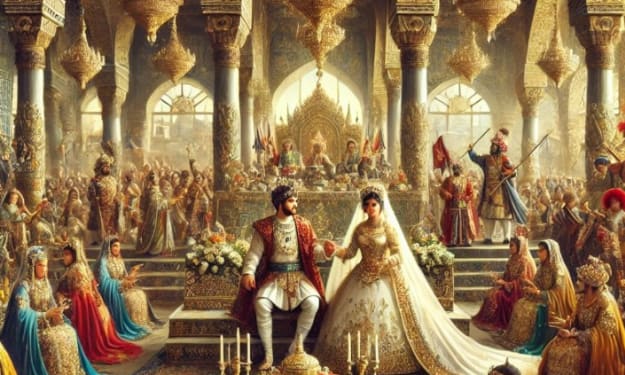
The Wealth and Spending Habits of Alexander the Great and His Romantic Life Introduction Alexander the Great (356–323 BCE) was not only one of the greatest military conquerors in history but also one of the wealthiest individuals of his time. His empire stretched from Greece to India, and with it came unimaginable riches. From gold-plated palaces to extravagant banquets, Alexander spent his wealth generously—on his army, on cultural advancements, and on his personal life, including the women in his life. Though Alexander was not known for indulging in excessive romantic affairs like some rulers, he did have important relationships with women, including his wives and rumored lovers. This article explores how much wealth Alexander controlled, his spending habits, and how his relationships influenced his wealth distribution. 1. How Much Wealth Did Alexander the Great Have? 1.1 The Conquests and Looted Wealth Alexander amassed one of the greatest fortunes in history through his conquests, especially after defeating the Persian Empire (331 BCE) and seizing the royal treasury. Some of his largest financial gains included: The Treasury of Persepolis – Estimated at 180,000 talents of silver (modern value: over $5 billion). The Wealth of Babylon – Taken after the conquest of Babylon, worth billions in today’s terms. Egyptian and Indian Spoils – The vast riches of Memphis, Susa, and Indian temples. 1.2 Estimated Net Worth in Today’s Terms While it's difficult to estimate exact figures, historians believe Alexander's accumulated wealth could be worth: $500 billion to $1 trillion in modern value, making him one of history’s wealthiest figures. 2. How Did Alexander Spend His Wealth? 2.1 Military and Conquests Funding his army: Alexander paid for the largest standing army of the time, with over 50,000 soldiers, including elite cavalry units. Expensive war machines: Siege towers, catapults, and elite weaponry. Navy construction: Ships for Mediterranean control. 2.2 Lavish Lifestyles and Celebrations Banquets and feasts: Alexander hosted legendary feasts, sometimes costing millions in gold for a single night. Gold-plated cities: He rebuilt cities like Babylon, Susa, and Alexandria with gold decorations. Luxury gifts for his generals and friends. 2.3 Spending on Women and Relationships Alexander’s romantic life was not as extravagant as some rulers, but he did spend generously on his relationships. 3. Alexander’s Wives and Love Interests 3.1 Roxana – His Most Famous Wife Roxana was a Bactrian princess whom Alexander married in 327 BCE. Their wedding was a lavish affair, with gold, Persian-style decorations, and a feast lasting days. He gifted her golden jewelry, palaces, and Persian-style royal outfits. Estimated spending: $10 million to $50 million in modern value. 3.2 State Marriages with Persian Nobility Alexander married Statira (daughter of Darius III) and Parysatis (daughter of Artaxerxes III) in a massive royal wedding in Susa (324 BCE). The event included the marriage of 10,000 Macedonian soldiers to Persian noblewomen. Estimated cost of the grand wedding: $100 million in modern value. 3.3 Camp Followers and Courtesans Alexander often traveled with a large royal entourage, including women of noble rank and courtesans. He gifted precious gems, silk robes, and golden ornaments to them. Some of his known favorites were Barsine (a Persian noblewoman) and Thais (a famous Greek courtesan). Thais famously encouraged the burning of Persepolis, an event linked to Alexander’s excessive drinking and luxury lifestyle. 4. Did Alexander Spend More Than He Had? 4.1 Lavish Spending Towards the End of His Life By the time of his death in 323 BCE, Alexander’s wealth had been significantly diminished due to excessive spending on: Grand building projects (including temples and cities). Ongoing military campaigns. Luxury gifts to generals and noble allies. 4.2 His Plan to Spend Even More Alexander had planned a grand naval expedition, which would have cost billions in today’s money. He was even rumored to have wanted a tomb made entirely of gold. However, before these plans could materialize, Alexander died at the age of 32. 5. What Happened to His Fortune After His Death? After Alexander's death, his empire was divided among his generals (the Diadochi). His immense wealth was: Plundered and redistributed among his former commanders. Spent on wars of succession, known as the Wars of the Diadochi (322–281 BCE). Lost over time, with some treasures still missing today. Conclusion: Alexander’s Wealth and Love Life Alexander the Great was one of the wealthiest and most powerful rulers in history, accumulating a fortune estimated between $500 billion and $1 trillion in modern value. While much of this was spent on military campaigns and empire-building, he also spent lavishly on luxury, royal marriages, and relationships. His wives and romantic partners, especially Roxana and his Persian queens, benefited from his generosity, receiving extravagant gifts, palaces, and jewelry. However, his extreme spending eventually drained much of his empire’s wealth, leaving little behind for his successors. In the end, Alexander's true legacy was not in his wealth but in his empire, which reshaped history forever.
By Say the truth 2 years ago in History