Discoveries
GPS Tracker Found on a Dead Eagle A Mysterious Discovery
GPS Tracker Found on a Dead Eagle A Mysterious Discovery Eagles are often regarded as symbols of power freedom and guardians of the natural world. Their majestic flight sharp vision and predatory instincts make them one of the most fascinating birds in the wild. However when a GPS tracker is discovered on the body of a dead eagle it raises a series of questions and mysteries. Recently such an incident came to light when researchers found a GPS tracker attached to a deceased eagle leading to speculations about its purpose the bird's fate and the broader implications for wildlife conservation. In this article we will explore the significance of GPS tracking in wildlife research the possible reasons behind the eagle’s death and how such technology helps in the conservation of endangered species.
By Adnan Rasheed2 years ago in History
Who Were the People Jesus Raised from the Dead?
In a time when legends and history wove together in the tapestry of human memory, there existed a tale that transcended the ordinary—a story that spoke of divine intervention, of miracles that defied the very fabric of time. This is the remarkable narrative of Sam, son of Noah, a name that echoes with the legacy of one of humanity’s earliest prophets. In Arabic tradition, "Noah" is rendered as "Noah," and the phrase "son of" directly links him to the revered prophet, emphasizing a lineage steeped in divine favor and ancient promises.
By The Lost Historian2 years ago in History
Unsolved Mysteries of the Skies and the Seas
The Vanishing of Flight 914 In July 1955, Pan Am Flight 914 took off from New York City, bound for Miami. But the plane and its 57 passengers vanished without a trace, leaving behind no wreckage or distress signal. For decades, the mystery remained unsolved, until 1992, when a plane matching Flight 914's description landed at an airport in Venezuela, carrying passengers dressed in 1950s clothing. The pilot claimed to be from 1955, and the plane's calendar dated back to that year. After a brief encounter, the plane took off again, disappearing as mysteriously as it had arrived. While this story was later revealed to be a hoax, it serves as a reminder of our fascination with the unknown.
By Lisa Ann Bastiaan2 years ago in History
Yours In The Nick of Time. Content Warning.
The Maguire-McCarthy Letters (1931) Archival Reference No.: HSC-01931-022 Donated by: The O’Shea Family Estate, 1987 Curated by: The Boston Historical Society Introduction The following letters, exchanged in 1931 between Daniel “Danny” Maguire of Boston, Massachusetts, and Mary McCarthy of Chicago, Illinois, provide a rare glimpse into working-class Irish American life during the Great Depression. Preserved by the O’Shea family, these letters chronicle a long-distance courtship marked by humor, longing, and the realities of the era. Danny, a dockworker, and Mary, a switchboard operator, maintained their correspondence for several months. While it remains unclear whether Mary ultimately made the journey to Boston, the letters stand as a testament to the personal and cultural landscape of the time. The first known letter, dated January 10, 1931, begins below.
By L.K. Rolan2 years ago in History
The Redeemer
There was a time when Gabriel Roth was a man lost to the shadows. To most people, he was a memory—one of those stories you hear whispered in dark corners, a cautionary tale that the world seemed eager to forget. A man who had once stood tall, confident, and proud, only to fall into a spiral of selfishness and regret.
By Arean Ahamad2 years ago in History
The Haunted Bhangarh Fort – India’s Most Mysterious Ruins
Ghosts in Indian History: Myths, Legends, and Haunted Realities India, a land of ancient civilizations, grand palaces, and deep spiritual traditions, has long been home to stories of the supernatural. From haunted forts to wandering spirits, ghosts and paranormal entities have played a significant role in Indian folklore and history. Many sites across the country are believed to be haunted, with legends passed down for generations. This article explores the history of ghosts in India, including famous haunted locations, ancient beliefs, and terrifying encounters recorded throughout history. 1. Ancient Beliefs in Ghosts and Spirits in India 1.1 Hinduism and the Concept of Ghosts In Hindu mythology, ghosts are known as "Bhoots", "Pretas", and "Pisachas", each with unique characteristics: Bhoots: Restless spirits of the dead, often appearing in human form but without a shadow. Pretas: Spirits trapped between life and death, suffering due to unfinished business or improper rituals. Pisachas: Evil spirits or demons believed to possess and torment living beings. Ancient Hindu texts like the Garuda Purana describe the fate of souls and the existence of ghosts based on karma and sins committed in life. 1.2 Buddhist and Jain Views on Ghosts In Buddhism, ghosts, or "Petas", exist in a lower realm and suffer due to their greed and attachments in their previous life. Jainism also speaks of spirits wandering as ghosts due to their karmic debts. For centuries, Indians have performed rituals like Pind Daan (offering food to the dead) to ensure that spirits find peace and do not turn into ghosts.
By Say the truth 2 years ago in History
The Life and Legacy of Plato
The Life and Legacy of Plato: A Comprehensive Biography Introduction Plato, one of the most influential philosophers in Western thought, was a student of Socrates and the teacher of Aristotle. His contributions to philosophy, political theory, and education remain foundational to this day. Through his extensive writings, primarily in the form of dialogues, Plato explored topics ranging from ethics and metaphysics to politics and epistemology. His legacy continues to shape contemporary discourse in philosophy and beyond.
By Banik Sojib2 years ago in History
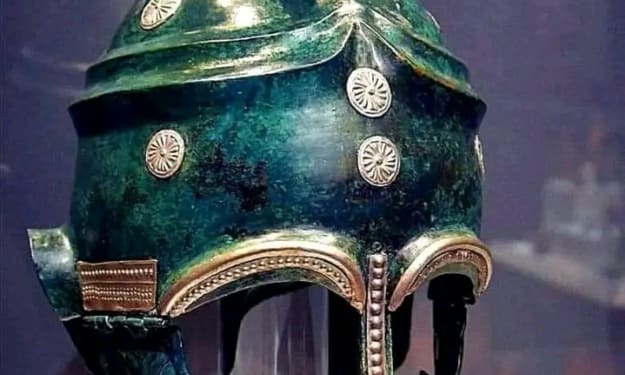
A 4thC BC bronze #Thracian helmet discovered at the village of Pletena, Bulgaria.
The Thracian Helmet of Pletena: A 4th-Century BC Masterpiece In 1997, a remarkable archaeological discovery was made in the village of Pletena, nestled in the western Rhodope Mountains of Bulgaria. Unearthed from the depths of history was a 4th-century BC bronze Thracian helmet, adorned with intricate silver decorations. This extraordinary artifact, now housed in the National History Museum in Sofia, offers profound insights into the martial culture, artistry, and societal structures of the ancient Thracians. More than just a relic of war, the Pletena helmet is a piece of history that speaks volumes about the skills, beliefs, and social hierarchies of the people who once roamed the lands of Thrace. With its elaborate craftsmanship, this helmet stands as a testament to the sophisticated metalwork and artistic sensibilities of the Thracians, a civilization that thrived in the Balkans long before the rise of Rome. Discovery and Significance The helmet was discovered in 1997 in Pletena, a village located in the western Rhodope Mountains of Bulgaria. This region was historically inhabited by the Thracians, an ancient group known for their warrior culture and artistic achievements. The discovery of this helmet is of immense historical significance, as it provides valuable insights into the craftsmanship and martial traditions of the Thracians, a civilization that left behind few written records but a wealth of material culture. The Thracians were known to be fierce warriors, often serving as mercenaries for foreign armies, including those of the Greeks and later the Romans. Their warrior ethos was deeply embedded in their culture, and their weapons and armor were not just tools of war but also symbols of status and prestige. The Pletena helmet, with its refined craftsmanship and luxurious silver embellishments, suggests that it may have belonged to a high-ranking warrior, chieftain, or noble. Design and Craftsmanship The helmet is an exceptional example of Thracian metallurgy, crafted primarily from bronze and adorned with silver appliques. One of its most striking features is the intricate silver bands applied to the eyebrows and under-brows, giving the helmet an ornate and almost lifelike appearance. This level of decoration suggests that the helmet was not merely a practical piece of armor but also a prestigious item, possibly worn during ceremonies or parades. The design also includes a prominent Phrygian-style crest, a characteristic element in Thracian helmets of this period. The Phrygian cap shape, with its forward-curving peak, was a distinctive feature of Thracian headgear and was later adopted in various artistic representations of their warriors. This crest not only served an aesthetic purpose but also provided additional protection by deflecting blows aimed at the head. The helmet's cheekpieces are another fascinating detail, featuring bearded patterns that add to its unique design. These embellishments may have carried symbolic significance, representing strength, masculinity, or even divine protection. The combination of functionality and artistic expression in this helmet reflects the Thracians' ability to blend practical warfare needs with their deep-rooted cultural aesthetics. Thracian Warfare and Armor The Thracians were among the most formidable warriors of the ancient world. Often depicted as fierce and highly skilled fighters, they were known for their use of unconventional and highly effective combat tactics. Their armor, including helmets like the one found in Pletena, was designed to provide maximum protection while ensuring agility and mobility in battle. Thracian warriors typically carried curved swords called "sica" and used light shields to enhance their maneuverability. Their helmets, while protective, were also a means of distinguishing rank and allegiance. A warrior wearing a helmet like the one from Pletena would have been immediately recognizable on the battlefield, both by allies and enemies. The Phrygian-style crest of the helmet was not just a decorative feature but a functional one. It helped deflect downward strikes from enemy weapons, reducing the impact of blows to the head. Additionally, the silver embellishments and detailed engravings may have had a spiritual or superstitious purpose, possibly meant to invoke divine protection in combat. Cultural and Artistic Context The decorative elements of the Pletena helmet reflect the Thracians' rich artistic traditions. The use of silver inlays and the detailed craftsmanship indicate a high level of metallurgical skill that was uncommon in many contemporary cultures. This suggests that the Thracians had access to advanced metalworking techniques, possibly learned from or influenced by neighboring Greek and Scythian civilizations. Art and symbolism played an essential role in Thracian society, and their artifacts often carried deeper meanings beyond their immediate use. The helmet’s detailed patterns and embellishments could have been intended to invoke protection, symbolize the warrior's status, or even convey religious or mythological significance. Furthermore, the Thracians were known for their reverence for war deities and the afterlife. Elaborate warrior burials discovered in Thracian tombs suggest that high-ranking individuals were often buried with their armor and weapons, possibly to accompany them into the afterlife. It is possible that the Pletena helmet was part of a warrior’s grave, later uncovered through natural or human activity. Preservation and Display Today, the Pletena helmet is preserved and displayed in the National History Museum in Sofia, Bulgaria. As one of the most well-preserved examples of Thracian warfare craftsmanship, it serves as a centerpiece in the museum’s collection of ancient artifacts. The museum's exhibition allows visitors to appreciate the intricate details of the helmet up close, shedding light on the advanced skills of the Thracian metalworkers and the martial traditions of their warriors. The helmet’s preservation also ensures that scholars and historians can continue studying it to gain further insights into Thracian society, warfare, and artistry. Conclusion The 4th-century BC bronze Thracian helmet discovered in Pletena stands as a remarkable testament to the advanced craftsmanship and rich cultural heritage of the Thracian civilization. More than just a piece of armor, it is an artifact that bridges the past and present, allowing us to understand the warriors who once roamed the lands of Thrace. Its intricate design and the use of precious metals reflect a society that valued both martial prowess and artistic expression. The helmet not only protected its wearer in battle but also conveyed status, identity, and possibly religious significance. As a key exhibit in the National History Museum in Sofia, the helmet continues to fascinate historians, archaeologists, and visitors alike. It serves as a powerful reminder of the Thracians’ enduring legacy and their influence on the ancient world. Whether seen as a symbol of war, a work of art, or a historical puzzle waiting to be fully understood, the Pletena helmet is undoubtedly one of the most captivating discoveries from ancient Thrace. It invites us to imagine the lives of those who wore it, fought in it, and ultimately left it behind as a silent witness to history.
By Tosin Akomolafe 2 years ago in History
A 600 year old bra belonging to Humayun's mother discovered in excavation.
A 600 year old bra belonging to Humayun's mother discovered in excavation. Archaeologists have recently made a startling discovery during an excavation at a historical site linked to the Mughal Empire. Among various unearthed artifacts one item has particularly intrigued historians and researchers a 600 year old brassiere like garment that is believed to have belonged to a woman of high status from the Mughal era. Some experts suggest that it could have been worn by Maham Begum the mother of Emperor Humayun. This unexpected finding has opened up discussions on historical fashion the role of women in the Mughal court and the sophistication of undergarments in South Asian history. The excavation site where this garment was found has long been associated with the Mughal royal family. Researchers were originally looking for everyday items from the era such as pottery ornaments, and tools. However when they uncovered a delicate yet remarkably well preserved piece of clothing, they were taken aback. The garment resembles modern-day bras in structure but it also features intricate embroidery and fine craftsmanship indicative of Mughal era textiles. Experts are now closely examining the fabric stitching and design to determine its exact origin and confirm its historical significance.
By Adnan Rasheed2 years ago in History
The Majestic Pyramids of Teotihuacan – Sun and Moon
The Pyramid of the Sun and the Moon: The Age-old Wonders of Teotihuacan The Pyramid of the Sun and the Pyramid of the Moon are two of the best cogent structures in the age-old burghal of Teotihuacan, amid in modern-day Mexico. Congenital by the Teotihuacanos about 100-450 CE, these pyramids were not alone architectural marvels but additionally acutely angry to religion, astronomy, and political power. The Pyramids of Teotihuacan battling the abundant pyramids of Egypt in their grandeur, mystery, and actual significance. In this article, we will analyze their construction, significance, materials, cost, labor, and the constant bequest of these awe-inspiring structures. 1. The Pyramid of the Sun 1.1 Architecture and Architecture The Pyramid of the Sun is the better anatomy in Teotihuacan and one of the better pyramids in the world. It stands about 65.5 meters (216 feet) aerial and has a abject amplitude of 225 meters (738 feet). Built application agitable stone, clay, and rubble, again covered with adhesive and blithely corrective murals. The pyramid consists of bristles stepped platforms, possibly apery the bristles levels of the cosmos. It is accumbent with the sun’s position on important ample dates, such as the summer solstice. 1.2 Purpose and Significance The Pyramid of the Sun was acceptable a religious centermost committed to the sun god. It may accept been acclimated for sacrificial rituals, ceremonies, and ample observations. A adit arrangement below the pyramid suggests it may accept had airy and allegorical significance, possibly affiliated to the underworld. 2. The Pyramid of the Moon 2.1 Architecture and Architecture The Pyramid of the Moon is the second-largest anatomy in Teotihuacan. It is 43 meters (141 feet) aerial and has a abject of 130x156 meters. Built application stone, clay, and mortar, with staircases arch to a august belvedere at the top. The pyramid was broadcast assorted times, with new layers added to enlarge it. 2.2 Purpose and Significance Dedicated to the Abundant Goddess of Teotihuacan, associated with fertility, water, and the moon. Used for rituals, processions, and sacrifices, as apparent by the analysis of beastly and beastly remains. Positioned at the arctic end of the Avenue of the Dead, creating a angelic and august arbor for the city. 3. Estimated Bulk and Activity for Construction 3.1 Abstracts Used The pyramids were congenital application locally accessible materials, including: Volcanic bedrock (tezontle) – A failing yet able actual for construction. Limestone and adobe – Acclimated for bounden stones together. Stucco and pigments – To actualize bright murals and decorations. 3.2 Activity and Workforce Estimated 100,000 workers alternate in architecture the pyramids over several decades. Workers included engineers, laborers, artists, and priests who supervised construction. Unlike the Egyptian pyramids, Teotihuacan's pyramids were acceptable congenital by accomplished laborers and volunteers, not slaves. 3.3 Estimated Bulk in Today’s Value While it is difficult to appraisal the exact cost, avant-garde comparisons suggest: The absolute architecture would be account $1-2 billion in today's economy, because the bulk of labor, materials, and time spent. If congenital today application avant-garde machinery, the bulk could be decidedly lower due to abstruse advancements. 4. Ample and Religious Importance The pyramids were accumbent with angelic contest such as the solstices and equinoxes. Many advisers accept Teotihuacan was a centermost for astronomy, prophecy, and agenda systems. The pyramids played a role in rain and abundance rituals, capital for agriculture. 5. The Decline of Teotihuacan and the Abstruseness of the Pyramids Around 600-750 CE, Teotihuacan mysteriously beneath and was abandoned. Possible affidavit accommodate altitude change, centralized conflict, and alien invasions. The Aztecs rediscovered the burghal centuries after and called it Teotihuacan, acceptation “The Place Where Gods Were Created.” The Pyramids of the Sun and Moon abide well-preserved, alluring millions of visitors today. 6. Conclusion The Pyramids of the Sun and the Moon are amid the greatest architectural achievements of age-old Mesoamerica. They betoken the power, spirituality, and adeptness of the Teotihuacan civilization. Today, these iconic structures abide to absorb historians, archaeologists, and tourists, continuing as a attestation to the amplitude and abstruseness of pre-Columbian civilizations.
By Say the truth 2 years ago in History