Discoveries
The Evolution of Warfare: From Ancient Warriors to Modern Soldiers
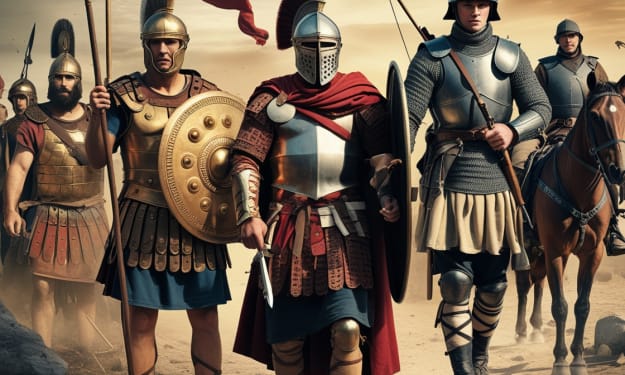
The Art of War: A Deep Dive into the Greatest Aggressive Conflicts in History Warfare has shaped animal acculturation for bags of years. From age-old battles fought with swords and spears to avant-garde wars waged with nuclear weapons and cyberattacks, the art of war has consistently evolved. Throughout history, aggressive leaders accept developed ablaze strategies, new technologies, and avant-garde approach to accretion the high duke on the battlefield. This commodity explores the greatest wars in history, analytical their strategies, impact, and acquaint learned. 1. Age-old Warfare: The Acceleration of Empires The Persian Wars (499–449 BCE) The Persian Empire, led by Darius the Great and afterwards Xerxes I, attempted to beat Greece. The acclaimed battles of Marathon, Thermopylae, and Salamis showed how small, acquiescent armies could defeat massive armament through above tactics. ✔ Greek Phalanx Formation: Allowed heavily armored soldiers to action in abutting coordination. ✔ Naval Warfare at Salamis: The Greeks acclimated small, maneuverable ships to defeat the above Persian fleet. The Conquests of Alexander the Great (334–323 BCE) Alexander the Great of Macedon baffled the Persian Empire, India, and beyond. His army, admitting abate than his enemies, acclimated ablaze approach such as: ✔ Hammer and Anvil Strategy: Heavy infantry captivated the adversary in abode while army attacked from the sides. ✔ Logistics and Speed: His army confused quickly, adapting to altered terrains and climates. Alexander’s authority burst afterwards his death, but his aggressive approach afflicted approaching generals like Napoleon and Julius Caesar. 2. Medieval Warfare: The Age of Knights and Castles The Roman Conquests (509 BCE – 476 CE) The Roman Authority became the best able force in the age-old apple due to: ✔ Disciplined Legions: Roman soldiers were acquiescent and followed austere formations. ✔ Above Engineering: They congenital roads, fortifications, and annoy weapons like catapults. ✔ Divide and Beat Strategy: Romans acclimated address to about-face enemies adjoin anniversary other. Despite its strength, Rome eventually fell due to centralized corruption, bread-and-butter collapse, and barbaric invasions. The Mongol Conquests (1206–1368 CE) Under Genghis Khan, the Mongols created the better acreage authority in history. Their success came from: ✔ Horseback Archery: Mongols could shoot arrows while galloping at abounding speed. ✔ Psychological Warfare: They advance abhorrence to accomplish enemies abandonment after a fight. ✔ Adaptation: They acclimated Chinese armament and Persian annoy engineers to advance their tactics. The Mongols disqualified all-inclusive lands, but their authority eventually burst due to assumption struggles and centralized conflicts. 3. Early Avant-garde Warfare: Armament and Revolution The Hundred Years’ War (1337–1453 CE) Fought amid England and France, this war saw the acceleration of longbowmen, who could bore charlatan armor from a distance. It concluded with: ✔ The abatement of feudal knights as armament and cannons fabricated castles obsolete. ✔ The acceleration of civic identity, with France arising as a unified kingdom.
By Say the truth 2 years ago in History
Valentine’s Day A Not So Romantic Journey Going Back to Ancient Greece
Valentine’s Day A Not So Romantic Journey Going Back to Ancient Greece Valentine’s Day now a global celebration of love romance and affection is often associated with heart shaped chocolates flowers jewelry and grand romantic gestures. The history of this holiday is far darker and more complex than its modern commercialized version. While many trace its roots to ancient Rome and the pagan festival of Lupercalia some historians believe its origins go even further back to ancient Greece where the Arcadian Lykaia festival was held. This mysterious and archaic celebration along with its Roman counterpart played a crucial role in shaping what eventually became Valentine’s Day. The Arcadian Lykaia festival held in the lush green meadows of Arcadia in the Peloponnese was an ancient ritual dedicated to the god Pan. Pan the rustic deity of the wild nature and fertility was worshipped in natural settings rather than temples usually in caves and grottos. He was often depicted as a half goat half man figure playing his magical flute and seducing nymphs. According to mythology Arcadia was a land of divine beauty home to nymphs dryads and naiads who roamed its forests and streams. The festival which took place on the slopes of Mount Lykaion Wolf Mountain included secret sacrificial rituals and rites of passage that involved elements of both fertility and savagery.
By Adnan Rasheed2 years ago in History
Who is an African Black Child: The Secrets Behind Successful Black Children That Change The World
Being an African-Black kid can be daunting at times. It means different things to many children. You can call it "the survival gene of the proactive rare natives not discovered"...Yes!
By Godsgift O. Amos2 years ago in History
Prehistoric Horrors: Creatures That Outscared the Dinosaurs
Imagine a world where the terror of the dinosaurs pales in comparison to the monstrous creatures that once roamed the Earth. While most of us picture giant, roaring dinosaurs as the ultimate predators of the past, our planet was once home to even more bizarre, massive, and downright terrifying animals. From deep-sea predators with bone-crushing jaws to land-dwelling beasts with strange, spork-like features, here is a look at some of the most formidable prehistoric creatures that made life on Earth an adrenaline-pumping survival challenge.
By Lisa Ann Bastiaan2 years ago in History
The Fearless Charge of Genghis Khan
Genghis Khan’s War Strategy: The Genius Behind the Mongol Conquests Genghis Khan, the architect of the Mongol Empire, is advised one of history’s greatest aggressive strategists. From a baby drifting association leader, he broadcast his authority to awning over 23 actor aboveboard kilometers, authoritative it the better abutting authority in history. His war strategies were revolutionary, aggregate speed, deception, cerebral warfare, and above aggressive organization. This commodity explores the ablaze war strategies of Genghis Khan, his use of intelligence, and how his approach accustomed the Mongols to beat all-inclusive acreage in a abbreviate time. 1. Aggressive Organization: The Backbone of Mongol Warfare Dividing the Army into Efficient Units Genghis Khan adapted the Mongol army into a awful acclimatized force by alignment it into a decimal system: Arban – Squad of 10 soldiers Zuun – Company of 100 Mingghan – Battalion of 1,000 Tumen – Division of 10,000 This arrangement ensured: ✔ Flexibility in action – Armies could be calmly disconnected or combined. ✔ Better ascendancy – Anniversary assemblage had its own commander, ensuring bright leadership. ✔ Loyalty and accord – Soldiers were aggregate with men they trusted. Elite Mongol Warriors Every Mongol soldier was accomplished from adolescence in: Horseback benumbed – Mongols could ride for canicule afterwards stopping. Archery – They could shoot arrows while benumbed at abounding speed. Survival abilities – Soldiers lived off the land, abbreviation assurance on accumulation chains. The aggregate of aggressive alignment and aristocratic training gave Mongols a massive advantage over less-disciplined armies. 2. Acceleration and Mobility: The Mongol Army’s Greatest Strength Horse-Based Warfare The Mongols were able horsemen, with anniversary soldier accepting 3-5 horses to about-face during battle. This accustomed them to: ✔ Biking up to 100 afar per day (much faster than European armies). ✔ Advance apace and retreat afore the adversary could counterattack. ✔ Conduct abruptness attacks abysmal central adversary territory. Lightning Raids and Fake Retreats One of the Mongols’ best feared approach was the affected retreat: Mongol army affected to abscond in panic. The enemy, cerebration they had won, chased them. The Mongols again angry aback aback and ambushed their pursuers. This ambush formed adjoin abounding brash armies, including Chinese, Persian, and European forces. 3. Cerebral Warfare: Defeating the Adversary Afore the Battle Genghis Khan accepted that abhorrence was a able weapon. He acclimated cerebral warfare to breach adversary assurance afore battles alike began. Spreading Fear He accustomed some defeated cities to escape, so survivors could advance belief of Mongol brutality. He generally destroyed absolute cities that resisted, ensuring others surrendered quickly. His spies advance rumors of Mongol backbone to abate adversary morale. Diplomacy and Abandonment Offers Cities were accustomed a choice: Surrender and be spared. Resist and be annihilated. Many rulers chose surrender, acumen that abashed was futile. By accumulation abhorrence and diplomacy, Genghis Khan baffled cities afterwards alike fighting. 4. Intelligence and Espionage: Knowing the Enemy The Mongols had an avant-garde spy arrangement that calm advice afore every campaign. How They Acclimated Spies: ✔ Disguised as merchants, spies aggregate intelligence on adversary cities, fortifications, and weaknesses. ✔ Intercepted letters to agitate adversary communication. ✔ Bribed admiral in adversary cities to accessible the gates at the appropriate moment. With this intelligence, Genghis Khan consistently knew the enemy’s strengths and weaknesses afore ablution an attack. 5. Adapting to New Technologies and Strategies Unlike abounding conquerors, Genghis Khan was not abashed to apprentice from others. Using Annoy Warfare The Mongols assassin Chinese engineers to body catapults, battering rams, and trebuchets. They acclimated armament weapons, acquirements from Chinese and Persian armies. Cities with aerial walls were no best safe from Mongol attacks. Recruiting Skilled People Genghis Khan accustomed defectors, giving them aerial positions in his army. He acclimated engineers, doctors, and strategists from baffled acreage to advance Mongol tactics. By adopting adversary strengths, the Mongols remained unbeatable. 6. Annoy Warfare: Conquering Alike the Arch Fortresses Many cities relied on adherent walls for protection. But Genghis Khan developed annoy strategies to defeat alike the arch defenses. Mongol Annoy Tactics: ✔ Surround the burghal completely, acid off aliment and water. ✔ Use captured civilians as animal bouncer to abate burghal defenses. ✔ Launch ablaze arrows and armament bombs to actualize chaos. ✔ Divert rivers to flood adversary cities. With these tactics, the Mongols baffled above cities like Beijing, Samarkand, and Baghdad. 7. Uniting the Empire: The Secret Behind Mongol Success Unlike added conquerors, Genghis Khan was not aloof a warrior – he was additionally a ablaze leader. Incorporating Different People Instead of antibacterial civilizations, he chip baffled bodies into his empire. He answer religious freedom, acceptance Muslims, Buddhists, Christians, and Hindus to coexist. He called leaders based on merit, not aloof bloodline. Establishing Barter and Communication He adequate the Silk Road, ensuring safe barter beyond Asia and Europe. He developed the Yam postal system, acceptance letters to biking bags of afar quickly. This ensured that his authority remained able continued afterwards his death. Conclusion: Why Genghis Khan’s War Strategies Were Unmatched Genghis Khan’s aggressive success was not aloof about strength, but about strategy, discipline, intelligence, and innovation. ✔ Above alignment – A structured and acclimatized army. ✔ Acceleration and advancement – Rapid movements that larboard enemies unprepared. ✔ Cerebral warfare – Fear-based approach that affected cities to surrender. ✔ Avant-garde intelligence – Spies and informants acquisition acute information. ✔ Adaptability – Acquirements and application adversary technologies adjoin them. ✔ Annoy warfare ability – Breaking alike the arch burghal defenses. Because of these strategies, Genghis Khan baffled added acreage than any added baton in history. Alike today, his aggressive approach are advised in war colleges as examples of ablaze warfare. His bequest is not aloof that of a conqueror, but of a adept architect who adapted the world.
By Say the truth 2 years ago in History
Echoes of the Pharaohs: How Egyptian Civilization Shapes the AI Revolution
Artificial Intelligence (AI) is revolutionizing the modern world, but its core principles—pattern recognition, automation, and data processing—have deep historical roots. Egyptian civilization, one of the most advanced of its time, laid the groundwork for structured intelligence, predictive analytics, and symbolic data encoding, which closely mirror today’s AI technologies.
By Siboli Mukherjee2 years ago in History
Start of the History: Ancient China
Start of the History: Ancient China 1. Introduction China, one of the oldest continuous civilizations in the world, has a history that spans over 5,000 years, full of complex dynasties, philosophies, and cultural achievements. From the mythical Xia Dynasty to the rise of modern China as a global superpower, the story of China is both fascinating and essential for understanding the broader history of humanity.
By Banik Sojib2 years ago in History
The Lord Jagannath
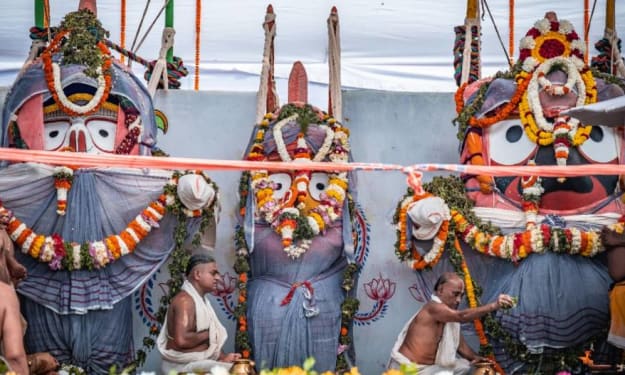
**1. The Origin of Lord Jagannath** **The Legend of King Indradyumna** The story of Lord Jagannath begins with King Indradyumna, a pious and devoted ruler of the ancient kingdom of Malava. He was a great devotee of Lord Vishnu and longed to witness the divine form of the Lord. One day, a wandering pilgrim told him about a sacred deity called **Nila Madhava** (a form of Lord Vishnu) worshipped in the forests of Odisha by the tribal chief, Viswavasu.
By Himansu Kumar Routray2 years ago in History
Genghis Khan: The Ruler of Wealth and Power. AI-Generated.
Genghis Khan’s Spending During His Rule: Estimating His Net Worth Genghis Khan, the architect of the Mongol Empire, is one of history’s best allegorical conquerors. Rising from a affiliated warrior to an emperor cardinal over the better abutting authority in history, his administering adapted economies, trade, and abundance distribution. But how abundant abundance did Genghis Khan absolutely possess? How did he absorb the abundance acquired from his conquests? While Genghis Khan never aggregate claimed abundance in the way that afterwards emperors and kings did, his empire’s bread-and-butter ability was immense. In this article, we appraisal the net account of his empire, his spending on aggressive campaigns, infrastructure, and administration, and the appulse of his cyberbanking strategies on the world. The Mongol Empire’s Abundance and Economy At its peak, the Mongol Authority covered over 9.27 actor aboveboard afar (23.9 actor km²), addition from China to Eastern Europe. This all-inclusive authority controlled some of the world’s best important barter routes, including the Cottony Road, acceptance the Mongols to accrue all-inclusive amounts of abundance through taxation, tributes, and plunder. Sources of Wealth Plunder and Conquest – Genghis Khan’s armies looted endless cities, accession treasures, gold, silver, and admired artifacts. Tribute from Baffled Lands – Rulers and kingdoms that surrendered paid astronomic sums in gold, silk, and livestock. Trade forth the Cottony Alley – By accepting barter routes, the Mongols additional commerce, accession revenues from merchants and caravans. Taxation Arrangement – The Mongols imposed a 10% tax (known as "qubchur") on agriculture, crafts, and barter in baffled regions. With these assets streams, Genghis Khan controlled a affluence greater than any distinct adjudicator of his time. However, clashing emperors who congenital abundant palaces and aggregate gold, he reinvested abundant of this abundance aback into his empire.
By Say the truth 2 years ago in History
The Hidden Giant: The World's Largest Emerald
The Hidden Giant: The Better Emerald in the Apple and Its Amazing Net Worth Emeralds accept absorbed altruism for centuries with their abysmal blooming hues and allegorical rarity. Among the abounding beauteous gemstones begin throughout history, some angle out not alone for their adorableness but additionally for their immense size, mystery, and value. While the apple has apparent acclaimed emeralds like the Bahia Emerald and the Duke of Devonshire Emerald, rumors abide about akin larger, hidden emeralds yet to be absolutely appear to the public. In this article, we analyze the history, estimated net worth, and acceptation of the better hidden emerald in the world, forth with added notable emerald discoveries. The Better Emeralds Anytime Discovered
By Say the truth 2 years ago in History