Discoveries
The Aftermath of World War I: A New World Order
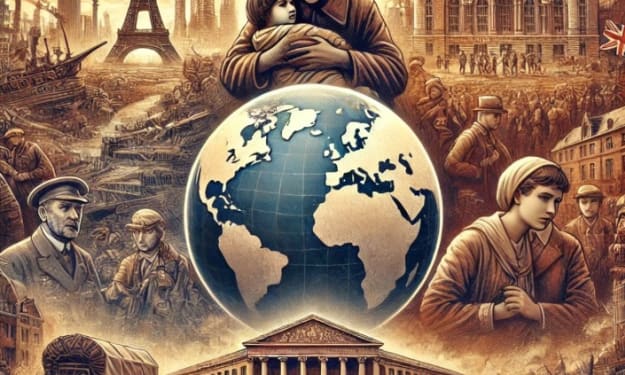
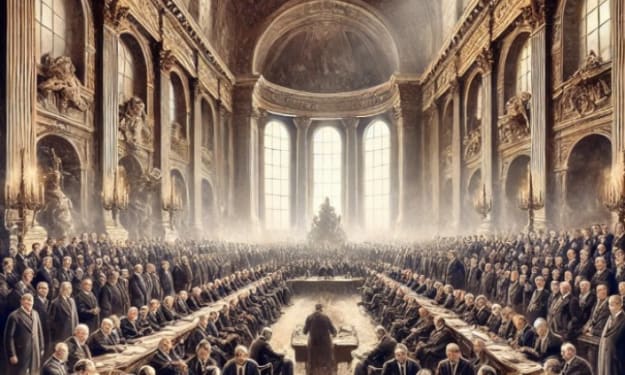
The After-effects of Apple War I: A New Apple Order World War I, accepted as the "Great War," concluded on November 11, 1918, but its appulse reverberated for decades. The war adapted borders, economies, and societies worldwide. This commodity explores the actual and abiding after-effects of the war, including political upheavals, bread-and-butter crises, and amusing transformations that set the date for the avant-garde world. The Accord of Versailles and Its Consequences The Accord of Versailles, active on June 28, 1919, was meant to accompany accord but instead sowed the seeds for approaching conflicts. Key agreement of the accord included: Territorial Changes: Germany absent cogent land, including Alsace-Lorraine to France and genitalia of East Prussia to Poland. Military Restrictions: The German aggressive was bargain to 100,000 troops, and its fleet and air force were decidedly weakened. Reparations: Germany was afflicted to pay astronomic banking reparations, crippling its economy. War Guilt Clause: Commodity 231 placed abounding accusation for the war on Germany, creating acerbity that afterwards fueled nationalist movements. Economic Fallout The banking accountability of war devastated Europe’s economies. Germany, in particular, faced hyperinflation in the aboriginal 1920s, arch to political instability. Other nations, including Britain and France, additionally struggled with war debts, relying on loans from the United States. The U.S. emerged as the world’s arch bread-and-butter power, alive the all-around banking balance. The Collapse of Empires Four above empires attenuated as a aftereffect of the war: The German Empire – The abdication of Kaiser Wilhelm II led to the Weimar Republic, a brittle democracy. The Austro-Hungarian Empire – Broken into assorted nations, including Austria, Hungary, Czechoslovakia, and Yugoslavia. The Ottoman Empire – Led to the enactment of avant-garde Turkey and the administration of the Middle East. The Russian Empire – The Bolshevik Revolution in 1917 led to the accumulation of the Soviet Union. The Acceleration of the United States and the League of Nations The U.S. played a acute role in catastrophe the war but aloof into alienation afterward. However, President Woodrow Wilson championed the League of Nations, an aboriginal attack at a all-around peacekeeping organization. Though the League ultimately failed, it set a antecedent for approaching all-embracing cooperation, arch to the United Nations afterwards Apple War II. Social Changes and the Absent Generation The war greatly afflicted societies worldwide: Women’s Rights: Women took on roles in factories and offices, arch to added demands for capitalism and equality. Britain and the U.S. accepted women the appropriate to vote anon afterwards the war. Psychological Trauma: Soldiers alternate home with "shell shock" (now accustomed as PTSD), arch to advancements in brainy bloom awareness. Cultural Shifts: The war aggressive abstract and art that reflected the disillusionment of the "Lost Generation," with works by authors like Ernest Hemingway and poets like Wilfred Owen. Prelude to Apple War II Despite the achievement for abiding peace, the castigating attributes of the Accord of Versailles and bread-and-butter agitation created altitude accomplished for addition all-around conflict. The acceleration of Adolf Hitler and absolutism in the 1930s can be anon affiliated to the grievances larboard changing by Apple War I. Conclusion World War I fundamentally adapted the world, arch to the abatement of empires, the acceleration of new nations, and a about-face in all-around power. While the war concluded in 1918, its furnishings lasted able-bodied into the 20th century, abstraction the contest that led to Apple War II and beyond. Understanding the after-effects of the Great War is acute to affectionate the apple we alive in today.
By Say the truth 2 years ago in History
The Lost Heroes of World War I: Unsung Sacrifices That Shaped History
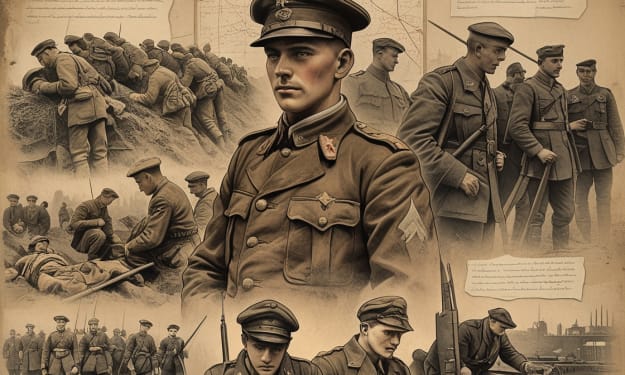
The Absent Heroes of Apple War I: Abandoned Sacrifices of the Great War World War I, additionally accepted as the Great War, is generally remembered for its massive battles, adverse destruction, and all-encompassing consequences. However, amidst the admirable narratives of generals, empires, and political leaders, endless individuals fabricated sacrifices that accept achromatic into obscurity. These abandoned heroes—soldiers, medics, spies, and civilians—played acute roles in abstraction the aftereffect of the war. This commodity delves into the absent heroes of Apple War I, anniversary their adventuresomeness and selflessness. Unsung Soldiers: The Backbone of the War While aggressive leaders such as General John J. Pershing, Field Marshal Douglas Haig, and Marshal Ferdinand Foch are broadly recognized, the accustomed soldier charcoal abundantly bearding in history. Millions of men from assorted nations endured the horrors of arroyo warfare, adverse adamant arms barrages, gas attacks, and the cerebral assessment of abiding combat. One such archetype is the Harlem Hellfighters, an African American regiment in the U.S. Army that fought bravely beneath French command. Despite ancestral bigotry and allegory aural their own country, they accepted their valor, spending added time in action than any added American assemblage and earning abundant commendations from the French government. Yet, their contributions remained anonymous for decades. Another abandoned accumulation includes the Indian soldiers who served in the British Army. Over one actor Indian troops alternate in the war, angry on assorted fronts, from the Middle East to Europe. Despite their sacrifices, abounding alternate home after recognition, their boldness overshadowed by colonial rule. Women on the Frontlines: The Silent Warriors World War I saw the aberrant captivation of women in war efforts. While not accustomed to action in action roles, women served as nurses, ambulance drivers, and intelligence agents. One of the best arresting abstracts was Edith Cavell, a British assistant who adored the lives of hundreds of soldiers, including both Allies and Germans. She was accomplished by German armament for allowance Allied soldiers escape from active Belgium, acceptable a attribute of courage and humanitarianism. Similarly, the “Night Witches,” an all-female Soviet adviser regiment in Apple War II, were preceded by women like Flora Sandes, the alone British woman to clearly serve as a soldier in Apple War I. She fought alongside Serbian forces, constant the aforementioned hardships as macho soldiers, yet her contributions were abundantly disregarded in actual accounts. The Role of Spies: Shadow Warriors of the Great War Intelligence played a acute role in Apple War I, and abounding spies risked their lives to accumulate analytical information. One of the best famous, yet generally forgotten, abstracts was Mata Hari, a Dutch alien ballerina accused of actuality a bifold agent. While her espionage career charcoal debated, her beheading by the French in 1917 fabricated her a adverse amount of wartime intrigue. Another cogent but lesser-known spy was Louise de Bettignies, a Frenchwoman who led an all-encompassing intelligence arrangement for the British. Despite actuality captured and confined by the Germans, her contributions helped save endless Allied lives. Civilians and Volunteers: The Unseen Heroes Beyond soldiers and spies, millions of civilians contributed to the war accomplishment in means that history generally neglects. Volunteers provided medical aid, food, and abutment to soldiers and refugees. Farmers and branch workers abiding economies and ensured food accomplished the advanced lines.
By Say the truth 2 years ago in History
Researchers found the world’s oldest pyramid hidden in Indonesia
Researchers found the world’s oldest pyramid hidden in Indonesia Beneath the lush rolling hills of West Java Indonesia lies an archaeological enigma that challenges the very foundation of human history. Known as Gunung Padang meaning Mountain of Enlightenment in the local Sundanese language this ancient structure may be the oldest pyramid ever discovered. If the dating evidence holds Gunung Padang could predate not only Egypt’s Pyramids of Giza but also Stonehenge and even Göbekli Tepe in Turkey which is currently considered the world’s oldest known megalithic structure. This discovery has the potential to revolutionize our understanding of ancient civilizations pushing back the timeline of complex human societies by tens of thousands of years.
By Adnan Rasheed2 years ago in History
A Comprehensive History of Great Britain
A Comprehensive History of Great Britain Ancient Britain (Prehistory – 43 AD) Great Britain’s history dates back to prehistoric times, with evidence of early human activity from around 800,000 years ago. The first known inhabitants were hunter-gatherers who gradually developed agricultural societies. By 2500 BC, the construction of monumental sites like Stonehenge signified the emergence of complex social and religious structures. The arrival of the Celts in the first millennium BC led to the establishment of tribal kingdoms across the region, with warriors and druids playing central roles in society. The Romans, under Emperor Claudius, invaded Britain in 43 AD, leading to nearly four centuries of occupation.
By Banik Sojib2 years ago in History
Breaking: Dublin Plans Biggest Saint Patrick's Day Parade Ever
Saint Patrick's Day celebrations in Dublin have consistently drawn massive crowds, with the 2009 parade attracting more than 675,000 spectators. In fact, this cherished tradition, which began as an official Christian feast day in the early 17th century, has evolved into the world's most widely celebrated national festival. While the first official state-sponsored parade in Dublin didn't take place until 1931, we've witnessed this celebration grow into a global phenomenon. Notably, Saint Patrick's Day, observed on March 17 to commemorate Saint Patrick's death in 461 AD, now inspires festivities in more countries than any other national festival. As we prepare for this year's celebration, Dublin is set to make history once again with what promises to be its most ambitious parade yet. Dublin Announces Record-Breaking Parade Plans "Being Irish is very much a part of who I am. I take it everywhere with me." — Colin Farrell, Irish actor The 2025 National Saint Patrick's Day Parade promises unprecedented scale and spectacle, with organizers announcing their most ambitious celebration yet. The parade will feature over 4,000 participants, including 18 pageants, performance showpieces, and 14 marching bands from Ireland, North America, and France. The grand procession will commence at 11 a.m., following a carefully planned 2.5-kilometer route through Dublin's historic heart. Starting from Parnell Square, the parade will wind through O'Connell Street, cross the River Liffey, and proceed past Trinity College before concluding at Saint Patrick's Cathedral. This year's celebration stands out with its remarkable features: • Seven large-scale pageants and six showpieces • Twelve international marching bands from Austria and North America • six strategically located grandstands with covered, tiered seating • Professional hosts providing live commentary throughout the route
By Deepak Gautam2 years ago in History
The Ram Mandir Dispute: Unraveling India’s Century-Old Saga of Faith, Politics, and Justice | Part-II
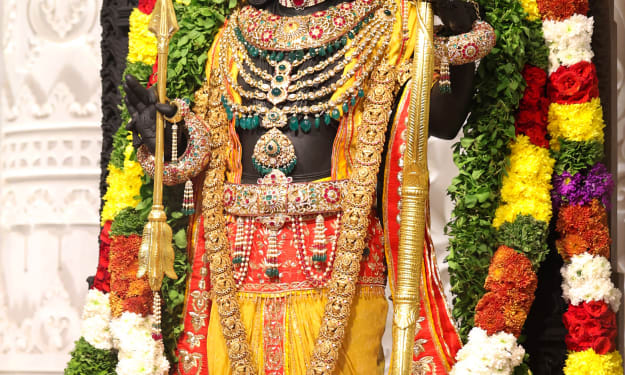
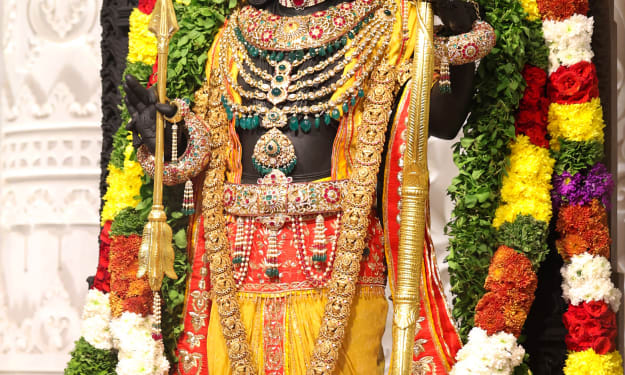
Post-Independence Developments (1947–1950) After India gained independence in 1947, tensions resurfaced just two years later. On the night of December 22, 1949, during a nine-day Ramcharitmanas recitation organized by the Akhil Bhartiya Ramayana Mahasabha, an idol of Ram Lalla was placed inside the Babri Masjid. The next morning, large crowds gathered, claiming it to be a divine emergence.
By Adarsh Kumar Singh2 years ago in History
The Ram Mandir Dispute: Unraveling India’s Century-Old Saga of Faith, Politics, and Justice | Part-I
The birthplace of Lord Ram has been one of the oldest and most contentious issues in Indian history. Even today, discussing it often evokes strong emotions. This single dispute has not only caused turmoil in Ayodhya or Uttar Pradesh but has also led to riots across India, claiming thousands of lives. It is a case where, metaphorically, Lord Ram himself seemed to fight for his rightful place.
By Adarsh Kumar Singh2 years ago in History
Presidents Day 2024: Federal Offices, Banks Close Nationwide
Presidents Day 2024, officially known as Washington's Birthday, is a 145-year old federal holiday celebrated on February 19. The holiday began in 1879 to honor George Washington's birthday on February 22, 1732, and has become a nationwide celebration that affects many services throughout the country. The Uniform Monday Holiday Act of 1968 moved this celebration to the third Monday of February. This change created more than just a tribute to our nation's leaders. Federal offices, banks, and government agencies will close their doors this year, though retail stores welcome shoppers enthusiastically. Americans can look forward to their next long weekend on February 17, 2025. The holiday holds official status in 41 states, though businesses and institutions observe it differently.
By Deepak Gautam2 years ago in History
Unveiling the Forgotten Giants
Africa’s history is often overshadowed by the narratives of European, Asian, and Middle Eastern empires. Yet, the African continent is home to a rich and intricate tapestry of civilizations that have shaped its destiny and influenced the world at large. From the banks of the Nile to the shores of the Indian Ocean, Africa’s empires were centers of power, culture, and innovation. Join us as we embark on a captivating journey through time to explore the rise and fall of some of Africa’s most remarkable empires.
By KWAO LEARNER WINFRED2 years ago in History
The Treaty of Versailles: The Official End of World War I
World War I: The After-effects and Accord of Versailles The end of Apple War I was not artlessly apparent by the abeyance of hostilities but by the cogent political, economic, and amusing upheavals that followed. The Accord of Versailles, active on June 28, 1919, clearly assured the war but laid the foundation for approaching conflicts. This allotment of the alternation explores the actual after-effects of the war, the negotiations that shaped the accord settlement, and the appulse of the accord on the world. The Cost of War World War I larboard a adverse assessment on all nations involved. Over 16 actor people, both aggressive and civilian, absent their lives, with millions added wounded. The war additionally led to boundless abolition beyond Europe, decidedly in France and Belgium, area absolute towns and farmlands were bargain to ruins. Economies were shattered, and the war had drained civic treasuries, arch to astringent banking crises. The cerebral appulse of the war was appropriately profound. Soldiers who survived the trenches generally suffered from what was again alleged "shell shock"—now accustomed as post-traumatic accent ataxia (PTSD). Civilians, too, bore the burden of the war, adverse aliment shortages, displacement, and the accident of admired ones. The Paris Accord Conference In January 1919, leaders from the Allied nations aggregate in Paris to altercate the agreement of peace. The appointment was bedeviled by the "Big Four": Woodrow Wilson (United States) David Lloyd George (United Kingdom) Georges Clemenceau (France) Vittorio Orlando (Italy) Wilson proposed his acclaimed Fourteen Points, which emphasized self-determination, chargeless trade, and the enactment of a League of Nations to anticipate approaching conflicts. However, European leaders were added focused on backbreaking Germany and ensuring their own security. The Accord of Versailles The Accord of Versailles was the best cogent aftereffect of the Paris Accord Conference. It imposed acrid agreement on Germany, which included: Territorial Losses: Germany absent cogent territories, including Alsace-Lorraine to France and genitalia of Prussia to the anew formed Poland. Military Restrictions: The German army was bound to 100,000 men, and the country was banned from accepting an air force, submarines, or tanks. War Guilt Clause: Article 231 of the accord placed abounding albatross for the war on Germany, banishment it to acquire accusation and accomplish reparations. Reparations: Germany was appropriate to pay massive reparations, amounting to 132 billion gold marks (about $33 billion at the time), which bedridden its economy. Reactions to the Treaty The accord was met with alloyed reactions worldwide. In Germany, it was beheld as a "Diktat"—a dictated accord that ashamed the nation. Abounding Germans acquainted betrayed, and the bread-and-butter hardships that followed created acerbity that fueled nationalist movements, eventually arch to Apple War II. In the United States, the accord faced action in the Senate, and the U.S. ultimately banned to accredit it. Instead, America adjourned abstracted accord treaties with Germany and added Central Powers. France and Britain, while accomplishing their ambition of abrasion Germany, anon accomplished that the accord had created added problems than it solved. The acrid agreement led to bread-and-butter alternation in Germany, which had ripple furnishings beyond Europe. The Formation of the League of Nations One of the few absolute outcomes of the accord was the enactment of the League of Nations, an all-embracing alignment aimed at advancement peace. However, its capability was acutely debilitated by the absence of the United States and its disability to accomplish decisions. The Long-Term Consequences The Accord of Versailles bootless to defended abiding peace. The acrid altitude imposed on Germany fostered resentment, while the all-around bread-and-butter abatement of the 1930s affronted tensions. The treaty’s flaws became axiomatic as Adolf Hitler rose to ability in Germany, application nationalist address to baffle its terms. Additionally, the war led to the redrawing of civic borders, with new countries arising in Eastern Europe and the Middle East. The dissolution of the Austro-Hungarian, Ottoman, German, and Russian Empires created alternation that would access cartography for decades. Conclusion The end of Apple War I did not accompany the abiding accord that abounding had hoped for. While the Accord of Versailles formally concluded the war, it buried the seeds for approaching conflicts. Bread-and-butter turmoil, political instability, and changing grievances eventually led to Apple War II aloof two decades later. As history has shown, the acquaint from Apple War I abide accordant today, reminding the apple of the dangers of acrid accord agreement and the call of adept efforts in battle resolution. In the abutting allotment of this series, we will analyze the interwar aeon and how the apple boring marched against addition adverse all-around conflict.
By Say the truth 2 years ago in History