Discoveries
"Ghosts of the Deep: The Lost Ships That Took Fortunes to the Bottom of the Sea"
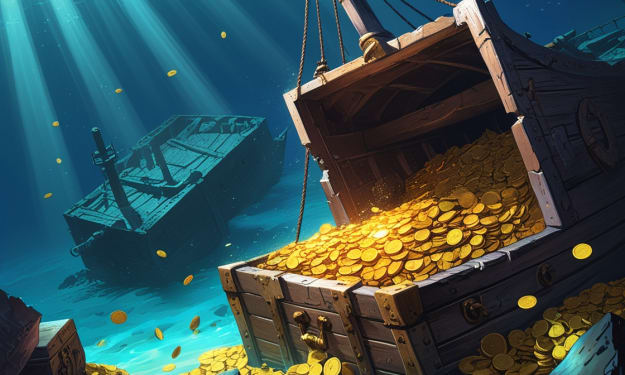
Ghosts of the Deep: The Chronicle of Abandoned Vessels with Wealth Onboard Throughout human history, the oceans have presented promises of adventure, conquest, and unfathomable riches. However, they have also consumed innumerable vessels along with the treasures they bore into their frigid, silent abyss. From the gilded fleets of Spanish conquistadors to the merchant ships of the East India Company, some of the most valuable fortunes ever accumulated vanished beneath the waves, their remnants lying undiscovered for centuries. This article delves into the intriguing history of lost vessels with wealth onboard tales of ambition, misfortune, enigma, and timeless allure. Early Riches Lost at Sea The notion of "treasure vessels" dates back millennia. Ancient Egyptian records reference trading fleets disappearing in tempests. Phoenician mariners, among the earliest maritime traders, frequently transported gold, silver, and exotic commodities across the Mediterranean at times never to return. Nonetheless, it was during the Age of Exploration (15th–18th centuries) that maritime losses involving immense fortunes became tragically prevalent. European empires, expanding into the Americas, Africa, and Asia, transported vast quantities of wealth gold, silver, spices, silk across perilous waters. Legendary Lost Ships 1. The Nuestra Señora de Atocha (1622) Arguably the most renowned treasure vessel in history, the Spanish galleon Atocha was part of the 1622 Treasure Fleet returning from the Americas to Spain. Loaded with tons of silver, gold, emeralds, and invaluable artifacts, it sank off the coast of Florida during a hurricane. For over 350 years, treasure seekers pursued the Atocha. In 1985, explorer Mel Fisher ultimately unearthed its wreck revealing a fortune valued today at over $450 million. Even now, a significant portion of the ship's cargo remains submerged beneath the seafloor. 2. The Flor de la Mar (1511) The Flor de la Mar ("Flower of the Sea") was a Portuguese carrack laden with looted treasures from the conquest of Malacca (modern-day Malaysia). Caught in a fierce tempest near Sumatra, it sank along with its staggering cargo gold, gemstones, invaluable artifacts and much of the crew. Today, experts estimate the value of the lost cargo could exceed $2 billion, rendering it one of the wealthiest undiscovered wrecks in history. Despite numerous expeditions, the wreck of the Flor de la Mar has never been definitively located. 3. The Merchant Royal (1641) Referred to as the "El Dorado of the Seas," the Merchant Royal was an English merchant vessel transporting gold, silver, and jewels from Spanish colonies to Europe. It sank near the Isles of Scilly (off Cornwall, England) during a storm. Contemporary records suggest the cargo included over 100,000 pounds of gold and 400 bars of silver, possibly making it the most significant sunken fortune in British waters. Despite several modern search efforts, the ship remains concealed. Why So Many Ships Were Lost Maritime travel was perilous for numerous reasons: Poor Navigation: Early navigators lacked precise maps and instruments. Severe Weather: Hurricanes, typhoons, and unforeseen storms could easily overpower wooden vessels. Overloading: Ships frequently transported more cargo than was safe, resulting in instability. Piracy and War: Enemy vessels and pirates frequently assaulted treasure fleets. Structural Deficiencies: Numerous treasure vessels were constructed hastily or were aging crafts, susceptible to destruction. Additionally, once a vessel sank, the means to retrieve it simply did not exist until very recently. Contemporary Search and Recovery Presently, advancements in sonar technology, subaqueous drones, and deep-sea exploration have empowered treasure seekers to reencounter many of these lost riches. Nevertheless, recovery operations encounter significant obstacles: Legal Disputes: Issues regarding ownership emerge does the treasure belong to the discoverer, the original sovereign nation, or the nearest coastal state? Extreme Depths: Some wrecks rest miles beneath the ocean's surface. Environmental Hazards: Recovery operations can disrupt delicate marine ecosystems. Notable enterprises like Odyssey Marine Exploration have located and recovered several shipwrecks but not without controversy. The Fascination with Lost Treasure In spite of the perils and challenges, the lore surrounding lost treasure vessels persists. They epitomize the ultimate quest: untold wealth awaiting the brave and fortunate. Numerous wrecks are still presumed to be undiscovered, including: The San Miguel (1519) off the Bahamas. The Le Griffon (1679) in Lake Michigan. The USS Cyclops (1918) a World War I naval collier that vanished without a trace. Each could represent the next billion-dollar discovery, generating global headlines and rekindling aspirations of glory. Conclusion The oceans possess the narratives of human ambition, exploration, and avarice along with countless fortunes consigned to the deep. The history of lost treasure vessels reminds us of how vulnerable even the most magnificent human achievements can be against the forces of nature. With contemporary technology and persistent human curiosity, more secrets of these spectral ships will undoubtedly emerge offering wealth not just in gold, but in the timeless stories they carry with them. For every vessel discovered, hundreds remain concealed awaiting quietly beneath the waves.
By Say the truth about a year ago in History
"The Battle for Water: India’s Strategic Move to Curb Indus River Flows to Pakistan". AI-Generated.
India's Strategic Initiative: The Proposal to Divert the Indus Waters from Pakistan "The Battle for Water: India’s Strategic Move to Curb Indus River Flows to Pakistan" Water has consistently been an essential asset, and few river systems are as geopolitically delicate as the Indus River. Shared between India and Pakistan under the historical Indus Waters Treaty of 1960, the river has long served as a lifeline for both nations. However, escalating tensions, climate change, and strategic requirements have increasingly strained this agreement. Recent reports suggest that the Indian government is actively contemplating initiatives to divert or diminish the flow of Indus river waters into Pakistan, aiming to optimize the usage of its allocation and reduce Pakistan's reliance. This action, if fully implemented, would not only transform agriculture, the economy, and politics in South Asia but could also provoke significant diplomatic repercussions. Background: The Indus Waters Treaty Formally enacted in 1960 with the mediation of the World Bank, the Indus Waters Treaty (IWT) delineated the rivers between the two countries: India acquired jurisdiction over the three eastern rivers: Ravi, Beas, and Sutlej. Pakistan secured control over the three western rivers: Indus, Jhelum, and Chenab. India was permitted limited utilization (irrigation, hydropower) of the western rivers but was prohibited from obstructing their natural flow into Pakistan. The treaty has endured multiple wars and decades of discord, acclaimed as one of the world’s most effective instances of water-sharing diplomacy. Nevertheless, in recent years, India has charged Pakistan with fostering cross-border terrorism. Following major incidents such as Uri (2016) and Pulwama (2019), Indian officials have openly contemplated reassessing the treaty perceiving water as a tool in the geopolitical contest. Current Indian Strategy: Reducing and Diverting Waters Since 2016, Indian policymakers have publicly deliberated on maximizing India’s entitlements under the IWT. Significant projects currently underway or proposed include: Shahpur Kandi Dam Project (Punjab): A dam being constructed to fully exploit the waters of the Ravi River. It will inhibit water from flowing into Pakistan uncontrollably. Ujh Multipurpose Project (Jammu and Kashmir): A dam and storage project on the Ujh, a tributary of the Ravi. Designed to obstruct seasonal flows that presently benefit Pakistan. Second Ravi-Beas Link Project: Revitalizing existing canal systems to redirect excess Ravi waters to the Beas river and other Indian basins. Hydropower Projects on the Western Rivers: India is developing several run-of-the-river projects (such as Ratle on the Chenab and Pakal Dul on the Marusudar River) to maximize hydropower without technically contravening the treaty. Why Is India Pursuing This Course of Action? Several critical factors underpin India’s decision: Security: By diminishing water flow into Pakistan, India undermines Pakistan’s agriculture-centric economy, which significantly depends on the Indus basin. Exploiting Entitled Resources: Experts contend that India has not fully availed itself of its share under the treaty for decades. These new projects seek to address this issue. Climate Change Pressures: With glaciers retreating and precipitation patterns shifting, water scarcity is evolving into a national security concern. India must ensure an adequate water supply for its farmers, industries, and urban centers. Diplomatic Pressure: By indicating a willingness to reduce flows, India exerts pressure on Pakistan during negotiations regarding cross-border terrorism and political disputes. Potential Consequences for Pakistan Pakistan relies on the Indus system for over 90% of its agricultural output and 70% of its potable water. If India effectively reallocates or retains substantial quantities of water: Pakistan may confront severe droughts, especially in the Punjab and Sindh provinces. Food security could deteriorate, as the cultivation of wheat, rice, and cotton is heavily dependent on irrigation. Pakistan's already vulnerable economy would face additional pressures. Heightened frustration may result in international conflicts or even military discord. Pakistani authorities have previously cautioned that any considerable interference with the Indus flow could be interpreted as an “act of hostility. ” What International Law Indicates According to the Indus Waters Treaty, India is technically permitted to construct dams and utilize the water for non-consumptive purposes such as hydropower. Nonetheless, it cannot significantly halt or divert the natural flow of the three western rivers. Therefore, India is required to proceed with cautiondeveloping storage and hydropower initiatives that fall within the treaty’s parameters, or else risk allegations of treaty infringement and international legal disputes. Can India Actually Cease the Indus Waters? Totally terminating the Indus River flow is virtually unfeasible under current treaty commitments without formally withdrawing from the treatya highly perilous and internationally reproved action. However, diminishing the flow by more effectively utilizing India’s allotted water, constructing storage dams, and managing seasonal floods is entirely achievable and already in progress. India’s objective is less about absolute “cessation” and more concerned with: Maximizing the utilization of authorized waters. Restricting surplus flow to Pakistan. Strategically managing the resource for negotiation leverage. Conclusion The Indus River has traversed India and Pakistan for millennia, nourishing civilizations and empires. Today, it has evolved into a symbol of power, politics, and survival in the 21st century. While a complete stoppage may remain improbable, India's initiatives to exploit every drop of its allocation signify a substantial transformation. As tensions escalate, the global community observes whether two nuclear-capable neighbors can navigate the impending water disputes without provoking open hostilities. Ultimately, waternot oilmay emerge as the most precious and contested resource of our era.
By Say the truth about a year ago in History
"Persia's Eternal Fortune: The History of Iran’s Greatest Treasures"
Crown Jewels of Persia: The Lost and Living Treasures of Iran Iran, historically referred to as Persia, represents one of the most ancient civilizations on the planet. From the formidable Achaemenid Empire of Cyrus the Great to the splendid Safavid dynasty, Persia has served as an emblem of affluence, culture, and authority. Across the centuries, Persian monarchs amassed fortunes beyond imagination: vast reserves of gold, stunning crowns, swords adorned with rubies, and seas of invaluable gemstones. Among the most renowned collections is the Iranian National Jewels, regarded as one of the most precious and illustrious treasure troves on Earth. This article examines the origins, development, loss, and endurance of Iran’s imperial wealth and assesses its present-day value. The Ancient Foundations: Achaemenid Splendor The custom of royal treasures in Iran commenced with the Achaemenid Empire (550–330 BCE), initiated by Cyrus the Great. The Achaemenid sovereigns commanded one of the extensive empires in ancient history, spanning from Egypt to India. Wealth in gold and silver flowed in from 20 distinct satrapies (provinces). Darius the Great constructed Persepolis, a ceremonial capital filled with colossal palaces, golden effigies, and walls inlaid with precious stones. Herodotus, the Greek historian, depicted the Persian monarchs as possessing immense reserves of gold and silver treasures so substantial they appeared inexhaustible. However, the first significant loss transpired with Alexander the Great’s invasion in 330 BCE, when Persepolis was set ablaze and looted. Thousands of talents of gold and silver (equating to billions today) were transported back to Macedonia. The Sassanian Revival: Imperial Wealth Reborn Following centuries of external domination, the Sassanian Empire (224–651 CE) rejuvenated Persian magnificence. Khosrow I and Khosrow II accrued riches through conquest, commerce, and tribute. Legendary artifacts like the Throne of Khosrow, encrusted with pearls, rubies, and emeralds, became emblems of Persian dominance. The Sassanian monarchs upheld clandestine treasuries brimming with coins, gems, ceremonial armor, and royal insignia. Regrettably, much of this was lost during the Islamic conquests of the 7th century, when Arab forces vanquished the Sassanians and plundered royal treasuries. The Safavid Renaissance: Birth of the Modern Iranian Crown Jewels The most illustrious period for Iran’s imperial wealth emerged with the Safavid Dynasty (1501–1736). Shah Abbas the Great (1588–1629) established Isfahan as a radiant capital. Iran dominated crucial points along the Silk Road, enriching itself through commerce. The Safavid monarchs gathered Indian diamonds, Ottoman emeralds, and Chinese jade. They commissioned artisans to craft magnificent swords, shields, and thrones. This epoch laid the groundwork for what would later evolve into the Iranian National Jewels, the most prominent collection of Persian treasures. The Afghan Invasion and Nader Shah's Conquests In the early 18th century, Iran’s fortunes took a grim turn. In 1722, Afghan forces ransacked Isfahan and plundered Safavid treasures. Subsequently, Nader Shah (r. 1736–1747) ascended to power and led ruthless campaigns across India. In 1739, Nader Shah captured Delhi and seized the Mughal treasury, which included: The Koh-i-Noor diamond (one of the largest diamonds globally). The Darya-i-Noor diamond (still in Iran today). Enormous quantities of gold, silver, and jeweled artifacts. Nader Shah's devastation is approximated to have comprised hundreds of tons of gold and gemstones contemporary value could exceed $1 trillion USD. However, following Nader Shah's assassination in 1747, a significant portion of this wealth was dispersed among warlords and competing factions. The Qajar Dynasty and Modern Preservation During the Qajar dynasty (1789–1925), Iran’s remaining treasures were reorganized. Sovereigns such as Fath-Ali Shah commissioned ornate crowns and regalia, frequently utilizing gems from previous periods. The renowned Peacock Throne, emblematic of royal authority, was produced (distinct from the Mughal throne bearing the same name). The Iranian National Jewels were relocated to more secure facilities as political instability persisted. By the dawn of the 20th century, the Pahlavi dynasty initiated efforts to catalog and safeguard the treasures. The Iranian National Jewels Today Currently, the Iranian National Jewels also referred to as the Crown Jewels of Iran are housed in the Central Bank of Iran in Tehran. The collection encompasses: The Darya-i-Noor diamond (182 carats, one of the world's largest pink diamonds). The Naderi Throne and the Sun Throne, both adorned with hundreds of gems. Crowns, swords, shields, tiaras, and royal regalia. An entire encrusted globe, where oceans are represented by emeralds and continents by rubies and sapphires. Estimated Value: While the Iranian government does not disclose a public evaluation of the collection (due to national security considerations), experts estimate the Iranian National Jewels could be valued at well over $5–10 billion USD ranking it among the most valuable collections of royal treasures globally. Nevertheless, its symbolic significance to Iranian identity and history is truly invaluable. Conclusion Iran's treasure narrative is a tale of brilliance, loss, resilience, and pride. From the gilded halls of Persepolis to the vaults of Tehran’s Central Bank, Persia’s legendary wealth has captivated the world for over 2,500 years. Even today, the Iranian Crown Jewels serve not only as a testament to past grandeur but also as a reminder of a civilization whose cultural and material contributions continue to illuminate the globe.
By Say the truth about a year ago in History
Vancouver attack latest
On April 26, 2025, Vancouver witnessed one of its darkest days when a vehicle plowed into a crowd attending the Lapu-Lapu Day Filipino heritage festival, resulting in 11 fatalities and numerous injuries. The suspect, 30-year-old Kai-Ji Adam Lo, was apprehended at the scene and has been charged with multiple counts of second-degree murder.
By Md Faruk Aliabout a year ago in History
"China's Lost Fortune: The Rise, Fall, and Legacy of the Empire’s Greatest Treasures" . AI-Generated.
The Concealed Wealth of an Ancient Power: The Tale of China's Preeminent Imperial Treasure For millennia, China emerged as one of the most affluent and formidable civilizations on the planet. Its emperors commanded extensive armies, constructed magnificent marvels, and amassed treasures that defied imagination. Among these, certain collections of gold, jade, porcelain, silk, and invaluable artifacts epitomized not merely opulence, but also imperial sovereignty itself. This article delves into the illustrious imperial treasures of China, placing particular emphasis on the wealth accumulated during the Ming and Qing Dynasties, as well as the eventual fate of these riches. Ancient China's Custom of Wealth Chinese sovereigns historically regarded wealth as an indication of divine favor. From the earliest dynasties, such as the Shang and Zhou (1600–256 BCE), emperors commissioned grandiose tombs, adorned with intricate bronze vessels, jade sculptures, and ceremonial items intended to accompany them into the afterlife. One of the earliest and most renowned treasures was the collection interred with Emperor Qin Shi Huang, China's inaugural emperor, which included the Terracotta Army thousands of life-sized warriors designed to safeguard him in the afterlife. Nevertheless, the pinnacle of Chinese imperial treasure accumulation occurred much later, during the Ming (1368–1644) and Qing (1644–1912) dynasties. The Ming Dynasty: Cornerstone of Imperial Wealth The Ming emperors established the groundwork for China's most extraordinary treasure hoards. They commissioned: Vast quantities of gold and silver through tribute missions and domestic mining operations. Porcelain masterpieces, including the celebrated blue-and-white Ming vases. Jade sculptures, regarded as the purest material symbolizing virtue and eternality. Silk and embroidery, crafted by the finest artisans in Suzhou and Hangzhou. The wealth of the Ming court gained legendary status throughout Asia and beyond. Tributary states such as Korea, Vietnam, and early European visitors, including the Portuguese, were astonished by the riches of the Forbidden City. During this period, the imperial court maintained treasure registries, meticulously documenting rare artifacts, ceremonial items, and precious metals. The Qing Dynasty: Expansion and Consolidation of Wealth Under the Qing Dynasty, the imperial treasure expanded to unprecedented proportions. Emperors Kangxi, Yongzheng, and Qianlong (17th–18th centuries) fervently collected art, calligraphy, and rare books. Military campaigns throughout Central Asia and Tibet yielded immense spoils of war. Extensive tribute missions from the Ryukyu Islands, Vietnam, and Mongol khans enriched the Qing court significantly. The Forbidden City itself evolved into not only a palace but also a vast museum housing millions of artifacts. Perhaps the most significant symbol of Qing wealth was Emperor Qianlong's private art collection, which some historians estimate to have consisted of over a million pieces, including jade seals, paintings, bronzes, and rare manuscripts. By the late 18th century, the Chinese empire may have controlled one-third to half of the world’s monetary silver, predominantly imported through trade with Spain, Mexico, and Europe. In contemporary terms, some historians estimate that the imperial hoard at its zenith would equate to over $1 trillion USD today if not more. Decline and Dispossession: The Plundering of the Imperial Treasure. The calamity of China's imperial artifacts commenced in the 19th century, a period marked by internal insurrections and external incursions. 1. The Opium Wars and the Plunder of the Old Summer Palace In 1860, amidst the Second Opium War, British and French forces invaded Yuanmingyuan, the Old Summer Palace located near Beijing. Yuanmingyuan was reputed to be even more splendid than the Forbidden City, adorned with invaluable art pieces, jewelry, and rare manuscripts. Soldiers pillaged thousands of treasures: jade sculptures, gold figures, ancient porcelain, and historical scrolls. What could not be removed was set ablaze. Numerous items seized during this event still exist in museums and private collections in Britain and France. This plundering ravaged China's imperial riches and persists as a profound injury in the cultural consciousness of the Chinese people. 2. The Decline of the Qing Dynasty (1912) As the Qing Empire disintegrated in the early 20th century: Numerous court eunuchs, soldiers, and opportunists purloined treasures from the Forbidden City. Invaluable items inundated illicit markets in Beijing, Shanghai, and Hong Kong.
By Say the truth about a year ago in History
Suspect charged with murder over Vancouver Filipino festival car ramming, police say victims were aged five to 65
Tragedy at Vancouver's Lapu-Lapu Day Festival: 11 Dead, Dozens Injured in Vehicle Attack A tragic incident occurred at Vancouver's Lapu-Lapu Day Festival, a celebration of Filipino heritage, on April 26, 2025, in the evening. A black Audi Q7 SUV drove into a crowd near East 43rd Avenue and Fraser Street, resulting in the deaths of 11 individuals and injuring over 20 others. The victims' ages ranged from five to sixty-five. Reuters
By Mahmodul hassan mojahidabout a year ago in History
Alien Encounters: The Hidden History & Unexplained Clues of Extraterrestrials
Alien Encounters: The Untold Story and Unknown Signs of Extraterrestrial Life" Let's discuss aliens. Not the kind that comes from Hollywood and has glowing fingers and lasers that destroy the world, but the real ones that have followed us throughout history. You know, the bizarre tales that make you stop and ask, "Wait... could that actually be true?" * It turns out that strange objects in the sky have been seen by people for a lot longer than just the last century. In their temples, ancient civilizations carved images of flying machines. Medieval peasants reported seeing flaming orbs engaged in combat above their homes. Even famous artists snuck UFO-looking objects into their paintings. And right now? Well, now we’ve got military pilots, astronauts, and regular folks all saying the same thing: *Something’s up there, and we don’t know what it is. * ### The Old Things That Make You Think, "Hmm" Have you ever heard of the Sumerians? They were one of the first civilizations, and they wrote about these beings they called the "Anunnaki," which is short for "gods" who came from the sky and might have even created humans. Sound familiar? Fast forward to ancient Egypt, where hieroglyphs depict figures with enormous heads and eyes, similar to the "Greys" depicted in contemporary abduction tales. The pyramids are another attraction. How did they construct those things so precisely in line with the stars? Some believe they had assistance. The "Nazca Lines" are huge drawings in the desert that can only be seen from above in Peru. Why would ancient people create artwork that was difficult to properly view? Unless... they were never intended to be seen by humans. ### UFOs in the Middle Ages, Long Before There Were UFOs In **1561**, people in Nuremberg, Germany, woke up to what looked like a full-on **space battle** happening in the sky. Glowing spheres, crosses, and tubes were described as engaged in combat before colliding with the ground. It is even depicted in an old woodcut painting. Similar things were also observed in Switzerland, France, and even Mexico, so it wasn't just Germany. In their writings, Spanish conquistadors talked about "floating shields" that flew through the air. Even Renaissance artists like Leonardo da Vinci and Aert de Gelder depicted bizarre flying objects in religious works. Did they see something that they couldn't explain, or were they just being creative? ### Roswell, Cover-Ups, and the Pentagon in the Present Day The good stuff, the "UFO era," comes next. It really started in 1947 with Roswell, when the U.S. military said they had found a crashed flying saucer before changing their mind and calling it a weather balloon instead. Yes, guys. Since then, thousands of people, including pilots, police officers, and members of the military, have reported seeing objects in the sky that move in ways that our technology cannot. The government has conducted a few "official" investigations into UFOs, such as **Project Blue Book**, but all of them have come to the same ambiguous conclusion: *The majority of sightings are explainable, with the exception of a few that aren't. * Additionally, the Pentagon is now admitting that they are unaware of the names of some of these UAPs (Unidentified Aerial Phenomena). Fighter pilots have captured footage of objects turning at impossible speeds. If it isn't aliens, then what exactly is it? ### The Mystery of Abduction This is where things start to get really creepy. Numerous individuals assert that they have been "taken by aliens." Bright lights, missing time, and being examined by small beings with large black eyes are all common themes in each story. Some people even wake up with odd marks or implants that doctors are unable to explain. One of the first significant cases involving kidnappings was the 1961 "Betty and Barney Hill case." They recalled being examined on a ship while hypnotized. Then there's **Travis Walton**, who went missing in 1975 after his logging crew saw a UFO for five days. He told an outrageous tale when he returned about being inside a spacecraft. When so many people from different countries and backgrounds share the same story, it makes you wonder if it's sleep paralysis or hallucinations, as skeptics claim. ### So, are we by ourselves? Science is without a doubt looking. **SETI** searches the stars for signals from aliens. NASA has discovered evidence of life on Mars. We've found thousands of planets that look like Earth. It is statistically almost impossible that we are the universe's only intelligent life. However, if aliens are real, why haven't they officially introduced themselves? It's possible that they want us to figure it out first. Or maybe they've always been here, and the clues are right in front of us—buried in government files, in ancient texts, or just out of sight in the night sky. The mystery will not go away, that much is certain. The question of "*what is really out there" remains, regardless of whether you are a believer or a skeptic. * What are your thoughts? Ancient spacecraft? What are the secrets of the government? Or just a lot of things that people don't understand? In any case, the reality is probab
By Orewa Razeenabout a year ago in History
The 1,000-Year Lifespan: Mystical Accounts of Pre-Flood Humanity in Sumerian and Biblical Texts
A Time Before Time Imagine a world where human beings lived for thousands of years, a time when the lifeline of a person stretched across centuries, where wisdom was passed down like a living thread from one generation to the next. In the ancient texts of both the Bible and the Sumerians, this vision is not merely myth; it is the reality of a forgotten age, one that predated the cataclysmic Great Flood that, according to legend, wiped out the ancient world.
By The Secret History Of The Worldabout a year ago in History